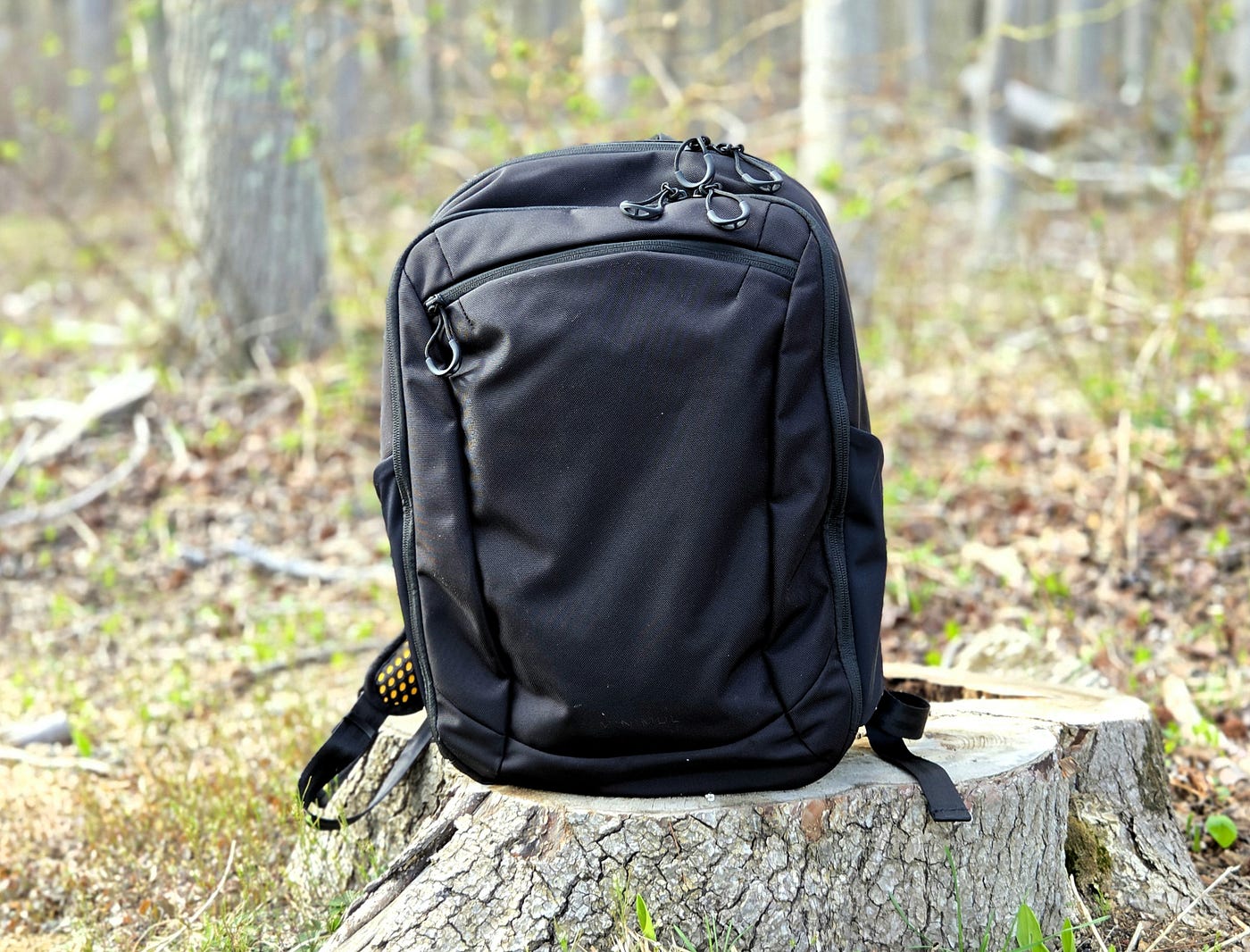
XOÀI Packs, 25L Adventure Pack Review
Sometimes, you want a backpack that is versatile enough for that rock scramble up to a peak but can also be your daypack while you’re in…
XOÀI Packs, 25L Adventure Pack Review
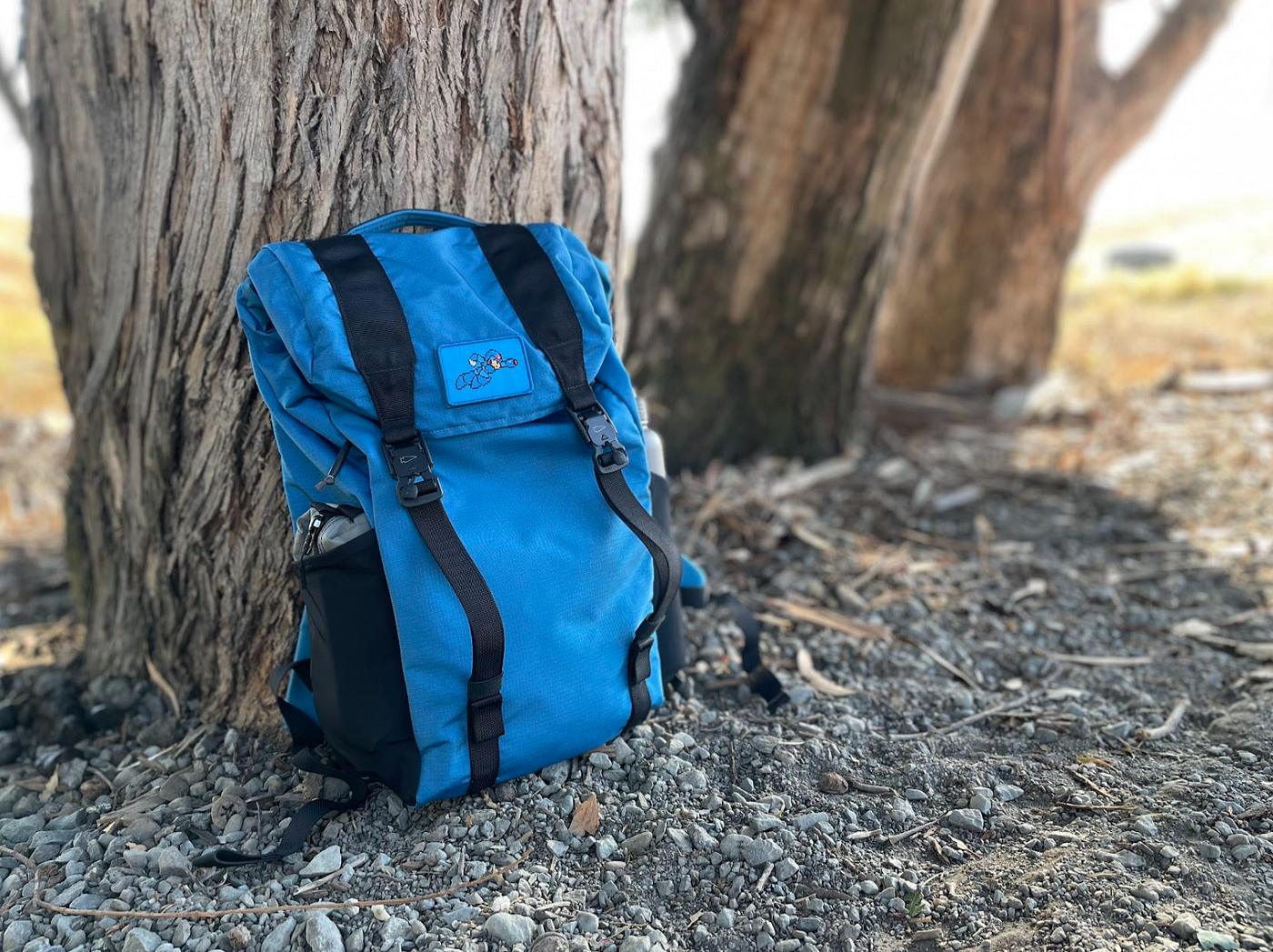
Sometimes, you want a backpack that is versatile enough for that rock scramble up to a peak but can also be your daypack while you’re in the city grabbing a cup of coffee. XOÀI Packs (pronounced swai or s-why) is a new bag maker that aims for that level of versatility, with their 25L Adventure Pack, while also maintaining an ethical manufacturing process and affordable prices. So how do the results look? Let’s dive in…
Disclaimer: Our Adventure Pack was provided to us by XOÀI. We are hugely grateful for the chance to try it, but we also caveat that we provide our honest opinions in the reviews, both the positives and the negatives.
Overview
The Adventure Pack is a 25L backpack that has the style of a hiking daypack but not to the extent that you would see in a day hike bag from Osprey, Gregory, or Deuter. I see it as targeting micro-adventures. You can use it for your day out in the city, a short hike at a nearby park, or on a casual bike ride on a local trail. It is adventure-oriented but without the true hiking pack features, like the suspension systems for your back panel and shoulder straps, load lifter straps, and a structured waist belt that can fully support the backpack itself. In exchange, you get affordability and some admin organization.
The main compartment is a full clamshell opening pocket, which is also not common for pure hiking packs, but very common in travel-oriented bags. Though it has a sleeve you can use as a laptop sleeve, it’s not particularly tech oriented. On a day hike, I can bring a light change of clothes, a light jacket, a packed lunch, some granola bars, and a couple bottles of water. This would not completely pack out the Adventure Pack either. If I use this as a commuter EDC bag, I can fit a laptop and charger, notebook, a wireless keyboard, a pouch with headsets and a mouse, a water bottle, a small umbrella, some snacks, and various small items like cables. This would not completely pack out the backpack either and you still have a tiny bit of space left.

Pros
- Affordability and ethical manufacturing
- Has versatility with organization to be an EDC or adventure bag
Cons
- Waist belt is very floppy and only serves to stabilize the backpack, it doesn’t take weight off your shoulders.
- The interior lining can feel loose in some parts
- I don’t love the bridged shoulder strap design (both straps being made from a single piece of foam)
Organization
- Main Compartment — This compartment is well padded on the back panel but has no padding on the front, sides, and bottom. There is a large laptop sleeve that fits a 16” laptop and has a false bottom. On the front of the laptop sleeve is a large tablet sleeve. Both sleeves have a very thin piece of padding sewn inside the fabric of their front faces.


- Quick Access Pocket — On the top of the backpack in front of the main compartment’s zipper is a felt-lined quick access pocket if you need somewhere to throw your sunglasses or phone.
- Front Panel Compartment — The front panel compartment has a 9.5" x 8.5" zipped pocket (W x H) with a key leash and two 4.5" x 6.5" (W x H) mesh elastic pockets. The compartment only goes halfway down the front panel of the backpack, which has its pros and cons. You have much less storage space for large items, but at the same time, you don’t have to go digging in a giant dark pocket to find something at the bottom and it doesn’t reduce the usable space in the main compartment.


- Dual Water Bottle Pockets — The water bottle pockets are made of a soft mesh, elasticated, and relatively deep. However, the elastic top is not very tight, leaving the opening pretty wide, which allows medium-sized water bottles can fall out when you bend over. This has happened to me multiple times in my month of using this backpack. Large bottles, like a 1L Nalgene bottle, that will force the elastic to stretch aren’t an issue. But my medium-sized S’well bottle fell out easily when I bent over to pick something up or tie my shoelaces. The mesh is also relatively thin, and you can see through them when they’re stretched out. This does make me feel like they may not be the most durable if they get caught on something (e.g., a branch or some thorns). The bottoms of the pockets are not mesh and use the same polyester as the side panels. Since there is also no drainage port, any spilled water will sit in the pocket.


- Waist Belt Pockets — Both sides of the waist belt’s wings have 7" x 2.5" (W x H) pockets. Big enough to keep some fruit snacks on hand, but not big enough to keep your phone nearby, which is something I look for in a hiking pack — this lets me keep my GPS/map nearby as well as my camera.
Additional Features
- Waist Belt — The waist belt itself isn’t very padded. It has a tiny layer of padding in the fabric but it’s so thin that it’s basically negligible. This makes the wait belt very floppy. So, it doesn’t have any structure and isn’t really able to take any weight off your shoulders, like the thick waist belts you see on trekking and hiking backpacks. Like waist belts that are just made of webbing strap, it just keeps the backpack from jostling around.
- Sternum Strap — Fully adjustable and attached to the shoulder strap via rails. The strap itself has an elastic section in the middle and also has a safety whistle integrated into the side release buckle.
- Compression Straps — Both sides have compression straps with side release buckles. You normally wouldn’t see side release buckles on a compression strap, but they’re necessary for this bag because the main compartment is clamshell opening.
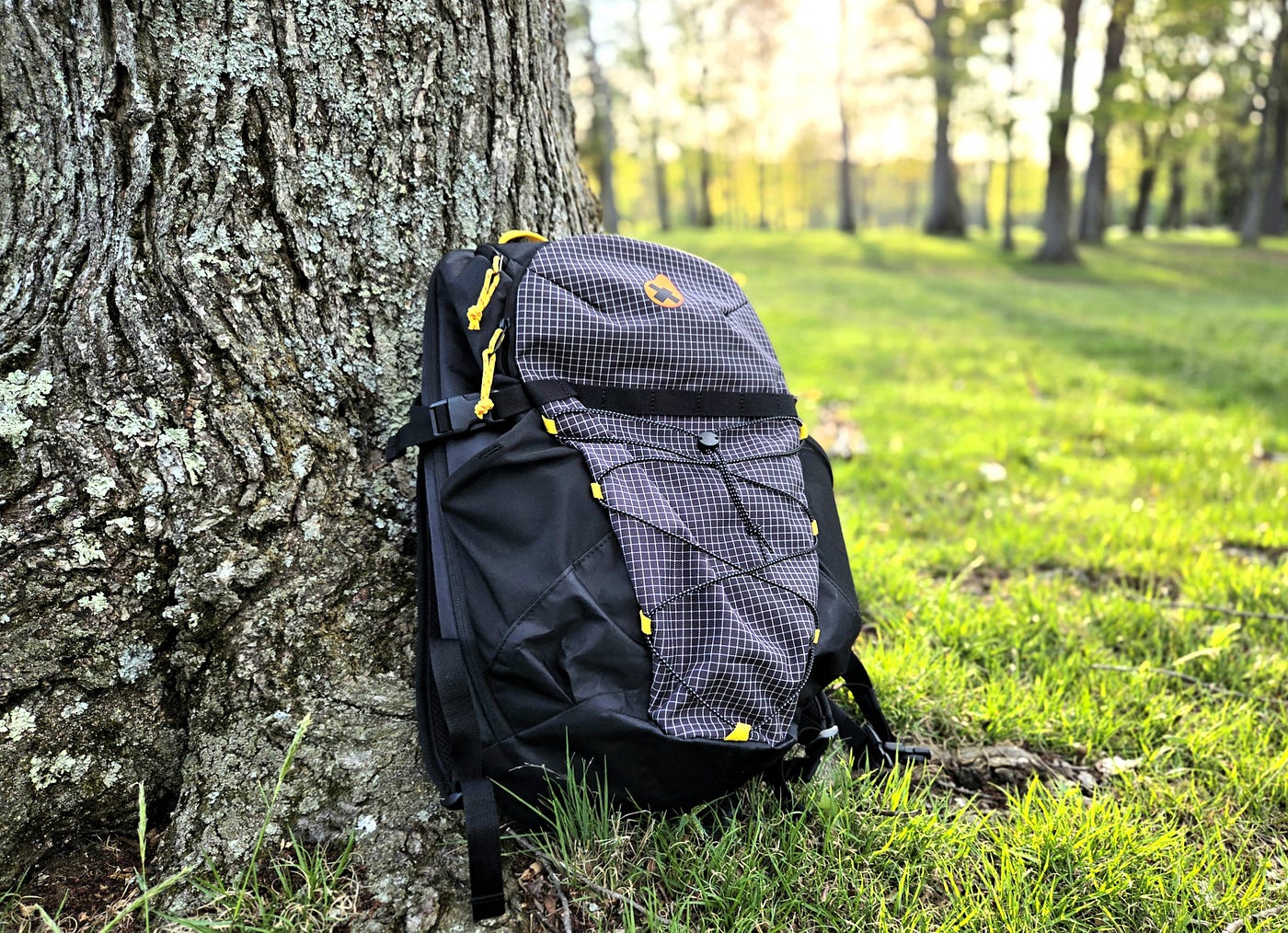
- Bungee Cord — The front panel has a bungee cord organizer, which makes a great place to throw your jacket when you start sweating on a hike. These bungee cords or a kangaroo pouch are vital features to a day hike backpack, in my opinion, though I prefer the kangaroo pouch for its versatility a bit more.
- Grab handle — A folded piece of nylon attached to the top of the bag provides a grab handle. Nothing fancy, and no padding in it.
- Lash Points — On the shoulder straps and across the front panel are lash points for carabiners or whatever your preferred method is.
Construction and Comfort
The Adventure Pack is 19 x 11 x 8.5 inches (H x W x D) and 25L in volume. It comes in at 1.9 lbs., which is pretty light overall. The front panel and front of the shoulder straps are 400D ripstop nylon with a TPU coating for added water-resistance. The side panels use an ECOPAK recycled polyester that feels of similar density and thickness to the front panel. The interior lining feels like a light nylon. It’s a little loose in some parts, which can make it feel a bit cheap.
The back panel is a mesh-covered EVA foam with 5mm ventilation holes spaced through. Though the backpack doesn’t have a hard frame, the full sheet of EVA foam basically acts like a frame, giving the bag sufficient structure. The shoulder straps use the same EVA foam and are lined underneath with mesh.

The zippers are YKK RCz with the main compartment being #8 and the other exterior zippers being #5. The rest of the hardware is UTX Duraflex and made from recycled plastic. It all feels very sturdy and I don’t have any concerns about their durability. The side release buckles, in fact, feel quite stiff. Overall, the bag seems decently solid, though I haven’t put it through the test of years on the trail.
The shoulder straps are slightly contoured, but less so than most true hiking backpacks are. I’m not a fan of the bridge shoulder strap design (where the shoulder straps are one single piece joined at the top). This makes it a bit less comfortable for people with wider necks or large upper trap muscles, especially because these shoulder straps use EVA foam, which is a stiffer foam.
The back panel’s foam padding is also just a large flat sheet. There isn’t any contouring or airflow. Though the padding has holes and is covered in mesh, it’s all going to lay flat against your back. For shorter day hikes or outings, or if you’re not carrying much weight, it’s not a significant detractor. But if you want to use this on longer adventures, other design choices may be more suitable.
Additional Notes
The interior lining is all black, which can make finding small items inside a bit of a scavenger hunt. The main compartment being clamshell opening does help, but I don’t want to have to open the main compartment all the way every time. So, best to keep small things in the front compartment or the quick access compartment.
One area where the Adventure Pack shines is its sustainable approach to materials and production and its good pricing. This is part of the ethos of XOÀI Packs, and something that they built the brand on.


Summary
Overall, the XOÀI Packs Adventure Pack is a nice pack that fills a niche between your office commuter and your hiking pack. It doesn’t do the best for either the office or the trail but can sufficiently stretch in either direction. I’d make a few design changes — e.g., separate pieces for the shoulder straps, slightly denser material, and padding in the waist belt. It’s best suited as an everyday adventure type of backpack and the eco-conscious user.

As always, thanks for reading. Drop a note in the comments if you have any questions about the XOÀI Packs Adventure Pack and follow us on Facebook and Instagram to stay up to date on what bags we’re trying out.
메타데이터
- post_id
- a6d8f10fa10f
- slug
- xoài-packs-25l-adventure-pack-review-a6d8f10fa10f
- url
- https://pangolinswithpacks.com/xo%C3%A0i-packs-25l-adventure-pack-review-a6d8f10fa10f
- canonical_url
- https://pangolinswithpacks.com/xo%C3%A0i-packs-25l-adventure-pack-review-a6d8f10fa10f
- author_url
- https://medium.com/@geodude.
- status
- ok
- fetched_at
- 2026-06-09 15:37:30