Pigmentation Treatment: Causes, Best Treatments & Expert Tips for Clear, Even-Toned Skin
Tired of Dark Spots That Just Won’t Fade?
Pigmentation Treatment: Causes, Best Treatments & Expert Tips for Clear, Even-Toned Skin
Tired of Dark Spots That Just Won’t Fade?
Have you noticed stubborn dark patches, acne marks, or uneven skin tone that don’t improve despite using expensive creams? You’re not alone. Pigmentation is one of the most common skin concerns affecting both men and women. While some pigmentation fades naturally, deeper discoloration often requires professional evaluation and treatment.
The good news is that modern dermatology offers effective, evidence-based treatments that can significantly improve pigmentation when combined with the right skincare and sun protection.
In this guide, we’ll explain what pigmentation is, why it happens, and the best ways to treat and prevent it.
What Is Pigmentation?
Pigmentation refers to the color of your skin, which is determined by melanin — a natural pigment produced by specialized skin cells called melanocytes. When these cells produce excess melanin or distribute it unevenly, dark patches or spots develop.
Pigmentation may appear as:
- Melasma
- Sunspots (age spots)
- Post-inflammatory hyperpigmentation (PIH)
- Freckles
- Uneven skin tone
While pigmentation is usually harmless, it can affect confidence and become difficult to treat without addressing the underlying cause. Why Does Pigmentation Occur?
Several factors can trigger excess melanin production, including:
- Prolonged sun exposure
- Hormonal changes (pregnancy or oral contraceptives)
- Acne and skin inflammation
- Aging
- Skin injuries or burns
- Certain medications
- Genetic predisposition
Understanding the cause is essential because different types of pigmentation respond to different treatments.
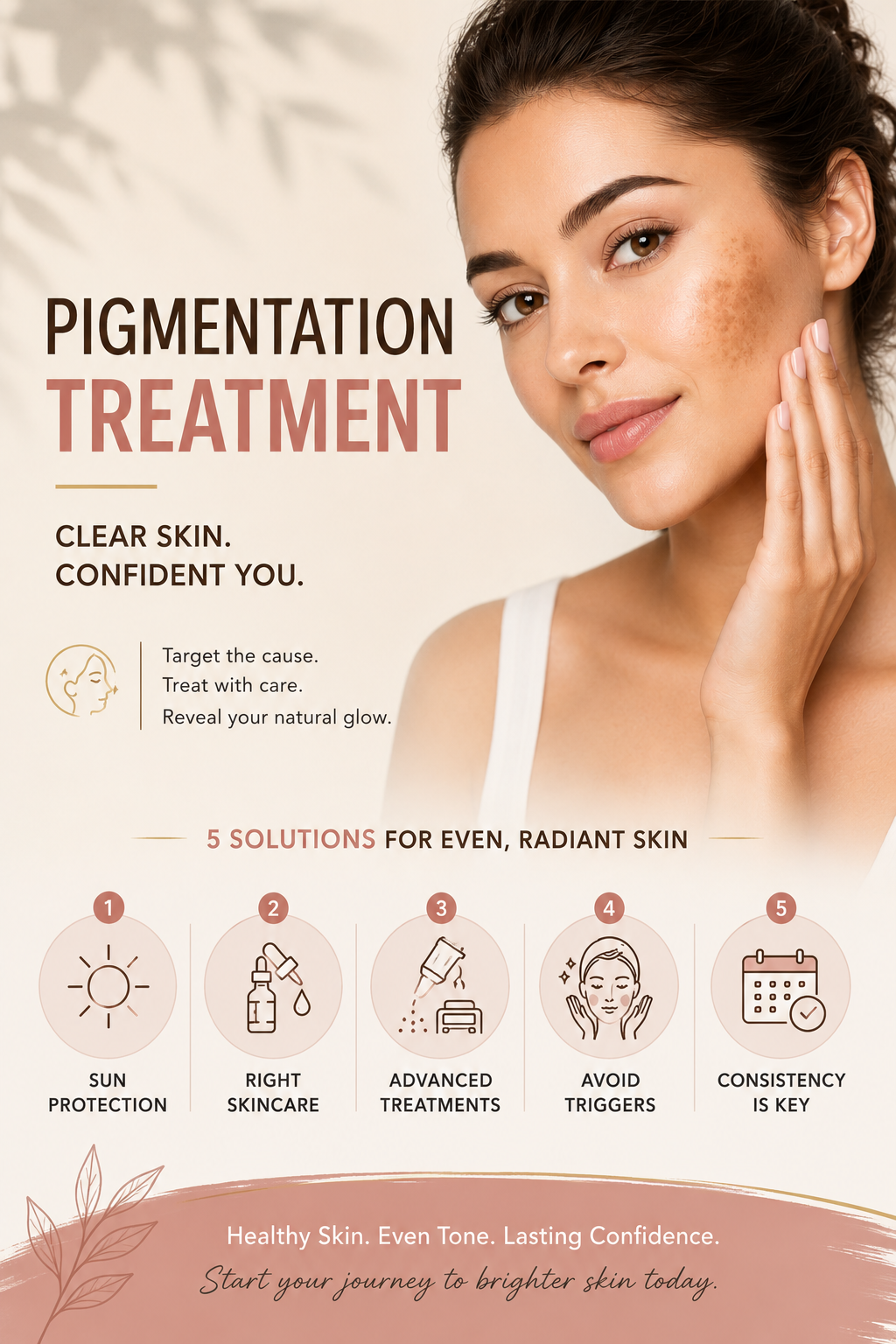
1. Always Protect Your Skin from the Sun
Why It Matters
Ultraviolet (UV) rays are one of the biggest triggers for pigmentation. Even after successful treatment, sun exposure can cause dark spots to return.
What You Should Do
- Apply a broad-spectrum sunscreen (SPF 30 or higher) every morning.
- Reapply every 2–3 hours if outdoors.
- Wear hats, sunglasses, and protective clothing.
- Avoid direct sun during peak hours whenever possible.
Expert Insight
Dermatologists often emphasize that treating pigmentation without daily sun protection is like trying to fill a leaking bucket. Sunscreen helps prevent existing pigmentation from worsening and reduces the risk of recurrence after treatment.
2. Use Dermatologist-Recommended Skincare Ingredients
Not every brightening cream works the same way. Choosing scientifically supported ingredients can improve pigmentation safely.
Effective Ingredients
- Vitamin C
- Niacinamide
- Azelaic Acid
- Kojic Acid
- Tranexamic Acid
- Retinoids (under medical supervision)
Benefits
- Reduces excess melanin production
- Brightens dull skin
- Improves skin texture
- Supports healthier, more even skin tone
Example
Someone with mild acne marks may notice gradual improvement after several weeks of using dermatologist-recommended products consistently, along with sunscreen.
Remember, visible improvement takes time, and results vary depending on the type and depth of pigmentation.
3. Consider Professional Pigmentation Treatments
Home skincare may help mild pigmentation, but stubborn or deeper pigmentation often benefits from professional dermatological procedures.
Common treatment options include:
Chemical Peels
Chemical peels gently exfoliate damaged skin layers, helping reduce superficial pigmentation and improve skin texture.
Suitable for:
- Mild pigmentation
- Acne marks
- Uneven skin tone
Laser Pigmentation Treatment
Advanced laser technology targets excess melanin while minimizing damage to surrounding skin.
Often recommended for:
- Sunspots
- Certain types of age spots
- Resistant pigmentation Microneedling
Microneedling stimulates collagen production and supports skin renewal, making it useful for post-inflammatory pigmentation and improving overall skin quality.
Prescription Medications
A dermatologist may prescribe topical medications depending on the cause and severity of pigmentation.
Expert Insight
Professional treatment plans are personalized after evaluating skin type, pigmentation depth, and medical history. Self-treating with strong bleaching creams without medical guidance may irritate the skin and worsen pigmentation.
4. Avoid Habits That Make Pigmentation Worse
Many everyday habits unknowingly increase pigmentation.
Avoid
- Picking acne or pimples
- Over-exfoliating
- Using harsh DIY remedies like lemon juice or baking soda
- Skipping sunscreen
- Frequently changing skincare products
These practices may damage the skin barrier, leading to inflammation and darker post-inflammatory marks.
Example
A person who repeatedly squeezes pimples is more likely to develop stubborn acne pigmentation that lasts for months.
Protecting your skin barrier is just as important as treating pigmentation itself.
5. Be Consistent and Patient
Pigmentation rarely disappears overnight.
Even with advanced treatments, improvement usually occurs gradually because the skin needs time to renew itself.
Tips for Better Results
- Follow your dermatologist’s treatment plan.
- Use prescribed products consistently.
- Attend follow-up appointments.
- Maintain a healthy skincare routine.
- Stay hydrated and eat a balanced diet rich in antioxidants.
Expert Insight
Many people stop treatment too early when they don’t see immediate improvement. Consistency often makes the biggest difference in achieving long-term results.
Common Types of Pigmentation
Understanding the type of pigmentation helps determine the most effective treatment.
Melasma
Usually appears as symmetrical brown patches on the cheeks, forehead, or upper lip. Hormonal changes and sun exposure are common triggers.
Post-Inflammatory Hyperpigmentation (PIH)
Dark spots left behind after acne, eczema, injuries, or skin inflammation.
Sunspots (Solar Lentigines)
Caused by years of cumulative UV exposure and commonly seen on the face, hands, and shoulders.
Freckles
Small pigmented spots influenced by genetics and sun exposure. They often become darker with increased sunlight.
When Should You See a Dermatologist?
Consider professional evaluation if:
- Pigmentation is spreading.
- Home remedies aren’t working.
- Dark patches keep returning.
- Pigmentation affects your confidence.
- You’re unsure whether the spots are harmless.
Early diagnosis helps identify the underlying cause and improves treatment outcomes.
Final Thoughts
Pigmentation is a common concern, but it doesn’t have to be permanent. The right combination of sun protection, evidence-based skincare, and professional dermatological treatments can significantly improve skin tone and reduce stubborn dark spots.
Since every individual’s skin is different, there’s no one-size-fits-all solution. A personalized treatment plan developed by a qualified dermatologist offers the safest and most effective approach.
Healthy, radiant skin is achieved through consistent care, realistic expectations, and treatments tailored to your unique needs.
Looking for Professional Pigmentation Treatment?
If you’re struggling with stubborn pigmentation, melasma, acne marks, or uneven skin tone, consulting an experienced dermatologist can help identify the underlying cause and recommend the most suitable treatment plan.
At **Cutibless Skin & Hair Clinic**, our dermatology team provides personalized pigmentation treatments using advanced technologies and evidence-based skincare protocols to help you achieve healthier, more even-toned skin.
Book a consultation to learn which pigmentation treatment is right for your skin and begin your journey toward clearer, brighter skin.
메타데이터
- post_id
- a71f83930cfb
- slug
- pigmentation-treatment-causes-best-treatments-expert-tips-for-clear-even-toned-skin-a71f83930cfb
- url
- https://medium.com/@cutiblessteam/pigmentation-treatment-causes-best-treatments-expert-tips-for-clear-even-toned-skin-a71f83930cfb
- canonical_url
- https://medium.com/@cutiblessteam/pigmentation-treatment-causes-best-treatments-expert-tips-for-clear-even-toned-skin-a71f83930cfb
- author_url
- https://medium.com/@cutiblessteam
- status
- ok
- fetched_at
- 2026-08-03 23:20:39