Coming Back Down the Mountain
The psychology of return after individuation
Coming Back Down the Mountain
The psychology of return after individuation
Part four of four.
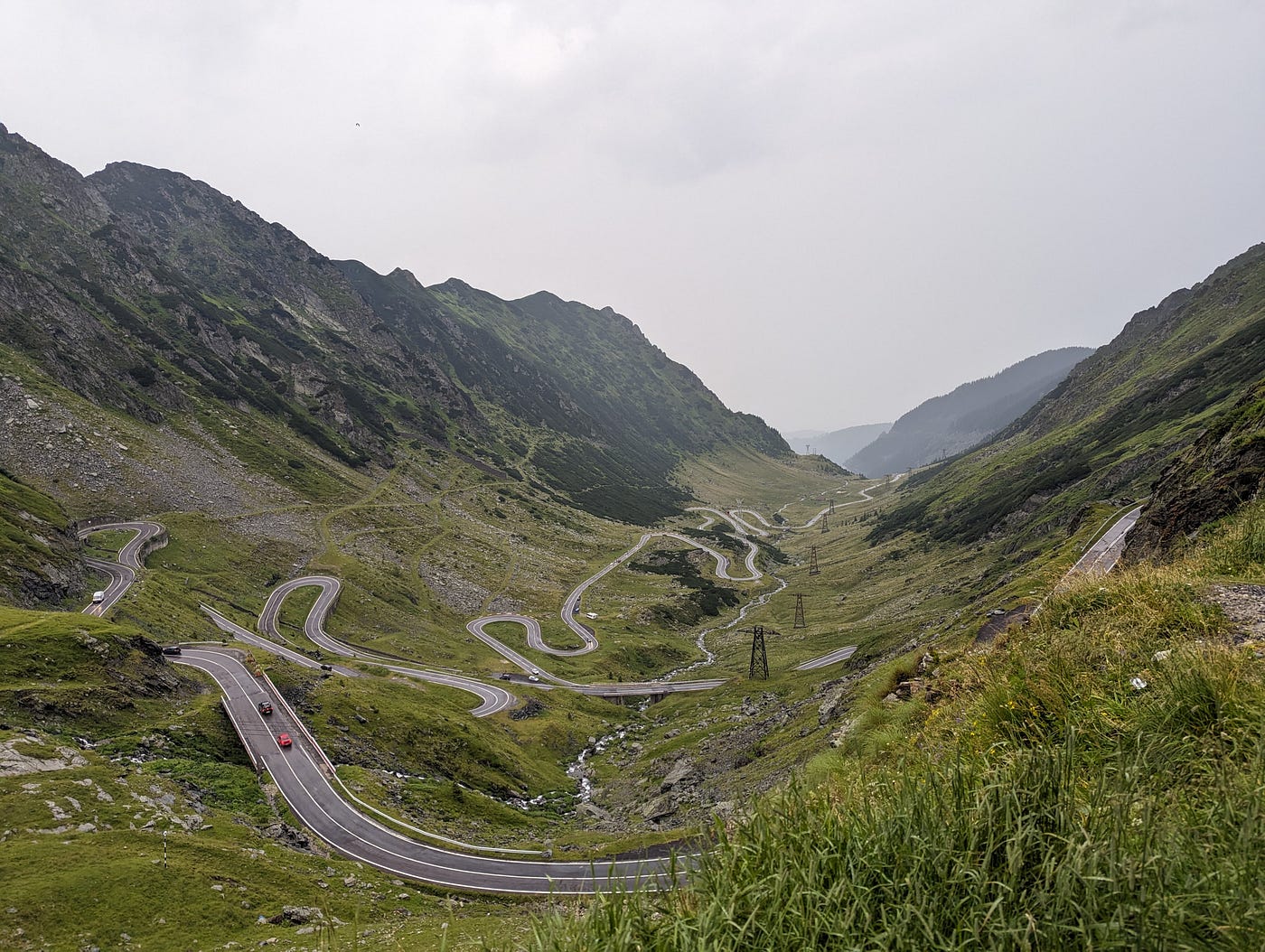
The way down is longer than you think. Photo by author.
There’s a story I keep coming back to. A man climbs a mountain. The ascent is brutal. He loses things along the way, certainties he thought were permanent, versions of himself he thought were real. Near the summit the air thins and the view opens up and for the first time he sees clearly. Not just the landscape below but himself. The whole of himself, the good and the terrible, held together without flinching.
And then he has to come back down.
This is the part nobody writes about. The descent. The return to the village at the base of the mountain where people are still arguing about the same things, where the bills still need paying, where his relationships are exactly as complicated as when he left. He’s different now. But the world isn’t. And somehow he has to figure out how to live in it again.
Over the past three articles I’ve been building toward something. In the first, I named the gap that Carl Jung’s individuation leaves open: the question of what comes after the inner work. In the second, I introduced teshuvah, the ancient process of return, and showed how it addresses the blind spots in Jung’s framework. In the third, I looked at how wisdom traditions across the world have grappled with this same problem, each seeing part of the picture.
Now I want to bring it together. Not as theory. As something you can actually use.
Here’s what the synthesis looks like when you lay it flat.
Jung gives you the map inward. His framework for understanding the shadow, the persona, the anima and animus, the Self as the archetype of wholeness, this remains the most detailed and psychologically rigorous account of the inner landscape ever produced. If you want to understand how you became fragmented and what integration actually requires, Jung is still the best guide available.
But Jung’s map fades at the summit. He gets you to the clearing but doesn’t tell you what to do once you’re standing in it.
Teshuvah gives you the map back down. It provides three things Jung doesn’t.
The first is moral weight. Cheshbon hanefesh, the accounting of the soul, insists that self-knowledge carries obligation. You don’t just see your shadow. You take responsibility for what it did. The jealousy that corroded a friendship. The avoidance that let someone down. The selfishness you dressed up as boundaries. You own it. Not as a psychological exercise. As a moral one.
The second is the return itself. Teshuvah’s answer to “what now?” is disarmingly simple: you go back. To your relationships. To your community. To the ordinary texture of your life. But you go back changed. The wholeness you found isn’t a trophy to display. It’s equipment for living. The transformation was never the point. What you do with it is.
The third is the communal container. Teshuvah embeds the return in community. The confessions are spoken in the plural. The process happens within a calendar shared by others walking the same path. The wounds that fragmented you happened in relationship and the healing has to include relationship too. You can’t complete the return alone.
\What does this actually look like in practice? Not as religious observance, but as psychological architecture?
It looks like doing the inner work, the shadow confrontation, the honest self-examination, the slow and often painful process of integration, and then asking yourself a question that Jung never quite asks: who do I owe my wholeness to?
Not in a guilt-ridden, self-flagellating way. In a grounded, adult way. If you’ve done real inner work, you’ve uncovered things about yourself that explain patterns in your relationships. You’ve seen where your unconscious material hurt people. You’ve understood, finally, why certain things kept happening.
Teshuvah says: that understanding is the beginning, not the end. Now you go to the people. Not with a therapy monologue about your attachment style. With accountability. With changed behaviour. With the quiet evidence that you’ve done something real with what you found.
And then you keep going. You re-enter your life. You show up at work. You sit across from your partner at dinner. You engage with your community. But now you do it as someone who has been to the summit and chosen to come back down. Not because there was nothing up there. Because everything that matters is down here.
The cyclical element is critical and it’s the piece that keeps this from being a one-time event.
Teshuvah isn’t something you do once and tick off. It spirals. Every year the Jewish calendar brings you back to the same period of examination. Not because you failed. Because you’re a year older, a year more lived-in, and new shadows have formed. New masks have hardened. The spiral asks the same questions at deeper levels each time.
Jung understood this intuitively. He knew the psyche doesn’t resolve in a straight line. He knew the shadow reconstitutes itself. But he never built a structure for this ongoing maintenance. Teshuvah does. It takes the insight that growth is spiral rather than linear and gives it rhythm, community, and practice.
You don’t need to be Jewish to use this structure. You don’t need to observe the calendar. What you need is the willingness to build a cyclical practice of honest self-examination, moral accountability, and deliberate return into your life. Weekly. Monthly. Yearly. Whatever rhythm you can sustain. The point is that the inner work doesn’t end with the breakthrough. It continues, in the form of return, for the rest of your life.
I started this series with a question I couldn’t answer. After years of deep inner work I hit a wall: what comes next? The books were quiet. The frameworks went vague. The self-help industry offered optimisation without direction. Become your best self. For what? For whom?
Teshuvah answered it. Not with complexity. With clarity. You come back down the mountain. You bring what you found. And you give it to the life that was waiting for you at the bottom.
The inner work was never about you. It was about everyone you’re going to be different for because you did it.
That’s the return.
This is the final article in a four-part series on what happens after individuation, and the ancient framework that completes what Jung started. If you’ve followed along from the beginning, thank you. If you’re arriving here first, start with [Part One: Jung’s Unanswered Question].
메타데이터
- post_id
- a7516d779149
- slug
- coming-back-down-the-mountain-a7516d779149
- url
- https://medium.com/the-mental-gym/coming-back-down-the-mountain-a7516d779149
- canonical_url
- https://medium.com/the-mental-gym/coming-back-down-the-mountain-a7516d779149
- author_url
- https://medium.com/@atayebnama
- status
- ok
- fetched_at
- 2026-07-23 07:59:38