McCloud’s Italian Cemetery
Spectacular waterfalls, roaring rivers, snowy Mount Shasta draw the lion’s share of attention in Siskiyou County. But this quiet little…
McCloud’s Italian Cemetery
Spectacular waterfalls, roaring rivers, snowy Mount Shasta draw the lion’s share of attention in Siskiyou County. But this quiet little graveyard hunkered among the mists and spray and dominating snowy peak flurries is worth a visit.
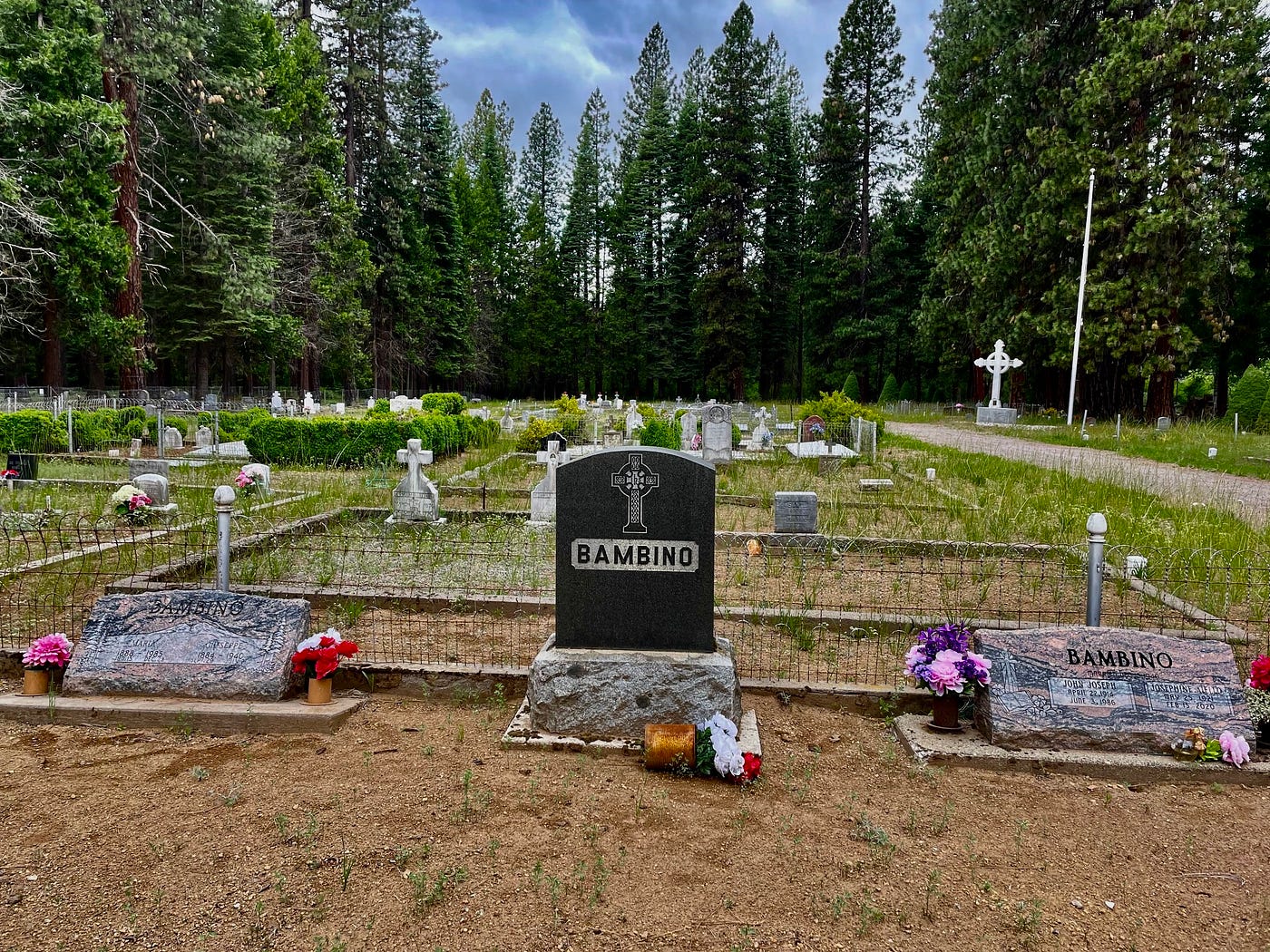
McCloud Italian Cemetery, a quiet place to visit just outside of town
The McCloud Italian Cemetery is small and, as many gravestones indicate, it is filled with the town’s Italians, a heritage going back to the 1800s. Where are they today?
McCloud, a company-built mill town, saw its first white settlers in 1829. According to the McCloud Chamber of Commerce:
In 1829, a party of Hudson Bay Company trappers and explorers, led by Alexander Roderick McLeod, were the first white men to travel through the valley where McCloud now stands. In the years that followed, a few hardy folks homesteaded in the beautiful Squaw Valley, including Joaquin Miller, later known as the Poet of the Sierras.
The downtown area is a Nationally Registered Historic District, with seventeen buildings designated as landmarks. The feeling of yesteryear pervades and lingers but belies the fact that McCloud is discovered, especially given its proximity to so much natural beauty, including the McCloud River and its several waterfalls, Burney Falls, and the majestic Mount Shasta.
Every June for most of the past 12 years I have spent a long weekend in McCloud for the annual Burning Tango Festival. About 200 or so of us converge upon the small unincorporated town and spend many hours dancing in McCloud’s spacious Dance Hall. We also take time out to revel in the misty falls, hike forested trails, try to find the famous vortexes on Shasta, and flyfish. Or just enjoy the small town culture. The weather is almost always superb in June at this 5,000 feet plus elevation.
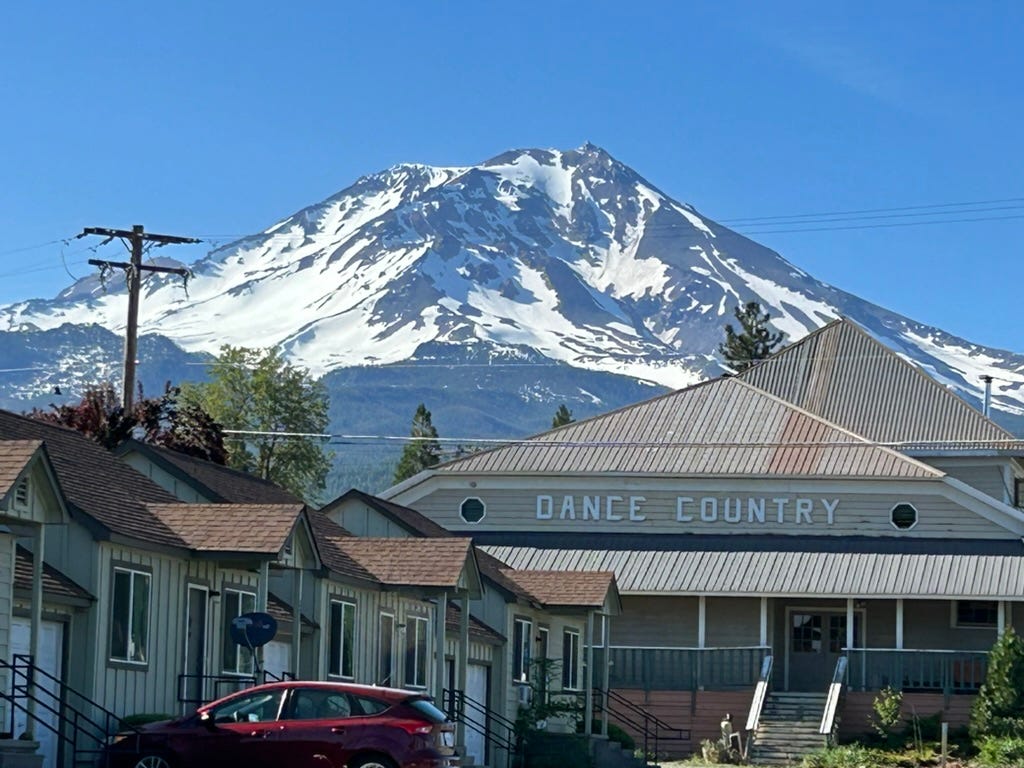
The famous dance hall hosts all sorts of dancing, not just tango.
The Veterans Hall reminds me of my father, a World War II vet who frequented anything veteran, reminiscing wartime stories with his buddies back when I was child. The dim hall has a bar and often features community pancake breakfasts, picnics, and some events open only to true-blue vets. For national holidays like Flag Day and the Fourth of July, the hall is draped in oldtime larger-than-life stars and stripes. There is something melancholic about the oldtime patriotism
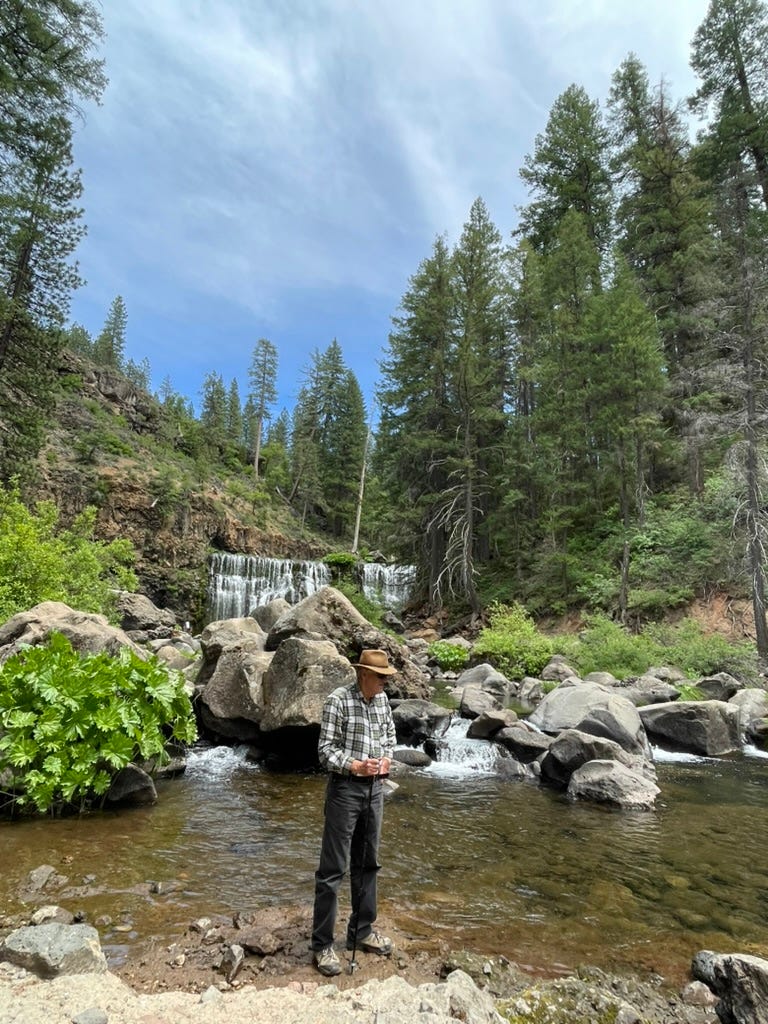
Inveterate fly fisherman, also a tango dancer, enjoys the music of falls on McCloud River.
We tango out-of-towners all usually run into each other at the Mercantile building, a modern version of the central plaza of old European cities. I have found delightful sweets in its old-fashioned candy shop, admired the apparel in the hip clothing boutique, and lingered with fellow dancers in the cafe. This casual meetup spot also holds an elegant hotel upstairs with fashionably appointed suites.
Over the years I have occasionally opted for camping. In town there is McCloud RV Park, which also has tent sites and cabins. About 15 minutes’ drive out of town is Friday’s, a private campground with good facilities but can be buggy. Lots of options here for nearby camping. And more indulgent-style **lodging here**.
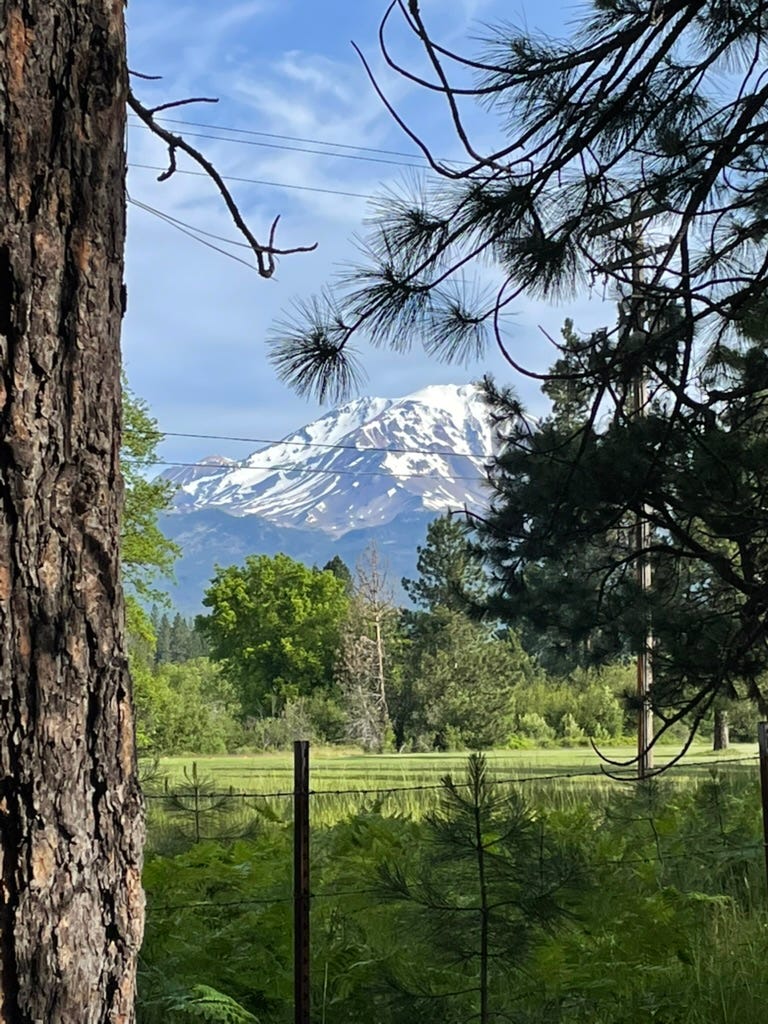
This area has got to have some of the most scenic in Northern California.
Water, water everywhere is the precious and abundant asset of McCloud and nearby Shasta City. Both are near the headwaters of the Sacramento River that serves them. The water gushes sweet and fresh, a rare quality these days in California. It is is mighty plentiful. Many times I have filled jugs of the sweet brew to take home, right at the park where the headwaters flow endlessly.
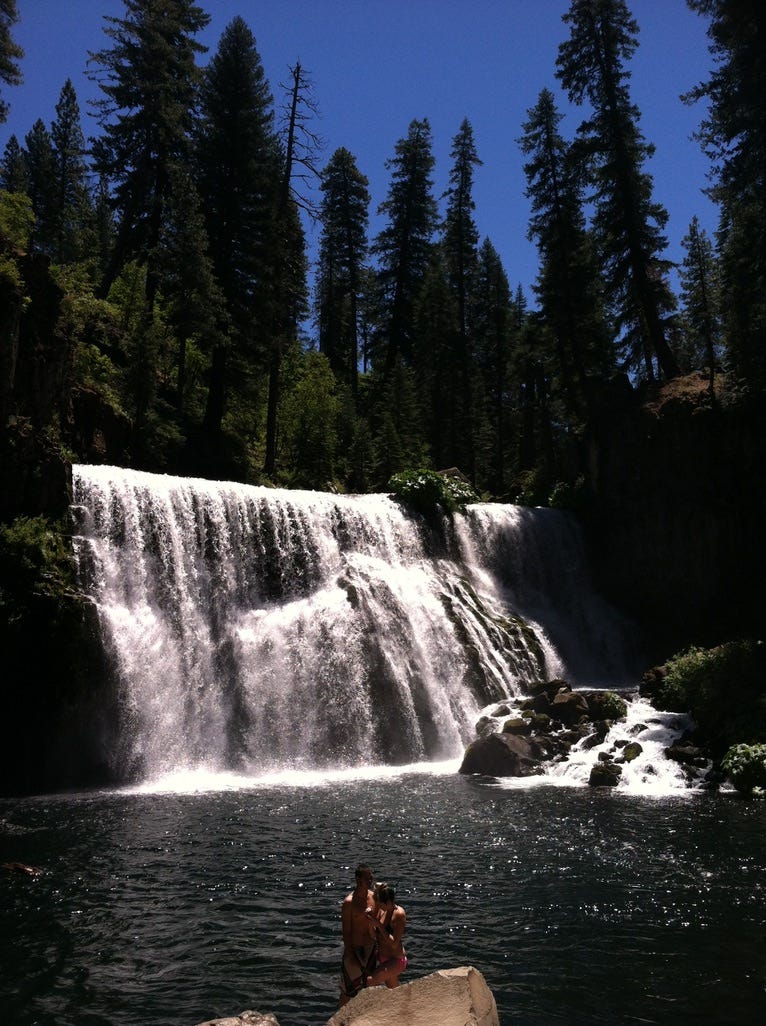
The waterfalls are short drives out of town, a cooling respite between tango dances.
Snow-draped Mount Shasta is the panoramic beacon hovering over the entire town. It feels so close but is actually accessed a good ten miles north, at Shasta City. It is hard to resist taking photos of the magnificent soaring cone from every spot in town.
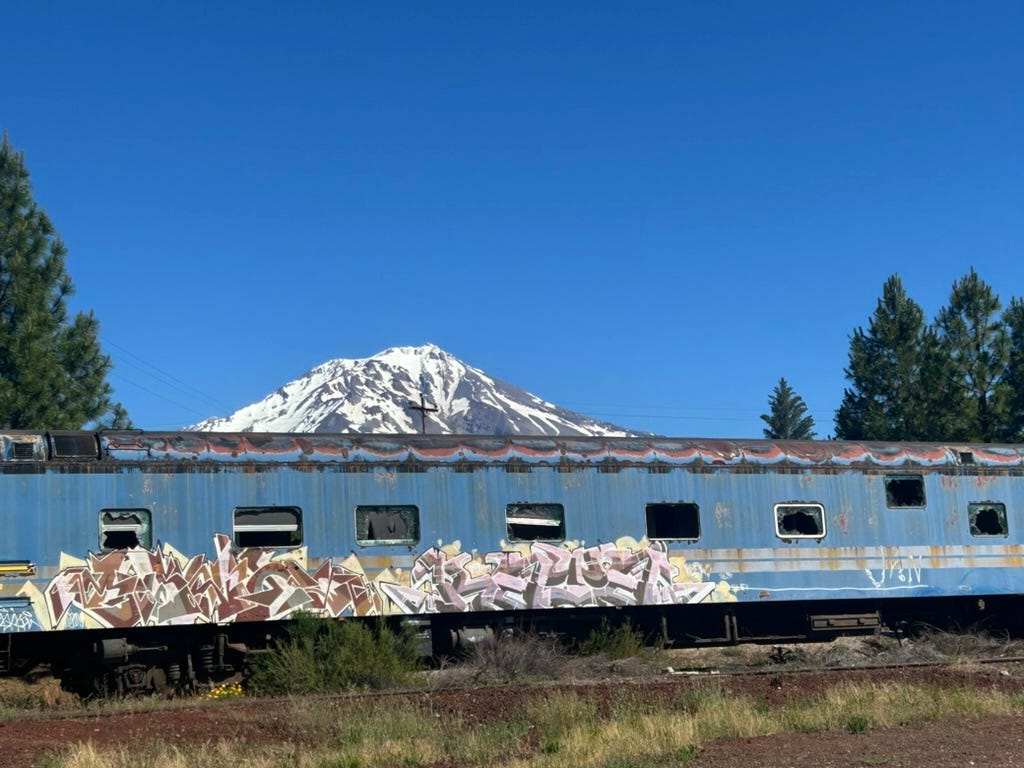
The remains of an old railroad with shining Shasta in background. The railroad was establlished around 1895, making it easier to transport lumber.
I seem to be the only one interested in the Italian cemetery. Not just because it’s filled with my fellow countrymen, but also because it’s a pleasant forested walk along the Volcanic Legacy Scenic Highway (goes all the way to Lassen) from downtown McCloud. Some of it on a dirt path and much of it borders the redwoods and other tall leafy canopy. The sound of running water, that golden resource, punctuates the way. The cemetery is fronted by a white gay-nineties fence. I search for names I might know but my Italian (Sicilian) heritage originated on the East Coast. Sometimes, respectfully, I do my morning yoga poses amid the graves and crumbling headstones. It feels life-centering, after a night of leaning for hours into mostly male torsos.
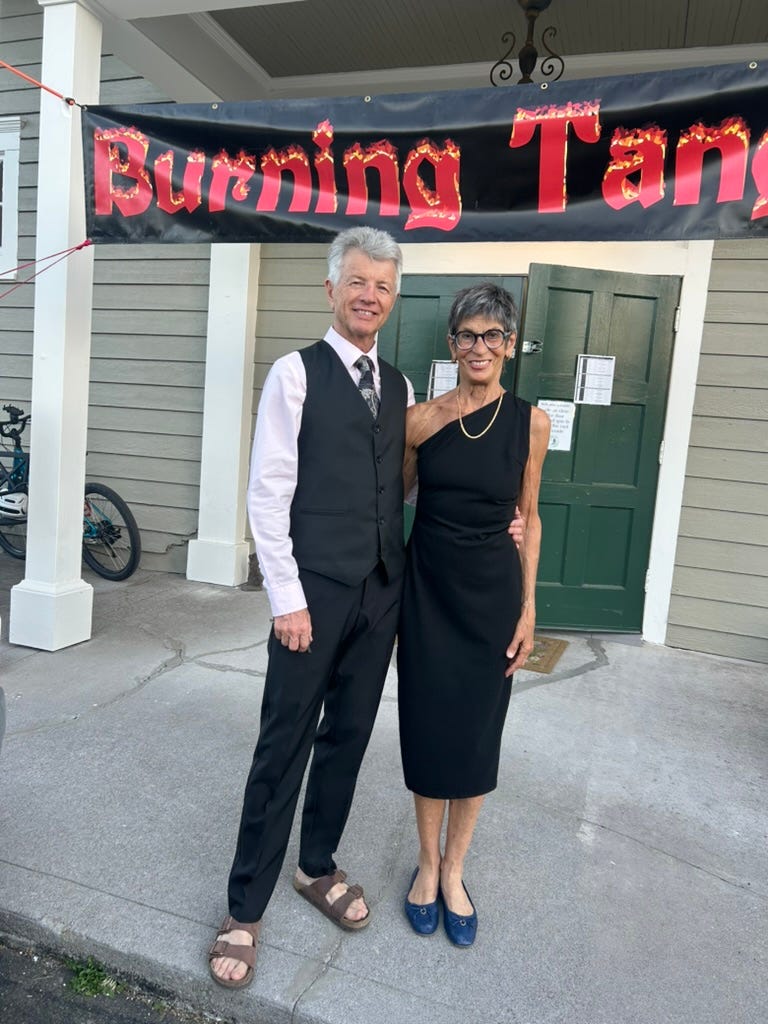
Annual “Burners” getting ready to warm up the dance floor with Argentine tango.
I’ve been curious about the Italian populace—where they came from, why, and where have they gone. So far I have not found out why an enclave ended up there. As with many immigrant peoples, they seem to have been absorbed—assimilated is the technical term for immigrants—into other areas over the years. As with my family, it is more common for that immigrant population to have started life in or near big cities where the work, much of it manual labor, and ghetto-style housing attracted them.
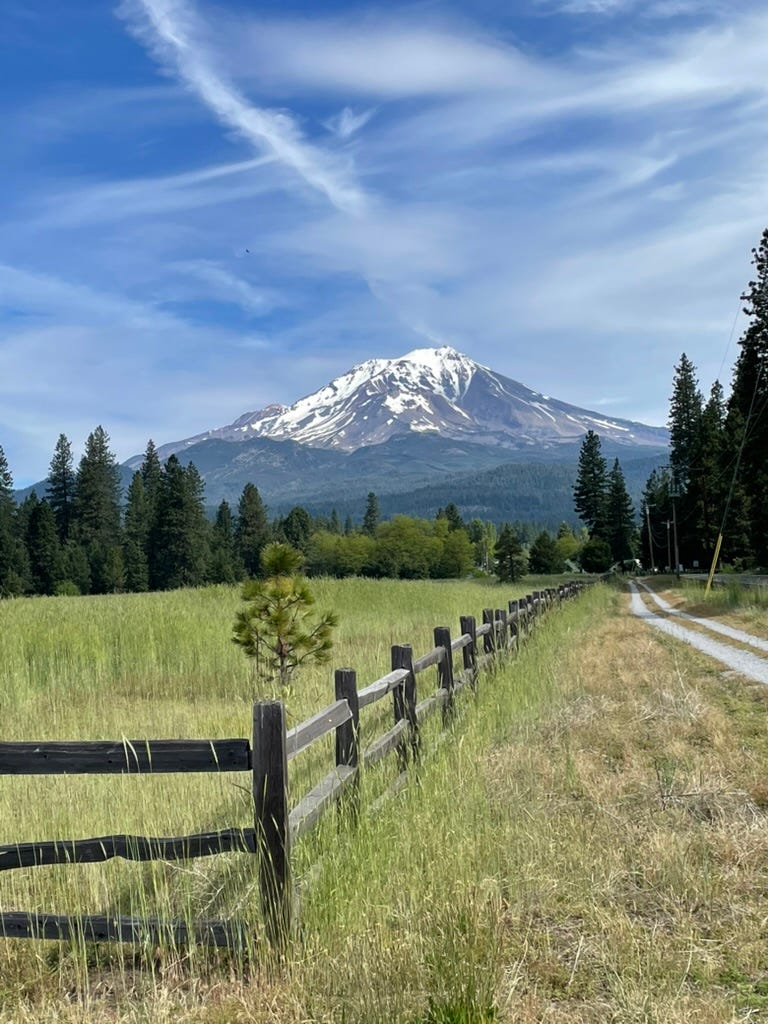
The path leads to the Italian Cemetery. Shasta is the omnipresent beacon.
I wondered if gold fever drew some of the Italian settlers — they would’ve come from the east first, then overland. There was the 1849 gold discovery and later there was the Klondike in the Yukon, around 1898. But this is only my guessing. They would’ve had to travel some ways still to arrive at this valley. As is well documented, most gold seekers ended up making a living other ways. In the case of McCloud’s Italians it would’ve been at the lumber mill. I’m tempted to add a verse to Blowin’ in the Wind.
Where have all the Italians gone? Gone to graveyards every one. . .
However they arrived, we know they did. The many gravestones attest to that, resting in peace as they are now. Wherever they’ve gone only they know. I once paraphrased a common cliché—Old Italians don’t die, they become American. Maybe that’s what happened to them.
Be sure to take a stroll to the Italian Cemetery, if you visit McCloud and its surrounding beauty.
메타데이터
- post_id
- a76e2eb0bbad
- slug
- mcclouds-italian-cemetery-a76e2eb0bbad
- url
- https://medium.com/@camillecusumano/mcclouds-italian-cemetery-a76e2eb0bbad
- canonical_url
- https://medium.com/@camillecusumano/mcclouds-italian-cemetery-a76e2eb0bbad
- author_url
- https://medium.com/@camillecusumano
- status
- ok
- fetched_at
- 2026-08-15 16:56:12