Stronger Than Circumstance: Refugees with Disabilities Strive for Economic Inclusion in Kenya
Refugees living with disabilities in Kenya navigate the difficult circumstances of forced displacement while battling with the limits and…
Stronger Than Circumstance: Refugees with Disabilities Strive for Economic Inclusion in Kenya
Refugees living with disabilities in Kenya navigate the difficult circumstances of forced displacement while battling with the limits and biases imposed by their disability.
By Mwara Namelok
One in seven people worldwide lives with a disability, yet for those forced to flee their homes, the challenges multiply. Persons with disabilities are among the most vulnerable in migration and forced displacement, facing heightened risks of violence, exploitation, and exclusion from essential services.
Despite these realities, data on refugees with disabilities remains limited. The absence of standardised data collection methods and varying definitions of disability across countries and organisations make it difficult to assess the full scale of the issue. While estimates suggest that in 2020, at least 12 million forcibly displaced people were persons with disabilities, the actual numbers are likely much higher.
In Kenya, refugees with disabilities not only contend with societal discrimination but also face systemic barriers, including lack of legal documentation, inaccessible infrastructure, and exclusion from national disability support programs. Their struggle for inclusion is shaped by these intersecting challenges — yet their resilience and contributions remain overlooked.
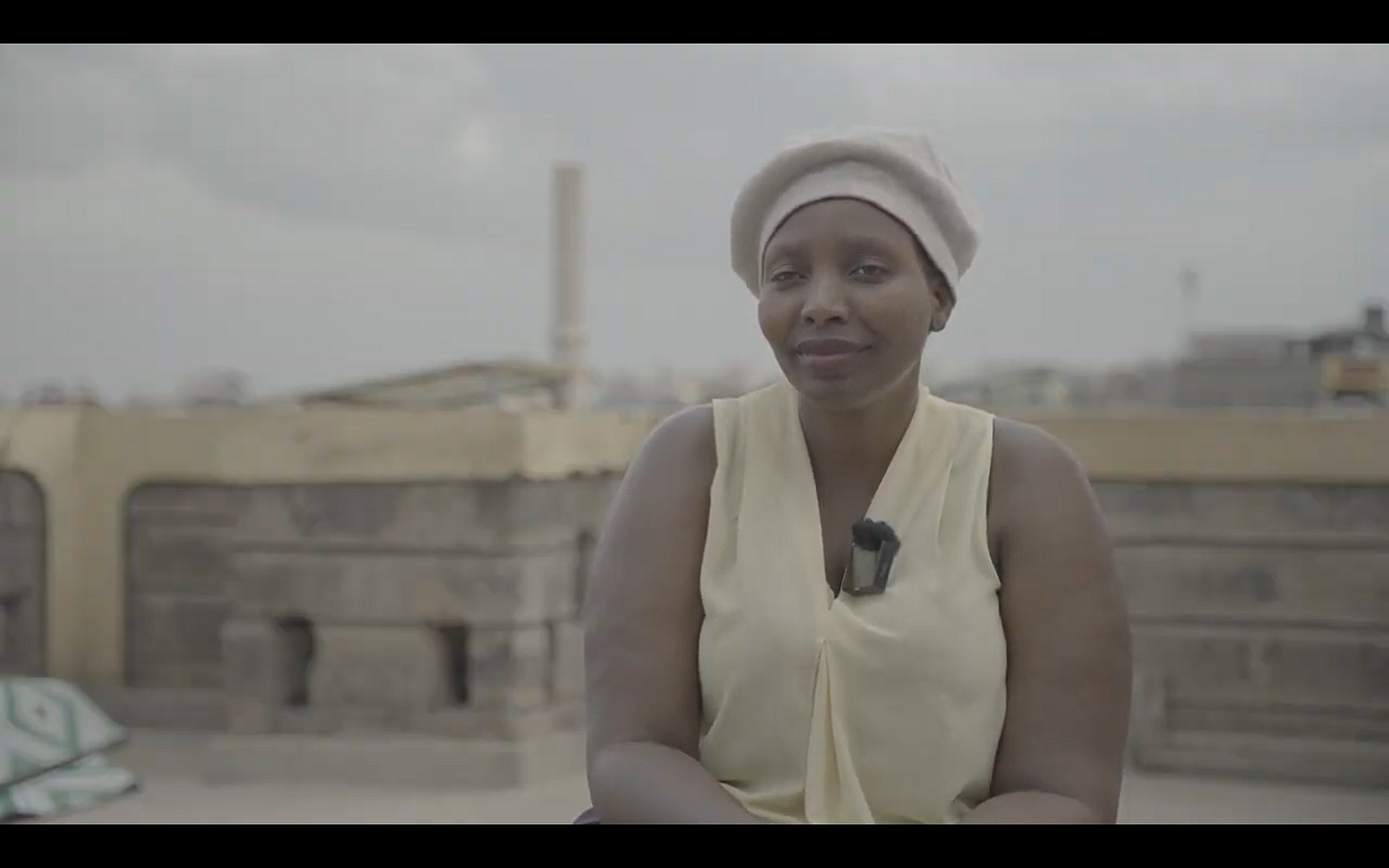
This is the reality for Antoinette Nyambibi, a 31-year-old Congolese refugee — who is also a disability advocate, and entrepreneur in Nairobi. Her journey demonstrates the broader issues hindering refugees’ economic participation in Kenya. Her voice was one of several included in an ongoing research project conducted by Samuel Hall for the Refugee Investment Network (RIN) to explore the economic benefits of refugee inclusion. The project aims to demonstrate how implementing the Refugee Act of 2021, particularly around ID reforms, can unlock opportunities not just for refugees but for the Kenyan economy at large.
Navigating the Barriers of Disability and Displacement
Antoinette arrived in Kenya in April 2016, fleeing conflict in the Democratic Republic of Congo. Alone and unfamiliar with her new environment, she found herself in Kasarani, a bustling urban centre on the outskirts of the capital Nairobi, hosting thousands of refugees mostly from Burundi, Rwanda and like Antoinette, the DRC. The transition was anything but easy. As Antoinette recalls,
“When I arrived, I knew no one. I had no home, no job, and no idea where to start. It was overwhelming.”
Over time, she connected with the Congolese refugee community and began volunteering for organisations such as HIAS and Humanity & Inclusion. Her leadership skills and unique experiences quickly earned her recognition, and she became an advocate for persons with disabilities, a role she still holds today.
Despite her education — which includes university-level qualifications — Antoinette’s disability became a stubborn barrier to formal employment.
“When people see us, they just judge us based on our appearance. When we sit down, they’re willing to talk about the job, but the excuses start as soon as I stand up. They say, ‘We’ll call you soon.’ But they never call back.” — she shares signalling to her prosthetic left leg.
The constant rejection pushed Antoinette to consider entrepreneurship. Initially, she provided beauty services like makeup and manicures on a mobile basis, travelling to clients’ homes, but in 2022, she finally joined a salon.
“It was a proud moment,” she recalls. “But the challenges didn’t stop. Public buses don’t have ramps for wheelchair or crutch users, and many public spaces, including markets and hospitals, remain inaccessible. Getting to work every day was a struggle.”

Illustarted via Canva
Locked Out by Lack of Documentation
At the heart of many of these challenges lies the issue of documentation. Refugees in Kenya must navigate restrictive policies that limit their ability to access work permits, register businesses, or secure loans. Refugee IDs, though essential, often fail to grant the same rights as national IDs. This exclusion is even more pronounced for persons with disabilities, who are prevented from registering with Kenya’s National Council for Persons with Disabilities (NCPWD).
Antoinette explains the ripple effects of this:
“Without registration, we miss out on opportunities like tax exemptions for businesses or monthly stipends. When city council officials come to collect taxes, I have to pay, unlike Kenyan citizens with disabilities who are exempted. We’re completely excluded from government support programs.”
Access to financial services is another significant hurdle. Our research for RIN as well as other projects finds that while Kenyans can easily access individual bank loans, refugees must form self-help groups to qualify for financial services.
Antoinette joined a community savings group supported by the International Rescue Committee (IRC) and Equity Bank, which has enabled her and others to access small loans. Yet, such initiatives are exceptions rather than the norm.
“We can only grow so much when our IDs are not recognised, It’s like trying to run a race with your eyes closed”
The Fight for Inclusion
Antoinette’s advocacy work is driven by a vision of equality and inclusion. As a representative for organisations like Humanity & Inclusion, she champions the rights of refugees with disabilities. Her mission aligns with the goals of Kenya’s Refugee Act of 2021, which promises greater integration and economic rights for refugees. However, implementation remains slow and uneven.
“We need policies that truly work for us,” she insists. “Ramps in buses, hospitals, and malls are just one part of the solution. We also need access to financial opportunities, recognition of our IDs, and inclusion in government programs. We’re not asking for charity, we’re asking for equal opportunities.”
Infrastructure remains a key barrier. Poorly designed marketplaces and urban spaces make it nearly impossible for persons with disabilities to participate fully in economic activities. Antoinette highlights how exclusion manifests in everyday life as she retells her experience trying to shop in Gikomba; the largest second-hand market in Kenya, a market known for its vast and affordable items, making it popular with vulnerable communities such as refugees.
“When we discuss the Gikomba market, people tell me,
‘You can’t work there because of how the place is built.’ Even our basic right to move freely and access affordable resources is limited.”
Imagining a Better Future — Entry points in Kenya’s Policy Framework for Refugees
If fully implemented, the Refugee Act of 2021 has the potential to transform the lives of refugees in Kenya. While the Act grants refugees greater rights to work, own property, and access financial services, its approach to refugees with disabilities remains broad and lacks specificity. As shared below, the Act contains a clause that calls for “appropriate measures” to ensure the safety of persons with disabilities; however, this provision is vague and does not outline concrete steps for accessibility and inclusion. Additionally, by grouping refugees with disabilities alongside other vulnerable groups, such as the elderly, the Act fails to provide the targeted support and tailored protections necessary to address their unique challenges. Furthermore, the Act does not address the realities and barriers refugees with disabilities will face when accessing formal employment and documentation.
The Commissioner shall ensure that appropriate measures are taken to ensure the safety of asylum seekers and refugees who suffer from disability or are of old age and persons or groups of persons who have been traumatized or otherwise require special protection at all times during admission into and stay in Kenya.
Antoinette envisions a future where refugee IDs grant equal rights and recognition, opening doors to employment, financial services, and business ownership.
“With proper recognition, we can contribute meaningfully to Kenya’s economy,” she says. “Many refugees are highly skilled. If given a chance, we can create jobs, pay taxes, and support local development.”
To achieve this vision, it is essential to align existing frameworks with the needs of persons with disabilities. For instance, if the National Council for Persons with Disabilities (NCPWD) recognised refugee registrations, it would grant access to benefits such as tax exemptions, business grants, and assistive devices. Enforcing non-discrimination in employment could create more opportunities, while improved accessibility in public spaces would ensure greater economic participation.
The potential economic benefits are immense. Refugees could help expand markets as consumers and entrepreneurs, driving demand for goods and services. For private businesses, hiring refugees with disabilities presents an opportunity to empower a largely untapped talent pool while fostering diversity and inclusion. This underscores the importance of research projects like this one, which provide critical insights to inform more inclusive programs and policies. Through its dedicated policy pillar, Samuel Hall ensures that vital research reaches decision-makers, bridging the gap between evidence and impactful policy change.
But Antoinette’s dream doesn’t stop at personal success. She hopes to mentor other refugees with disabilities, teaching them skills that can lead to self-sufficiency.
“We need to support each other. If I’ve been able to do this, others can too. All we need is a fair chance.”
A Five-Point Action Plan for Refugees with Disabilities in Kenya
Antoinette’s story highlights the resilience of refugees with disabilities and the systemic changes needed to ensure their economic inclusion. To achieve this, aligned with our forthcoming research; she recommends the following actions:
- Government Implementation of Policies: Fully enact the Refugee Act of 2021 to grant refugees equal rights to work and access services.
- Accessible Infrastructure: Ensure public spaces and transportation systems are inclusive of persons with disabilities.
- Financial Inclusion: Expand financial services to refugees, allowing them to access loans and open individual bank accounts without restrictive conditions.
- Recognition by NCPWD: Include refugees in the National Council for Persons with Disabilities to ensure they benefit from support programs.
- Awareness and Training: Educate employers and the public about the capabilities of persons with disabilities to combat stigma and discrimination.
Antoinette’s voice, shared as part of the Key Informant Interviews, we conducted for our project with Refugee Investment Network underscores the importance of evidence-based research to drive change. The study aims to quantify the economic benefits of integrating refugees into the Kenyan economy, modelling scenarios where refugees like Antoinette gain full access to IDs and work permits. By unlocking these opportunities, Kenya could see increased tax revenue, entrepreneurial activity, and greater social cohesion.
“We need real change, we are tired of being excluded. Let us show you what we can achieve if only given the chance.”
The road to economic inclusion for refugees with disabilities in Kenya is long, but stories like Antoinette’s remind us of what is possible when barriers are dismantled. With collective effort from the government, private sector, and civil society, a more inclusive future is within reach.
메타데이터
- post_id
- a773a5c6bb52
- slug
- stronger-than-circumstance-refugees-with-disabilities-strive-for-economic-inclusion-in-kenya-a773a5c6bb52
- url
- https://medium.com/samuel-hall-stories/stronger-than-circumstance-refugees-with-disabilities-strive-for-economic-inclusion-in-kenya-a773a5c6bb52
- canonical_url
- https://medium.com/samuel-hall-stories/stronger-than-circumstance-refugees-with-disabilities-strive-for-economic-inclusion-in-kenya-a773a5c6bb52
- author_url
- https://medium.com/@media_82620
- status
- ok
- fetched_at
- 2026-07-29 22:36:47