The Dark Side of Open Offices
Open offices were designed to make people communicate better. No walls, no closed doors, no barriers. In theory, this sounds great. People…
The Dark Side of Open Offices
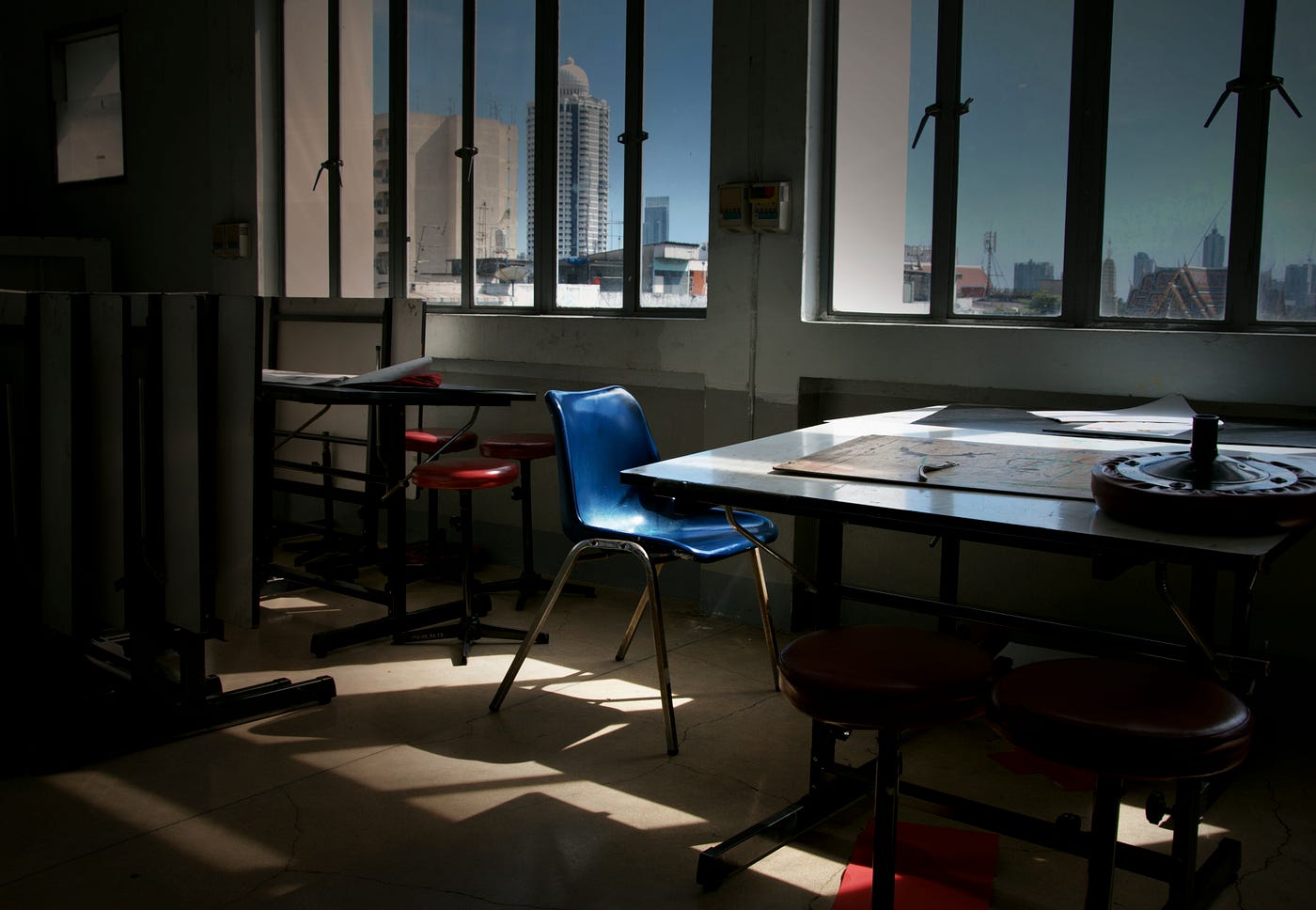
Photo by rawpixel.com Freepik
Open offices were designed to make people communicate better. No walls, no closed doors, no barriers. In theory, this sounds great. People can share ideas faster, collaborate more easily, and feel like part of one team.
But in real life, open offices can also create a serious problem.
They can make workplace tension, exclusion, and bullying much harder to escape.
In a traditional office, people at least had some physical space. They could close a door, move to a quiet room, or separate themselves from negative behavior. But in an open office, everything happens in public. Every comment, every look, every awkward silence, and every small act of exclusion becomes part of the daily environment.
For someone being targeted, this can feel exhausting.
The bullying is not always obvious. It may not look like shouting or direct insults. Sometimes it appears as small actions repeated again and again.
A colleague walks over, and the group suddenly becomes quiet.
A team goes to lunch and “forgets” to invite one person.
A meeting happens nearby, but someone is left off the calendar invite.
Mistakes are pointed out loudly in front of others.
People have distracting conversations right beside someone’s desk.
Individually, these actions may seem small. But when they happen repeatedly, they create a hostile environment.
The problem is that managers often struggle to identify what is really happening. In an open office, people can pretend their behavior is accidental. They can say, “I didn’t know,” “It was just a joke,” or “We forgot to invite her.” Because everything happens casually and publicly, the bullying can be hidden in plain sight.
This is where open offices become dangerous for workplace culture.
When there is no private space, emotional pressure becomes constant. The employee cannot easily step away from the tension. The person is forced to sit near the same people who exclude, criticize, or ignore them. Over time, this affects confidence, focus, motivation, and mental well-being.
It also damages the organization.
A culture where people feel unsafe does not produce strong teamwork. Employees stop sharing ideas. They avoid speaking up. They become more focused on protecting themselves than doing great work. Good people may eventually leave, not because of the job itself, but because of the daily emotional stress.
Leaders need to understand that open offices do not automatically create openness.
A room without walls does not mean the culture is transparent. A shared workspace does not mean people feel included. Collaboration does not happen just because desks are close together.
Managers must pay attention to the small signals.
Who is being left out?
Who is always interrupted?
Who becomes quiet in meetings?
Who seems uncomfortable around certain people?
Who is receiving criticism in public but support in private is missing?
These details matter because bullying often begins as repeated small behaviors before it becomes a major problem.
To fix this, leaders need to create clear rules for respect, inclusion, and communication. Team members should know that exclusion, public embarrassment, and repeated “accidental” isolation are not acceptable. Managers should also create safe ways for employees to report problems without fear of being judged or punished.
Most importantly, leaders must not ignore behavior just because it looks small.
In an open office, small actions are magnified because everyone can see them, hear them, and feel them. If the culture is healthy, the open office can support energy and teamwork. But if the culture is toxic, the open office becomes a stage where bullying happens every day.
The real issue is not the furniture. It is not the desk layout. It is not whether the office has walls or no walls.
The real issue is culture.
An open office only works when people feel safe, respected, and included. Without that, there is no place to hide.
메타데이터
- post_id
- a77e39e79620
- slug
- the-dark-side-of-open-offices-a77e39e79620
- url
- https://medium.com/@dciconsulting/the-dark-side-of-open-offices-a77e39e79620
- canonical_url
- https://medium.com/@dciconsulting/the-dark-side-of-open-offices-a77e39e79620
- author_url
- https://medium.com/@dciconsulting
- status
- ok
- fetched_at
- 2026-06-15 20:49:13