Type 1 vs Type 2 Diabetes: Understanding the Key Differences, Symptoms, Causes & Treatment
Type 1 vs Type 2 Diabetes: Understanding the Key Differences, Symptoms, Causes & Treatment
Type 1 vs Type 2 Diabetes: Understanding the Key Differences, Symptoms, Causes & Treatment
Type 1 vs Type 2 Diabetes: Understanding the Key Differences, Symptoms, Causes & Treatment
Published by Onlinemedicine4u
Diabetes is one of the fastest-growing health conditions worldwide, affecting millions of people across the United States and United Kingdom. Although many people have heard of diabetes, not everyone understands that Type 1 Diabetes and Type 2 Diabetes are different conditions with different causes, treatments, and long-term management strategies.
Knowing the difference can help you recognize symptoms early, seek timely medical care, and reduce the risk of serious complications.
What Is Diabetes?
Diabetes mellitus is a chronic condition that occurs when the body cannot properly regulate blood sugar (glucose). Glucose is the body’s primary source of energy, and insulin — a hormone produced by the pancreas — helps move glucose from the bloodstream into the cells.
When insulin is absent, insufficient, or doesn’t work effectively, blood sugar levels rise, increasing the risk of complications affecting the heart, kidneys, eyes, nerves, and blood vessels.
What Is Type 1 Diabetes?
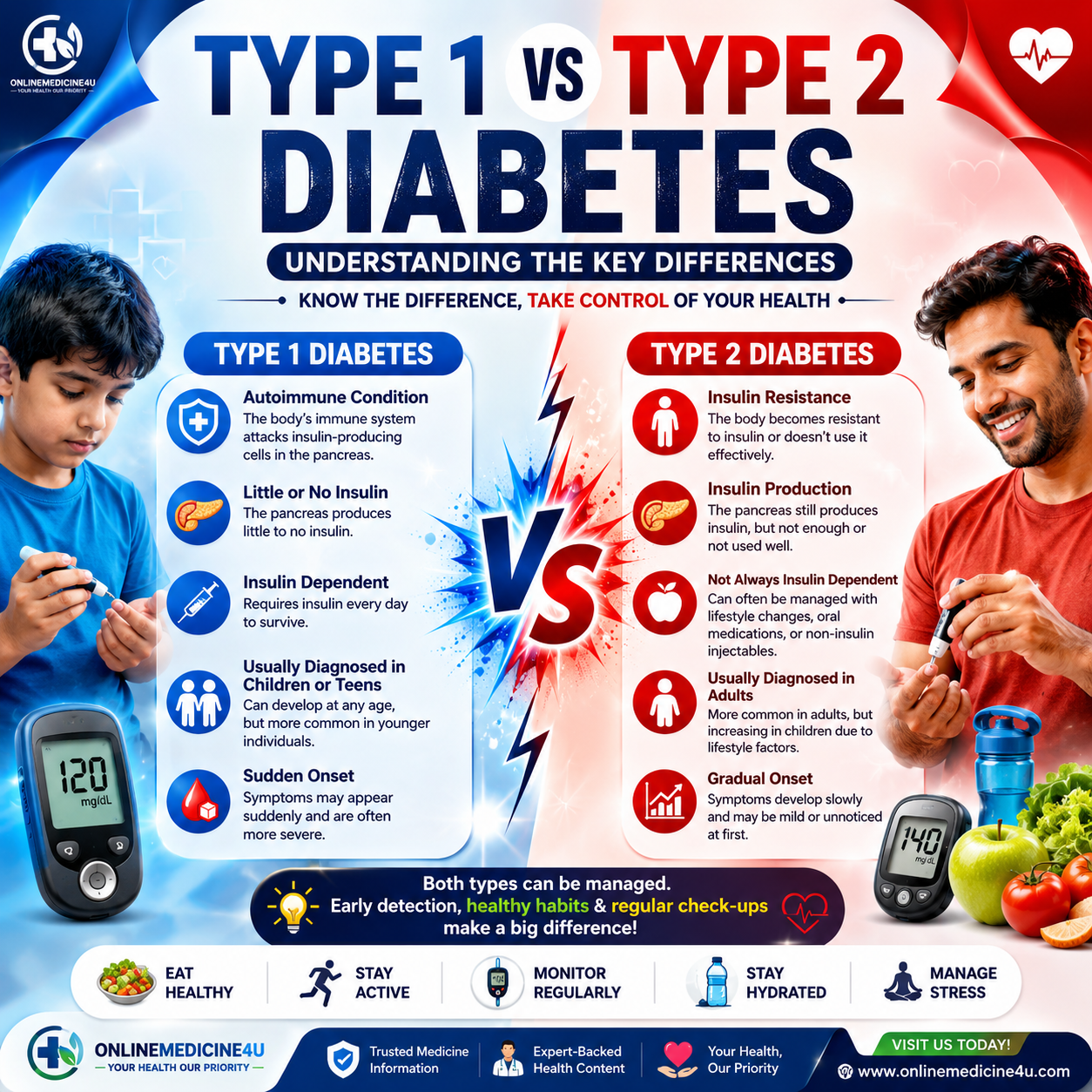
Type 1 Diabetes is an autoimmune disease in which the immune system mistakenly attacks the insulin-producing beta cells in the pancreas.
As a result, the body produces little or no insulin, making lifelong insulin therapy essential.
Common Characteristics
- Usually develops in childhood or early adulthood
- Can occur at any age
- Autoimmune condition
- Requires daily insulin treatment
- Cannot currently be prevented
What Is Type 2 Diabetes?
Type 2 Diabetes is the most common form of diabetes. It develops when the body becomes resistant to insulin or cannot produce enough insulin to maintain healthy blood sugar levels.
Unlike Type 1 Diabetes, Type 2 Diabetes often develops gradually and is closely linked to lifestyle and genetic factors.
Common Risk Factors
- Overweight or obesity
- Physical inactivity
- Family history
- High blood pressure
- Increasing age
- Unhealthy diet
- Previous gestational diabetes
Type 1 vs Type 2 Diabetes: Key Differences
Type 1 DiabetesType 2 DiabetesAutoimmune diseaseInsulin resistanceLittle or no insulin productionInsulin still produced but less effectiveUsually develops early in lifeMore common in adults but increasingly seen in younger peopleRequires lifelong insulinManaged with lifestyle changes, medications, and sometimes insulinCannot currently be preventedRisk may be reduced with healthy lifestyle habits
Common Symptoms
Both conditions may share similar symptoms, including:
- Frequent urination
- Excessive thirst
- Increased hunger
- Fatigue
- Blurred vision
- Slow-healing wounds
- Unexplained weight loss
- Frequent infections
Symptoms of Type 1 Diabetes often develop quickly, while Type 2 Diabetes may develop gradually over months or years.
How Is Diabetes Diagnosed?
Healthcare providers may recommend:
- Fasting blood glucose test
- HbA1c blood test
- Oral glucose tolerance test
- Random blood sugar test
Early diagnosis allows treatment to begin before complications develop.
Treatment Options
Type 1 Diabetes
Treatment typically includes:
- Daily insulin therapy
- Blood glucose monitoring
- Healthy eating
- Regular physical activity
- Continuous glucose monitoring (when appropriate)
Type 2 Diabetes
Management may include:
- Balanced nutrition
- Weight management
- Regular exercise
- Oral diabetes medications
- Injectable medications
- Insulin therapy when required
Treatment plans should always be individualized and guided by a healthcare professional.
Possible Complications
Poorly controlled diabetes may increase the risk of:
- Heart disease
- Stroke
- Kidney disease
- Nerve damage
- Eye disease
- Foot problems
- Slow wound healing
Maintaining healthy blood sugar levels can significantly reduce these risks.
Tips to Lower Your Risk of Type 2 Diabetes
You cannot currently prevent Type 1 Diabetes, but you can reduce your risk of Type 2 Diabetes by:
- Maintaining a healthy weight
- Staying physically active
- Eating a balanced diet rich in vegetables, fruits, whole grains, and lean proteins
- Limiting sugary drinks and highly processed foods
- Getting regular health check-ups
- Managing blood pressure and cholesterol
- Avoiding smoking
When Should You See a Doctor?
Consult a healthcare professional if you experience:
- Persistent excessive thirst
- Frequent urination
- Sudden unexplained weight loss
- Constant fatigue
- Blurred vision
- Slow-healing cuts or sores
- Recurrent infections
Early diagnosis and treatment can help prevent long-term complications.
Frequently Asked Questions
Is Type 1 Diabetes hereditary? Genetics can increase the risk, but environmental factors also play a role.
Can Type 2 Diabetes be prevented? Many cases can be delayed or prevented through healthy lifestyle habits, although genetics also influence risk.
Can Type 2 Diabetes become Type 1? No. They are distinct conditions with different underlying causes.
Do people with Type 1 Diabetes always need insulin? Yes. Because the body produces little or no insulin, replacement therapy is essential.
Can children develop Type 2 Diabetes? Yes. Although more common in adults, it is increasingly diagnosed in children and adolescents.
Final Thoughts
Understanding the differences between Type 1 Diabetes and Type 2 Diabetes empowers individuals to recognize symptoms, seek medical advice promptly, and make informed decisions about their health. While both conditions require ongoing management, early diagnosis, healthy lifestyle choices, and adherence to treatment plans can improve quality of life and reduce the risk of complications.
At **Onlinemedicine4u**, we are committed to providing reliable, evidence-based health information to help patients and caregivers better understand medical conditions and medications. Explore our educational resources for trusted guidance on diabetes, prescription medicines, and overall wellness.
Disclaimer: This article is for educational purposes only and does not replace professional medical advice, diagnosis, or treatment. Always consult a qualified healthcare provider regarding any medical concerns, diagnosis, or changes to your treatment plan.
Type 1 Diabetes, Type 2 Diabetes, Diabetes Symptoms, Diabetes Treatment, Blood Sugar, Diabetes Prevention, HbA1c, Insulin, Prediabetes, Diabetes Awareness, USA Healthcare, UK Healthcare, Onlinemedicine4u, Diabetes Education, Healthy Living.
메타데이터
- post_id
- a792ea7ef439
- slug
- type-1-vs-type-2-diabetes-understanding-the-key-differences-symptoms-causes-treatment-a792ea7ef439
- url
- https://medium.com/@onlinemedicineforyou/type-1-vs-type-2-diabetes-understanding-the-key-differences-symptoms-causes-treatment-a792ea7ef439
- canonical_url
- https://medium.com/@onlinemedicineforyou/type-1-vs-type-2-diabetes-understanding-the-key-differences-symptoms-causes-treatment-a792ea7ef439
- author_url
- https://medium.com/@onlinemedicineforyou
- status
- ok
- fetched_at
- 2026-06-29 01:02:39