Intelligent FHIR Pipelines for Real-Time Clinical Interoperability
Introduction

Intelligent FHIR Pipelines for Real-Time Clinical Interoperability
Introduction
The increasing adoption of digital healthcare technologies has created a strong demand for seamless communication between hospitals, laboratories, pharmacies, insurance providers, and telemedicine systems. Healthcare organizations often use different software platforms and data structures, making it difficult to exchange patient information efficiently. These limitations can lead to delayed diagnoses, repeated medical tests, and fragmented patient records. Intelligent FHIR pipelines provide an advanced solution for enabling real-time clinical interoperability across modern healthcare environments.
FHIR, which stands for Fast Healthcare Interoperability Resources, is a healthcare data exchange standard designed to simplify communication among healthcare systems. Intelligent FHIR pipelines combine this interoperability standard with artificial intelligence, cloud computing, and real-time analytics to improve healthcare data sharing and clinical decision-making. These pipelines automate the collection, transformation, validation, and transmission of patient information, enabling healthcare professionals to access accurate and updated clinical records instantly.
Overview of Intelligent FHIR Pipelines
FHIR-based interoperability focuses on standardizing healthcare information such as patient demographics, prescriptions, laboratory reports, imaging results, and clinical observations. Unlike traditional healthcare integration methods, FHIR uses modern web technologies and application programming interfaces that support faster and more flexible communication between systems.
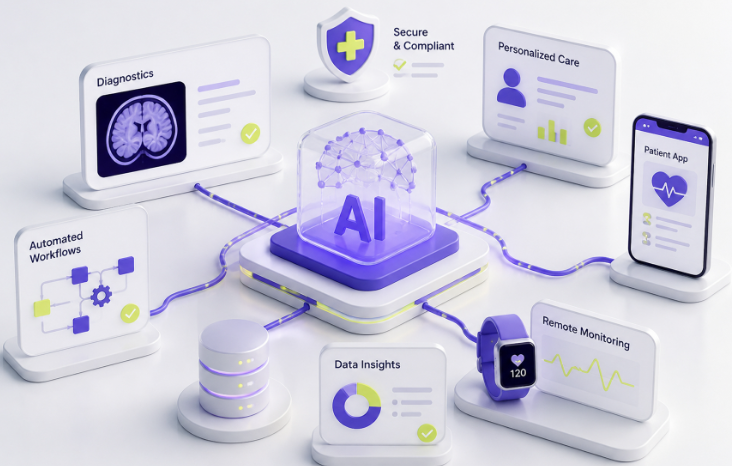
An intelligent FHIR pipeline acts as a digital workflow that continuously processes healthcare data from multiple sources. The pipeline receives information from electronic health records, wearable devices, diagnostic systems, mobile healthcare applications, and remote patient monitoring platforms. Artificial intelligence techniques are then used to clean, organize, and validate the incoming data before it is transmitted securely to authorized healthcare providers.
The primary goal of these pipelines is to ensure that healthcare data is available in real time, reducing communication delays and improving clinical coordination among healthcare teams.
Architecture of Intelligent FHIR Pipelines
Intelligent FHIR pipelines are typically organized into several interconnected layers that support secure and efficient healthcare interoperability.
Data Acquisition Layer
This layer gathers patient information from multiple clinical systems and medical devices. Data may include patient histories, laboratory reports, medication records, vital signs, and diagnostic imaging results. FHIR APIs standardize this information into structured healthcare resources.
Data Transformation Layer
Healthcare organizations often use different data formats and legacy systems. The transformation layer converts heterogeneous healthcare data into standardized FHIR-compatible formats. Artificial intelligence and natural language processing techniques can also extract meaningful information from unstructured clinical notes and physician reports.
Validation and Security Layer
This layer ensures that healthcare records comply with interoperability standards and healthcare regulations. Security mechanisms such as encryption, authentication, and access control protect patient privacy during data transmission and storage.
Real-Time Analytics Layer
Real-time analytics engines process streaming clinical information to identify patterns, detect anomalies, and generate predictive insights. For example, intelligent systems can monitor patient vital signs continuously and alert clinicians about potential health risks before conditions worsen.

Integration and Delivery Layer
Validated and processed healthcare data is distributed across hospitals, pharmacies, laboratories, insurance providers, and telemedicine platforms. This layer ensures that authorized healthcare professionals can access updated patient information whenever needed.
Role of Artificial Intelligence in Clinical Interoperability
Artificial intelligence plays a critical role in improving the efficiency and intelligence of FHIR pipelines. AI algorithms automate repetitive tasks such as data mapping, duplicate detection, and error correction. These technologies help reduce administrative burden while improving the accuracy of healthcare information exchange.
Machine learning models can analyze large volumes of clinical data to identify hidden patterns and support predictive healthcare strategies. For instance, AI systems can detect early warning signs of chronic diseases, predict hospital readmission risks, and recommend personalized treatment plans.
Natural language processing also contributes significantly to interoperability. Clinical notes, physician observations, and discharge summaries are often stored as unstructured text. NLP algorithms convert this information into structured healthcare records that can be exchanged through FHIR pipelines.
AI-driven automation also improves operational efficiency by prioritizing urgent medical information and routing it to appropriate healthcare departments in real time.
EQ.1. Clinical Interoperability Efficiency:

Benefits of Intelligent FHIR Pipelines
Improved Patient Care
Real-time interoperability allows healthcare professionals to access updated patient records instantly. Physicians can review medical histories, laboratory reports, and medication details without delays, leading to faster and more accurate diagnoses.
Enhanced Clinical Decision-Making
AI-powered analytics provide healthcare providers with predictive insights and automated alerts. These capabilities help clinicians identify high-risk patients and make proactive treatment decisions.
Reduced Administrative Complexity
Automation minimizes manual documentation and reduces duplicate data entry. Healthcare staff can spend more time focusing on patient care rather than administrative tasks.

Better Emergency Response
In emergency situations, immediate access to patient information can be lifesaving. Intelligent FHIR pipelines ensure that emergency departments receive accurate and updated clinical data quickly.
Scalability and Cloud Integration
Cloud-enabled interoperability platforms support large-scale healthcare ecosystems capable of managing millions of patient records efficiently. These systems also support remote healthcare services and telemedicine applications.
Improved Data Consistency
Standardized healthcare communication reduces inconsistencies and errors associated with fragmented patient records. This improves coordination among healthcare providers and ensures continuity of care.
Challenges in Implementing Intelligent FHIR Pipelines
Despite their advantages, intelligent FHIR pipelines face several challenges. Many healthcare institutions still rely on legacy systems that may not fully support modern interoperability standards. Integrating older technologies with FHIR-based architectures can be complex and expensive.
Data privacy and cybersecurity also remain critical concerns. Healthcare information is highly sensitive, and unauthorized access can result in severe ethical and legal consequences. Strong security frameworks and compliance mechanisms are necessary to protect patient data.
Another challenge involves the shortage of skilled professionals capable of managing AI-driven interoperability systems. Healthcare organizations require expertise in cloud computing, data engineering, cybersecurity, and artificial intelligence to implement and maintain these advanced infrastructures effectively.
EQ.2. Healthcare Analytics Accuracy:

Future Directions
Future healthcare interoperability systems are expected to integrate advanced technologies such as edge computing, blockchain, and federated learning. Edge computing can process patient data closer to medical devices, reducing latency during critical situations. Blockchain technology may improve transparency, traceability, and trust in healthcare data exchange.
Federated learning approaches can enable collaborative AI model training while preserving patient privacy. These innovations will further strengthen real-time interoperability and support intelligent healthcare ecosystems.
The expansion of Internet of Medical Things devices and wearable health technologies will also increase the demand for scalable and intelligent FHIR pipelines capable of handling continuous streams of healthcare data.

Conclusion
Intelligent FHIR pipelines represent a major advancement in real-time clinical interoperability. By integrating standardized healthcare communication with artificial intelligence and cloud-based technologies, these pipelines enable faster, safer, and more efficient healthcare data exchange. They improve patient care, support predictive healthcare analytics, reduce administrative complexity, and strengthen clinical coordination across healthcare organizations.
Although challenges related to legacy integration, cybersecurity, and infrastructure costs still exist, ongoing technological advancements continue to improve the feasibility and effectiveness of intelligent interoperability solutions. As healthcare systems increasingly move toward connected digital environments, intelligent FHIR pipelines will play a central role in building efficient, data-driven, and patient-centered healthcare ecosystems.
메타데이터
- post_id
- a79fa128a39a
- slug
- intelligent-fhir-pipelines-for-real-time-clinical-interoperability-a79fa128a39a
- url
- https://medium.com/@kolla.trivenii/intelligent-fhir-pipelines-for-real-time-clinical-interoperability-a79fa128a39a
- canonical_url
- https://medium.com/@kolla.trivenii/intelligent-fhir-pipelines-for-real-time-clinical-interoperability-a79fa128a39a
- author_url
- https://medium.com/@kolla.trivenii
- status
- ok
- fetched_at
- 2026-06-09 15:37:30