Who Owns the AI Taking Your Job — And Why Aren’t You Getting Paid?
Every search, click, and comment you make trains billion-dollar AI systems. You built it. They profit. Here’s how to change that.
Who Owns the AI Taking Your Job — And Why Aren’t You Getting Paid?
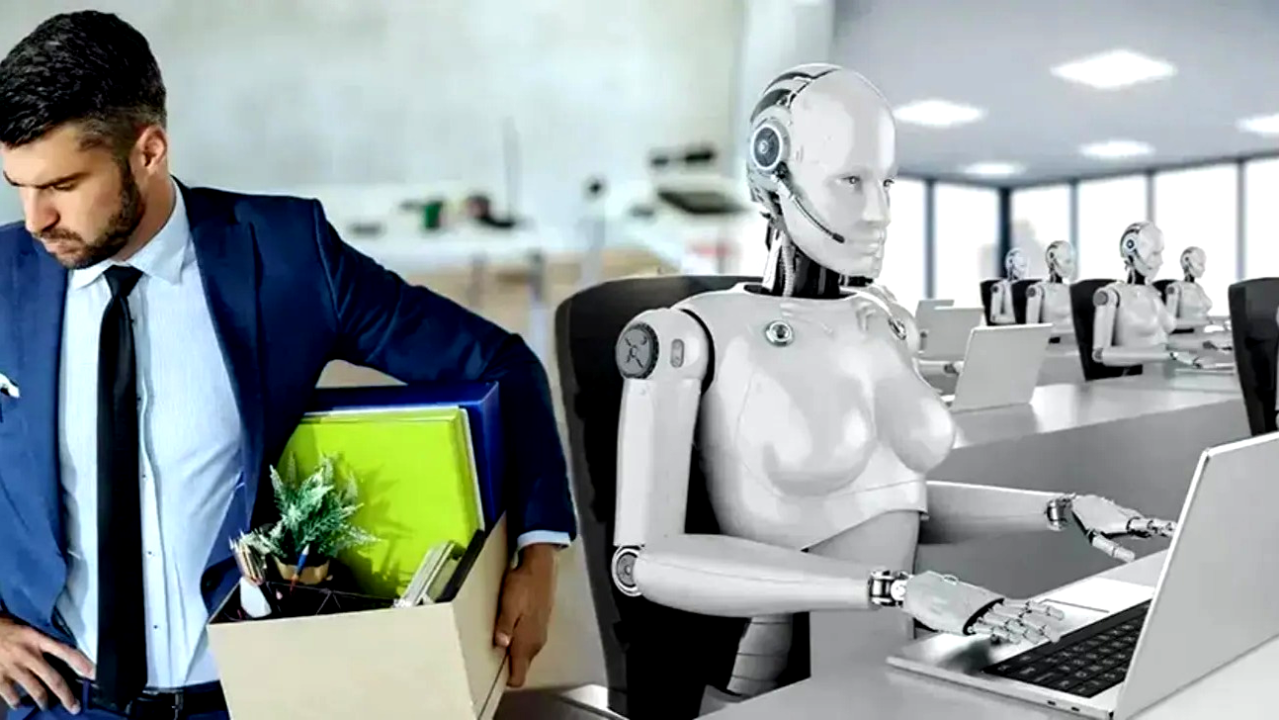
Image by Anchit Singh
Every search, click, and comment you make trains billion-dollar AI systems. You built it. They profit. Here’s how to change that.
Every search you make, every click you take, every word you type trains the machine that may one day replace you. The data is yours. The AI is not.
This morning, before you got to work, you already worked for free.
You typed a search query into Google. You corrected autocomplete on your phone. You clicked through a CAPTCHA — you know, the one that asks you to identify fire hydrants and crosswalks and bicycles in a grid of blurry photographs. You liked a post. You wrote an email. You left a review. You streamed a show and paused it, rewound it, watched certain scenes twice.
Every single one of those actions generated data. That data was collected, processed, labeled, and fed into machine learning systems that are growing smarter, more capable, and more economically valuable by the hour. The companies that own those systems are now worth trillions of dollars.
You were not paid. You were not asked. In most cases, you were not even told.
And now the AI you helped build — for free, at scale, over years — is being deployed to automate the jobs that pay your rent. The circle is complete. The irony is almost architectural in its perfection.
“You are both the unpaid laborer who built the machine and the worker the machine was built to replace. No one in the boardroom thinks this is a contradiction.”
Who actually owns the AI economy
Image by Tech Talk
Let’s name the names. The AI revolution is not a diffuse, distributed phenomenon. It is concentrated in the hands of a remarkably small number of companies — each sitting on mountains of data, mountains of compute, and mountains of capital that create barriers to entry no startup can realistically scale.
Microsoft

Image by investmentmonitor
Owns the infrastructure and the interface. $13B invested in OpenAI. Azure powers a significant share of global AI compute. GitHub Copilot is already inside the workflows of 1.8 million paying developers — the same developers it may eventually help replace.
Image by techmonitor
Owns the data pipeline. Search, Gmail, YouTube, Maps, Android — the largest voluntary human data collection operation in history, now feeding Gemini. Every query you’ve ever typed into Google was, in some sense, a free contribution to its AI training corpus.
Meta
Image by uctoday
Owns the social graph. Twenty years of likes, shares, comments, relationship statuses, and political opinions from 3 billion people. Meta’s Llama models are trained on the most intimate behavioral dataset ever assembled — and it was assembled by people who thought they were just talking to friends.
Amazon

Image by libertex
Owns the commerce layer. Every product you searched, every review you read, every purchase you made trained Amazon’s recommendation and logistics AI. AWS hosts a third of the internet. The company that delivers your packages is also the landlord of the AI economy.
Nvidia
Image by nvidianews
Owns the hardware.monopoly. Without GPUs, there is no AI. Nvidia controls over 80% of the AI chip market. Every model, every chatbot, every autonomous system runs on their silicon. They sell the picks and shovels in the gold rush — and they never lose.
These five companies collectively represent more than $12 trillion in market capitalization. They employ a combined workforce of roughly 1.5 million people. The AI systems they are building are projected to automate tasks currently performed by hundreds of millions of workers worldwide. The math is not subtle.
The CAPTCHA con — and what it reveals

Image by oopspam
The CAPTCHA is the most honest metaphor for the AI economy that exists. You are shown a grid of images. You are asked to identify the traffic lights, the storefronts, the bicycles. You comply — because you want to access the website, because you have no real choice.
What you are actually doing is labeling training data for computer vision AI systems. You are performing skilled cognitive labor — the kind that, if done by a contracted data labeler, would cost money. You do it for free, billions of times a day, across the entire internet. The AI learns to see. The company captures the value. You get access to a website.
The invisible labor economy powering AI

Image by Felipe Camargo
Every Google search query: natural language training data.
Every autocorrect acceptance or rejection: keyboard AI training signal.
Every YouTube watch, pause, and skip: recommendation algorithm refinement.
Every photo uploaded to a social platform: computer vision training data.
Every email written in Gmail: language model exposure to real human communication patterns.
Every CAPTCHA solved: direct, explicit image labeling for AI training. Unpaid. At planetary scale.
The legal framework that makes this possible is elegant in its simplicity: you agreed to the terms of service. Somewhere in a document you did not read, written in language designed not to be read, you consented to allow your data to be used to improve the service. The service improved. The improvement is now worth trillions. Your share of that value is zero.
“The terms of service are the longest unpaid employment contract in human history. We all signed them. None of us negotiated them.”
Which jobs AI is coming for — and whose they are
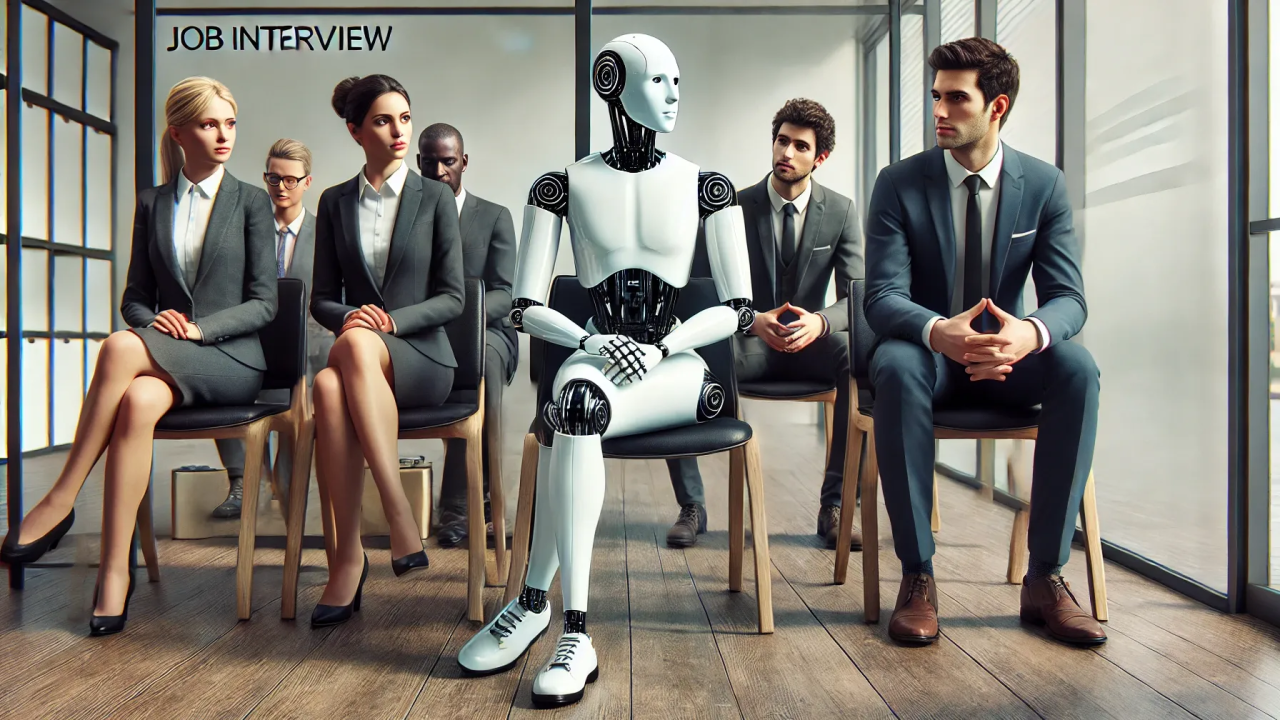
Image by Vijender Singh Chauhan
85M- jobs displaced by AI by 2030, per World Economic Forum
$15.7T- projected AI contribution to global GDP by 2030
Top 1%- of earners capture most AI productivity gains, per IMF
The jobs AI is replacing first are not, as the early narrative suggested, the repetitive manual jobs of factory floors. They are knowledge worker jobs — the jobs that required years of education, professional licensing, and accumulated expertise to perform. Radiologists. Paralegals. Junior developers. Copywriters. Financial analysts. Customer service managers. Translators.
These are middle-class jobs. They are the jobs that, for two generations, represented the social contract between education and economic security. Go to school, get skills, get a job that pays a living wage. AI is not automating the bottom of the labor market first. It is hollowing out the middle — precisely where the workers who trained it on their data happen to live.
The people whose creative work, professional output, and daily digital behavior trained the models are disproportionately the same people whose careers those models now threaten. Writers trained the writing AI. Lawyers trained the legal AI. Coders trained the coding AI. Radiologists’ annotated scans trained the diagnostic AI.
They were never compensated for that contribution. They are now competing against it.
The ownership question nobody in power wants asked

Image by theforage
Here is the question that should be at the center of every AI policy debate, every labor negotiation, every tech ethics conference — and is conspicuously absent from most of them: if the value of AI is derived from the data generated by billions of people, who should own that value?
This is not a radical question. It is the foundational question of property rights applied to a new kind of asset. When oil was discovered beneath someone’s land, we developed frameworks — however imperfect — for determining who owned it. When a factory worker’s labor created value, we developed frameworks — however contested — for determining how that value should be shared.
We have built no such framework for data. We have instead allowed the companies with the technical capability to collect and process data to assert ownership over it by default — and written terms of service to make that assertion legally defensible.
A handful of economists and legal theorists have proposed alternatives. Data unions, where individuals collectively negotiate the terms under which their data is used. Data dividends, where a portion of AI profits is redistributed to the population whose behavior generated the training data. Mandatory licensing schemes, where AI companies pay ongoing royalties for the use of creative work in training datasets.
None of these proposals has found serious legislative traction in any major economy. The lobbying power of the companies that benefit from the status quo is, predictably, formidable.
What “you own your data” actually means — and doesn’t

Image by The Future of Work
Every few years, a tech company gets caught in a data scandal, regulators make noise, and the company issues a statement affirming that users own their data. It is a reassuring phrase. It is also almost entirely meaningless in practice.
Owning your data, as currently defined, means you have the right to download a copy of it and the right to request its deletion. It does not mean you have any claim on the economic value generated by its use. It does not mean you were compensated when your data was used to train a model. It does not mean you can prevent that model — already trained, already deployed — from continuing to generate revenue from patterns it learned from you.
You own the raw material. The company owns the factory, the product, the patent, and the profit margin. This is not ownership in any meaningful economic sense. It is ownership as a public relations strategy.
What a fair AI economy could look like

Image by https://news.mit.edu/
None of this is inevitable. The concentration of AI ownership in five companies is a policy choice, not a law of nature. The absence of compensation for data contributors is a legal choice, not a technical necessity. The hollowing out of middle-class knowledge work without redistribution of the productivity gains is an economic choice — one that will have political consequences that are already beginning to show.
A fairer AI economy would look different in at least three ways. It would recognize data generation as a form of labor and create mechanisms — however imperfect — for compensating it. It would break the feedback loop between data monopoly and AI monopoly, preventing the companies that control the most data from automatically controlling the most capable AI. And it would ensure that the productivity gains from automation are broadly shared — through taxation, through sovereign wealth funds, through universal basic income, through whatever political mechanism a democratic society chooses — rather than captured entirely by shareholders.
These are not utopian proposals. They are the application of basic principles of distributive justice to a new technological reality. We’ve done versions of this before, imperfectly, with oil and with labor. We can do it again.
But we will not do it automatically. We will not do it because the companies building AI have a change of heart. We will do it, if we do it, because enough people understand what is actually happening — who owns what, who built what, and who is paying the cost of a revolution they did not choose and were not paid to enable.
You helped build the machine that may take your job. That is the reality. The question is what you decide to do with that information.
If this made you see your data differently, share it — ironically, on the platforms that will use that share as training data. The least we can do is make the contradiction visible.
메타데이터
- post_id
- a7b0a71f2586
- slug
- who-owns-the-ai-taking-your-job-and-why-arent-you-getting-paid-a7b0a71f2586
- url
- https://medium.com/activated-thinker/who-owns-the-ai-taking-your-job-and-why-arent-you-getting-paid-a7b0a71f2586
- canonical_url
- https://medium.com/activated-thinker/who-owns-the-ai-taking-your-job-and-why-arent-you-getting-paid-a7b0a71f2586
- author_url
- https://medium.com/@happywritter
- status
- ok
- fetched_at
- 2026-06-09 15:37:30