The Portrayal of Operation Market Garden in A Bridge Too Far and Band of Brothers: The Impact of…
Adapted from my dissertation for my undergraduate degree which I received a First on. Please note: I absolutely adore both of these media…
The Portrayal of Operation Market Garden in A Bridge Too Far and Band of Brothers: The Impact of Anglo-American Socio-political Changes on the War Genre.
Adapted from my dissertation for my undergraduate degree which I received a First on. Please note: I absolutely adore both of these media and my analysis does not mean I don’t enjoy them both!
Introduction
Released 30 years apart, Band of Brothers (2001) and A Bridge Too Far (1977) both portray the struggles of the fight for European liberation in Operation Market Garden. A Bridge Too Far focuses on Operation Market Garden- the renowned military failure to capture key bridges in the Netherlands in 1944, from the perspective of the British. Band of Brothers provides a more comprehensive view, with episode 4 depicting Market Garden from the perspective of the 101st Airborne Division. This dissertation argues that the contrasting socio-political climates of the late 1970s and late 1990s/early 2000s shaped how Operation Market Garden was presented; A Bridge Too Far reflected Vietnam era war scepticism while Band of Brothers reinforced the ideals of American exceptionalism in the post Cold War era.
While the cultural memory of the Second World War has been discussed in a multitude of ways, the direct comparison of British and American screen portrayals of Operation Market Garden across different political eras hasn’t been addressed. This dissertation compares these two portrayals across three chapters: by first analysing Band of Brothers, then A Bridge Too Far, then discussing reception and finally comparing them within their respective socio-political climates. Primary sources include production interviews, cast commentary, contemporary reviews and veteran testimonies. These are used to contextualise each work’s narrative, as well as providing insight into how each production was intended to be seen.
Operation Market Garden was intended to provide a swift end to the war, following on from the surprise D-Day landings (Operation Overlord) on June 6th, 1944. The objective was to capture Dutch Nederrijn bridges as a corridor into the Rhine region for a rapid allied invasion of Germany (Montgomery, 2006). Montgomery claimed that Eisenhower gave the operation limited priority for supplies as he still considered the single thrust strategy to not be feasible (Montgomery, 2006). On the night of the 17th of September, the First Allied Airborne Army dropped into the Netherlands to hold the bridges while the British Second Army and XXX Corps arrived as back up- aiming to cover over 62 miles of land (Middlebrook, 2009). The Dutch cities of Eindhoven and Nijmegen were the first to be liberated, where the Allied soldiers were met with joyful celebrations in the streets of Valkenswaard and Eindhoven.
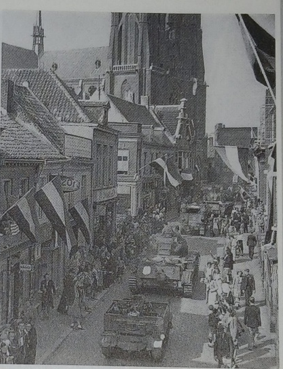
Figure 1: The locals greeting the allies troops arriving into Eindhoven. (Buckingham, 2004)
However, upon reaching Arnhem, the British 1st Airborne Division failed to capture it and had to withdraw- resulting in over 8000 captured, missing or dead (Buckingham, 2004). Landing too far from Arnhem- and met with unpredicted resistance- most of the division were stuck at the final bridge, without “rations, water, ammunition, and weapons” (Montgomery, 2006). Those who broke through to the bridge faced nine days of fighting before being relieved via an order to retreat from Osterbeek (Buckingham, 2004). Market Garden established a reputation a military failure despite the original optimism, making it ripe for post-war myth making and narratives of blame (Beevor, 2018). Historians remain divided on where the blame lies, with Beevor and Hastings stressing command issues and incompetence (Beevor, 2011), Kershaw attributing some of it to German improvised responses and lack of reinforcements (Kershaw, 2011), while others such as Ryan and Frost highlight intelligence failures (Ryan, 1974, Frost, 2002). It was first dramatised in Theirs Is The Glory (1946), before being portrayed in A Bridge Too Far and Band of Brothers.
Jeanine Basinger forms the basis of the historiographical background of war media through her work on the five stages of war films. Writing in 1985, she places these five phases as 1941–1943 (creation of current historical events), 1944–1946 (creation of current historical events in established genre terms), respite for 3 years where no war films were created, 1949–1959 (creation of filmed reality based on earlier films and history), 1960–1970 (epic re-creation), and 1965–1975 (the testing of the genre, often parodied and satirical) (Basinger, 2003). Her model is useful as it demonstrates how war films evolve with cultural shifts- which is relevant for understanding how Market Garden was reframed in 1977 and 2001. She specifies the Vietnam War as a major catalyst, which is an argument echoed by McCleneghan when discussing the change in violence in TV (McCleneghan, 2019).
The limit of Basinger’s analysis is that she concludes these phases in 1975 and focuses primarily on the American war genre, only discussing American events to have affected the genre. By terminating her analysis at 1975 (despite re-editing her book in 2003), Basinger fundamentally misses out on discussing the resurgence in the late 90s/early 2000s, something which many other scholars discuss as pertinent due to the re-remembering of the war and 50th anniversaries. Basinger also writes from a film studies perspective and fails to bring in other elements of historical context beyond that of the Korean/Vietnam wars. Her framework is useful for understanding how war films respond to cultural shifts, but the American-centred focus and failure to cover post 1975 works, leaves a gap that this dissertation aims to fill.
In 2001, Ambrose discussed the phenomenon of war media increasing in the late 90s and 2000s- attributing it to veterans who realised “they don’t have much time left in the world and […] are willing to talk about their experiences” (HBO press release, 2001). He is correct in this theory, as seen through his own interviews with veterans that formed the basis of most of his written work. However, his explanation reflects his own reliance on oral testimony and overlooks the broader contexts of the late 1990s pushing the resurgence of Second World War media. Writing in 2002, Schatz relates the evolution of the war genre to the shifting political climate. He describes the nature of change to be a response to the political climate- that “with each successive military event since the 1940s, the WWII film has become an increasingly paradoxical subspecies” (Schatz, 2002). This is particularly relevant to A Bridge Too Far and Band of Brothers which both present the moral issue of the “Good War” while reacting to anxieties about military intervention. Schatz situates this as a form of propaganda, that the war genre was to be used as a moral standard for viewers, to be compared to current military engagements while the Second World War was gradually becoming less prevalent in popular memory (Schatz, 2002). Schatz’s emphasis on politics directly influences this dissertation’s argument that Market Garden was used as a reflection of contemporary military anxieties.
Michael Paris in 2007 wrote about the war genre and its evolution, noting a peak in the 1950s, a decline in the 1960s and only small-scale films existing after this (Paris, 2007). Paris puts this down to the anti-Vietnam war sentiment, concerns around American involvement in foreign countries, as well as the rise of home entertainment (Paris, 2007). While his consideration of cultural shifts is correct, it overstates the impact of technological change. Although It’s true to say the war genre faded around this time, the rest of the Anglo-American film industry was booming with hits such as Star Wars (1977), Alien (1979), Jaws (1975) and Westworld (1973). A stronger argument to be made (and that will be applied in this dissertation) would be that the economic and socio-political issues outside of military interventions also had an effect on the war genre and its popularity. Paris’ recognition of transnational war film production is also relevant, as Anglo-American collaborations are examined in this dissertation in the context of A Bridge Too Far and Band of Brothers. Mackenzie also argued that war films are inherently shaped by the ideology of production (Mackenzie, 2007). This dissertation extends this claim by suggesting that films are also reflections of the broader socio-political climate of their production (Mackenzie, 2007). His analysis is inherently limited due to his primary focus being on the Battle of Britain, but arguments of political impacts are pertinent.
Lastly, writing in 2011, Mork considered Band of Brothers to be reinforcing the political myths of the “Good War”, which is particularly relevant to Market Garden due to its reframing of American heroism as a time of military intervention (Mork, 2011). She describes Band of Brothers as perpetuating the political myths of the Second World War in a critical time for military support (Mork, 2011). Taken together, the historiography shows that there is a clear evolution in the war genre (Basinger, Ambrose, Schatz, Paris) as well as a strong correlation between the contemporary political climate and the media (Mackenzie, 2007, Mork, 2011). This underpins the analysis of how A Bridge Too Far and Band of Brothers construct different narratives of Market Garden.
Band of Brothers was filmed in England, in 2001, under the direction and production of Stephen Spielberg and Tom Hanks. It was based on the book by Stephen Ambrose- positioning it within the late 90s/early 2000s Second World War resurgence. Ambrose’s ‘veteran centred’ approach shaped the tone, reinforcing the personal, heroic narrative. The episode mainly focused on Market Garden is episode 4 “Replacements”. A Bridge Too Far was filmed in the Netherlands, in 1977, under the direction and production of Joseph E Levine and Richard Attenborough. It was based on the book by Cornelious Ryan- situating it within the anti-war sentiment of the 1970s. Previously, Ryan’s work had been adapted to film with the 1962 film The Longest Day, with a similar topic of the D-Day landings. In a mixture of German and English, the film follows both sides of the attack from the planning stages to the aftermath.
These two works have been selected as they provide interesting comparisons between two distinct political and cultural eras. Despite sharing the specific focus of Market Garden, the two works have never been compared directly. often A Bridge Too Far simply being left out of the discussion, whilst Band of Brothers is often compared only to Saving Private Ryan. No work so far has examined how representations of the same event differ across the 1970s and early 2000s film/TV. Their contrasting production contexts- 1970s anti-war sentiment and early 2000s military revival- make them ideal for examining how the same event can be reframed to serve different socio-political purposes. Therefore, it’s the aim of the comparison made in this dissertation to bridge this gap of contrast, focusing on the political and economic issues present in both decades, and how these affect what was presented in each media. The aim is also to bring in more socio-political context into historical debates and discussions surrounding the war genre.
Chapter 1: Band of Brothers
Adapted from Stephen Ambrose’s book, Band of Brothers was released in 2001 and produced by Spielberg and Tom Hanks. It follows the 101st Airborne Division from basic training to the end of the war, with Operation Market Garden depicted in Episode 4 “Replacements”. Band of Brothers emerged in a politically charged time, released two days before 9/11 and shaped by the Blair and Bush administrations (Knox, 2020). The subject resonated in both countries, sparking debates of the political myths of ‘Good War’, “Just War” and “the Greatest Generation” (Mork, 2011). The series continues to be circulated within military training, reinforcing contemporary narratives of cohesion, heroism and moral clarity. Following Mackenzie (Mackenzie, 2007), this chapter argues that Band of Brothers is shaped by the socio-political climate of the UK and US in late 90s/early 2000s. This chapter examines Band of Brothers through three lenses: its production and political context, its representation of Anglo-American relations in episode 4 and its role in enforcing American military myths.
Episode 4 follows the 101st through the perspective of Sergeant Randleman, as they push into the Netherlands via Eindhoven, before starting the failed assault of Nuenen. After a British tank refuses to take the first shot, the division are caught off guard and forced to retreat. Captain Nixon’s lasting comment is “I think we’re gonna have to find another way into Germany”, as Operation Market Garden had failed (‘Replacements’, ep. 4).
Chapter 1.1: Production and context
The production itself was fraught with problems- reflecting the turbulent politics of the 2000s. Originally meant to be a joint Anglo-American production, Band of Brothers was set to show the benefits of international collaboration, both on screen and behind it. However, American involvement overshadowed that of the BBC as British producers were excluded from planning stages, scriptwriting and even editing- despite the initial framing of collaboration (Knox, 2020). BBC personnel at the time of production were said to have described America’s involvement as an “acquisition” rather than co-production (Tutt, 2011). Despite Shregger (president of HBO in 2001) insisting that they “didn’t want [Band of Brothers] to be a US version of WWII or of heroism” (Tutt, 2011), the final series centres US productive and military narratives. The purposeful sidelining of the BBC was also politically significant. Under the New Labour government, “home grown” media was central for national identity-building and Blair had explicitly stated the importance of British involvement in Band of Brothers (Hill, 2012). Blair’s personal interest in the production underscores how central British media production was to New Labour’s cultural agenda and may account for why the dominance of American perspectives was overlooked.
These production issues happened within a broader socio-political landscape shaped by New Labour’s cultural agenda. Their desire for ‘cool Britannia’ led to a dependence on Band of Brothers as it interwove Anglo-American relations into successful home-grown media within the context of growing unemployment and financial issues (Davies, 2021). Not only was a project like this considered to be the “vanguard of a new creative, cool Britain” (Knox, 2020) by Blair’s government, but there were also the military and economic effects of such a project. Criticisms were levied at the British involvement in the Middle East, and so a TV series produced on home soil, focused on fighting the ‘good fight’ with America offered a politically useful narrative (Casaregola, 2023). The economic impacts were also critical for the New Labour government, having introduced tax relief benefits for ‘British made’ media. The benefits of British tax relief on the film meant further incentive for the industry to spend on home grown resources, however for Band of Brothers to be considered in this incentive- production had to be 70% British (e.g Simon Pegg, James McAvoy and Andrew Scott) (Knox, 2020). With the scale reaching over 500 actors, 50 of which for Easy Company, it was easier to fill the quota than if it was a smaller production (Schatz, 2002). Knox argues that the hiring of so many British actors went beyond just financial benefits, suggesting instead that it showed a shift in international relations through an Anglo-American exchange (Knox, 2020). These relations can often be seen as symbiotic, both countries utilising each other for gain, often political and economic.
Saving Private Ryan “loom[ed] large over Band of Brothers” (Tutt, 2011) upon its release, due to its worldwide success, and not least due to the similar production teams on both (namely Spielberg and Hanks). The triumph of Saving Private Ryan perhaps explains why the BFC “lobbied furiously to bring the lucrative miniseries to the UK” (Tutt, 2011); they had rightly anticipated it to be a project of comparable scale and prestige which would in turn boost Britain’s film and television industries. A promotional poster in Screen International further illustrates how much hope was pinned on Band of Brothers to save the British media industry. It publicly thanked the US for “choosing to bring Band of Brothers to the UK” and “promoting the UK as an international production centre to the film and television industries”

Figure 2: Promotional poster from BFC, thanking America for using the UK to produce Band of Brothers. Screen International 1302. (2011)
This creation of an entire poster dedicated to expressing gratitude (as well as Spielberg being given a knighthood for services to UK media) (Tutt, 2011) demonstrates the pressure placed on the series to revitalise British film industry.
Despite the successful international relationships between America and Britain, there was one major difference between the two countries: the two nations had varied moral understandings of war and the legitimacy of military intervention. By 2000, war was at the fore-front of politics, the decade before had seen numerous conflicts involving Britain and America including, but not limited to: Bosnian Wars (1992–1995), civil wars in places such as Somalia (1991-now), Iraq/Kurdistan (1994–1997),) and other conflicts and insurgencies such as the Al-Qaeda insurgency in Yemen (1998-now). The 1990s was further plagued by memories of war, as it instigated a Second World War revival, framed by 1989 being the symbolic end of the Cold war and 1999 being the 60th anniversary of the outbreak of war. American attitudes to war had changed in these 60 years, shaped by the moral ambiguity of the Vietnam war. Films and subsequent morals were being questioned by the general public therefore the American myth of the ‘Good War’ had to return (Mork, 2011). An increasingly militarised world made the revival of the Good War myth politically useful, meaning contemporary interventions would be framed against the morals of the Second World War. To justify the contemporary involvement despite the so called ‘isolationist policy’ adopted by America, America needed to be portrayed as exclusionary in war. America’s fundamental view of the Second World War was, as Mork puts it, a “creation myth” based on the “defence of [their] nation’s survival” (Mork, 2011).
Chapter 1.2: Mythologies of war and conclusion
Episode 4 of Band of Brothers omits the strategic reasons for Market Garden’s failure- that of logistical errors (Beevor, 2018, Hastings, 2011), reconnaissance faults (Ryan, 1974)- instead attributing it to British conduct. The error within the battle occurs about half way through the episode, when Easy Company encounter a British tank regiment on the outskirts of Nuenen. Sergeant Martin approaches the tank to discuss the need for the British to aim at a German Panzer tank lying in wait- out of sight from the British but seen by the 101st. The British tank commander stubbornly refuses citing “no unnecessary destruction of property” (Replacements, 32:00) and Martin’s appeals do not work, with the commander following up by saying “if I can’t see the bugger I can’t bloody well shoot him, can I?” (Replacements, 32:15). This scene demonstrates a contrast between American military decisiveness and British rigidity. It first shows the different attitudes to war (and what is considered worthwhile sacrifices), with America willing to do whatever it takes to win, whereas Britain saw this as excessive, preferring to only cause destruction if absolutely necessary. Band of Brothers mocks this view, portraying it as disastrous for the tank regiment, as they are seconds later blown up while the 101st are left to struggle on their own. The British are portrayed as uptight, rigidly sticking to the rules compared to the forward thinking, brave Americans. Band of Brothers reframes Market Garden’s failure to show it being due to British incompetence instead of flawed planning or reconnaissance faults, in turn reinforcing American myths of exceptionalism. This myth is encapsulated by Easy Company’s motto- “We stand alone, together” (Cowen, 2001). By reframing Market Garden’s failure as the result of a British incompetence rather than broader allied strategy issues, Band of Brothers created a narrative of American exceptionalism and decisiveness that aligned with late 90s/early 2000s political needs.
The series draws heavily on the political myths of a “Good War”, “the Greatest Generation” and justification of involvement as “the Just War”. These themes are reiterated throughout each episode; the veteran interviews that preface each episode demonstrate the narrative, repeatedly emphasising the self-sacrifice. Many re-iterating the selfless act of joining the 101st Airborne to protect America (Replacements, 2:32–3:56). As Mork and Schatz argue, Band of Brothers played a role in formulating the moral standard for military intervention (Mork, 2011, Schatz, 2002). In this episode, the dominant political myth is that of the ‘Greatest Generation’; as Operation Market Garden was a failure, it is harder to present it as ‘just’ or ‘good’. Instead, the emphasis is placed on the heroic actions of the 101st, that they bravely fought despite this ultimate failure.
One of the most distinctive features of Band of Brothers is the preface of each episode with veteran interviews. It forces the viewer to never forget the ‘reality’ of what’s being portrayed, to constantly be reminded of the generation which sacrificed themselves for the ‘greater good’ of America. With screenings for veterans happening on D-Day (Tutt, 2011) and interviews with veterans at the beginning of each episode, Band of Brothers cemented its role of portraying and celebrating this Greatest Generation. The emphasis on realism went beyond the content, as it premiered at a special ceremony on June 6th, 2001, on Utah Beach Normandy- acknowledging “debt […] to the events of D-Day” (Schatz, 2002). It premiered days before 9/11, its release coincided with an increasingly militarised political climate with anticipation of new forms of conflict. Band of Brothers was therefore produced at a time of socio-political upheaval, and its commemorative framing aligned with the emerging narratives of duty and national purpose.
Overall, the production history, political context and narrative strategies of Band of Brothers shows how and why the series represented American military mythologies. It emerged as a product of the political, cultural and economic conditions of the late 1990s and early 2000s, and its representations of Market Garden shouldn’t be separated from this socio-political context. By attributing Market Garden’s failure to British rigidity, and by uplifting the heroism of the 101st Division, it enforces the myths of the ‘Greatest Generation’, the ‘Great War’ and the ‘Just War’. Therefore, Band of Brothers is a product of early 2000s socio-political culture, shaping public memory in a way that legitimised contemporary military action.
Chapter 2: A Bridge Too Far
Released in 1977, Joseph E Levine’s A Bridge Too Far presents the inverse of Band of Brothers, both in terms of its narrative and the way politics shaped its production. The socio-political climate of 1977 marked by Vietnam and economic austerity, resulted in different interpretations of Arnhem that emphasised the futility of military ambition. The film had intended an anti-war stance, framing Operation Market Garden as a failure due to high level command. The purpose of A Bridge Too Far was to honour the writing of Cornelious Ryan and to present a film to different demographics than those to whom war films were previously aimed at. Levine explicitly aimed to capitalise on the Vietnam anti-war sentiment from younger audiences and made the claim that the film would specifically appeal to Japanese audiences “because they love to see white men kill each other” (McKenna, 2011). This remark reflects his often-inflammatory marketing tactics but also shows how important discussions of war were at the time. The Vietnam era climate shaped Levine’s marketing strategy and framed the film’s reception, making A Bridge Too Far a reflection of the political anxieties of the late 1970s.
Directly stating Vietnam as a catalyst for change in war media, Basinger also notes the feature of ‘the last man standing’, values to be questioned and cites films such as The Dirty Dozen (1967) (Basinger, 2003). This last man standing motif is echoed in the strikingly emotional last scene is that of destruction caused; crowds of injured soldiers in the garden of Kate Ter Horst, singing Abide With Me while awaiting capture.

Figure 3: Still from A Bridge Too Far (1977). The wounded allies are singing Abide With Me in Kate Ter Horst’s garden, awaiting capture after the failure at Arnhem. 2:43:16.
The film reinforces this tone through the last line spoken in English being the eponymous line from General Browning, “you know I always thought that we tried to go a bridge too far” (A Bridge Too Far, 2:41:38).
Basinger identifies Vietnam as a catalyst for changing morals in war films, whose focus then tended to be on the individual soldiers and the psychological effects of combat (Basinger, 2003). Despite this, A Bridge Too Far aligns more closely with Basinger’s fourth stage- that of the large scale ‘epic’ films of 1960–1970, with films such as The Longest Day, Battle of the Bulge and Tora! Tora! Tora!. Basinger further identifies three defining features for this stage, filming on location, use of international casts and involvement of veterans (Basinger, 2003). A Bridge Too Far contains all three features; it was shot on location in the Netherlands, features an Anglo-American cast and includes veterans within the cast. Together, this shows the conflicted identity of A Bridge Too Far, Vietnam era scepticism and the lingering of the epic war tradition.
Chapter 2.1: Production and background
A Bridge Too Far was first underestimated in 1970s cinema, being a box office failure on release. The project originated from Ryan’s deathbed wish to see his book adapted, while Levine himself was in poor health (McKenna, 2011). The production faced criticism for the rising costs of production, as well as receiving grievances from figures such as Daphne Du Maurier, who objected to the portrayal of her husband, General Browning (McKenna, 2011). To understand these early controversies, the film has to be situated within the wider economic and political landscape of the late 1970s- a period shaped by shifting war attitudes and financial instability.
Production records show the film’s reliance on American financing- Levine argued that “American involvement was needed to facilitate this” but that “US studios had an antipathy for British casts” (McKenna, 2011). These early controversies show how issues of national identity and financial control were embedded in the film. American involvement was essential to the film’s production for two main reasons: Britain’s economic instability in the late 1970s and the strength of the American film industry. Britain’s economic crisis of the 1970s affected every sector, marked by rising unemployment, failing businesses and industrial tensions (Philips, 2007). In the years 1974–1976, the government prioritised reducing public expenditure (Rogers, 2013) as a response to stagflation and the vulnerability of sterling- which collapsed in 1976 after a surge in public borrowing (Sutcliffe-Braithwaite, 2011). The government was faced with difficult choices regarding the future economy of Britain (Rogers, 2013). Given these constraints, it’s unlikely that a production of this scale could have been financed in the UK; American investment was therefore critical. The financial dependence of the UK was necessary for the creation of A Bridge Too Far, and shaped Anglo-American dynamics as well.
In contrast, the American film industry had a commitment to funding the arts in the 1970s and a comparatively strong economy. Economic growth was critical to the politicisation of American life; framed as evidence of capitalist superiority in the ideological war against communism. The chair of the Council of Economic Advisors, Walter Heller, saw 1970s America as “ever increasing wealth and leisure… [as a] pot of gold and the rainbow” (Saunders, 2005), encapsulating the optimism of art investments.
Under Nancy Hanks, leader of the National Endowment for the Arts from 1969–1977, funding for the arts expanded exponentially. From the fiscal year 1969 to the fiscal year 1977 arts funding increased twelvefold; from $8,456,875 to $99,872,000, clearly signalling federal commitment to increasing the arts sector (Saunders, 2005). This increase was fundamental for the American media at the time, creating a flourishing American film industry that produced cult classic films such as Star Wars, The Godfather, Apocalypse Now, Jaws and Westworld. Saunders argues this increase in art funding was directly related to the ideological effects of the Cold War on policy making. As she puts most succinctly, “public funding for the arts contributed to this national agenda” (Saunders, 2005), the arts purpose during this time was for the benefit of the masses as a whole rather than for direct consumers of the media. This contrasting economic landscape meant that A Bridge Too Far enforced the Anglo-American tensions that underpinned its creation.
The difference between the film’s intended identity and its public perception shows deeper debates about American influence, authorship and its anti-war positioning. A Bridge Too Far had faced criticisms during production for being ‘too American’, something which director Attenborough intensely refuted. In an interview with Peter Noble during filming, Attenborough felt the criticism was unwarranted, hyperbolically saying “the crew- all English- I don’t think you can find an American there”.(Noble, 1976). After Noble enquired about Levine himself being American, Attenborough said while Levine was American, there were also “248 English men, the crew itself headed by Sir Richard Attenborough!” (Noble, 1976). By contrast, Hardy Kruger (who played Generalmajor Ludwig), interpretated the film as a US production, remarking to Goldman that it was a “sign of the times that Americans are now making films about Allied defeats instead of Allied victories” (Goldman, 1977). This indicates rifts amongst production regarding the Anglo-American influences, as well as debates about the failure. Ryan O’Neal (who played Brigadier General Gavin) instead viewed A Bridge Too Far as challenging the idea of American triumphalism, arguing that “America was kept clear of anything we lost or didn’t win big […] I didn’t think there was a bridge too far for Americans to cross” (Goldman, 1977). For Attenborough, A Bridge Too Far was unequivocally a British film, but the persistence of the debates shows that its national identity was contested, and an important factor at the time.
Chapter 2.2: Rhetoric and conclusion
The film’s commercial failure reflects the shifting socio-political expectation of the late 1970s, and the growing disconnect between epic war films and contemporary politics. Paris attributed this to the rise of home entertainment that led to the declining relevance of box offices (Paris, 2007), but there are other factors that play a more significant role. The film itself was eclipsed by the success of George Lucas’ Star Wars (Chapman, 1998a), as well as there being a growing shift away from the war genre in the late 70s (Chapman, 1998a), and lastly, conflicting expectations on what a war film should be in the late 1970s. Chapman interprets the film’s commercial failure to be a representation of “the symbolic (as well as actual) end of the traditional war film” (Chapman, 1998a), situating it within the broader decline of the war genre. In many ways he is right, there is a marked decrease in these ‘classic war films’ in the period of the 1970s and 1980s, as film production favoured instead sci-fi and horror films, making a break from the realism of previous decades. While Chapman’s analysis is correct in terms of noticing how out of place A Bridge Too Far was, it’s an oversimplification to state that it’s different to that of previous ‘traditional’ war films. “Traditional” is an unstable category, as its clear the genre had undergone significant shifts through the 50s and 60s, making it overly simplistic to place A Bridge Too Far as a last example of this. Instead of signalling the end of a genre, the film reflects the evolving socio-cultural tensions of the late 1970s.
Despite the intentions, the film’s anti-war message was not universally recognised. For instance, tickets were distributed to graduates of the Canadian Airborne course, suggesting the film could also be embraced as a celebration of military endurance rather than a critique of warfare.

Figure 4: A free ticket for the film ‘A Bridge Too Far’ given to Vigilant Platoon after completing Canadian Airborne course. Dated 1st January 1977. From Airborne Assault Museum ParaData Archive, Imperial War Museum, Duxford.
Attenborough’s own statements to Goldman in A Story of A Bridge Too Far leave little doubt that he positioned the film as anti-war. He argued that “if we tell this story right and truthfully” audiences would leave the cinema with no sense of war having “one iota of glamour left” (Goldman, 1977). In the pre-release interview with Noble, Attenborough again reinforced this view, describing the film as a story about an “incredible disaster” with a “fighting force that had even the Nazis in awe and admiration” (Noble, 1976).
Although these claims arguably overstate the power of cinema, this anti-war rhetoric was echoed by many other members of the main cast and crew. Levine himself reinforced this message, telling Goldman that he saw “it definitely as an anti-war film” as well as repeating Attenborough’s argument that “Anybody who has the power to make wars would hesitate if he saw this film” (Goldman, 1977). Goldman’s interviews reveal a similar pattern amongst the cast: “I think the film should stir very bad memories, so bad that people try never to have a war again” (Maximillian Schnell), “my feeling is that the picture is meant to show what should be avoided in the future” (Hardy Kruger) and “I think Vietnam has taught the whole world a lesson, and now the attitude is very much different from when I went into the army in 1951” (Michael Caine) (Goldman, 1977). Taken together, these statements suggest the film’s anti-war identity wasn’t just a marketing strategy but appeared to be an ideology amongst cast and crew.
Liv Ullman, who played the role of Kate ter Horst, provided a different interpretation of what A Bridge Too Far represented. Interviewed in 1977 by Film Illustrated, her view of A Bridge Too Far was that she saw the film as being broadly feminist- “and as usual, it’s the woman who really makes the statement” (d’Arcy, 1977). Given that Ullmann’s character is one of only a few women with speaking roles, this seems an over accreditation of her role and overstates the film’s feminist potential. While her role is emotionally significant, it’s very unlikely that Levine intended the film to be read through a feminist lens. Her interpretation does however highlight the extent of how the ideology of the film could be contested.
At an overview, these production interviews indicate a possible lack of understanding from the cast at the ‘role’ or ‘purpose’ of A Bridge Too Far and perhaps explains why it has many contrasting reviews from viewers (see chapter 3.1). These different interpretations also reflect the film’s own ambivalence, while it shows Operation Market Garden as a military failure, it fails to condemn the issues while simultaneously emphasising the endurance and sacrifice of those involved. The disparities between intention and reception are central to understanding how A Bridge Too Far functioned with the Anglo-American political and cultural landscape of the late 1970s. The difference between intended message and audience interpretation underscores the film’s unstable ideological role within the late 1970s war film genre.
Ultimately, A Bridge Too Far was released at a time where it’s representation of war was no longer aligned with audience expectations in the late 1970s. Levine’s hope for the film was to appeal to the disillusioned anti-Vietnam war Americans and Japanese people who “wanted to see white men kill each other” (McKenna, 2011), while the rest of cast believed it to be staunchly anti-war, and Ullmann seeing it as a feminist narrative. It couldn’t function as a Vietnam allegory as it fundamentally didn’t challenge the legitimacy of military intervention and failures; instead, it frames failure as a miscalculation rather than an ideological fault. Moreover, contemporary discourse meant that the predominant blame levied was due to the Polish army’s “unwillingness to take risks” (Buckingham, 2019), further distancing the film from late 1970s critiques of Western military authority. To conclude, these factors reveal why A Bridge Too Far struggled to resonate with late 1970s audiences: it’s diverse intentions, narrative and political framing were different to the cultural landscape of both Britain and America.
Chapter 3
3.1 Contemporary views of Band of Brothers and A Bridge Too Far
Examining the reception and reviews of Band of Brothers and A Bridge Too Far reveals how changing socio-political climates shaped public expectations of how Operation Market Garden. Veterans often focused on critiquing accuracy and national representation, reflecting the contemporary debates about the blame and mythologising of failure. In contrast, general audiences’ responses focus more on accusations of propaganda and a perceived imbalance of national roles, highlighting broader cultural worries about Anglo-American relationships and Second World War nostalgia. For Band of Brothers, veteran’s responses are less common due to each episode having interviews with the 101st Airborne Division at the beginning. This positioning of reconstruction rather than adaptation means that often the general responses to it are less focused on accuracy, as it almost presumed to be directly true. However, later army personnel are used as well. A Bridge Too Far has plenty of veteran responses, often in regimental publications such as the Pegasus Journal, where the film was scrutinised as well praised.
Veteran responses to Band of Brothers are shaped by the series’ reliance on oral history, as well as deliberate connections to surviving members of Easy Company. However, there were occasional corrections- such as Albert Blythe’s misreported death- which showed limits to the oral testimony approach (McCormick, 2021). Tiktok videos from Easy Company veteran Bill Guarnere’s granddaughter provides insight that he often discussed his love and appreciation of the series. She frequently shares photos of Wild Bill with the actor, Frank John Hughes, as well as the numerous cast and veteran meetups organised by the Band of Brothers production team. She presents a close relationship, describing Hughes on the phone with Bill “almost every day while filming Band of Brothers”, even going as far as saying they had “friendship until the day [her] grandfather died” (d_raff on tikok, 12th January 2026). These interactions show how authenticity was constructed: veterans endorsed Band of Brothers as they felt listened to and included. This approval in turn reinforces the cultural authority of the show. The Guarnere family’s continued digital commemoration of him further reinforces the series’ status as a definitive account of the 101st Airborne, showing how family mediated digital memory can further add to the legacy of Band of Brothers- especially in the digital age.
There are also numerous reviews on the film cataloguing website Letterboxed from modern training/serving members of the armed forces which can be used. These reviews often indicate showings of Band of Brothers were common in military training schools- interestingly all reports of this with ½ or 1-star reviews. ‘Yoon’ reviewed it with half a star rating (the lowest possible on this website), while saying “they forced me to watch this in the bootcamp during military. no phones, no internet, no outside contact for 6 weeks”.

Figure 5: Letterboxed review from user ‘yoon’. Band of Brothers is rated half a star due to having to watch it in the military. 25th March 2025
User N8123 felt similar, rating it another half star “They made me feel watch this in Military school so you’d think I have a trauma bond but anytime I see a clip I smell corn chips, sweet and testosterone.”

Figure 6: Letterboxed review from user ‘n8123’. Band of Brothers is rated half a star due to having to watch it in the military. 2nd June 2024.
User Meganandme rates it two stars, similarly being forced to watch it for “a navy leadership class”.

Figure 7: Letterboxed review from user ‘MeganandMe’. Band of Brothers is rated 2 stars, due to having to watch it in the Navy. 14th January 2024.
On a similar note there is a review left from an Israeli user called tomersh318 that (translated) says “The air defence team didn’t like the first and second episodes, especially since we were called in to watch them in the middle of the night.” Posted on the 10th December situates this directly after a large scale air bombing of the Gaza strip and refugee camps (Khadder, 2023).

Figure 8: Letterboxed review from user ‘tomersh318’. Band of Brothers is rated 2 and a half stars. Translated: “The air defence team didn’t like the first and second episodes, especially since we were called in to watch them in the middle of the night”. 10th December 2023.
Overall, these reviews reveal that Band of Brothers continues to circulate in military institutions as an ideological and a pedagogical tool (despite reception among trainees being negative). These negative responses reveal that Band of Brothers celebration of the 101st can further be seen in a bad light, if shown through pedagogy in military training.
British veterans of the Airborne assault wrote into the Pegasus Journal in 1977 to discuss the release of A Bridge Too Far as many were invited to the UK premiere. There is distinct division in reviews; some veterans valued the emotional tone and commemorative intent, while others wanted a more detailed portrayal of regimental identity. Richards of the 4th Parachuter Squadron described the film as “one of anti-war”, echoing the sentiment of the cast and production of how the film should be received.

Figure 9: Letter from Eric Richards to the Pegasus Journal. 26th June 1977
He praised the film, stating that at the premier many of the veterans were thoughtfully silent and he thought they would watch it again. Opposing this, Major Toler of the 1st Air Landing Anti-Tank Battery describes feeling “disappointed” about the “many serious omissions”.

Figure 10: Letter from Major Toler to the Pegasus Journal. 15th July 1977.
General Frost offers a rebuttal to these claims, however. As a consultant of the film, he felt Major Toler’s complaints were unfounded and unrealistic, due to “problems of time and space” but recognises that he knew this might be a potential issue.

Figure 11: Letter from General Frost to the Pegasus Journal. No date.
He further says he saw Market Garden as ending “disastrously”, saying there were too many divisions involved in this failure to include them all in the film. American veterans’ frustrations reflect a wider cultural expectation that Second World War narratives should foreground American success and individuality (the founding myth, as per Mork, 2011), considering it to be “boring…when it dwelled on the British defeat”. They also found A Bridge Too Far to be historically inaccurate as it “devotes too much attention to the British”, seeing it to be unfair when “[they] accomplished our mission, the British didn’t”.

Figure 12: “Veterans Cast A Critical Eye At A Bridge Too Far”, The Washington Post. 18th July 1977.
These responses show how deeply ingrained the politics of blame were in the transatlantic memory of Market Garden. The reception from veterans reflect broader national anxieties about responsibility and pride. While British and American veterans both discuss accuracy, for British critics this referred to omitted acts or tactical details, but for American veterans it became a measure of American representation and national identity- that it was inaccurate because it centred British failure rather than American success. This contrast shows that ‘accuracy’ can mean different things to different groups, used by British veterans to discuss regiments, and by Americans to defend national identity.
However, the reception from the general public when watching Band of Brothers demonstrates a different view. Reviews taken from the BBC website in 2001 show a variety of complaints, often focusing in on the Americanisation of Market Garden. British viewers such as David Shaw expressed frustration about the America focus, enquiring “Come on BBC, when are we going to get stories about British/ Commonwealth Soldiers?”, perhaps also alluding to the money, land and cast that the BBC put into the production Band of Brothers.

Figure 13: Shaw, David. Review on BBC “Band of Brothers: Your Views”
Wayne Watson agreed, complaining about the “constant ‘Hollywood style’ American flag flying!” and thought it was “aimed at American audiences”.

Figure 14: Watson, Wayne. Review on BBC “Band of Brothers: Your Views”
For American viewers like Michael Gover, the series’ emphasis on American heroism resonated strongly with early-2000s patriotism; “For America it is an important series at a time when America is becoming more isolationist in her view of the world — this shows a time when she stood up for what is right.”

Figure 15: Gover, Michael. Review on BBC “Band of Brothers: Your Views”
Adrian replicated the view that Band of Brothers had an American focus “Once again you feel as if only the Americans were at D-Day.”

Figure 16: Adrian. Review on BBC “Band of Brothers: Your Views”
Rich Junack insistence that international divisions “never fought together” again shows how American cultural dominance shaped historical awareness.

Figure 17: Junack, Rich. Review on BBC “Band of Brothers: Your Views”
These contrasting Anglo-American reviews show the differing narrative authority; while British viewers feel underrepresented, American audiences view the series as an affirmation of national heroism.
A Bridge Too Far received similarly mixed reviews from the general public. Gary Arnold in the Washington Post gave high praise to A Bridge Too Far, as he felt it was helpful to American audiences to “hear an explicit comment on what the failure of Operation Market Garden cost Dutch civilians”. By emphasising Dutch suffering, he challenges the framing of American involvement as always being a positive.

Figure 18: “An Epic War Movie At the Head of Its Class”, Arnold, Gary, The Washington Post. 16th June 1977.
Conversely, Gene Siskel of the Chicago Tribune described the battles to be “more often tedious than glamorous”, then making a statement on blame, arguing if the allies had just planned better, “they wouldn’t have lost the battle”. While it seems he understood the film to be anti-war, he finds fault in the lack of glamour, displaying frustration at the loss presented. This reveals a discomfort at the film’s portrayal of war as not glamorous- despite the film being one of bravery and camaraderie, for it to be a military failure automatically made the film not likeable to Siskel.

Figure 19: Siskel, Gene. “Big Budget ‘Bridge’ overspans itself”, Chicago Tribune. 16th June 1977.
Overall, it’s clear to see that reception of both productions display similar themes of Anglo-American anxieties surrounding representations and blame for Operation Market Garden’s failures. This binary reflects the cultural politics of the 1970s, when Cold War narratives influenced Anglo-American relations and encouraged audiences to interpret the Second World War through the simple ideal of American success versus British failure. For British veterans, accuracy meant tactical detail and omissions, whereas for American veterans saw accuracy to mean national representation. It reflects a broader anxiety that British contributions to the Second World War were being overshadowed by the American mythologies surrounding the war.
3.2 Comparative analysis of Band of Brothers and A Bridge Too Far
Both Band of Brothers and A Bridge Too Far were produced in socio-politically charged climates and comparing the two productions highlights how each nation used the memory of Operation Market Garden to serve contemporary political narratives. The purpose of this chapter is to draw parallels and comparisons between the two media, while going back to the original question of how they were used individually used to further political motives, whether intentional or not. These main parallels will focus on the themes of production (economics, transatlantic casts), the sociopolitical climates and in turn how this changed the representation of America and Britain’s role in the Second World War.
The first parallel is the similarities of pre-production and production, as they both were fraught with difficulties. Band of Brothers, an American production yet filmed in the UK in collaboration with the BBC, often featured small cameo-like roles for British actors- usually putting on American accents (Knox, 2020). British frustration with the US reliance on labour, locations and tax incentives, yet little narrative on British contributions were rife- reinforcing the perception that American media appropriated British resources to sell American stories. A Bridge Too Far, conversely, was funded through American investments, with an American producer, yet aimed to present itself as British made (McKenna, 2011). This led to American audiences feeling it was too British, especially noting how it dwelled on British failure rather than American success.
Economic pressures also shaped the narratives, determining whose perspective dominated the representation of Operation Market Garden. A Bridge Too Far was produced in Britain during a period of economic instability causing widespread social issues within the country (Hill, 2012), while American media funding was at a high due to NEA funding under Nancy Harris (Saunders, 2005). This meant that American funding was critical for A Bridge Too Far to be made and for Levine’s vision of the cast to come to light. However, this seems to not have had as much of an influence on national identity within the film, as consensus reviews all seem to find there to be a lack of American involvement portrayed. Band of Brothers had similar economic influences. Due to New Labour’s new media tax incentives, Britain was positioned as a global production hub (Hill, 2012). This encouraged American studios to use British labour and locations whilst retaining creative control. It’s for this reason that Spielberg took the production of Band of Brothers to Hertfordshire. Although the cast is majority British, their roles are predominately background, cameo like roles in order to reach the quota for economic benefit while not having to change the American centred narrative. Both productions relied on cross-Atlantic economic support, yet in both instances the economic support didn’t come with changing narratives that may have been expected. The predominant American production of Band of Brothers led to an American centred approach, pushing the mythology of D-Day to be that of The Great War and a founding myth of modern America, whereas the British production of A Bridge Too Far resulted in a focus on military failure and the impact on civilians.
Secondly, the contemporary political climates shaped the ideology of both medias: Band of Brothers responded to war on terror, interventionist America, while A Bridge Too Far responded to Britain grappling with economic decline and disillusionment with military leadership. The late 1970s and early 2000s were marked with international warfare and economic problems as well as being unique eras for Anglo-American relations. The release of A Bridge Too Far in 1977 was situated in a time of political and military crisis for America, and economic and social crisis for England (Sutcliffe-Braithwaite, 2021). For America, the overwhelming effects of the Vietnam War and subsequent loss in 1975 had drastic implications for America’s response to war, especially making the country question America’s role within the international theatre of war (DeDominicis, 2021). Operation Market Garden was used as a vehicle to explore critical portrayals of military leadership through another established international failure. Whereas America’s crisis was rooted in military failures and a loss of confidence in global warfare, Britain’s was tied to economic decline and socio-political uncertainty (Havarti, 2014)> The different political climates meant that each media used Market Garden to reflect contemporary anxieties, Vietnam-era scepticism and early 2000s Middle East interventionist confidence.
Lastly, the military’s adoption of each production shows how they could both be used as a means to reinforce contemporary ideology. Band of Brothers was a celebration of American heroism during the Second World War, following ‘small town’ men into the largescale battles. The interviews that start each episode provide a performative sense of authenticity, displaying the series to be a faithful reconstruction of the Second World War.
A Bridge Too Far was first used by the Canadian Vigilant airborne Division during its Canadian premiere; a free film ticket was given to everyone who passed the airborne assault course in 1977. Although the film’s focus is on failure, it’s emphasis on the courage of the soldiers could have made it a useful and evocative tool to inspire bravery amongst Paratroopers. This seems to be the only evidence of A Bridge Too Far being used in military contexts, however, perhaps its anti-war sentiment overpowered this message of bravery. In a time of political instability, Band of Brothers gave legitimacy to American foreign involvement in the 2000s, yet A Bridge Too Far’s portrayal of the mismanagement involved in Market Garden reflects the broader Vietnam era disillusionment.
Band of Brothers has similarly been used within a military setting. It was first seen in this context when veterans of the 101st Airborne Division would visit military groups stationed abroad, after the release of Band of Brothers. Six veterans- all of whom had featured in Band of Brothers- visited Camp Arifjan in Kuwait, a base preparing for Operation Iraqi Freedom (Maj. McClelland, 2008). Spc. Matt Klinkenberg, of the 129th Transportation Company was excited, as he had seen and idolised these men through watching the HBO show- “it’s cool meeting actual war heroes”.(Maj. McClelland, 2008). This clearly reveals how the series shaped contemporary soldier’s understanding of heroism, giving the 101st Airborne an almost mythic status. Spc. Woodard-Hinton’s account of this visit focuses on the morale boosting impact of the veterans, and the similarities between the two generations of servicemen. Easy Company’s Lyall is quoted to have said “I am no different from any soldier here […] we just have good P.R. people” (Spc. Woodard-Hinton, 2008). This self-awareness demonstrates that the veterans understood their elevated status to be a product of media representation. The presence of Easy Company veterans in Kuwait elevated the series to be a moral boosting tool, reinforcing American heroism while it was preparing for renewed military intervention in the Middle East. As seen in chapter 3.1, Band of Brothers continues to be used in military training schools for this purpose- yet seems less successful. The different military responses to Band of Brothers seems to be linked to the presence of veterans during screening. For the 129th Transportation Company, veteran participation produces significantly more favourable feedback than screenings conducted alone in training environments.
Both productions reveal how the public memory of Market Garden was changed to meet the socio-political needs of their eras, despite sharing similar transatlantic production. A Bridge Too Far channelled 1970s scepticism at military leadership and national decline, while Band of Brothers affirmed early 2000s American narratives of morality and heroic purpose. Discussed together, they show how the same historical event can be used to reflect contemporary Anglo-American visions of identity, responsibility and wartime legacy.
Conclusion:
To conclude, the contrasting portrayals of Operation Market Garden in A Bridge Too Far and Band of Brothers show how representations of the Second World War are continually changed to reflect the socio-political of their contemporary climate. They were both shaped by Anglo-American dynamics, with transatlantic finance and collaboration influencing the creation and contemporary receptions. Despite this shared influence, each media uses Market Garden to articulate different ideals about responsibility and heroism.
Band of Brothers constructs American heroism through character driven sequences that foreground sacrifice, framing the 101st Division as martyrs amongst British strategic failures. Created in a time of military intervention on foreign soil- and with a resurgence of interest and commemoration of the Second World War, Band of Brothers celebrated the US army, uplifting the “greatest generation” and cementing the idea of there being a “Good War”. It became a part of early 2000s efforts to utilise Second World War memories in support of contemporary military agendas (Mork, 2011). A Bridge Too Far used its emphasis on miscommunication to critique decision making, further drawing on British narratives of underdog resilience and endurance, which resonated during a decade marked by economic instability and introspection of war: the films last scene of the destruction making a broader critique of the human cost of warfare. It is a response to Vietnam era worries of military guilt, as Basinger first described (Basinger, 2003).
Ultimately, these contrasting portrayals demonstrate how a historical event such as Market Garden can be applied to serve a socio-political purpose. Mackenzie and Schatz’s arguments surrounding the role of war films in the political sphere are proven correct; the different representations in the 1970s and 2000s reflect how war films function as commentaries on the present as well as re-telling the past (Mackenzie, 2007, Schatz, 2002). By comparing these two-juxtaposing works, this dissertation highlights the importance of situating war films within their socio-political contexts in order to have a deeper understanding of how the Second World War is reinterpreted in public memory. Future analysis could create a model for tracing how war representations change over time; linking political change, media economics, and evolving cultural memory to show patterns of how historical events are reconstructed for contemporary audiences.
- Thank you for reading my dissertation! If this interests you, I have also written another article about war films that you can read. Massive thank you to people who came from TikTok to read this- I didn’t expect so many people to be interested in this. I loved researching and writing this, so I hope you enjoy it as much as I did :)
Bibliography:
Primary sources:
Arnold, Gary. “An Epic War Movie At the Head of Its Class”, The Washington Post. 16th June 1977.
Attenborough, Richard, dir. A Bridge Too Far. United Artists, 1977.
Black, RJ. Letter to The Pegasus Journal. No date provided.
Cowen, Mark, dir. We Stand Alone Together: The Men of Easy Company. HBO, 2001.
d’Arcy, Susan. “Sure Liv!”, Film Illustrated, 6. 1977.
Gen. Frost. Letter to The Pegasus Journal. No date provided.
Goldman, William. Story of A Bridge Too Far: The Battle Retold in Over 150 Exciting Photographs. Dell Publishing, 1977.
Khadder, Kareem. “Palestinian news agency: Dozens killed in Jabalya refugee camp as Khan Younis hospitals face more pressure”. CNN, 10th December 2023. https://www.cnn.com/middleeast/live-news/israel-hamas-war-gaza-news-12-10-23#h_c037663bbf770a1374c107405ab20077
Maj. McClelland, Carol. “World War II Band of Brothers meets Operation Iraqi Freedom Band of Brothers”, dvids.com. 23rd September, 2008. DVIDS — News — World War II Band of Brothers meets Operation Iraqi Freedom Band of Brothers
Montgomery, Bernard. The Memoirs of Field Marshal Mongomery. Pen and Sword, 2006.
Noble, Peter. “Going on Location with A Bridge Too Far,” Screen International 52. 1976.
Nutter, David, dir. “Replacements.” Band of Brothers. Season 1, episode 4. Written by Stephen Ambrose. HBO, 23rd September 2001.
Richards, Eric. Letter to The Pegasus Journal. 26th June 1977.
Siskel, Gene. “Big Budget ‘Bridge’ overspans itself”, Chicago Tribune. 16th June 1977.
Maj. Toler. Letter to The Pegasus Journal. 15th July 1977.
Spc. Woodard-Hinton, Elayseah. “WWII Vets of Band of Brothers HBO Miniseries Visit Troops in Kuwait”. uso.org, 19th September 2008. WWII Vets of “Band of Brothers” HBO Miniseries Visit Troops in Kuwait · United Service Organizations
“Band of Brothers: Your Views”, BBC. 10th September 2001. http://news.bbc.co.uk/1/hi/entertainment/1535834.stm
“Band of Brothers: Reviews”, Letterboxed. 10th December 2023- 25th March 2025.
https://letterboxd.com/film/band-of-brothers/reviews/by/entry-rating-lowest/
@d_raff on Tiktok, (reply to comment) “How close to your grandpa s character was the actor in band of brothers” 12th January 2026. https://vm.tiktok.com/ZNRC8dHtM/
“Historian Stephen e Ambrose, Author of Band of Brothers Discusses the Story of Easy Company” HBO press release, 13th July 2001.
Free ticket for the film ‘A Bridge Too Far’ given to Vigilant Platoon after completing Canadian Airborne course. Airborne Assault Museum ParaData Archive, Imperial War Museum, Duxford. 1st January 1977. https://paradata.org.uk/archive/non-premium/photos/photos-batch-8/4534643-ticket-
“Veterans Cast a Critical Eye At ‘A Bridge Too Far’”, The Washington Post. 18th July 1977.
Secondary sources:
Ambrose, Stephen. Band of Brothers. Simon and Schuster, 1992.
Ambrose, Stephen. D-Day. Simon and Schuster, 1994.
Basinger, Jeanine. The World War II Combat Film: Anatomy of a Genre. Wesleyan University Press, 2003.
Beevor, Anthony. Arnhem: The Battle for the Bridge 1944. Penguin Books, 2018.
Beevor, Anthony. “The Battle of Arnhem”, Politics and Prose. YouTube video, 11:18. 24th November 2019. https://www.youtube.com/watch?v=_Ywp0Ak7Qs4
Brotherton, Marcus. A Company of Heroes. Berkley Caliber, 2020.
Buckingham, William. Arnhem 1944. Amberley Publishing, 2019.
Casaregola, Vincent. ““Prior Justification”: Neo-World War II Films as Rhetorical Appeals for “Just War” in the New Millennium” New Millennium, Lit: Literature Interpretation Theory 34, no. 2, (2023), pp. 128–145.
Chapman, James. The British At War: Cinema, State and Propaganda, 1939–1945. Tauris Publishers, 1998a.
DeDominicis, Benedict Edward. “The Vietnam War and American Nationalism: The Institutionalization of Stereotypes in the Postwar US Foreign Policy Making Process.” The International Journal of Interdisciplinary Civic and Political Studies 16, no. 1, (2021), pp. 65–88.
Maj-Gen. Frost, John. A Drop Too Far. Pen and Sword, 2002.
Hastings, Max. All Hell Let Loose. HarperPress, 2011.
Havardi, Jeremy. Projecting Britain at War: The National Character in British World War II Films. McFarland, 2014.
Heffernan, Richard. “Labour’s New Labour Legacy: Politics after Blair and Brown” Political Studies Review 9, (2011), pp. 163–177.
Hill, John. ‘“This is for the Batman’s as well as the Vera Drakes’: Economics, Culture and UK Government Film Production Policy in the 2000s,” Journal of British Cinema and Television, 9, no. 3, (2012), pp. 333–355.
Kershaw, Robert. It Never Snows in September: The German View of Market Garden. Ian Allen Publishing, 2011.
Knox, Simone. “Bringing the Battle to Britain: Band of Brothers and Television Runaway Production in the UK,” Journal of British Cinema and Television 17, no. 3, (2020), pp. 313–332.
LaRocca, David. The Philosophy of War Films. University Press of Kentucky: 2014.
Mackenzie, Simon. British War Films, 1939–1945: The Cinema and the Services. Hambledon and London, 2014.
Mackenzie, Simon. The Battle of Britain on Screen. Edinburgh University Press, 2007.
McCleneghan, Sean. “‘Reality violence’ on TV news: it began with Vietnam” The Social Science Journal, 39:4, (2019), pp. 593–598.
McCormick, Colin; Shaw-Williams, Hannah. “How Band of Brothers Changed Blithe’s Death (What Really Happened)”. ScreenRant. 5th June 2021. https://screenrant.com/band-brothers-private-blythe-death-true-story-change/
McKenna, A.T. “Joseph E Levine and Bridge Too Far: A Producers Labour of Love,” Historical Journal of Film 31, no. 2, (2011), pp. 211–229.
Middlebrook, Martin. Arnhem: The Airborne Battle. Pen and Sword, 2009.
Miller, T., Govil, N., McMurria, J., Maxwell, R. and Wang, T. Global Hollywood 2. Bloomsbury, 2019.
Mork, Anne. “Will This Picture Help Win the War?”, American Studies in Scandinavia 43, no.2, (2011), pp. 45–72.
Paris, Michael, Repicturing the Second World war: Representations in Film and Television. Palgrave Macmillan, 2007.
Phillips, Jim, “Industrial Relations, Historical Contingencies and Political Economy: Britain in the 1960s and 1970s”, Labour History Review 72, (2007), pp. 215–233.
Rogers, Chris. “Crisis, Ideas, and Economic Policymaking in Britain during the 1970s Stagflation”, New Political Economy 18, no. 1, (2013), pp. 1–20.
Ryan, Cornelius. A Bridge Too Far. Hodder, 1974.
Saunders, Shauna. “The Case for the National Endowment for the Arts: Federal Funding for the Arts in America in the 1960s and 1970s”, History of Political Economy 37, no. 3, (2005), pp. 593–616.
Schatz, Thomas. “Old War/New War: Band of Brothers and the Revival of the WWII War Film,” Film and History 32, no. 1, (2002), pp. 74–78.
Shull, Michael S., and Wilt, David Edward. Hollywood War Films, 1937–1945: An Exhaustive Filmography of American Feature-Length Motion Pictures Relating to World War II. McFarland, 2006.
Sutcliffe-Braithwaite, Florence et al. eds. The Neoliberal Age? Britain Since the 1970s. UCL Press, 2021.
Tutt, Louise. “The Art of War”, Screen International 1302, (2011), pp.15–16.
Wood, Edward. Worshipping the Myths of World War II: Reflections on America’s Dedication to War. Potomac Books, 2007.
메타데이터
- post_id
- a7cdac4ba179
- slug
- the-portrayal-of-operation-market-garden-in-a-bridge-too-far-and-band-of-brothers-the-impact-of-a7cdac4ba179
- url
- https://medium.com/@thisarchaeologistwrites/the-portrayal-of-operation-market-garden-in-a-bridge-too-far-and-band-of-brothers-the-impact-of-a7cdac4ba179
- canonical_url
- https://medium.com/@thisarchaeologistwrites/the-portrayal-of-operation-market-garden-in-a-bridge-too-far-and-band-of-brothers-the-impact-of-a7cdac4ba179
- author_url
- https://medium.com/@thisarchaeologistwrites
- status
- ok
- fetched_at
- 2026-08-12 18:35:13





