Why I Tell Property Managers the Front Desk Is the Job, Not the Greeting
The call came in around 2:40 on a Tuesday afternoon. A man on the line, friendly, a little rushed, said he was a dispatcher for a delivery…
Why I Tell Property Managers the Front Desk Is the Job, Not the Greeting
The call came in around 2:40 on a Tuesday afternoon. A man on the line, friendly, a little rushed, said he was a dispatcher for a delivery company.
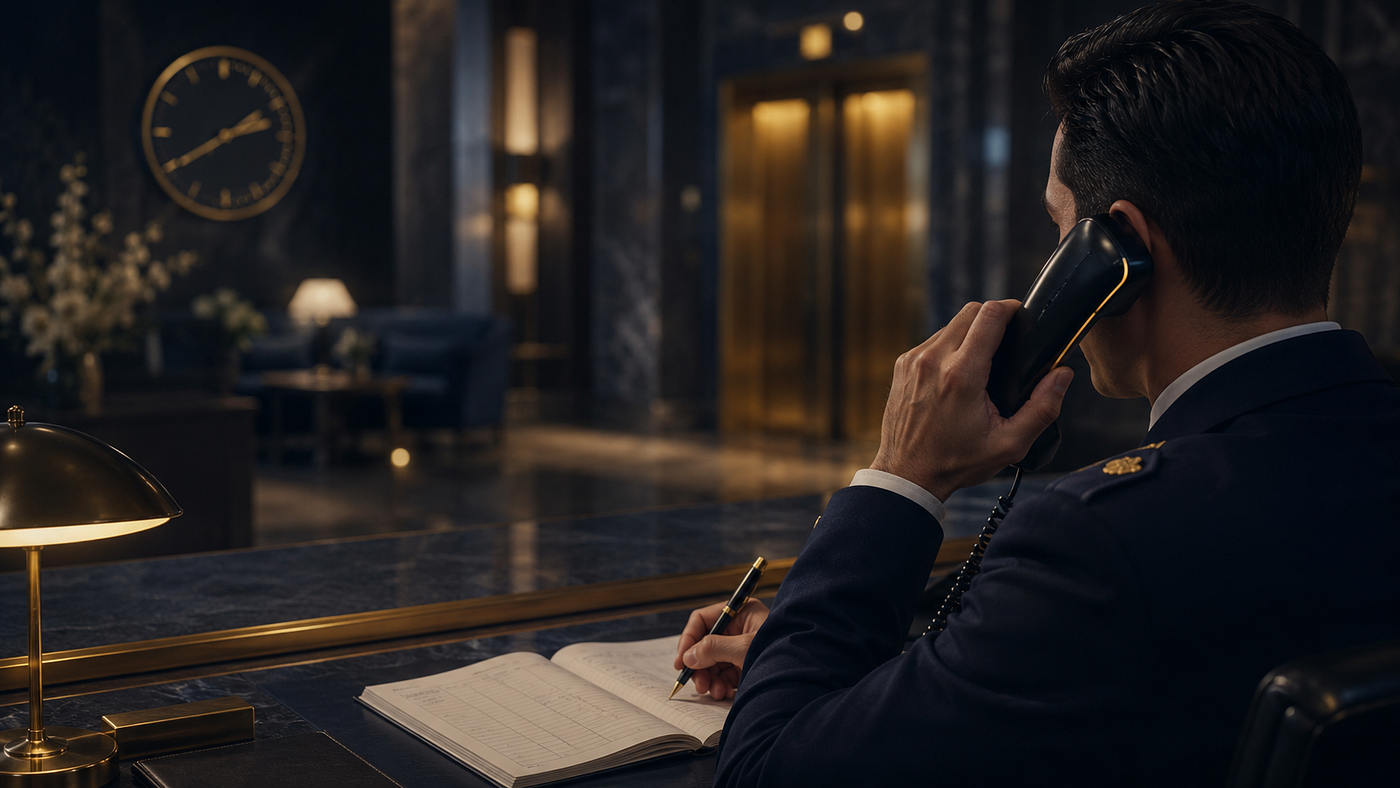
He had a high-value package, signature required, and his driver was running behind. He just wanted to confirm whether the resident in apartment 14B was usually home in the late afternoon, or if it was easier to leave packages with the front desk.
That was the question. Routine, on the surface. The kind of thing a concierge gets asked four times a day.
Our concierge didn’t answer it.
She told him she couldn’t share resident schedules, took his name and a callback number, and said property management would get back to him about delivery procedures. She hung up, opened the post-order binder, and logged the call. Twenty minutes later, when no carrier matched the number she’d written down, she emailed the property manager. Nothing happened. No incident, no headline, no police report. The building’s day kept going.
I’ve been in this business for more than forty years, and that call is the kind of moment I think about when somebody tells me concierge work is glorified reception.
What the caller actually wanted
Anyone running residential security in a Class A building has seen this pattern. The “delivery dispatcher” call is one of the oldest pretexts in the book, and it has gotten more sophisticated, not less. The caller isn’t trying to deliver anything. He’s trying to find out when a specific resident is not home, and he’s hoping a friendly person at the front desk will hand him a window.
The questions sound innocent in isolation. Does Mr. So-and-so usually accept packages at the door? Is the apartment normally empty after 3? Does the building hold packages on the ground floor or send them up? Each answer, on its own, is harmless. Stitched together, they tell you when to come, what floor to walk to, and what to expect when you get there.
The people running these calls aren’t amateurs. They use real company names. They have a believable reason for needing the information now. They build rapport. They count on the front desk being trained to be helpful, and they count on nobody upstairs ever finding out the call happened. Most of the time, they’re right.
What the concierge did
What our concierge did took less than three minutes, and on paper it sounds mundane. She didn’t confirm whether the resident was home. She didn’t give a delivery window. She didn’t read out the name of the person in 14B back to the caller, even though the caller had given it first. She took down a callback number that turned out to belong to nobody. She logged the call in the building’s daily report. She flagged property management.
Mundane on paper. In practice, it’s the entire job.
The reason she did it that way is that she had been trained to recognize the pattern, not just the rule. A rule says don’t share resident information. A pattern says here’s what a hostile call sounds like, here’s the script they’re working from, here’s what they’re actually trying to get, and here’s the answer that closes the door without tipping them off that you saw through it.
The 40-year lens
When I started in this industry, the front desk in a residential building was a doorman. Open the door, take a package, hail a cab. The training was a uniform and a smile. Nobody used the word concierge for that job, and nobody expected the person doing it to think about social engineering, because the term didn’t exist in the way we use it now.
That world is gone. The buildings we staff today are full of high-net-worth tenants, deliveries from companies that didn’t exist twenty years ago, contractors coming in and out at all hours, and a steady background hum of people on the other end of a phone or an intercom trying to get information they shouldn’t have. The threat model changed. A lot of operators in our industry didn’t change with it.
We started building real scenario training into our concierge program in the early 2000s, after we kept running into the same incidents at different buildings. The pretexting calls. The contractor showing up on a Saturday with an invented work order. The ex-spouse at the desk with a story about retrieving belongings. The package fraud at scale during the holidays. None of those are in a job description. All of them are the job.
What I tell property managers when they ask me what they’re paying for is this: you’re not paying for someone to greet residents. You’re paying for the difference between a person who answers the question and a person who recognizes the question. The first one costs a building money the day something goes wrong. The second one is the reason nothing goes wrong in the first place, which is also the reason the work is invisible.
What separates a concierge from a front desk attendant
I get asked the difference often enough that I have a short list. None of it is a credential, and most of it doesn’t show up on a resume.
A real concierge works from a written post order that names specific scenarios and specific responses, not a generic checklist. They’ve sat through scenario training, repeatedly, including the calls and the visitors that didn’t end in incidents — because the absence of incidents is the proof the training worked. They know which decisions are theirs and which ones go up the chain, and they don’t guess at the line. They know the residents well enough to notice when something is off, and they know the building well enough to know which contractors are routine and which one is wearing a uniform that doesn’t match anyone we use. And they treat patterns as information. One odd phone call is a story. Three odd phone calls in a month at three different buildings is a problem we share across our portfolio.
A front desk attendant does none of that, not because they’re bad at their job, but because nobody set the job up that way.
The cost of getting this wrong
The reason any of this matters is that the building pays for the difference. A pretexting call that succeeds is a burglary, an insurance claim, an angry resident, a nervous board, and a property manager explaining to ownership why the front desk gave a stranger a delivery window. By the time it gets to that conversation, the operator has usually already lost the contract.
This is the job, not an upsell or a premium tier. If you run a building and you’ve never asked your security provider how their concierge would handle a 2:40 call about apartment 14B, that’s the question to ask this week.
If you want to talk through what a real concierge program looks like in your building, we’ll have that conversation. No quote, no pitch deck. Just the conversation.
Read more: Concierge Vs Security Guards
메타데이터
- post_id
- a7ddee7ac309
- slug
- why-i-tell-property-managers-the-front-desk-is-the-job-not-the-greeting-a7ddee7ac309
- url
- https://medium.com/@buildingsecurityservices/why-i-tell-property-managers-the-front-desk-is-the-job-not-the-greeting-a7ddee7ac309
- canonical_url
- https://medium.com/@buildingsecurityservices/why-i-tell-property-managers-the-front-desk-is-the-job-not-the-greeting-a7ddee7ac309
- author_url
- https://medium.com/@buildingsecurityservices
- status
- ok
- fetched_at
- 2026-07-15 05:07:54