How Speed-to-Lead Is Reshaping Modern B2B Demand Generation in 2026
Today’s B2B buyers expect immediate engagement. Businesses improving response speed through AI-powered demand generation, intent…
How Speed-to-Lead Is Reshaping Modern B2B Demand Generation in 2026
Today’s B2B buyers expect immediate engagement. Businesses improving response speed through AI-powered demand generation, intent intelligence, and automated lead workflows are outperforming competitors in pipeline growth and customer acquisition.
Modern B2B buyers move fast.
The moment a prospect fills out a form, downloads a resource, or engages with a campaign, expectations shift instantly. Buyers now expect rapid communication, personalized engagement, and immediate value from brands they interact with.
The problem is that many businesses still operate with delayed lead response systems. Sales teams take hours — sometimes days — to follow up. Leads get manually assigned, and CRM workflows remain disconnected. By the time outreach happens, the buyer’s attention has already shifted elsewhere.
This is why speed-to-lead has become one of the most important performance drivers in modern B2B demand generation. Today, high-performing B2B lead generation companies in Pune are focusing heavily on response-time optimization, AI-powered engagement, and automated lead workflows to improve conversion opportunities before buyer interest fades.
Why Slow Lead Response Is Quietly Killing Revenue
Most businesses underestimate how quickly buyer intent disappears. Modern buyers are researching multiple vendors simultaneously. If your business delays engagement, competitors often become the first meaningful interaction in the buying journey.
Traditional lead handling processes usually involve:
- Manual lead assignment
- Delayed CRM updates
- Generic follow-up emails
- Disconnected sales communication
- Limited engagement visibility
These operational gaps create serious revenue challenges, leading to lower conversion rates, reduced customer engagement, poor lead nurturing, longer sales cycles, and missed revenue opportunities.
This is why modern Sales Lead Generation Companies are moving toward intelligent demand generation systems capable of responding to buyers in real time. Organizations prioritizing speed-to-lead strategies are seeing measurable improvements across lead engagement rates, sales productivity, pipeline velocity, and overall customer experience.
What Speed-to-Lead Actually Means in Modern Demand Generation
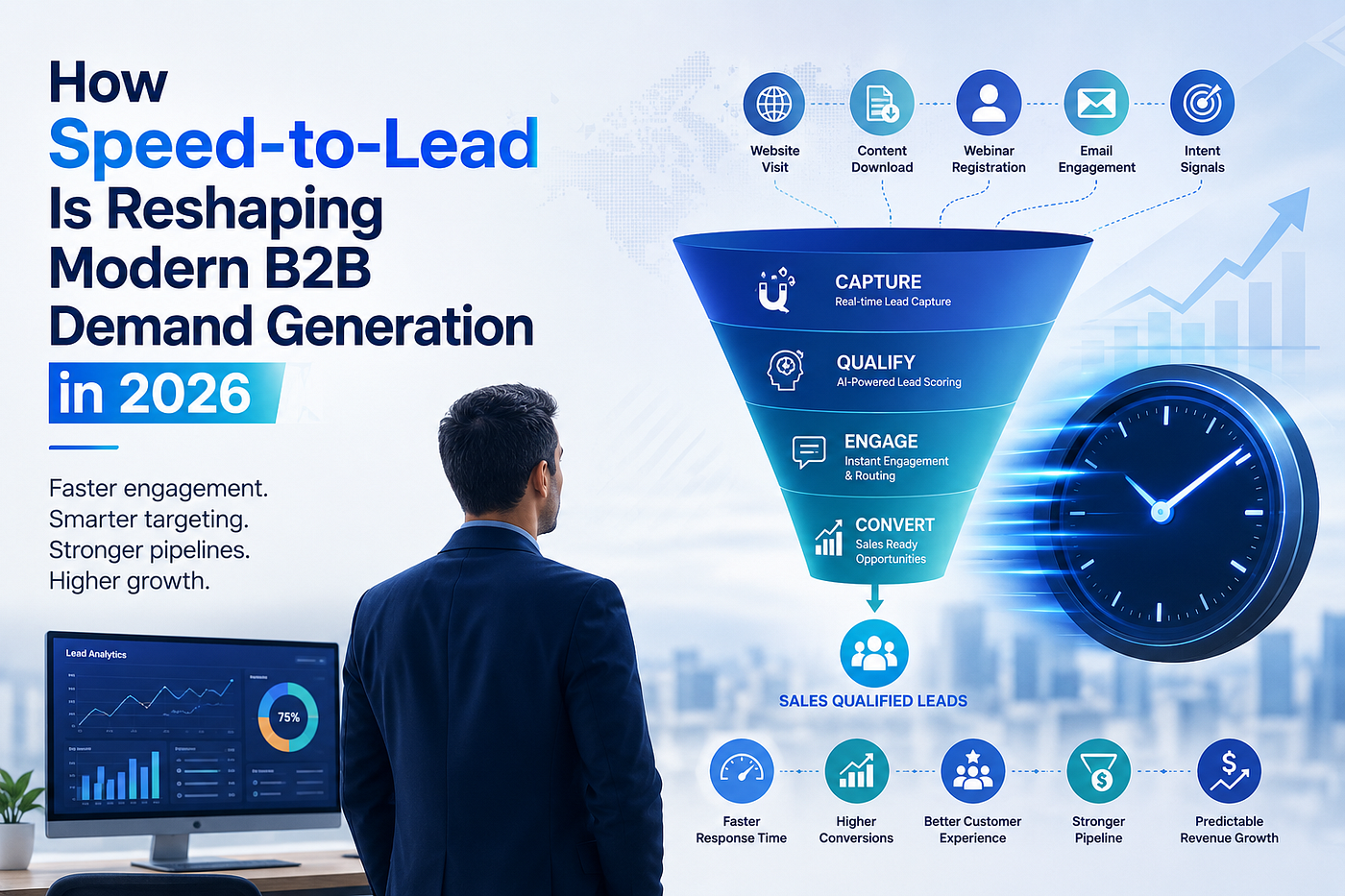
Speed-to-lead is not simply about responding quickly. It’s about creating a connected engagement system capable of:
- Capturing intent signals
- Routing leads instantly
- Triggering automated workflows
- Delivering personalized engagement
- Aligning marketing and sales communication
Modern demand generation strategies combine AI-powered lead scoring, CRM automation, behavioral tracking, real-time engagement workflows, and intent-driven communication to create a much faster and more intelligent buyer experience.
Businesses working with advanced sales qualified lead generation services are increasingly focusing on automation and intent intelligence to accelerate lead engagement before competitors enter the conversation.
Why Buyer Intent Matters More Than Ever
One of the biggest changes in B2B demand generation is the rise of buyer intent intelligence. Today’s buyers leave digital signals throughout their research journey via website visits, content downloads, webinar engagement, search behavior, and competitor research.
Intent data helps businesses identify which accounts are actively researching solutions before they directly contact sales. Top-tier B2B lead generation companies in Pune are using these signals to prioritize high-intent prospects and trigger faster outreach workflows. This allows businesses to improve targeting precision, reduce wasted outreach, and build stronger pipeline predictability.
You can explore how DemandTech Demand Generation Solutions help businesses combine intent intelligence, automation, and full-funnel engagement strategies to improve demand generation outcomes.
The Role of AI in Speed-to-Lead Optimization
Manual lead management cannot keep pace with modern buyer expectations; this is where AI-powered automation becomes critical. AI-driven demand generation systems help businesses automate lead routing, prioritize high-intent accounts, and optimize communication timing.
Instead of relying on static workflows, businesses can create intelligent engagement ecosystems capable of responding dynamically to buyer behavior. A modern global B2B marketing services company uses AI-driven automation not only to improve response speed but also to enhance communication relevance and buyer personalization. This dramatically improves the customer experience while reducing operational inefficiencies.
How Modern Demand Generation Firms Build Faster Conversion Pipelines
The most successful demand generation strategies today focus on seamless alignment between marketing, sales, CRM systems, automation workflows, and buyer intelligence. Modern businesses no longer treat lead generation as an isolated marketing activity. Instead, they build connected systems capable of managing the entire customer journey.
A leading demand generation firm for global markets focuses on:
- Intent-based targeting
- Multi-channel engagement
- Real-time lead scoring
- Automated lead nurturing
- Funnel-stage personalization
- CRM integration and pipeline acceleration
The Growing Importance of Sales and Marketing Alignment
One of the biggest reasons businesses struggle with speed-to-lead is poor alignment between marketing and sales teams. Marketing often generates leads without enough contextual insight, while sales teams receive incomplete information about buyer behavior and intent. This creates delays in communication and weakens engagement quality.
Businesses implementing AI-powered demand generation platforms can improve lead visibility, buyer journey tracking, and engagement history. Modern sales qualified lead generation services increasingly depend on shared data environments that help sales teams understand which content buyers consumed and what triggered their engagement. This context transforms cold outreach into informed conversations.
Why Speed-to-Lead Matters Across Industries
Although speed-to-lead is often discussed in B2B environments, the impact extends across B2C industries as well. Sectors like SaaS, healthcare, real estate, education, financial services, and consulting benefit immensely from AI-powered lead engagement. For both B2B and B2C companies, rapid engagement helps improve customer experience, increase trust, reduce lead drop-offs, and accelerate decision-making.
How DemandTech Supports Modern Demand Generation
Modern businesses need more than just lead collection; they need systems capable of identifying intent, accelerating engagement, and aligning revenue teams. This is where DemandTech helps businesses modernize their demand generation infrastructure.
DemandTech focuses on:
- Intent-driven demand generation
- AI-powered engagement workflows
- Full-funnel lead nurturing
- CRM-connected automation
- Behavioral targeting
Businesses looking to improve pipeline quality, engagement timing, and lead conversion efficiency are increasingly adopting AI-powered demand generation systems to remain competitive in evolving digital markets.
You can also explore our detailed breakdown of these strategies here:
Speed-to-Lead B2B Demand Generation Insights
The Future of Demand Generation Is Real-Time
The future of demand generation belongs to businesses capable of responding to buyers in real time. Modern customer acquisition is no longer driven by volume-based outreach alone. It’s driven by buyer intelligence, intent data, AI automation, and faster communication systems.
Companies still relying on delayed workflows and disconnected systems will continue struggling with inconsistent pipeline performance. Businesses building intelligent speed-to-lead infrastructure today are creating significant competitive advantages in customer engagement, conversion speed, and long-term revenue growth.
Conclusion
Modern buyers expect immediate, relevant engagement — and businesses that fail to respond quickly risk losing opportunities before conversations even begin. Speed-to-lead has become one of the most important drivers of modern demand generation performance.
Businesses adopting AI-powered engagement systems, intent intelligence, and automated workflows are improving pipeline quality, accelerating customer acquisition, and creating more predictable revenue growth. As digital markets continue to evolve, companies investing in intelligent demand generation infrastructure will consistently outperform competitors still relying on slow, disconnected legacy systems.
메타데이터
- post_id
- a7e9a0d5cb36
- slug
- how-speed-to-lead-is-reshaping-modern-b2b-demand-generation-in-2026-a7e9a0d5cb36
- url
- https://medium.com/@demand.tech.links/how-speed-to-lead-is-reshaping-modern-b2b-demand-generation-in-2026-a7e9a0d5cb36
- canonical_url
- https://medium.com/@demand.tech.links/how-speed-to-lead-is-reshaping-modern-b2b-demand-generation-in-2026-a7e9a0d5cb36
- author_url
- https://medium.com/@demand.tech.links
- status
- ok
- fetched_at
- 2026-06-09 15:37:30