The Invisible Conversation: Design Language, Creative Direction, and Product Design
The Invisible Conversation: Design Language, Creative Direction, and Product Design
The Japanese concept of Ma can be thought of as “a space (or time) that is intentionally left empty, in order to allow the existence of relations and functions between people and things.”
Thoughtful design is fundamentally relational — it finds meaning in the “ma,” the space between, providing an invisible structure that guides contextualization, relationship, and function long before any object is designed, created, or encountered.
Design language, like all language, creates a foundation for sense-making and is concerned with the space between people and things; in this way, design language is really the first element of any design we encounter, defining how objects relate to their environment and to the people who engage them. As we approach a piece of furniture or a website or a musical instrument — any design — design language is always transmitting some contextual meaning about its function, purpose, and how it fits within the world.
Three Reasons Why This is Interesting
This is such a fascinating angle to explore for a few reasons. First, as highlighted by the Japanese concept of ma, a significant amount of art and design is communicated implicitly, invisibly, or through what is not present rather than what is explicit, visible, and present. This idea shares its genesis with everything from ancient spiritual mystics who referred to this as the apophatic way, to poets or composers who rely on the caesura (//) to create intentional fractures in a melodic line that forces the listener or reader to experience the silence.
Second, the creative direction choices demonstrate how material, form, and construction reflect more than consumer goals or isolated decisions — they represent a collective vision that you’re experiencing at scale. It’s not a small thing to consider how many meetings, sketches, and iterations went into every product that any design team ultimately ended up creating; it’s the chair you’re sitting in, the screen you’re reading this on, or your desk and lamp you’re using right now.
And third, true integration is achieved not merely by aligning visual styles or methodically plotting matching colorways, but by establishing a deep, coherent conversation between design language, creative direction, and product design.
That is to say, integration occurs when the invisible frameworks — the principles, intentions, and values — infuse every tangible detail and every user experience. When these three elements are harmonized, the resulting object or system is not just functional or beautiful: it embodies a relational intelligence, transmitting meaning and purpose through both presence and absence, through what is seen and what is not seen, through what is understood and what is felt.
Some Iconic Examples
We see this integration or dynamic most clearly in the objects that have outlasted any trends and remain iconic examples of design language we all seem to “get.” In this way, we’re reminded that there’s always the object, and then there’s the invisible design choices that help transmit what that object means. This way of seeing these designs and products is also what imbues them with beauty.
It is the very nature of design language to cultivate curiosity and wonder for all made things. We see what is there and ask, “What is it’s function?” We see what is not there and ask, “Why was it made at all?” This is our first hint that design is not just about the creation of an object, but the relationship between one thing and another thing…between the product and nature, even between our creations and ourselves.

© Noguchi.org
Consider Isamu Noguchi’s ***Akari Light Sculptures***, which he designed not as lamps, but as “sculptures of space.” The object itself — paper and bamboo — is fragile and weightless; its primary function is to sculpt the empty air of a room with warm, diffuse light. The design is not the paper; the design is the atmosphere the paper creates. And perhaps more importantly, the design language is found in the relationship the sculpture is creating.
He called these works Akari, “a term meaning light as illumination, but also implying the idea of weightlessness.” If you’ve stood beside or beneath one of Noguchi’s beautiful designs, you can know that there’s as much happening with the materials that make up the sculpture as there is with the design language being spoken between the lamp, the room, and yourself.
There’s the Akari, and then there’s what the Akari means.

© Multicore
Another example is a design from Naoto Fukasawa — product designer, curator, and vice president at Tama Art University. The Wall mounted CD player (1999) was always more than a CD player. It’s designed to be used and displayed, but not just displayed; it’s clear that the it was designed by many conversations, teams, and questions that transcend the practical function of “play a CD.”
The design language in this technological masterpiece is speaking to you, almost begging you to answer the question: why is this mounted vertically on a wall? It’s drawing you in to look at more than the CD player: the color of the wall, the placement in a room, the curious problem of cable management, and so on.
There’s the CD player, and then there’s what the CD player means.
(Fun note: his work was recently featured in a comprehensive exhibition at the Philadelphia Art Museum, which offered the public-at-large an opportunity experience this relational design language firsthand.)
Design Is About Relationships
Even with the clearest design language and most coherent creative direction, real teams face pressure from manufacturing constraints, timelines, and stakeholder priorities that can disrupt this invisible conversation. Maintaining open dialogue and clear communication under pressure like this is where design leadership truly matters.
If we accept that design is not just about making objects, but about curating these invisible relationships, the question shifts from a consumeristic-centered ‘How do we use this?’ to a human-centered ‘How do we live with this?’
Our own language begins to change the more we learn the nuance of design language.
Integration isn’t a theory; it’s a practice — we recognize that we are embedded in a world of made, found, and natural objects and we would do well to understand our relationship to those objects: when we begin asking questions of integration, relationship, and emptiness, we’re starting to understand design language.
Here is how we can begin to cultivate this way of seeing the design language in our work and in our lives.
The “Negative Space” Practice
Instead of focusing on what is there (content, features, products), really observe what is missing. Review your current design ecosystem and ask: what is happening in the empty space, the silence, the margin?
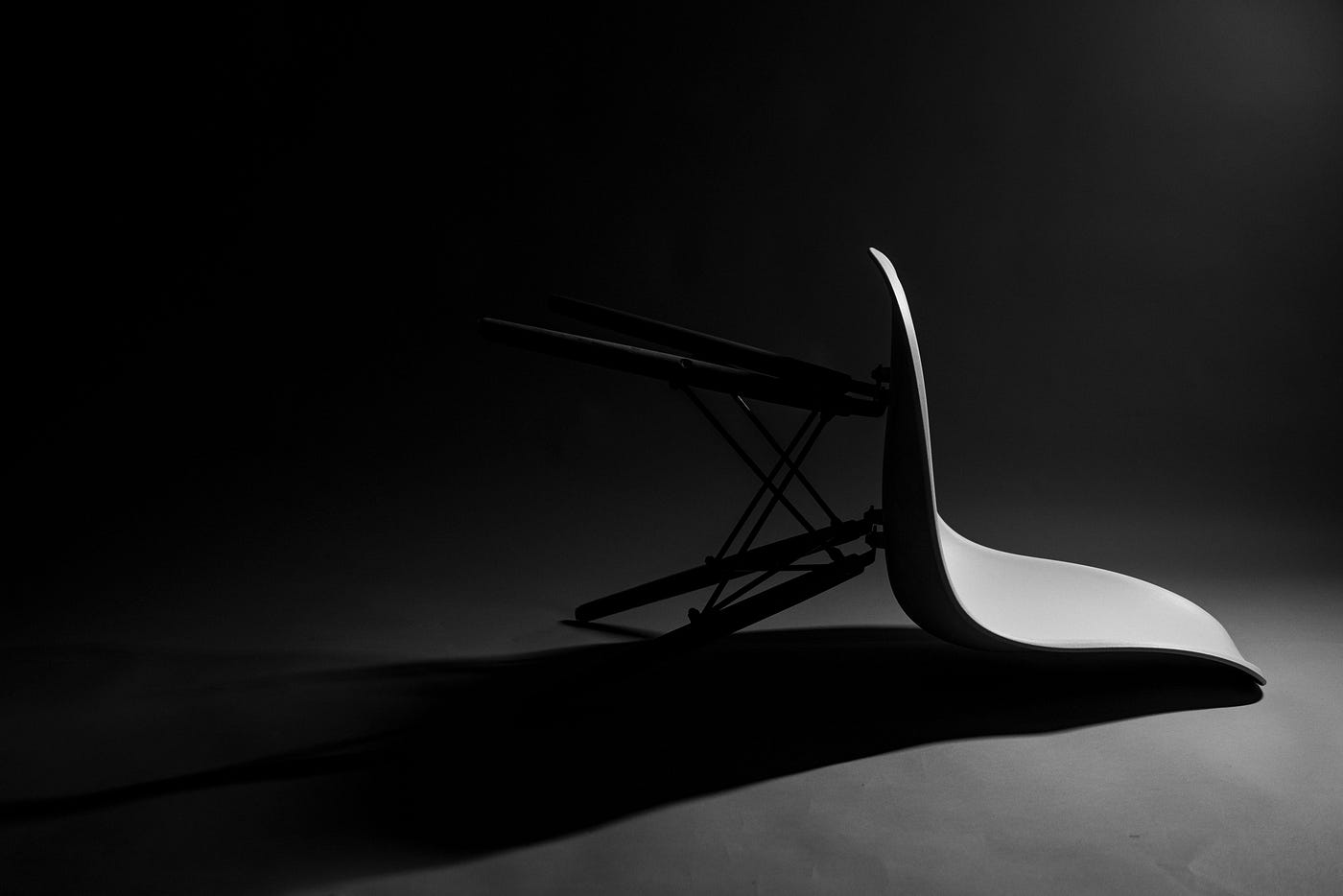
- An action you can take: Identify where your brand or product is “shouting” (over-explaining, over-featuring, over-styling). Paradoxically, brands often gain clarity by removing elements that can complicate the design language. If every part of a chair or interface is fighting for attention, there is no ma — no space for the user to imagine themselves.
Begin With The End In Mind
To achieve the “integration” we may long for, teams often need a mechanism to ensure the “invisible framework” survives the transition from concept to completion.
- An action you can take: Before a feedback meeting or review, teams could practice making a pitch highlighting the invisible intent of the product in one sentence — not its function, but its relational goal (e.g., “This chair should feel like it’s waiting for you,” or “This bookshelf already knows how much you love books,” etc. Have fun with these!
Embodied Practice: “Sensing the Ma”
Since we know that design is “relational,” we need to retrain our bodies to feel that relationship, not just see it. This practice grounds the abstract concept of something like ma in physical reality. Here’s a repeatable, short rhythm you can implement on a regular basis:
-
Select an Object: Choose a meaningful object in your space (a favorite chair, a stoneware mug, a well-designed writing tool, etc.).
-
The Non-Touch: Sit with it for a couple of minutes without touching it. Focus your attention not on the object itself, but on the space between your body and the object.
-
The Interaction: Reach out and use or move toward the object, but move with intentionality and thoughtfulness: notice the exact moment the “design language” communicates how to experience or hold it. Does the handle invite your hand? Does the texture tell you to be gentle or firm? Do you intuitively want to shift your weight one way or the other?
-
The Reflection: Recognize that this natural, embedded instruction — the handle saying “hold me here” — is the invisible conversation happening in real time. By slowing down, you move from using the design to living with it.
Design, at its best, speaks to the art of leaning into these invisible conversations over time — through sketches, through the myriad of iterations, all the way into a finished object that quietly knows how it wants to live with us. When design language, creative direction, and manufacturing choices all honor the same intention, the result is not just something we can use, but something that feels evocative and timely, as if it has always belonged in the space, once empty, it now inhabits.
메타데이터
- post_id
- a83a7ea04e93
- slug
- the-invisible-conversation-design-language-creative-direction-and-product-design-a83a7ea04e93
- url
- https://medium.com/lumen-by-ida-design/the-invisible-conversation-design-language-creative-direction-and-product-design-a83a7ea04e93
- canonical_url
- https://medium.com/lumen-by-ida-design/the-invisible-conversation-design-language-creative-direction-and-product-design-a83a7ea04e93
- author_url
- https://medium.com/@justinpheap
- status
- ok
- fetched_at
- 2026-06-09 15:37:30