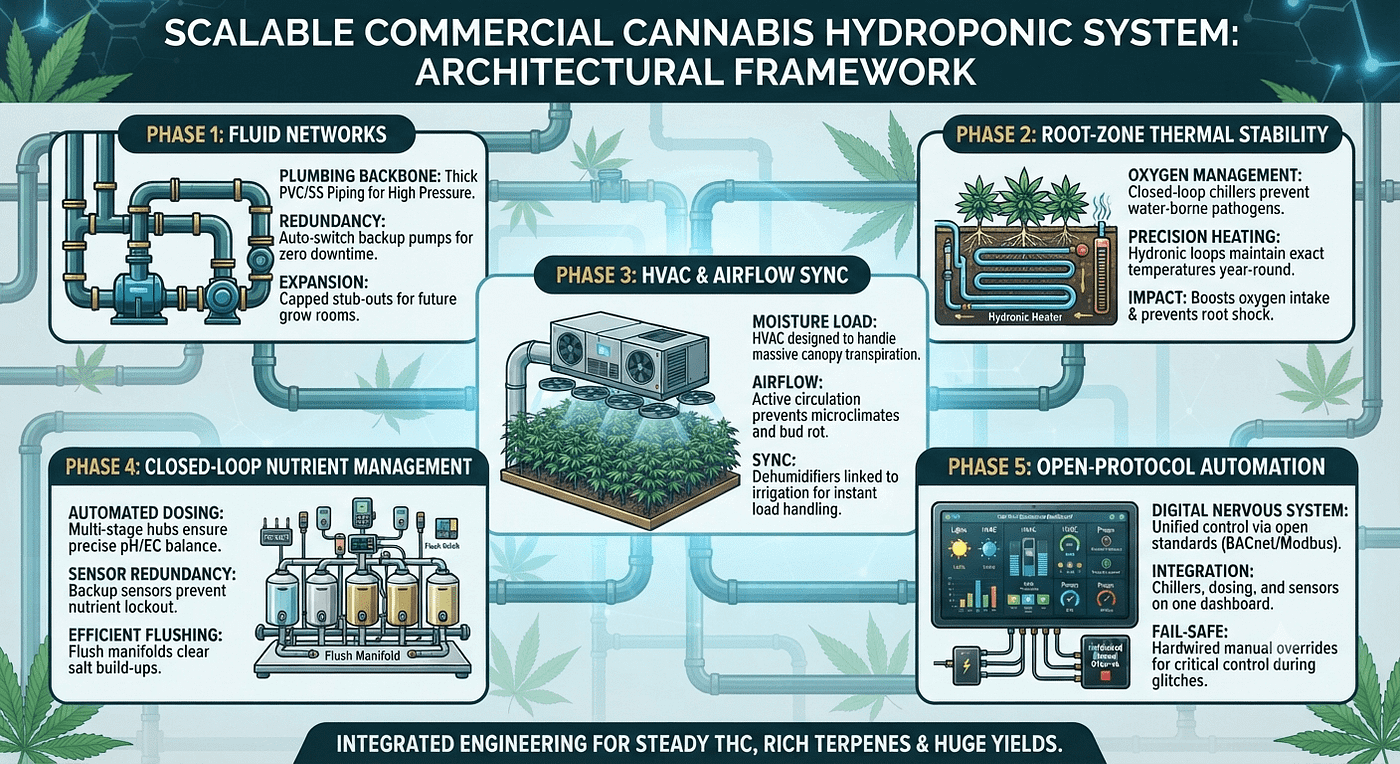
Hydronic Heating Systems Explained: The Physics and Engineering That Make Them Work
The Science Behind Hydronic Heating Systems in Greenhouses: Physics, Engineering, and Efficiency
Hydronic Heating Systems Explained: The Physics and Engineering That Make Them Work
The Science Behind Hydronic Heating Systems in Greenhouses: Physics, Engineering, and Efficiency

Hydronic Heating Systems
- Introduction
Greenhouses rely on tight climate control to ensure healthy plant growth and top yields. Heating is a vital step when the outdoor air is cold or during winter. Of the many options out there, **hydronic heating systems** excel due to their ability to provide steady, low-waste warmth. By using basic physics alongside clean engineering design, these setups generate stable zones that support crops while reducing energy costs.
2. The Basics of Fluid-Based Greenhouse Heating
What Is a Hydronic System?
To put it simply, these setups create a warming loop based on water. A central boiler heats the water to the right mark, and small pumps move the fluid through a piping grid. As the water flows, it releases warmth into the greenhouse through tubes. It then returns to the boiler to be heated once more.
This steady cycle provides warmth without the sharp heat spikes common in forced-air units. Using hot water is especially useful in a greenhouse setting. It allows for zone setups that match the exact needs of crops for optimal growth and development.
Core Parts
The major parts of a fluid-based setup are the boiler, pumps, pipes, and heat tools. Each part plays a vital role in keeping waste low. Boilers create the heat, pumps move the water, and lines distribute it across the facility.
Heat tools are set in place to send that warmth to the spots that need it most. For example, finned pipes installed down crop rows provide direct heating. Under-floor tubing is also used to make sure soil heat stays even. All of these parts combine to build a single loop that balances energy use with plant health.
3. The Physics Behind the Warmth
Heat Transfer Principles in Plant Environments
- Conduction: This is the transfer of heat straight through materials. An example is hot pipes warming the surrounding air or soil.
- Convection: This involves the movement of warm air currents. It helps distribute heat evenly throughout the greenhouse structure.
- Radiation: This delivers heat directly from hot surfaces, such as pipes and tubes, to the plants and soil.
An efficient greenhouse uses all three modes of heat transfer. Pipe conduction moves energy, air convection spreads it, and radiation warms the crops directly. This balance creates a stable climate where plants can thrive.
Why Water is an Ideal Medium for Stable Climates
Water is an ideal tool for moving energy because it retains heat much better than air. So, hydronic heating systems are capable of maintaining a consistent level of warmth without sudden, frequent changes. The thermal mass of the water enables the system to store heat energy. It then releases that energy at a slow pace to keep conditions steady.
In a commercial greenhouse, this translates to life-or-death stability. Plants are easily stressed by sudden drops or jumps in heat, which hydronic heating system minimizes. Growers who use water as the carrier for heat achieve a predictable atmosphere. This leads to healthier crops and higher yields.
4. Efficiency and Performance Factors
Energy Efficiency Advantages for Growers
Because water holds heat longer than air, heat stays more stable in hydronic heating systems with less energy required. This low waste means fuel use and operating costs are markedly lower. High-efficiency boilers make performance even better while making the setup more friendly to the land.
Energy efficiency also aligns perfectly with modern green goals. Many growers want to reduce their carbon footprint. Because hydronic heating systems can integrate with renewable energy sources, they make it easier to reach those goals. The long-term savings in both energy and emissions make fluid heating a smart investment.
Climate Benefits for Plant Growth
Stable heat safeguards plant health. Modern hydronic heating system eliminates cold spots and reduce wide heat swings, maintaining a uniform climate. Consistent warmth promotes stronger growth, faster maturity, and higher-quality crops.
These setups also eliminate most of the humidity problems created by forced-air systems. Without constant air blasting, the system prevents wild moisture changes. This is important to prevent plant stress and stop the spread of crop diseases.
Commercial Greenhouses and Large-Scale Production
In commercial facilities, hydronic heating system delivers the exact consistency needed for large-scale production. Uniform heat ensures that crops mature at the same time, which is vital for market demand. These setups are highly appealing because they scale up easily to suit operations of varying sizes.
Large growers also benefit from smart automation. Digital controls allow precise management of heating schedules, reducing fuel waste and optimizing energy use. This combination of low waste and reliability supports long-term profits.
5. Conclusion
Fluid heating setups embody the application of science to engineering design. They produce an effective and dependable method of providing heat in the greenhouse environment. The physics of heat transfer and the thermal properties of water permit these systems to create stable climates. From commercial operations to specialized facilities, these systems afford the precision and reliability required by today’s farming challenges.
메타데이터
- post_id
- a87ac2da82d5
- slug
- hydronic-heating-systems-explained-the-physics-and-engineering-that-make-them-work-a87ac2da82d5
- url
- https://medium.com/@biotherm.solutions360/hydronic-heating-systems-explained-the-physics-and-engineering-that-make-them-work-a87ac2da82d5
- canonical_url
- https://medium.com/@biotherm.solutions360/hydronic-heating-systems-explained-the-physics-and-engineering-that-make-them-work-a87ac2da82d5
- author_url
- https://medium.com/@biotherm.solutions360
- status
- ok
- fetched_at
- 2026-07-13 06:23:13