Covert Narcissism in the Temporal Loops of Circular Conversations
You didn’t lose the argument. You lost three hours of your life to a conversation that was designed never to end — and now you’re replaying…
Covert Narcissism in the Temporal Loops of Circular Conversations
You didn’t lose the argument. You lost three hours of your life to a conversation that was designed never to end — and now you’re replaying it at 2 a.m. like it owes you an apology.

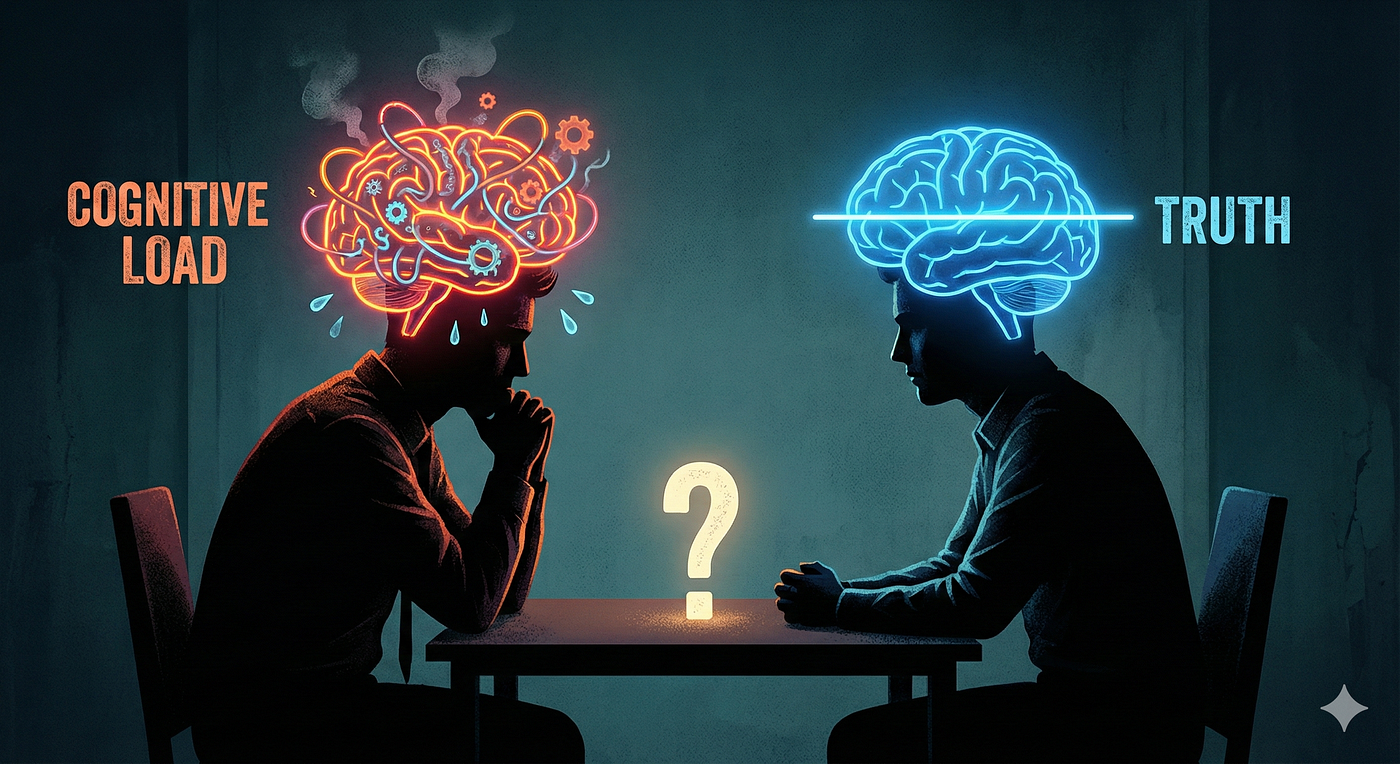
Image is generated via Nano Banana Pro.
There is a specific kind of tired that doesn’t come from work, or from running, or from a long week of bad sleep.
It comes from a 45-minute conversation that started about the dishwasher and somehow ended with you defending a comment you made at a wedding in 2019.
If you know that tired, you already know what this article is about. You just maybe never had a name for it.
I’m going to give you a name. Several, actually. By the end, you’ll understand why your brain feels like it’s running in circles long after the other person has left the room — and why you’re still arguing with them in the shower the next morning.
This is about covert narcissism. But more specifically, it’s about the strangest, most disorienting weapon in their entire arsenal. The one nobody warns you about. The one that doesn’t bruise, doesn’t yell, doesn’t even raise its voice.
The temporal loop.
The circular conversation that has no exit, no resolution, no clock, and — somehow — no end.
Let me tell you what’s actually happening to you in those conversations. Because once you see the pattern, you cannot un-see it. And once you cannot un-see it, you stop trying to win.
You start walking out of the room.
Part One: The Conversation That Should Have Lasted Four Minutes
I want you to picture something very specific.
It’s a Tuesday night. You’re tired. You bring up something small. Maybe it’s the trash that didn’t get taken out. Maybe it’s a comment your partner made in front of your sister. Maybe it’s a credit card charge you didn’t recognize. The kind of thing two functional adults handle in under five minutes.
You open your mouth. You say the sentence. Calmly. You’ve rehearsed it in the car on the way home because you’ve learned, by now, that how you say things matters more than what you say.
Forty-seven minutes later, you are crying in the kitchen, defending something you said at your nephew’s baptism in 2021, while the original topic — the trash, the comment, the charge — has not been touched once.
You don’t remember how you got here.
You don’t remember the bridge. The pivot. The moment the conversation slipped sideways into a parallel universe where you are the bad guy and your nervous system is the only thing on trial.
This is not an argument. This is not a fight.
This is a temporal loop. And you are inside it.
I want you to understand something before we go any further. What I just described isn’t bad communication. It isn’t a personality clash. It isn’t “we just process things differently.” It’s a specific, deliberate, almost choreographed conversational structure that some people — particularly covert narcissists — deploy with surgical precision.
It has rules. It has stages. It has tells. And once you know them, you can spot one starting inside the first 90 seconds.
I’m going to teach you those 90 seconds. But first I have to explain why your brain doesn’t catch it in real time. Because that’s the part that makes you feel crazy.
Part Two: Why You Cannot Think Straight Inside the Loop
There’s a reason you walk away from these conversations feeling like your IQ dropped 40 points somewhere between the living room and the hallway.
Your brain is, very literally, going partially offline.
When the human nervous system detects unpredictability in a close relationship — not danger, not violence, just unpredictability — it activates the same threat response that would fire if you saw a snake on the carpet. The amygdala flares. The prefrontal cortex, the part of your brain that handles logic, language, narrative, sequencing, and “wait, what was I saying again?” — that part dims down.
This is not a metaphor. This is measurable. It’s why you forget your own argument mid-sentence. It’s why you lose your words. It’s why you can be a senior executive who runs a team of 60 people and still find yourself stammering at your kitchen table because your partner just asked you, with quiet astonishment, “why are you so upset right now?”
You are not stupid. You are not bad at confrontation. You are not “too sensitive.”
You are in a low-grade physiological threat state, trying to win a logic-based debate, against someone whose entire goal is to keep you in that threat state until you give up.
This is the cruelest part of the temporal loop. It’s not just that the conversation goes nowhere. It’s that the longer it goes, the less capable you become of finding the exit. Because every minute inside the loop further degrades the part of your brain that would normally say:
“Hey. We’ve been talking for 38 minutes and we are not closer to a solution. We are further from one. This conversation is not what it appears to be. Get out of the room.”
Healthy conversations build coherence. Loop conversations dismantle it. By minute 30, you can’t even remember the original topic. By minute 60, you’re agreeing to things you don’t agree with. By minute 90, you’re apologizing for things you didn’t do.
And then they go to bed. And you lie awake.
That’s the loop closing.
Part Three: Meet the Covert Narcissist (No, Not the One You’re Thinking Of)
When most people hear “narcissist,” they picture a loud one. The arrogant boss. The guy at the party who won’t stop talking about his car. The grandiose, peacocking, status-obsessed type. Loud. Vain. Easy to spot. Easy to avoid.
That’s the overt narcissist. The one Hollywood loves. The one your friends warn you about.
That’s not who we’re talking about today.
The covert narcissist is the quiet one. The one who looks shy in the first three months of knowing them. The one who plays the underdog. The one who tells you, with sad eyes, that nobody has ever really understood them — until you. The one who is “going through a lot.” The one with the soft voice, the wounded backstory, the casually mentioned therapist, the perfect listening face when you tell them about your day.
The covert narcissist doesn’t demand to be the center of attention. They demand to be the center of concern.
And here’s the thing that makes them so much harder to spot than the overt kind: they often genuinely believe they are the good ones. The victim. The misunderstood one. The kind, sensitive person in a cruel world that keeps misreading them. They will weep in front of you. They will apologize beautifully. They will say all the right therapy words: “boundaries,” “trauma,” “trigger,” “showing up for me.”
You will leave a conversation with a covert narcissist feeling like you might be the problem.
That is not an accident. That is the design.
The overt narcissist controls a room by dominating it. The covert narcissist controls a room by making you feel responsible for their feelings inside it.
And the temporal loop — the circular conversation — is their masterpiece.
Part Four: What a Temporal Loop Actually Is
Let me give you a real definition, because most articles dance around it.
A temporal loop, in the context of covert narcissism, is a conversational structure that:
- Has no resolution as its goal.
- Uses time as a weapon — both real-time (the duration of the conversation) and historical time (pulling in events from years ago).
- Removes linear cause-and-effect from the dialogue.
- Forces the other person into a cognitive state where they cannot track what is being discussed.
- Ends not with agreement, but with exhaustion — and exhaustion that re-loads itself the next time you remember the conversation.
That last part is the kicker. The temporal loop doesn’t end when the conversation ends. It ends when you stop replaying it in your head. Which, for most victims of covert narcissism, is sometime around the next conversation, which is itself a loop, which then resets the clock.
You are not having a series of arguments. You are inside one continuous, multi-year argument that has no edges, no center, no resolution, and no exit. Today’s fight is a continuation of last month’s, which was a callback to last year’s, which referenced something that happened six years ago.
There is no “we already talked about that.” Everything is permanently re-litigatable. The covert narcissist holds the entire emotional ledger of your relationship in their hand at all times, and they can pull any line item out at any moment, and they will.
This is what people mean when they say covert narcissists “weaponize the past.” But it goes deeper than that. They weaponize the concept of past. They make time itself a tool. There is no statute of limitations on any grievance. There is no closing of any chapter. Every drawer in the house is always open. Forever.
That is the temporal loop.
Part Five: The Eight Moves They Use to Lock You In
The temporal loop is not random. It’s a sequence of specific moves, executed in a rough order, with predictable transitions. I’m going to walk you through all eight, because once you can name them in real time, half their power dies.
Move 1: The Pivot Within Sixty Seconds
You bring up Topic A.
Within the first minute, they move to Topic B. Almost always, Topic B is a complaint about you.
It looks like this:
You: “I wanted to talk about how late you came home last night, I was worried.”
Them: “You know what’s interesting that you bring that up, because I’ve been wanting to say something for weeks about how you’ve been talking to me lately.”
You did not get to say a second sentence about Topic A. You will not get to say one for the entire conversation. Topic A is dead. It died at second 47. It will be buried so deep under Topics B through Q that by the time the conversation ends, you will not remember why you opened your mouth in the first place.
Watch for this in the first 60 seconds. Every single time.
Move 2: The Past Cannon
If the pivot doesn’t work — if you, having read enough Reddit threads, try to gently steer back to Topic A — they reach for the cannon.
The Past Cannon is a sudden, dramatic reference to something you did six months, two years, or eight years ago. It will be unrelated to the current conversation. It will be presented as if it explains everything.
“I find it really hard to have these conversations with you because honestly, ever since the thing at your sister’s wedding, I’ve been trying to feel safe with you.”
You will now spend the next 20 minutes either (a) defending the thing at your sister’s wedding, or (b) trying to remember what they’re even referring to, because somehow it didn’t seem like a thing to them at the time. They didn’t bring it up then. They are bringing it up now, in this conversation, about the trash.
The cannon does two things. It pulls you backward in time, away from the present grievance. And it activates the shame circuit — because nobody likes being told they hurt someone, especially someone they live with. You are now soft. You are now sorry. You are now defensive about something that happened during the Obama administration.
The original topic is now lost in a galaxy three time zones away.
Move 3: Manufactured Complexity
You ask a yes-or-no question. They answer with a TED talk.
You: “Did you call the plumber?”
Them: “It’s interesting because I’ve actually been thinking a lot about how decisions get made in this household and how I feel like a lot of the mental load falls on me in ways that I don’t think have ever really been acknowledged, and I’m not saying you do it on purpose, but there’s a pattern where I’m the one carrying these things and then I’m also the one being asked about them, and I think before we can even get to the plumber question we have to talk about the larger system here…”
By minute four of this monologue, you have forgotten what a plumber even is.
Manufactured complexity is the deliberate inflation of a simple question into an unanswerable existential one. They have not refused to answer you. They have done something much smarter. They have made the question itself feel small, immature, naïve — like you are missing some larger context that they, of course, are kind enough to share with you.
You will spend the rest of the conversation trying to engage with the “larger system.” You will leave the room having never learned whether the plumber was called.
(He was not called.)
Move 4: The DARVO
DARVO is an acronym borrowed from researchers studying abuse patterns. It stands for Deny, Attack, Reverse Victim and Offender.
It looks like this. You finally, after 30 minutes, name something they did. Not in an aggressive way. Just clearly.
“When you said that thing in front of my parents, it hurt my feelings.”
The covert narcissist will:
Deny — “I didn’t say that. I would never say that. You’re misremembering.”
Attack — “Honestly, the way you’re bringing this up right now is exactly the problem. You ambush me. You wait until I’m tired and you ambush me.”
Reverse Victim and Offender — “Do you have any idea how exhausting it is for me to constantly be in conversations where I’m being accused of things? I feel like I can’t say anything around you. I feel like I’m walking on eggshells in my own home.”
In sixty seconds, you have gone from the person who was hurt to the person doing the hurting. They are now the victim. You are now apologizing.
This is not improvisation. This is a script. Most covert narcissists will run DARVO in some form during every meaningful conflict. You can almost set a timer to it.
Move 5: The Eternal Victim Card
If DARVO doesn’t fully land, they pull the card.
“You don’t understand. You don’t know what it was like growing up the way I did. You have no idea how hard it is for me to even have these conversations. I’m trying. I’m really trying. But it’s hard for me because of what happened to me as a kid.”
You cannot argue with this. There is no argument to make. They have invoked a trump card that takes the entire conversation off the table. To continue pursuing your point would now make you the monster who is using their childhood trauma against them.
Note: this is not a critique of people with real trauma. Most people with genuine trauma do not deploy it strategically inside arguments about household logistics. The Eternal Victim Card is specifically the use of vulnerability as a shield against accountability. It is real pain being used as fake currency.
You will fold. You will say “I’m sorry, I didn’t mean to — .” The original topic is now buried under a layer of empathy for the person who hurt you.
Loop tightening.
Move 6: The Goalpost March
This one is sneaky because it doesn’t feel like manipulation. It feels like clarification.
You offer a solution. They reject it for a reason. You offer a new solution that addresses the reason. They reject that one for a new reason. You offer a third solution. They reject that one because of the first reason, which you thought you’d already addressed.
The goalposts are not fixed. They never were. The goalposts are a function of whatever you said most recently. The covert narcissist is not actually evaluating your proposals against a standard. They are evaluating them against the need to keep the conversation going.
Because remember: resolution is not the goal. Exhaustion is.
A solution would end the conversation. So no solution can be acceptable.
You will leave this conversation believing you are bad at problem-solving. You are not. You are problem-solving in a system where the problem is structurally not allowed to be solved.
Move 7: The Silent Punctuation
Sometimes — not always, but sometimes — they will go quiet.
Not the quiet of listening. The quiet of withdrawal. The strategic, theatrical, weaponized silence. They will look at the floor. They will exhale slowly. They will, with elaborate sadness, refuse to engage.
This is designed to make you talk more. To fill the silence. To begin negotiating with yourself, out loud, in front of them, while they watch. You will offer concessions you didn’t intend to offer. You will apologize for tone you didn’t use. You will become smaller and softer because the silence is unbearable.
The silent punctuation usually comes after they have already accomplished most of the loop and now want to lock the result in. It is the period at the end of the sentence they wrote on you.
When you finally say, “I’m sorry, can we just be okay?” — and they slowly, sadly nod — they have won.
The loop is now closed.
Move 8: The Reset
This is the move that turns one conversation into a multi-year temporal loop.
The next day — or the next hour, or the next week — they are sweet again. Warm. Easy. Almost as if last night didn’t happen. They will not bring it up. They will not reference it. They will not apologize for it, but they will also not seem to be holding anything against you.
You will feel an enormous wave of relief. You will think, maybe I was overreacting. Maybe it wasn’t that bad. Maybe we just had a rough night. You will not bring it up either, because bringing it up would risk starting another loop, and you are still recovering from the last one.
The conversation is not resolved. It is simply paused. Filed away. Stored in the narcissist’s emotional ledger, ready to be redeployed in three months when they need ammunition.
This is how Move 8 becomes Move 2 in the next loop. The Reset is what makes the Past Cannon possible. By refusing to ever close a conversation, they keep every conversation permanently loaded.
You are not living through a series of arguments. You are living inside one argument that never ends. The lights just dim and brighten on it.
Part Six: The Twelve Hours After the Loop
Here is the part nobody warned me about.
The conversation does not end when the conversation ends.
You will go to bed. You will lie there in the dark. Your partner will fall asleep within four minutes — covert narcissists tend to sleep extraordinarily well after these conversations, which is its own clue — and you will lie awake for the next three hours, replaying the loop.
You will think of the perfect thing you should have said.
You will draft, in your head, the clean three-sentence response that would have ended the whole thing.
You will replay the moment you got off track. You will identify the exact second the loop closed around you. You will, in the dark, win the argument retroactively, twelve different ways.
This is the temporal loop’s second life. It is the part of the loop that lives in your head, on your time, draining your sleep, eating your mental bandwidth — while the other person, the one who built the loop, is snoring beside you.
Some nights you will not sleep. Some weeks you will not sleep. Your work will start to suffer. Your friendships will start to thin out, because how do you explain to a friend that you are exhausted because of a conversation about laundry that lasted three hours?
You will start to feel like you are losing your mind. You are not. You are responding entirely normally to an entirely abnormal communication pattern.
But here’s the thing your nervous system doesn’t understand yet, because nobody has told it: the replay is the abuse. The loop continues to deal damage during the replay. Every time you re-litigate the conversation in your head, you are still inside the loop. Your brain is still spending its glucose, your cortisol is still elevated, your sleep is still degraded.
The covert narcissist does not need to be in the room to keep abusing you. They installed the software. The software runs on your hardware. They go to bed.
This is the part where people start to break.
Part Seven: Why You Specifically Got Chosen
I want to say something gently here, because most people I’ve watched go through this carry an unbelievable amount of shame about having been “stupid enough” to end up in this kind of relationship.
You were not stupid.
You were chosen.
Covert narcissists do not pick partners at random. They select carefully. They are looking for very specific traits, and the traits they want are not weakness. They are not stupidity. They are not low self-esteem.
They are looking for:
- High empathy. (You will keep trying to understand them.)
- High conscientiousness. (You will keep believing it’s solvable if you communicate better.)
- High self-reflection. (You will internalize blame quickly.)
- A history of being “the strong one.” (You won’t ask for help.)
- A communication style that values resolution. (You will keep coming back to the table.)
- A belief in giving people the benefit of the doubt. (You will excuse the first hundred small wrongs.)
You were picked because you were good. Not because you were broken. The exact muscles that make you a high-functioning, emotionally intelligent, kind person are the exact muscles a covert narcissist needs to pull on.
When people ask, “how did such a smart person end up with someone like that?” — they have the question backwards. It’s because you were smart and kind that you ended up with someone like that. The qualities you are best at are the qualities they need most.
This is important because if you walk away from this article thinking “I should have known better,” you are still inside the loop. You are still letting the framework run.
You did not fail at communication. You were communicating in good faith with someone who was not.
Part Eight: The Specific Reason They Love Circular Conversations
Let me explain something that took me a long time to understand.
Covert narcissists do not actually want to win arguments. Not really. They are not after the satisfaction of being right.
What they are after is something stranger. They are after the feeling of being unaccountable.
A linear conversation — a normal one, the kind functional adults have — moves toward resolution. Resolution requires someone to be accountable. Someone says, “yeah, that was on me, I’ll do that differently.” Resolution is, by its nature, the closing of a loop.
The covert narcissist cannot tolerate closing a loop. Not emotionally. Not because they’re stubborn. Because their entire sense of self is built on a fragile core of unacknowledged shame. To be accountable — even for something tiny, like leaving the milk out — is to touch the shame. The shame is so unbearable, so foundational, so deep, that they have constructed an entire personality whose sole purpose is to never, under any circumstance, touch it.
Circular conversation is the perfect defense against shame. Because if the conversation never ends, accountability never arrives. The loop is, functionally, a way of running out the clock on every single moment in their life where they could be wrong.
You are not arguing with a person. You are arguing with a defense system. The defense system has been refined for decades. It will outlast any single conversation. It will outlast any single relationship. It will outlast you, if you let it.
This is why the loop has no exit. The loop is the whole point. The loop is not bad communication. The loop is communication functioning exactly as designed — to protect the narcissist from ever having to feel their own shame.
You cannot break the loop from inside. You can only stop entering it.
Part Nine: How the Loop Reshapes You
I need to talk about what living in this for years does to a person, because most articles skip this part and it is the part that matters most.
You will change. Slowly. So slowly you won’t notice.
You will start pre-arguing. Before you bring something up, you will run the conversation in your head, war-gaming every possible response, every pivot, every cannon they might fire. By the time you actually open your mouth, you are exhausted before the conversation starts. You will start avoiding bringing things up because the pre-argument alone is too tiring. Whole categories of grievance will simply go un-named, sealed inside you, slowly turning into resentment.
You will start over-apologizing. Not just to them. To everyone. To the barista. To the coworker who bumped into you. To your friend, for being five minutes late. Apology becomes your default conversational opening, because in your home, apology is the only thing that ends conversations.
You will lose track of your own preferences. When someone asks what you want for dinner, you will freeze. Not because you don’t have a preference, but because you have lost the muscle of having one out loud. You have spent years navigating someone else’s preferences, monitoring someone else’s moods, predicting someone else’s reactions. The neural circuit that says “I want sushi” has gone slack from disuse.
You will become hypervigilant. You will walk into rooms scanning faces. You will check your partner’s mood before you check your phone. You will know, within three seconds of them coming home, what kind of evening you are about to have. This is not love. This is not attunement. This is a threat-detection system that has been running for so long it has fused with your personality.
You will start to forget things. This is the gaslighting effect, but it goes deeper than just doubting specific events. Your whole memory system starts to feel unreliable. You stop trusting your own version of yesterday. You stop telling people stories because what if you’re misremembering. Your past starts to feel like a foreign country.
You will dim. Friends will start saying things like, “you don’t seem like yourself lately.” You will laugh and say you’re just tired. You are not just tired. You are being slowly metabolized by a relationship that converts your light into someone else’s stability. Every loop closes around a little more of you.
You will become extremely good at appeasement. This is the saddest one. Because appeasement looks, from the outside, like kindness. Like patience. Like grace. You will be praised for these qualities. People will tell you, “I don’t know how you stay so calm, I would have lost it.” They don’t know that you have lost it — quietly, internally, in a thousand small ways — and have replaced your inner life with the choreography of avoiding the loop.
Part Ten: The Tells You Can Spot Before You Get Pulled In
Once you understand the structure, you can spot a loop in formation. Here are the warning signs that a conversation is about to become a loop. If you see two or more of these in the first three minutes, your nervous system should be moving toward the door.
The Sigh Before Engaging. They sigh. Not a small sigh. A theatrical one. Often accompanied by a slow setting down of whatever they were holding. This sigh signals that you have already asked too much of them, and the conversation has not even started.
The “Interesting that you bring that up.” This is the verbal tell of an incoming pivot. Anyone who responds to a direct concern with “interesting that you bring that up” is, ninety percent of the time, about to redirect the conversation onto you.
The Long Inhale Before a Long Monologue. When you ask a yes-or-no question and they take a long, contemplative inhale before answering, you are about to receive Manufactured Complexity. Cancel your evening plans.
The Sudden Reference to “Patterns.” Covert narcissists love the word “pattern.” Specifically, they love using it to describe behavior they perceive in you. “This is part of a pattern with you.” “You do this every time.” The word “pattern” is a way of dismissing the specific event you are trying to discuss by absorbing it into a larger narrative where you are the structural problem.
The Wounded Reframe. Within the first two minutes, the conversation has somehow become about how hard this is for them. Not the issue you raised. The conversation itself. “I find these conversations really difficult.” “It’s hard for me when you come at me like this.” You raised the issue gently. They have already redefined raising the issue as an act of aggression.
The Therapy-Speak Tell. Watch for the over-deployment of therapy words. Boundary. Trigger. Trauma. Holding space. Sitting with. Showing up for me. Healthy people use these words sometimes. Covert narcissists use them as armor. The presence of therapy vocabulary in the first three minutes of a conflict is often a sign that you are about to be pathologized.
The Calm Voice Mismatch. Their voice is very calm. Suspiciously calm. Almost gentle. The content of what they are saying is not gentle. They may be accusing you of something significant. But the tone is so soft, so measured, so therapist-coded, that any volume in your voice will now look unhinged by comparison. They have set the audio levels to make you look unstable.
The Eye Contact Switch. They were looking at you when the conversation started. They are now looking at the floor, at the table, at the middle distance. This is preparation for the silent punctuation. They are dimming their physical presence so that yours will feel louder. So that you will feel like the one pushing.
If you see three or more of these in the first three minutes, please understand: the conversation has already been decided. Continuing to engage will not change the outcome. The outcome was set the moment they sighed.
Part Eleven: The 2 a.m. Realization
There is a moment, for most people who finally break out of these relationships, when the whole thing becomes visible all at once.
For me — and for almost every person I have ever talked to who has lived through this — it happened at 2 a.m. Not during a fight. Not after a fight. Just in the bathroom, alone, brushing teeth, or staring at the ceiling, or making tea you don’t want to drink.
The realization is this:
They are not confused. They are not bad at communication. They are not struggling to express themselves. They know exactly what they are doing. They have always known.
This is the realization that ends the loop.
Because as long as you believe they are confused — as long as you believe they are doing their best, struggling, working through their own trauma, trying to communicate from a wounded place — you will keep extending grace. You will keep coming back to the table. You will keep believing that with the right combination of patience and clarity, you can be understood.
The 2 a.m. realization is that the right combination does not exist. Not because you are bad at finding it. Because it was never going to exist. The system was not designed to accept any combination. The system was designed to extract energy from you, indefinitely, with no exit.
Once you see that, everything reorganizes.
You stop asking yourself “how can I communicate better.” You start asking yourself “why am I still communicating.”
You stop asking yourself “what did I do wrong this time.” You start asking yourself “how long have I been the only one trying.”
You stop apologizing in the silence. You let the silence sit. You let it be uncomfortable. You let it be theirs.
This is not a cold moment. It is not a vengeful moment. It is, for most people, an enormously sad moment. Because the person you are realizing is not who you thought they were is also the person you have built a life around. Maybe a marriage. Maybe children. Maybe a decade. Maybe everything.
But it is also, finally, a clear moment. And clarity is the only currency that buys you out of the loop.
Part Twelve: What Actually Works — And What Doesn’t
I want to be honest about something most articles get wrong.
You cannot fix this with better communication.
I know that’s not what you want to hear. I know you have read seventeen books on healthy conflict, and you have done couples therapy, and you have practiced “I feel” statements, and you have tried scheduled check-ins, and you have read about Nonviolent Communication, and you have done the Gottman exercises.
None of those will work on a covert narcissist. They were not designed to work on someone who is operating in bad faith. Every communication tool in the modern relationship canon assumes both parties want resolution. The covert narcissist does not. The tools cannot bridge a gap when only one side is reaching.
In fact — and this is the cruel part — most communication tools make the loop worse. Because the covert narcissist will learn the language. They will mirror the framework. They will start saying “I feel” statements that are weaponized. They will use the vocabulary of healthy communication to perform health while continuing to operate in bad faith. You will now be facing a loop with a therapist’s vocabulary, which is much harder to spot than the original.
So what actually works?
Disengagement, not engagement. The first thing that works is recognizing that you cannot win a conversation that is structurally rigged. You can only refuse to play. This is not “shutting down.” This is not “stonewalling.” It is the simple, sovereign act of declining to enter a structure that has no exit. “I’m not going to continue this conversation right now. I’m going to take some space.” You do not have to defend this. You do not have to explain it. You do not have to apologize for it.
Refusing the Past Cannon. When they fire it, you can simply name it. “I’m not going to talk about something from three years ago in a conversation about today.” You will be accused of being defensive. You are not being defensive. You are refusing to be ambushed across time. There is a difference.
Letting silences sit. The silent punctuation only works if you fill it. Don’t fill it. Sit in the quiet. They will eventually break it themselves, or they will not, and either outcome is fine. The first time you let a silence sit for a full minute without filling it, something in the dynamic will shift permanently.
Documenting in writing. Memory is the covert narcissist’s playground. They will rewrite events confidently. The only defense against this is writing things down — emails, texts, notes to yourself. Not for legal reasons (though sometimes that too). For sanity. For the moment, six months from now, when they tell you with full sincerity that a thing did not happen and you can quietly check your own record and know it did.
Friends who knew you before. People who knew you before the relationship are a stabilizing force. They remember who you were. They will, eventually, gently tell you that you don’t seem like yourself, and you will need that. Do not isolate from them. Covert narcissists almost always work, slowly, to thin out your pre-existing friendships. Resist this. Have lunch with the old friend who keeps texting.
A good therapist who knows the pattern. This is critical. Not all therapists know how to work with covert narcissism. Many will, with good intentions, try to do couples counseling that treats both parties as equally responsible for the dynamic. This will be devastating for you. Find an individual therapist who specializes in narcissistic abuse recovery. The credential matters. The specialization matters. Do not settle for a generalist on this one.
Leaving, if leaving is possible. Sometimes the only fix is leaving. I am not going to pretend this is simple. Leaving a covert narcissist is one of the hardest things a person can do, because they will not stop you with anger — they will stop you with grief. With sudden gentleness. With a beautifully timed apology. With a memory of who they used to be in month two. With a child between you. With a shared home. With a thousand small hooks. Leaving takes years for some people. There is no shame in that timeline. The clarity comes first. The exit comes later.
Part Thirteen: The Strange Grief of Leaving the Loop
Here is something nobody tells you.
When you finally break out — when the loop stops running — you do not feel free.
Not at first.
You feel, mostly, grief. Profound, disoriented, structureless grief. Because for years your entire emotional architecture was organized around managing the loop. Predicting the loop. Surviving the loop. Recovering from the loop. The loop was, in some terrible way, the central organizing principle of your inner life.
When it goes, there is a hole.
You will not know what to do with your evenings. You will not know what to do with your worry. You will catch yourself, at random moments, scanning a room for a mood that is no longer in it. You will reach for the threat-detection muscle and find it slack. You will not know who you are without the constant background hum of vigilance.
This is normal. This is part of leaving. This is what recovery actually looks like, and it does not look like freedom for a long time. It looks like a strange, empty grief that you will, at moments, mistake for evidence that you should go back.
Do not go back.
The grief is the loop dying. Let it die. It is the longest exhale of your life.
Part Fourteen: What You Get Back
I want to end with this, because most articles about narcissistic abuse end on the trauma and forget the after.
There is an after. And it is extraordinary.
You get your sleep back. This is the first thing. You sleep through the night and you do not wake up at 3:47 a.m. with your jaw clenched. You wake up at 7 and you don’t know what woke you. It was nothing. There was no loop running. There was just morning.
You get your memory back. You start telling stories again. You stop pausing mid-sentence to check whether the detail is right. You start to trust the way you remember things, because there is no one in your life constantly editing the record.
You get your preferences back. Someone asks what you want for dinner and the answer comes immediately, almost before you’ve thought about it. You realize you have been wanting Thai food for two years and never said so.
You get your friends back. The ones who quietly drifted away during the years of the loop — they come back. Not because you went chasing them, but because you stop being too tired to text back. You stop pre-arguing every social interaction. You become available to other people again, because your bandwidth is no longer being eaten by a closed system at home.
You get your nervous system back. You walk into rooms without scanning faces. You don’t check anyone’s mood before you check your phone. You stop flinching at sighs. You stop reading silences as data. You discover that most silences mean nothing. Most silences are just silence.
You get your work back. Your focus comes back. You realize how much cognitive bandwidth you were spending on conversational chess. You realize you used to be smarter than this. You realize you still are.
You get a baseline of inner quiet that you may have forgotten existed. This is the most surprising one. There is a low hum of okay-ness that returns when the loop is no longer running in the background of your life. Most people who have lived through this say the same thing: “I forgot it was possible to feel this calm.”
You get yourself back.
The covert narcissist did not change. You did not “win” them. You did not “fix” them. You did not finally find the right combination of words. You simply, eventually, stopped feeding the loop. And the loop, like all loops without a power source, stopped.
The strange thing is, once you are out, you stop being angry. Not in a noble way. Just in a tired, clear way. The person you used to argue with at 1 a.m. for three hours becomes, in your memory, mostly small. The loops that consumed years of your life become, in retrospect, almost embarrassingly transparent. You wonder how you didn’t see it.
You didn’t see it because nobody could have seen it from the inside. The loop is, by design, invisible to its occupants. You needed to leave the room before you could see the shape of the room.
Now you have left the room. You can see the shape.
It was a small room. A very small, very dark room. Designed, somehow, to feel like the whole world.
It wasn’t the whole world. It was just a loop.
You are out now. You can sleep. The clock on the wall, the one whose hands used to spin in your dreams, has finally, finally, started to tick forward again.
A Final Note for the Person Still in the Loop
If you are reading this and you are still in it, I want you to know something.
You are not crazy. You are not stupid. You are not bad at communication. You are not the problem. You are not too sensitive. You are not too much. You did not bring this on yourself by being kind, by being patient, by being someone who believed in working things out.
You are inside a structure that was designed by someone who needed you to be unable to leave it. The structure is real. The structure is sophisticated. The structure has been refined for decades, possibly generations.
The structure is not your fault. The structure is not your responsibility to fix.
You do not have to fix the person. You do not have to fix the communication. You do not have to fix anything.
You just have to start, very slowly, very gently, to stop entering rooms that loop.
That’s it. That’s the whole exit.
It begins with one conversation you decline to have. One sigh you do not respond to. One Past Cannon you let fall to the floor. One silence you do not fill. One night you go to bed without replaying anything.
Just one.
And then another.
That’s how the loop ends. Not with a confrontation. Not with a triumphant final argument. Not with them finally understanding. Not with closure.
With one quiet, sovereign refusal at a time, until the loop runs out of fuel.
The fuel was you.
You get to stop being the fuel whenever you decide.
You can decide today.
메타데이터
- post_id
- a87f927a7966
- slug
- covert-narcissism-in-the-temporal-loops-of-circular-conversations-a87f927a7966
- url
- https://medium.com/psyche-pedia/covert-narcissism-in-the-temporal-loops-of-circular-conversations-a87f927a7966
- canonical_url
- https://medium.com/psyche-pedia/covert-narcissism-in-the-temporal-loops-of-circular-conversations-a87f927a7966
- author_url
- https://medium.com/@waheedahmedofficial
- status
- ok
- fetched_at
- 2026-07-09 15:12:33