Why the Strait of Hormuz Opened for a Day And Why It Matters
Explore the untold story of geopolitics, energy security, and fragile global trade routes.
Why the Strait of Hormuz Opened for a Day And Why It Matters
Explore the untold story of geopolitics, energy security, and fragile global trade routes.
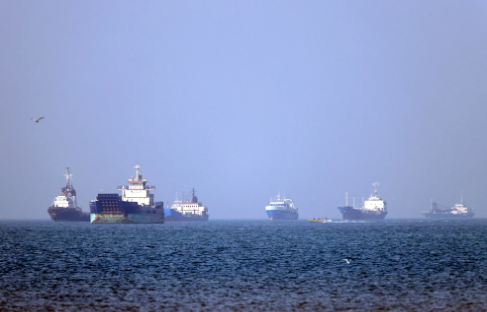
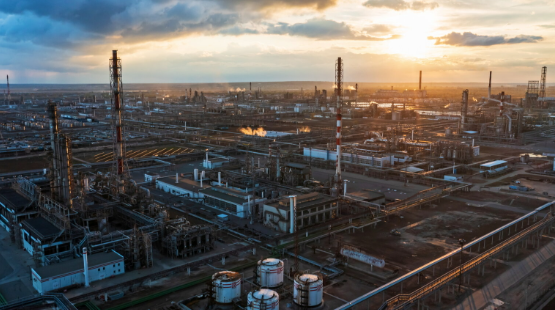
Image used from bloomberg
I’ve been watching the Iran situation evolve almost by the hour over the past week, and honestly, what happened this past weekend felt like something out of a particularly exhausting political thriller. For a brief moment, it looked like we might actually be turning a corner. Ships were moving through the Strait of Hormuz for the first time in months.
Diplomatic talks were progressing. There was genuine, if cautious, optimism in the air. And then, within the span of a single Saturday, it all collapsed back to where we started. So let me walk you through exactly what happened, why it happened, and what I think this reveals about where this whole situation is actually heading.
The Strait of Hormuz Finally Opened (For About a Minute)
Let me set the scene for you, because the timeline here matters for understanding just how fragile this whole situation is.
After months of the Strait of Hormuz being essentially closed to normal shipping traffic since the conflict escalated in late February, we finally saw movement. On Thursday, a double-digit number of ships crossed through, reaching a two-month high of around 25 vessels. By Saturday, that number had climbed to 55 ships making it through. Now, to put that in perspective, the pre-war baseline was somewhere between 130 and 160 ships per day.
So 55 is still a fraction of normal. But it was progress. Real, visible, measurable progress.
The memorandum of understanding between the United States and Iran, which involved what most observers described as massive US concessions, was supposed to be the framework that made this possible. Diplomatic talks on Iran’s nuclear program were set to continue. For a brief window, it genuinely looked like the worst of the crisis might be winding down.
And then Saturday happened.
Iran’s Islamic Revolutionary Guard Corps Navy announced that the strait was once again closed to traffic. Any vessel attempting to cross was warned that its safety could not be guaranteed. Traffic ground to a complete standstill almost immediately. All that painstaking diplomatic work, all those concessions, and we were right back to square one by Saturday afternoon.
What Caused the Collapse? Israel, Hezbollah, and a Ceasefire That Lasted Less Than an Hour
Here’s where the story gets genuinely complicated, because the thing that collapsed the strait reopening wasn’t actually a dispute between the US and Iran directly. It came down to Israel and Hezbollah, two parties who weren’t even part of the original memorandum of understanding.
Let me explain the structural problem here, because I think it’s important. The agreement between Washington and Tehran included, as its very first point, a requirement for an immediate and permanent end to the war on all fronts, explicitly including Lebanon. The problem is that the US was effectively signing this commitment on behalf of Israel while Israel made absolutely clear that it had no intention of being bound by it. Shortly after the US and Israel launched their campaign against Iran back in February, Hezbollah entered the conflict on Iran’s side and opened a front in Lebanon. Since then, Israel has launched what can only be described as a full-scale invasion, with tens of thousands of IDF personnel occupying significant portions of Lebanese territory.
So you have a peace agreement that requires Lebanon to be included, but the party doing the fighting in Lebanon isn’t party to the agreement and doesn’t want to be.
Friday was particularly brutal. Four IDF soldiers were killed in early fighting near a town in southern Lebanon. Reprisal strikes followed, killing 47 and injuring over 100. A ceasefire deal was actually announced, the result of negotiations that had been quietly developing between Lebanese and Israeli governments in Washington. All shooting was supposed to stop by 4 pm Lebanese time.
It lasted less than an hour.
Over 100 additional Israeli air strikes hit Lebanon in the hours that followed the supposed ceasefire. The flashpoint was a hill called Ali Al-Ahar that directly overlooks the city of Nabatiyeh. The IDF had tried and failed to take it earlier in the week and apparently tried again Friday night, hours into the supposed ceasefire. Hezbollah returned fire. Israel accused Hezbollah of violating the ceasefire. Iran, having watched a ceasefire collapse within the hour and the fighting continue with renewed intensity, reached its limit. By Saturday afternoon, the strait was closed again.
Netanyahu’s Trap: The Political Corner Israel’s Prime Minister Has Painted Himself Into
To understand why Israel is behaving the way it is in Lebanon, and why this keeps blowing up the broader diplomatic picture, you need to understand the extraordinary political pressure Benjamin Netanyahu is operating under right now.
A recent poll by Israel’s Channel 12 found that just a third of Israelis think Netanyahu should even run again in the country’s upcoming elections. Even more striking: 92% of Israelis believe Iran won this war. Let that number sit for a moment. Nine out of ten Israelis think their country’s primary arch enemy, the one they’ve been in a state of declared hostility with for decades, came out of the first-ever period of direct, protracted warfare between the two countries looking like the winner.
For a prime minister who built his entire political identity around being the tough, security-focused leader who would protect Israel from existential threats, this is an almost impossible situation to survive politically. The Iran war outcome was already deeply damaging. Lebanon has become both his last opportunity to pull out something that looks like a win and simultaneously the thing most likely to finish him off politically if he’s seen to withdraw without achieving anything.
That explains the rigidity you see in Israel’s approach to Lebanon. Pulling back Israeli forces, under the terms the ceasefire deal and the US-Iran memorandum require, would look to many Israelis like a complete defeat on every front. Netanyahu is essentially trapped between two sets of critics pointing in opposite directions.
His political opponents, including former allies, are attacking him for damaging Israel’s international standing. Opposition leader Yair Lapid publicly warned that if the government isn’t replaced quickly, Israel’s foreign relations will be effectively destroyed.
Meanwhile, from the other direction, former Prime Minister Naftali Bennett has accused Netanyahu of going too soft, of normalizing Iranian attacks and excessively restraining the military in Lebanon.
And now, to make things even more complicated, Netanyahu’s relationship with Washington is showing real strain. Vice President JD Vance publicly criticized Israel for trying to “kill your way out” of every national security problem. Trump himself has weighed in repeatedly, citing high levels of civilian casualties and infrastructure destruction in Lebanon. For an Israeli government that has depended heavily on unconditional American backing, this level of open public criticism from the White House is genuinely unprecedented.
Where Netanyahu goes from here is genuinely hard to predict. But what’s clear is that almost every available option generates more ammunition for his opponents. There doesn’t seem to be a path out of this that makes him look strong.
How the Tables Have Completely Turned: Iran’s Maximum Pressure Campaign
Here’s the bigger strategic picture that I think deserves the most attention, because it represents a genuinely significant shift in the regional balance of power.
For most of the past decade or more, the defining phrase in US policy toward Iran was “maximum pressure.” Washington applied sweeping sanctions, ended nuclear deal relief, and systematically tried to constrain Iran’s options through economic and diplomatic isolation. For years, it largely worked in the sense that it imposed serious costs on Iran.
Now the dynamic has completely flipped. It is Iran that is applying maximum pressure onto the United States, and doing so from a position of genuine leverage rather than just rhetoric. The US failed to achieve its stated strategic objectives in the Iran war. The regime change that was at least implicitly on the agenda didn’t happen. Control of the strait wasn’t secured. The memorandum of understanding involved concessions that, by any honest reading, were far more favorable to Iran than to the US, including a commitment to invest $300 billion in Iran.
The result is that Iran has emerged from this conflict with something it has never had before: real, demonstrated leverage over global energy flows that it has shown it’s willing to use, and that the United States has demonstrated it cannot easily overcome through military means.
Iran is using that leverage right now specifically to protect Hezbollah. This represents a significant change from how the so-called Axis of Resistance has traditionally worked. For years, the arrangement was essentially one-directional: Iran’s proxy groups like Hezbollah existed partly to protect Iran if it ever came under direct attack.
Iran benefited from the network but was never really expected to bear the same defensive costs in return. The running joke was that whenever Israel struck a proxy group, Iran’s response was essentially supportive words and not much else.
Those days appear to be over. Iran has been consistent since the April ceasefire that any peace deal must include Lebanon on terms that include a full Israeli withdrawal. Back then, that could be dismissed as a negotiating position. Today, Iran can actually enforce it by closing the strait whenever it wants to make a point. If the US pushes back too hard, Iran demonstrates what happens to global oil markets. That’s not a theoretical threat. We just watched it play out over a weekend.
The Dangerous Game Ahead: How This Could Tip Back Into Open Conflict
I want to be honest with you about where I see the risks in this situation, because I think some of the commentary around these developments is either too optimistic or too focused on the diplomatic surface rather than the underlying dynamics.
Iran’s newfound confidence is real and deserved based on the outcomes so far. But it also creates its own risks.
There’s a version of this where Iran overplays its hand. The US made enormous concessions in the memorandum of understanding primarily because getting traffic flowing through the strait again was worth the cost. That relief is the main thing Washington got from the deal. If Iran repeatedly closes the strait over developments in Lebanon, at some point Washington has essentially gotten nothing from the deal at all while having given up a great deal.
Trump has already started issuing threats again, warning about bombing Iran if the situation continues going in this direction. Now, Trump’s threats don’t always translate into action, and a lot of people have learned not to take them entirely at face value. But there genuinely is an appetite in Washington to reassert some kind of dominance after what most analysts would describe as a very difficult set of outcomes from the Iran war.
If Iran miscalculates how far it can push before triggering a response, the region could tip back into open conflict under conditions where neither side has obviously better options than last time.
The Swiss talks that began in the early hours of Monday, involving the US, Iran, Pakistan, and Qatar, apparently produced some progress on Lebanon according to Iran’s foreign minister. But traffic through the strait remains at a standstill as of the most recent information, and a ceasefire in Lebanon that lasts less than an hour doesn’t exactly build confidence in the durability of any new agreements.
My honest read on this is that we’re in a period of deeply unstable equilibrium rather than genuine progress toward resolution. Both sides have real leverage, both sides have real constraints, and the key variable that neither side fully controls is what Israel decides to do in Lebanon. A Netanyahu government that feels politically cornered is not necessarily a government that makes strategically rational decisions, and that unpredictability is what makes the next few weeks genuinely hard to forecast.
What do you think? Does it feel to you like we’re watching a genuine path toward resolution in the Middle East, or does this feel more like a temporary pause before the next escalation? I’d love to hear your perspective in the comments.
메타데이터
- post_id
- a8c2a7bd1dfe
- slug
- why-the-strait-of-hormuz-opened-for-a-day-and-why-it-matters-a8c2a7bd1dfe
- url
- https://medium.com/geopolitics-beyond/why-the-strait-of-hormuz-opened-for-a-day-and-why-it-matters-a8c2a7bd1dfe
- canonical_url
- https://medium.com/geopolitics-beyond/why-the-strait-of-hormuz-opened-for-a-day-and-why-it-matters-a8c2a7bd1dfe
- author_url
- https://medium.com/@quotesnjokes07
- status
- ok
- fetched_at
- 2026-07-12 00:02:18