Scaling Delivery: What IT Infrastructure Do U.S. Dark Kitchens Need?
According to Statista and Grand View Research, the U.S. dark kitchen (ghost or cloud kitchen) market was valued at around $3.5 billion in…
Scaling Delivery: What IT Infrastructure Do U.S. Dark Kitchens Need?
According to Statista and Grand View Research, the U.S. dark kitchen (ghost or cloud kitchen) market was valued at around $3.5 billion in 2023 and is projected to grow by more than 60% annually, potentially surpassing $100 billion by 2030. Delivery-only formats are no longer just an experiment — they’ve become a backbone for both new and established restaurant brands. Many food entrepreneurs now skip the dining room entirely and go digital-first from day one.
In this interview, Max Bontsevich, CEO of the foodtech software development studio dev.family, shares how dark kitchens are evolving in the U.S. market, what technology makes them scalable, and why ready-made software no longer works for this fast-changing industry.
The State of the U.S. Dark Kitchen Market
The American market has matured beyond the post-pandemic boom and entered a phase of calculated growth, where unit economics, automation, and scalability define long-term success. During COVID-19, many restaurateurs and tech founders rushed to test the delivery-only model. Today, only those who understand digital infrastructure and efficiency remain competitive.
Operators are experimenting with multiple models:
- Multi-brand kitchens, where one kitchen runs several virtual brands optimized for different audiences and aggregator algorithms;
- Direct-order strategies, aimed at owning the customer relationship through websites, apps, and CRM-driven loyalty.
Another fast-growing format is micro-kitchens — compact facilities of 200–500 sq ft, often embedded in retail or residential zones, serving limited menus with a hyperlocal delivery radius (1–2 miles). These are cheaper to launch and easier to replicate across urban grids.
Why the Format Attracts Consumers
U.S. dark kitchens are typically built as digital-first food brands: bold, interactive, and identity-driven. Users encounter strong branding, personalized promotions, and smooth ordering flows designed for immediacy. Within a few taps, they get what they want — great food at a clear price, with delivery that arrives exactly when promised.
For a generation accustomed to DoorDash and Uber Eats, a virtual brand that “just works” feels as trustworthy as a physical restaurant. This digital fluency is part of why dark kitchens continue to win over new audiences.
Challenges for New Entrants
Despite the booming market, barriers to entry are rising. The U.S. delivery ecosystem is dominated by a few major aggregators, logistics operators, and franchise networks, all competing for limited customer attention. These players control not just visibility, but distribution infrastructure, which makes it harder for newcomers to build direct relationships with users.
Still, there’s a clear advantage in regional expertise. Local founders understand their neighborhoods better — the dining habits, spending patterns, even the kind of imagery that resonates. A small, hyperlocal dark kitchen in Austin or Chicago can outperform national players by being contextually relevant and fast to adapt.
Yet regional operations have their own pain points: logistics costs, zoning restrictions, and the notorious “last mile” problem. In suburban layouts, delivery routes stretch longer, and maintaining profitability depends on fine-tuned digital management — dynamic pricing, smart batching, and predictive order routing.
Why Dark Kitchens Can’t Rely on “Boxed” Solutions
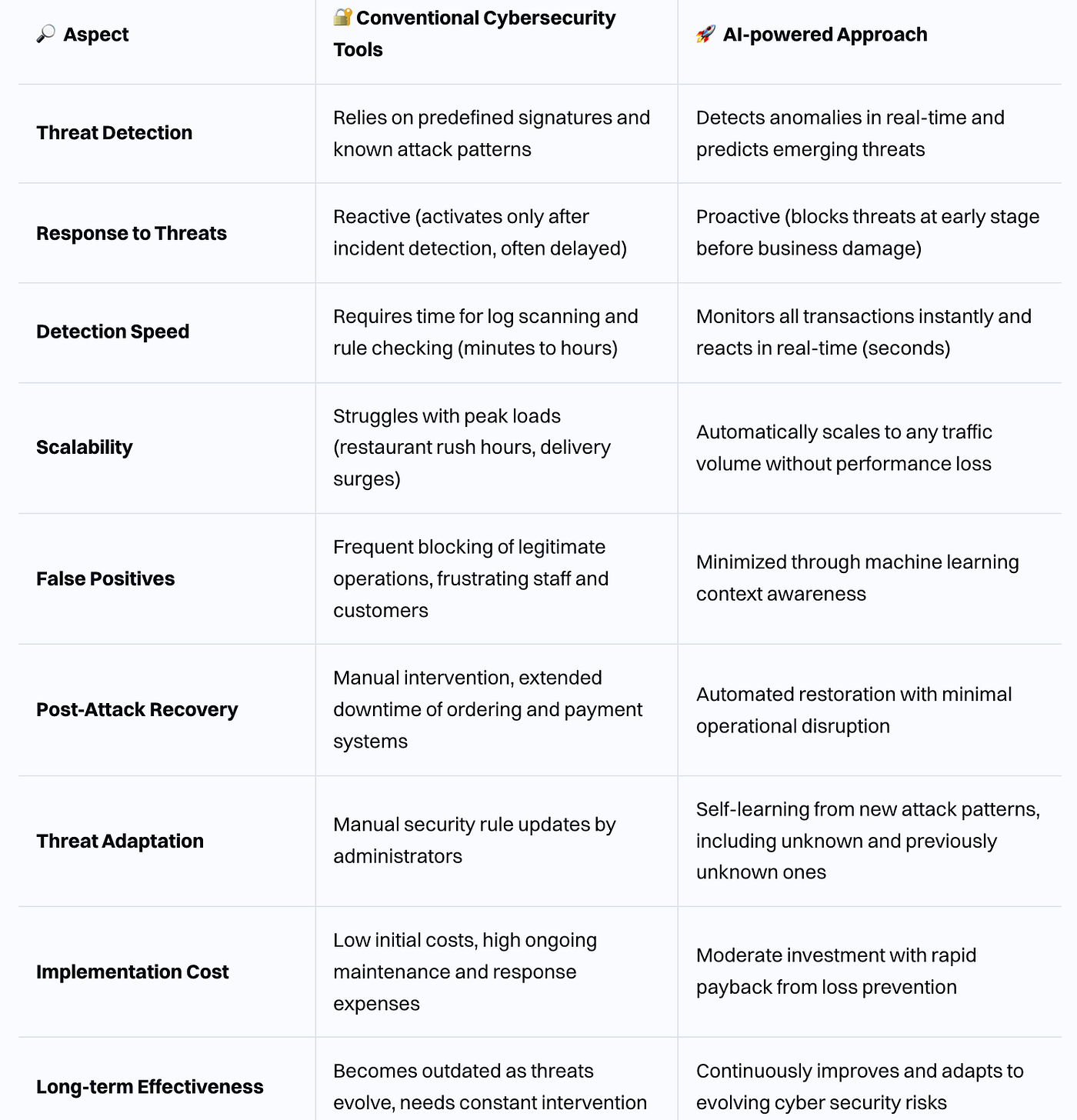
Today’s dark kitchen industry moves too fast for off-the-shelf products. Operators need flexibility, scalability, and modularity — and that means custom development.
Ready-made restaurant management systems often fail to handle:
- multi-brand operations from one backend,
- flexible menu logic by time, zone, or demand,
- dynamic pricing,
- and real-time logistics optimization.
As Max explains, “Dark kitchens are living systems. They evolve weekly — new menus, partners, delivery rules. Boxed software just can’t keep up. The tech has to grow with the business.”
Custom-built infrastructure not only integrates better with external systems (like POS, delivery APIs, loyalty apps), but also helps founders iterate faster — critical in a market where customer expectations shift constantly.
Case in Point: Sizl, Chicago
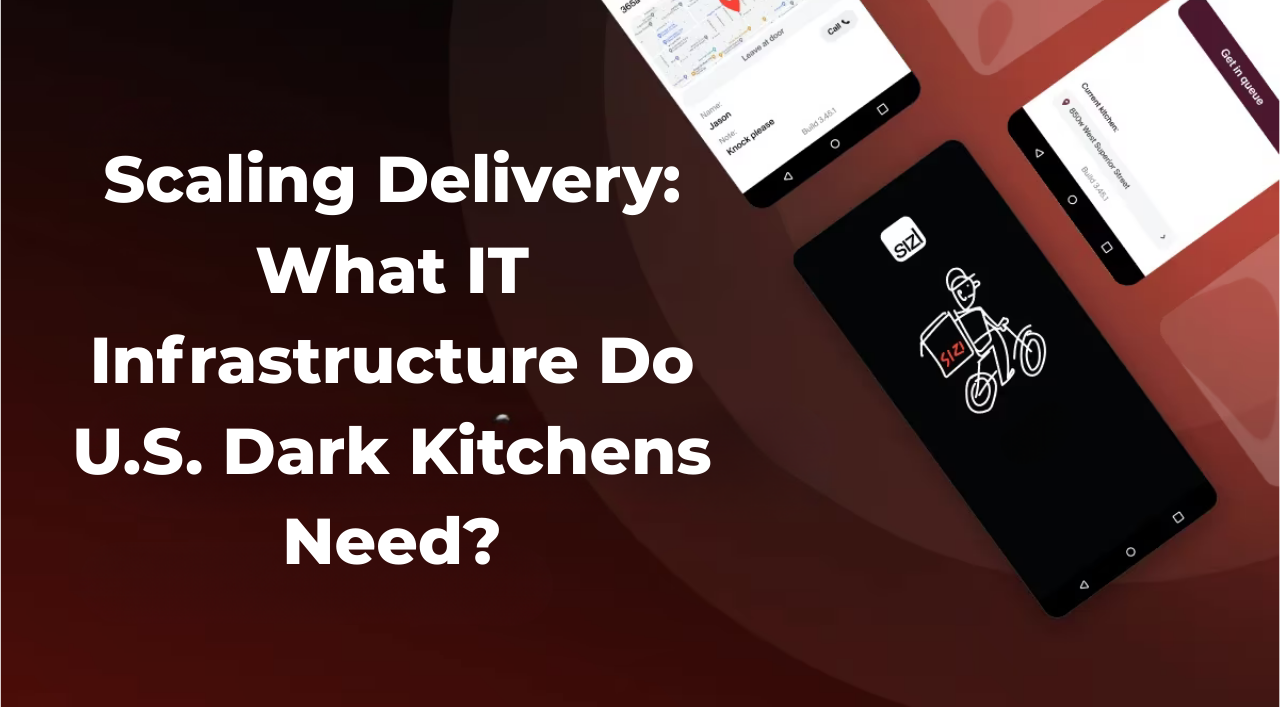
A good example is Sizl, a Chicago-based dark kitchen network co-founded by Alexey Kolesnikov, one of the creators behind Kitchen on the District. The project’s tech partner team, led by Max’s studio, worked on the product’s platform layer — from order flow to logistics management.
The team focused on key user scenarios:
- effortless cart management,
- automatic calculation of delivery time and cost,
- and flexible pickup and group order options.
This clarity of focus helped Sizl build traction quickly. The project recently raised $3.6 million in seed funding and continues to expand across the U.S. The success underlines a simple truth: strong food plus strong technology equals sustainable scale.
Key Takeaways
Your website or app is the face of your kitchen — the first brand impression long before a customer tastes your food. But quality cuisine alone isn’t enough. In the dark kitchen world, technology replaces the front-of-house experience. Smooth order logic, adaptive menus, reliable delivery timing, and customer-centric design are what keep people coming back.
Dark kitchens are no longer a side trend — they’re one of the most dynamic sectors in modern foodtech. But that speed also means one thing: they can’t afford rigid software. The only sustainable infrastructure is one that evolves as quickly as the market itself.
메타데이터
- post_id
- a8d1a92dfa23
- slug
- scaling-delivery-what-it-infrastructure-do-u-s-dark-kitchens-need-a8d1a92dfa23
- url
- https://medium.com/foodtech-family/scaling-delivery-what-it-infrastructure-do-u-s-dark-kitchens-need-a8d1a92dfa23
- canonical_url
- https://medium.com/foodtech-family/scaling-delivery-what-it-infrastructure-do-u-s-dark-kitchens-need-a8d1a92dfa23
- author_url
- https://medium.com/@na_sok
- status
- ok
- fetched_at
- 2026-06-11 16:11:38