Why Brands Need Human Touch in Product Photo Editing
In today’s fast-moving digital world, visuals play a major role in how customers see a brand. Whether a business sells fashion products…
Why Brands Need Human Touch in Product Photo Editing
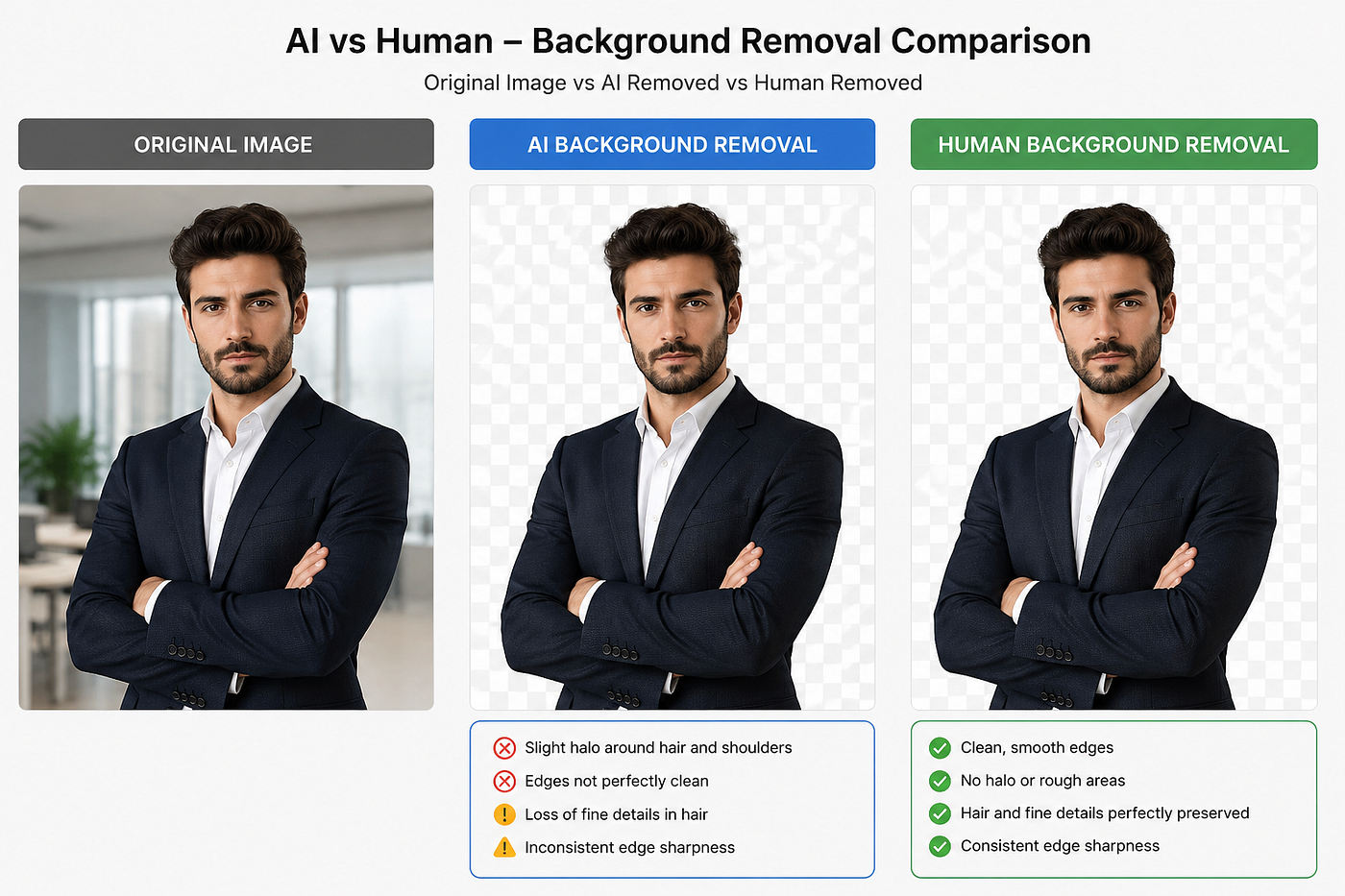
In today’s fast-moving digital world, visuals play a major role in how customers see a brand. Whether a business sells fashion products, electronics, jewelry, furniture, food items, or beauty products, high-quality product photos can directly influence customer trust and buying decisions. A clean, attractive, and professional image can make a product look more valuable, while a poorly edited photo can make even a great product look cheap or unreliable.
This is why product photo editing has become an important part of online branding and eCommerce success. Many businesses now use AI tools for background removal, image enhancement, and quick photo editing. AI editing is fast, easy, and useful for basic tasks. However, when it comes to professional image quality, manual editing still delivers better results.
Manual photo editing is important because it delivers accuracy, consistency, and natural-looking results that automated tools often miss. Skilled editors can refine edges, correct colors, restore details, create realistic shadows, and match brand standards. For businesses, this means cleaner visuals, stronger trust, better product presentation, and higher customer confidence online.
AI can remove a background within seconds, but it often struggles with complex edges, fine details, shadows, reflections, product texture, and realistic finishing. Human editors can carefully adjust every part of an image to make sure it looks clean, professional, and brand-ready.
What Is Manual Product Photo Editing and why its important?
Manual product photo editing is the process of editing images by skilled photo editors using professional tools such as Adobe Photoshop or similar editing software. Instead of depending only on automated tools, human editors carefully adjust each image by hand.
This can include background removal, clipping path, image masking, color correction, shadow creation, reflection adjustment, dust removal, retouching, resizing, cropping, and final image optimization.
The biggest advantage of manual editing is precision. A human editor can zoom in, identify small imperfections, and fix details that AI tools may miss. For example, if a product has transparent glass, soft fabric, hair, fur, lace, jewelry chains, or complex shapes, manual editing can preserve those details more accurately.
Manual editing is not just about removing a background. It is about improving the entire image so the product looks natural, clean, and attractive.
What AI Photo Editing Can Do
AI photo editing tools are popular because they save time. With one click, users can remove backgrounds, brighten images, crop photos, or apply automatic adjustments. For simple images with clear product edges and plain backgrounds, AI can produce acceptable results.
AI is useful for quick previews, personal projects, social media drafts, or low-budget editing needs. It can help businesses process images faster when perfect accuracy is not required.
However, AI editing has limitations. It works based on patterns and automated detection. It does not truly understand product value, brand identity, customer expectations, or visual storytelling. AI may recognize the main object in an image, but it can fail to understand which small details should stay and which should be removed.
That is where manual editing becomes more valuable.
Why Manual Editing Is Better Than AI for Professional Images
**Manual editing is better than AI **because it gives full creative and technical control over the final image. A professional editor can make decisions based on the image type, product category, brand style, and platform requirements.
AI may remove a background quickly, but it often creates rough edges, missing details, uneven outlines, or unnatural results. For example, AI may accidentally cut off part of a shoe lace, remove loose hair from a model, damage the edge of a transparent bottle, or make jewelry look flat.
A human editor can avoid these problems by carefully selecting the product, refining the edges, preserving details, and improving the overall appearance.
Manual editing also allows custom adjustments. If a brand wants a pure white background for Amazon, a soft shadow for Shopify, a lifestyle-style look for social media, or a premium finish for advertising, a human editor can create the right result. AI tools usually apply a general solution, while manual editing creates a tailored result.
Clean Edges Make a Big Difference

One of the most important parts of **image background removal** is edge quality. Clean edges make a product look realistic and professional. Rough or damaged edges can make the image look fake and poorly edited.
AI background removal tools often struggle with edges, especially when the product has curves, holes, transparent parts, soft materials, or detailed outlines. This can lead to jagged edges, blurred borders, or missing product areas.
Manual editors can refine edges with accuracy. They can use clipping paths for hard-edged products and image masking for soft or complex areas. This helps maintain the natural shape of the product.
For eCommerce, clean edges are extremely important. Customers cannot physically touch the product, so the image must clearly show the product’s shape, quality, and details. A cleanly edited image makes the product look more trustworthy and professional.
Human Editors Understand Product Details
Every product has unique features. A leather bag may need texture correction. A ring may need shine enhancement. A clothing item may need wrinkle removal. A glass bottle may need transparency control. A cosmetic product may need color accuracy.
AI does not always understand these details. It may apply the same type of editing to every image, which can make the final result look unnatural. Human editors, on the other hand, can study the product and edit it according to its specific needs.
For example, if a jewelry photo looks dull, a human editor can enhance the brightness, improve the shine, and keep the metal looking natural. If a clothing photo has uneven lighting, a human editor can balance the colors without changing the actual fabric shade.
This level of judgment is one of the main reasons why brands need human touch in product photo editing.
Manual Editing Creates Natural Shadows and Reflections
Shadows and reflections are often overlooked, but they are very important in product photography. A product without a shadow can look like it is floating. A product with a bad shadow can look fake or unprofessional.
AI tools may remove the original shadow during background removal, and the replacement shadow may not match the product’s shape, direction, or lighting. This can make the image look artificial.
Manual editors can create natural shadows and reflections that match the product. They can adjust shadow softness, opacity, angle, and placement. This helps the product look grounded and realistic.
For premium product images, natural shadows can improve depth and visual appeal. They make the photo look more polished and help customers better understand the product’s shape.
Brand Consistency Requires Human Judgment
A strong brand needs consistent visuals. Product images should have similar backgrounds, lighting, colors, cropping, margins, and overall style. This consistency helps a website look professional and improves the customer experience.
AI tools may not maintain perfect consistency across a large batch of images. Some photos may look brighter, others may look darker, and the crop or background may vary from image to image.
Manual editing allows better quality control. Human editors can follow brand guidelines and make sure every image matches the same standard. This is especially important for eCommerce stores, catalogs, advertising campaigns, and marketplace listings.
When customers see consistent product photos, they are more likely to trust the brand.
AI Can Be Fast, But Manual Editing Builds Trust
Speed is one of AI’s biggest advantages. It can process images quickly, which is useful for simple tasks. But speed should not come at the cost of quality.
In online business, trust matters. Customers often judge product quality based on images. If an image looks poorly edited, customers may question the professionalism of the brand. They may wonder whether the product is also low quality.
Manual editing helps create polished product images that look reliable and high-value. It improves the way customers see the product and the brand behind it.
For businesses selling online, better images can support higher engagement, better conversion rates, and stronger brand credibility.
When AI Editing May Not Be Enough
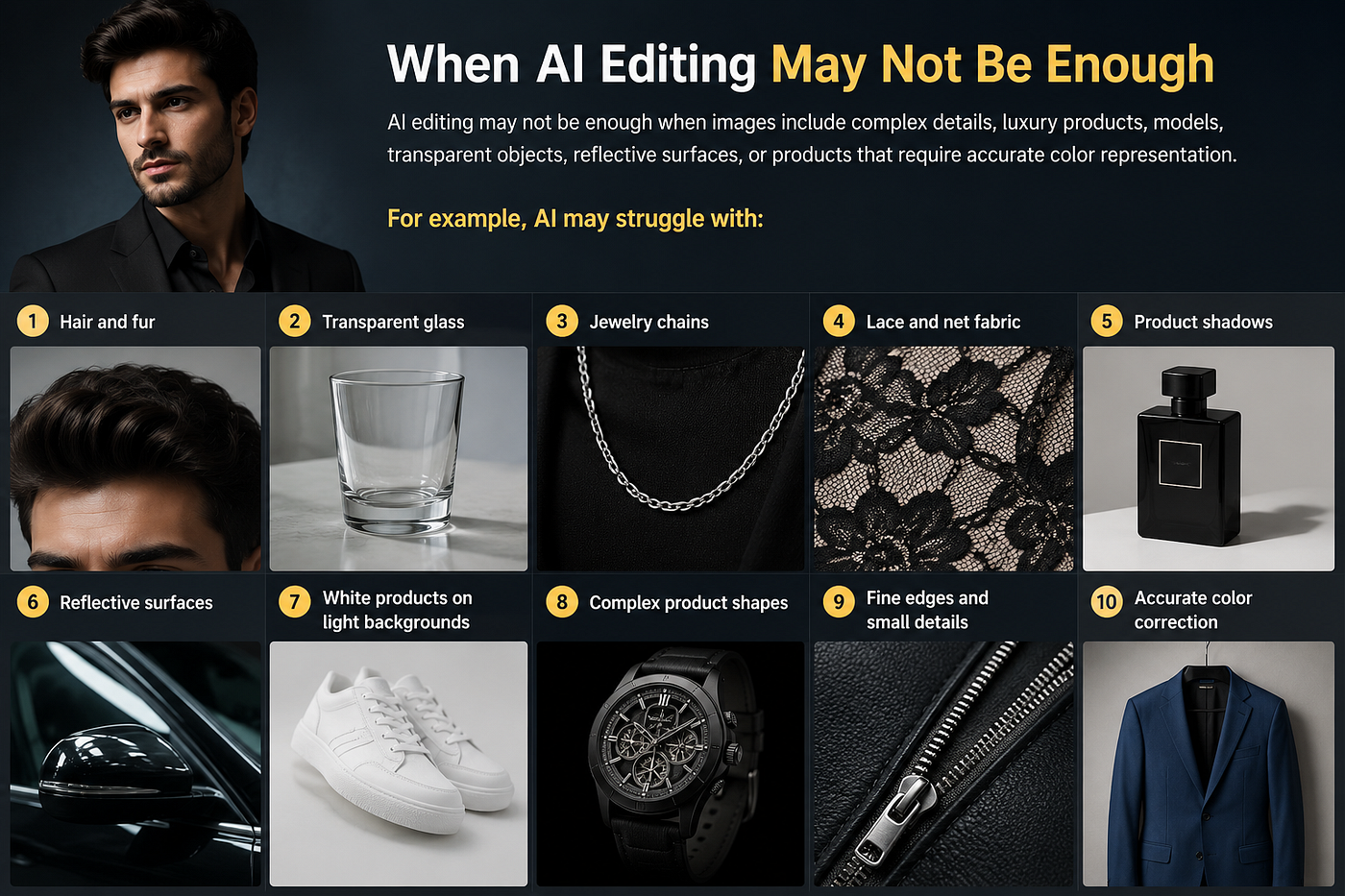
AI editing may not be enough when images include complex details, luxury products, models, transparent objects, reflective surfaces, or products that require accurate color representation.
For example, AI may struggle with:
· Hair and fur
· Transparent glass
· Jewelry chains
· Lace and net fabric
· Product shadows
· Reflective surfaces
· White products on light backgrounds
· Complex product shapes
· Fine edges and small details
· Accurate color correction
In these situations, manual editing gives better control and a more professional final result.
Why eCommerce Brands Should Choose Manual Editing
eCommerce is highly competitive. Customers compare products quickly, and images are often the first thing they notice. A high-quality product image can help a listing stand out, while a weak image can reduce interest.
Manual editing helps eCommerce brands present their products in the best possible way. It ensures that the product is clear, attractive, and suitable for platforms like Amazon, Shopify, Etsy, eBay, WooCommerce, and social media stores.
Professional manual editing can also help with marketplace requirements. Many platforms require clean backgrounds, proper image size, clear product visibility, and no distracting elements. Human editors can prepare images according to these requirements more accurately than basic AI tools.
For brands that want to increase trust and improve product presentation, manual editing is a smart investment.
The Best Approach: AI Speed with Human Quality Control
AI is not useless. In fact, AI can be helpful when used correctly. It can speed up basic editing tasks and help create quick drafts. However, for professional results, human quality control is essential.
The best approach is not always AI vs human. It is AI support plus human expertise. AI can help with speed, while human editors can refine the final result. This combination can save time while still maintaining high image quality. However, when quality matters most, manual editing should always be the final step.
Final Thoughts
AI background removal and photo editing tools are useful, but they cannot fully replace human skill. They are fast, but they often lack accuracy, detail control, creativity, and brand understanding.
Manual editing is better than AI because it delivers cleaner edges, natural shadows, accurate colors, detailed retouching, and professional consistency. Human editors understand how to make product images look polished, realistic, and trustworthy.
For brands, product photos are more than just images. They are part of the customer experience. They influence first impressions, trust, engagement, and sales. That is why brands need human touch in product photo editing.
메타데이터
- post_id
- a8deee8b07b2
- slug
- why-brands-need-human-touch-in-product-photo-editing-a8deee8b07b2
- url
- https://medium.com/@marketingclippingworld19/why-brands-need-human-touch-in-product-photo-editing-a8deee8b07b2
- canonical_url
- https://medium.com/@marketingclippingworld19/why-brands-need-human-touch-in-product-photo-editing-a8deee8b07b2
- author_url
- https://medium.com/@marketingclippingworld19
- status
- ok
- fetched_at
- 2026-06-09 15:37:30