The Secret Behind the Motion: How Pan & Tilt Motors Bring Moving Heads to Life
When watching a live concert, club show, or stage performance, it’s often the lighting that creates the first emotional impact. Beams sweep…
The Secret Behind the Motion: How Pan & Tilt Motors Bring Moving Heads to Life
When watching a live concert, club show, or stage performance, it’s often the lighting that creates the first emotional impact. Beams sweep across the crowd, colors chase the rhythm, and moments feel alive rather than static. At the heart of this movement is a simple but powerful mechanism: pan and tilt motors. These motors are what allow Moving Heads to move freely, precisely, and dramatically. Understanding how they work helps DJs, musicians, sound engineers, and event organizers get more value from their lighting setups and design more engaging shows.
What Are Moving Heads?
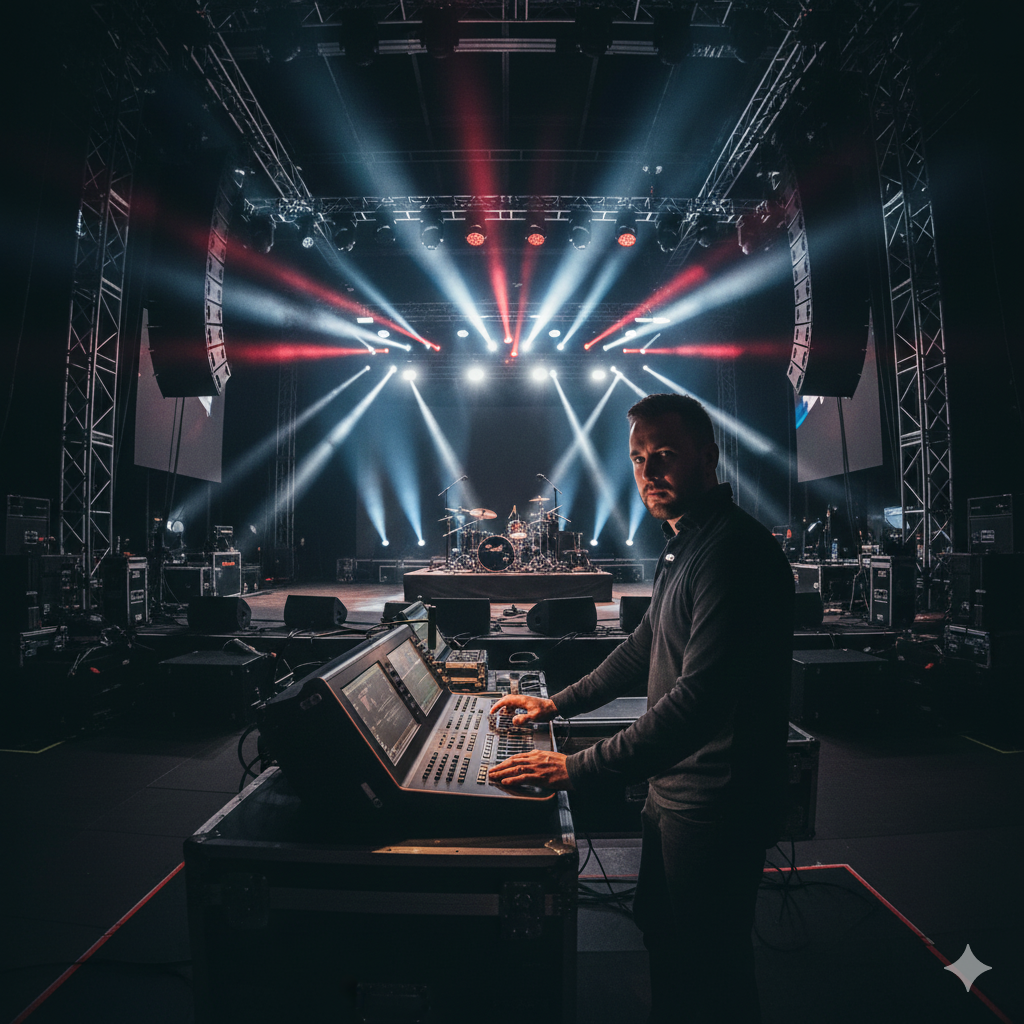
Moving Heads are intelligent lighting fixtures designed to rotate horizontally (pan) and vertically (tilt). Unlike static lights, they can change direction, color, beam shape, and intensity in real time. This flexibility makes Moving Heads essential for concerts, festivals, clubs, houses of worship, and corporate events.
At the core of every moving fixture is a motor-driven system that translates control signals into smooth motion. Without pan and tilt motors, Moving Heads would simply be bright lights stuck in one direction.
Understanding Pan and Tilt Movement
Pan and tilt are the two axes that define motion in Moving Heads:
- Pan: Horizontal rotation, usually up to 540° or 630°
- Tilt: Vertical rotation, typically up to 270°
Together, these movements allow Moving Heads to reach almost any position in the room. This range is what enables sweeping crowd scans, sharp accents, and synchronized lighting choreography.
How Pan Motors Work
The pan motor controls side-to-side movement. In modern Moving Heads, this motor is often a stepper motor or servo motor, chosen for accuracy and reliability.
Key characteristics of pan motors:
- High torque for fast movement
- Fine positioning control
- Quiet operation for indoor venues
The motor receives commands via DMX or digital lighting protocols, converting data into precise rotation. This is why Moving Heads can snap quickly between positions or glide smoothly during slower scenes.
How Tilt Motors Control Vertical Motion
Tilt motors handle up-and-down movement. Because the fixture’s head carries lenses, gobos, and LEDs, tilt motors must balance speed with stability.
In quality Moving Heads, tilt motors:
- Prevent unwanted vibration
- Maintain beam focus while moving
- Support repeated fast motion without overheating
This balance ensures that Moving Heads stay accurate even during long shows.
Why Motor Precision Matters
Precision is what separates professional-grade Moving Heads from budget fixtures. Accurate pan and tilt motors ensure:
- Consistent positioning
- Smooth fades and sweeps
- Reliable preset recall
When lighting cues rely on exact positioning, even a small motor error becomes visible. That’s why experienced professionals often source Moving Heads from reputable audio and lighting shops that focus on build quality.
Speed vs. Smoothness in Motion Design
Fast movement creates excitement, but smooth movement creates elegance. Modern Moving Heads are designed to offer both.
Lighting designers often adjust:
- Acceleration curves
- Movement delay
- Speed limits
This allows Moving Heads to match different moods, from aggressive EDM drops to subtle theatrical scenes.

Motors and DMX Programming
Pan and tilt motors respond to DMX channels. Each movement parameter can be fine-tuned using:
- 8-bit or 16-bit control
- Presets
- Automated scenes
With advanced consoles, Moving Heads can perform complex patterns without manual control.
The Role of Calibration
Calibration ensures Moving Heads know their exact position. At startup, fixtures reset their pan and tilt motors to reference points. This process:
- Prevents drift
- Keeps synchronized shows aligned
- Improves long-term reliability
Poor calibration leads to misaligned beams and inconsistent performance.
Practical Tips for Better Movement Effects
To get the best results from Moving Heads:
- Avoid running motors at full speed constantly
- Use smooth movement transitions
- Match movement intensity with music tempo
- Allow fixtures to cool between long sessions
These habits extend motor life and improve show quality.
How Movement Shapes Audience Experience
Movement isn’t just technical — it’s emotional. Sweeping Moving Heads can:
- Direct attention
- Build anticipation
- Enhance musical impact
A well-programmed pan and tilt sequence can turn an average performance into a memorable one.
Choosing the Right Moving Heads
Not all fixtures are equal. When selecting Moving Heads, look for:
- Motor resolution
- Noise level
- Rotation rang
- Build quality
Professional audio shops often test and recommend fixtures suited for real-world use, helping buyers avoid common pitfalls.
Conclusion
Pan and tilt motors may work quietly behind the scenes, but their impact on live lighting is anything but subtle. They are what give Moving Heads their personality — fast when energy is high, smooth when the moment calls for restraint. When these motors are understood and used thoughtfully, lighting becomes more than illumination; it becomes movement with purpose. For DJs, musicians, and event professionals, choosing reliable Moving Heads with well-engineered motion systems makes a noticeable difference over time. That’s why many professionals prefer sourcing their fixtures from a trusted professional audio shop, where performance, durability, and real-world application are always part of the conversation.
메타데이터
- post_id
- a8f9523ba5ca
- slug
- the-secret-behind-the-motion-how-pan-tilt-motors-bring-moving-heads-to-life-a8f9523ba5ca
- url
- https://medium.com/@charlesspeters6/the-secret-behind-the-motion-how-pan-tilt-motors-bring-moving-heads-to-life-a8f9523ba5ca
- canonical_url
- https://medium.com/@charlesspeters6/the-secret-behind-the-motion-how-pan-tilt-motors-bring-moving-heads-to-life-a8f9523ba5ca
- author_url
- https://medium.com/@charlesspeters6
- status
- ok
- fetched_at
- 2026-08-11 14:02:38