The soul as the principle of becoming
Why it is so important to find and practice your soulcraft
The soul as the principle of becoming
Why it is so important to find and practice your soulcraft

What is the human soul? Does it even exist? In this article, I explain a theory for what the soul is and how it conforms neatly to the Aristotlean concept of the soul while also being compatible with Christian and Buddhist concepts as well.
Although pre-Socratic philosophers mentioned the soul occasionally in the context of life after death as in the Homeric epics, as wraiths inhabiting the underworld, Plato and Aristotle were the first to provide detailed descriptions of the soul and its properties. Plato believed that the soul encompassed our intellect, which could be freed from the body to contemplate philosophy for eternity.
In The Republic, Socrates asks Glaucon,
Haven’t you realized that our soul is immortal and never destroyed?
Standing in for the reader, no doubt, it continues,
He looked at me [Socrates] with wonder and said: “No, by god, I haven’t. Are you really in a position to assert that?”
This contradicted popular 5th century BC Greek ideas, which had moved on from Homer, that the soul is like smoke and would disperse after death.
In Phaedo, Plato presents his [as Socrates] arguments for the indestructibility of the soul relying on it being more like thought or abstract concepts and less like a physical thing, i.e., immaterial not material.
One of the problems with being a modern person and reading anything from centuries or milliennia ago is that we imagine these texts as addressing fundamentally important problems that we have today, when in fact they may simply be trying to address problems of the time that we don’t understand. In other words, Plato is trying to solve 5th-4th century BC problems like is the soul material, like smoke, like everyone believes or immaterial, like a thought, as he believed. Plato won that argument and hardly anyone now believes the soul is a material thing (attempts to weigh it notwithstanding).
The questions Plato left open then became problems for Aristotle to solve.
Aristotle contradicted his teacher, arguing that the soul vanishes with the body. Aristotle went much further than Plato provided a more complete description of its nature and function.
The Greek concept of the soul includes not only the vital essence of a person but everything that distinguishes living from nonliving, animate from inanimate. Our word “animal” comes from the Latin word anima, which means soul, while our word “psychology” comes from the Greek words psyche and logos, meaning the word or study of the soul. Thus, there is some notion that the soul is both the animating force of life and also the force behind the mind. It also means that all living things, by Greek reasoning, have souls.
Modern materialist philosophy tells us that life force and the mind should be attributed to physical processes such as energy, metabolism, and neural firings, but such a mechanistic understanding of reality is a relatively recent outgrowth of 18th-century rationalism. Philosophers of the Enlightenment such as David Hume and Thomas Hobbes wanted to replace all the old, mystical belief systems with a mechanistic one based on Newtonian physics and scientific reasoning. It is no surprise that mechanical automatons were hugely popular in the 18th century and that philosophers of the time ran towards a theory that life itself was no more than a more sophisticated automaton.
Such mechanistic descriptions, however, are insufficient to explain the existence of life or the mind. They provide only the immediate “how”, not the bigger picture “why” that metaphysics demands. Hence, why the Greeks are still relevant even now.
Aristotle’s theory of the soul rests on his own philosophical school which became popular in the Middle Ages and is having a renaissance now. This school is called *hylomorphism, hylo meaning matter and morphism *meaning form: the theory of form and matter. While the world is made of matter, form distinguishes one lump of matter from another. This form gives an object not just its shape but its essence, “the essential whatness” of its being. Thus, a table is a lump of wood, but it also has something called “tableness,” which makes it not a mere lump of wood but a table.
If you have been steeped in postmodernism (I almost wrote “modern” postmodernism before realising how silly that sounds), you might find hylomorphism quaint. A table is only a table because we call it a table. Isn’t that true? Reality is matter, and only the human mind gives it form.
This, however, is just 1960s commie tripe promoted by the likes of Foucault, Derrida, and others. (Derrida would argue that matter isn’t even a thing.) Aristotle understood such arguments long before they were elevated and brushed them away:
Suppose that what is literally an ‘organ’, like an axe, were a natural body, its ‘essential whatness’, would have been its essence, and so its soul; if this disappeared from it, it would have ceased to be an axe, except in name. (De Anima, 1, translated by J. A. Smith)
Aristotle was vague on exactly what essential-whatness is or how it came to be but modern process philosophy, based on the ideas of Alfred North Whitehead, can lend some clarity:
The choices that lead up to a thing’s existence contribute to its essential whatness. Those choices are not mere mental chatter but decisions that are enacted in the physical space.
A table does not simply appear ready-made by some random process that turns some lumps of wood into tables and others into random shapes. If that were so, if all matter were random, then you could say that our words for some forms of matter versus others were simply titles that have no significance. But that is not true.
Imagine what it takes for a craftsperson to make a table from scratch, as the pioneers did. They must go into the woods and select a tree. They must fell the tree. They must take that tree and saw it into planks. Those planks must be dried and then formed into legs and a table surface, then joined together. All these choices are physically enacting the vision the creator has in their mind. Thus, the table, existing as a thing, is a physical representation of a mental construct, a transfer of mental energy into physical reality.
This image-in-the-mind-of-the-creator is one theory as to what gives objects their form.
What if we and the animals and plants have no creator? No image led to our existence, only blind chance on an evolutionary roulette table.
That is some random chance, but that is an argument for another time.
If the human eye evolved from blind natural selection, its ability to detect visible light and form images emerged from countless events that selected it to appear as it is. This creates an end-result purpose to the eye, even if there was no purpose prior to its introduction.
Therefore, we can abstract our image-in-the-mind-of-the-creator into a generic principle of becoming. This principle applies to both teleological (purpose-driven) creation, like the craftsperson, and anti-teleological (non-purposeful) emergence, as in natural selection.
The human eye emerged from a principle of advantage to those being that could see. It is impossible to determine if the eye would always emerge given a different set of evolutionary accidents but it seems likely. The eye developed out of necessity. Therefore, it exists in all possible worlds where human beings are still human.
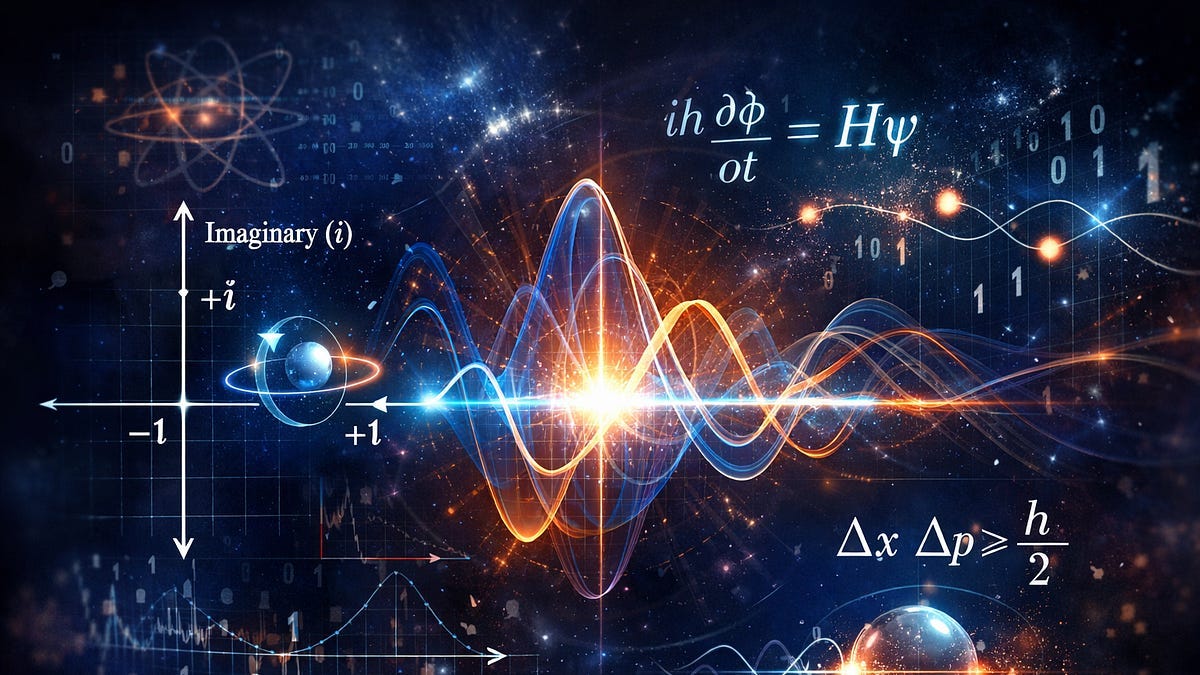
A principle of becoming is like a train track. Unless the track goes to the station, the train cannot arrive there. It is not physical but instead a rule or law that emerges from circumstances, that draws objects to develop a particular form. Form, in the hylomorphic sense, is a principle of becoming. This is process-based form, however. It emerges from sequences of events that have a common outcome across possible worlds, almost like a Feynman path integral from quantum mechanics where many paths lead to one measured outcome.
Your soul, likewise, is your principle of becoming.
Deep within our cultural hive-mind, we understand this already.
When I was a freshman at university, I was assigned a book (when I briefly considered studying engineering) called The Soul of a New Machine. This 1981 Pulitzer Prize-winning book about a team of engineers creating a new computer design uses the word “soul” in precisely this way. The new machine, the computer, gains its soul from its creators, who imbue it with a principle of becoming to be the thing it is intended to be.
Our soul is exactly this: our own principle of becoming, the intention that God had when He created us in his love. This soul is non-corporeal but essential not only to our existence but to that which we are called to do. When we do what God has willed, we are enacting our souls. When we go against that will, we betray that soul, that principle of becoming, by following another, darker will.
The soul, however, is not some neo-Platonic ghost like in Harry Potter. It isn’t something living inside you. It is far greater than that and far more all-encompassing.
Another wonderful book is Shop Class As Soulcraft by Matthew B. Crawford, about finding meaning through hands-on work, such as, in Crawford’s case, running a motorbike repair shop. Soulcraft is a compound word. One definition I found for it is “an activity that nourishes the soul,” but the soul doesn’t need nourishment as in food because the soul is not a being or an organ. It is a principle of becoming. Thus, soulcraft is an activity that obeys that principle. Hence, to engage in soulcraft is to obey your Creator’s intention for you. That behavior nourishes your body and your mind in non-corporeal ways.
Although call, as in vocation, has long been used only to describe those in religious ministries, today it describes ideal work. That, to me, is a narrow view of vocation since we are called to be many things in life, not merely those things that pay a salary. Corporate culture has co-opted the meaning of vocation and focused it on its own priorities: money.
Your vocation, however, is your soulcraft. It aligns you with your soul. This isn’t something you have. It is you. It is why you are here.
To lose your soul, then, is not to lose an object you own but to lose your self, your very purpose for existing. When your soul is in torment, it is because you are so far from that purpose that you are in despair.
Whether a soul is destructible or not is a meaningless question. A soul is not matter, so inherently it is indestructible, but that isn’t the question. The question is whether the soul’s purpose, its principle, has a termination point, and that is up to the intention of the Creator.
Some things are meant to be temporary, and others are not. A species goes extinct when the conditions that caused it to come into being vanish or change too much for it to survive. In Toy Story 4, the disposable fork Forky, for example, originally feels pulled to the trash because he knows he is supposed to be thrown away. He tries to launch himself into the trash bin at every opportunity because that is his soulcraft. As he morphs into a toy, however, he finds a new purpose, a new life, that is more than mere disposability. He gains a different soul when he becomes a toy.
Could it be that we are more like Forky than we’d like to admit?
Atheists argue that humans age and die to satisfy evolutionary requirements. We are, like Forky in his original fork form, temporary beings, and our ultimate principle of becoming is, at best, survival of the fittest. We are only to live long enough to ensure our children are born and reproduce.
Christians argue that God’s image for us, as Himself, necessarily includes eternal life. The only reason that people die is that we have deviated from that divine image, and only through the death and resurrection of Jesus Christ can a human soul be placed back on track. This means that we are born like Forky, destined for the trashheap and, in our secular culture are markers that human life is considered disposable based on how we treat the most vulnerable. Through Christ we can be transformed into something eternal and recognize that potential in others.
Can we, like Forky, gain a different soul, then? Are we destined for trash, and can we be refreshed into something new?
Yes.
This happens on a smaller scale, too, when we find our soulcraft, and it fills our life with meaning and purpose. Here I am writing, something I couldn’t stop doing even if I wanted to, because it is my soulcraft.
Once you understand what the soul is, it makes it easier to answer the question: why do we have bodies, and should we want to have bodies or do ought we to hope for the Platonic ideal?
Neo-Platonists, especially 2nd century AD philosopher Plutarch, believed the body was imperfect and that the soul’s purpose was to be freed from the body, where it would ascend to a realm of pure form. This influenced the contemporary Christians. Some became Gnostics, rejecting physical matter entirely which would later be stamped out as heresy. Others struck a balance, but the concept of the soul as a ghost inside us that escapes the body and can have a life of its own stuck around. This led to the pernicious idea that the whole point of salvation was to go to heaven when we die rather than for God to remake the world and give his people new, indestructible bodies.
If, however, the soul is a principle of becoming, then it cannot exist apart from the body any more than axeness can exist without an axe there to embody it. Aristotle knew this.
St. Thomas Aquinas, who based his Summa Theologicae on Aristotle, had to develop an escape from the Philosopher’s obvious conclusion that the soul needs the body. His approach was to imagine the soul of human beings as consisting of two parts: the part that senses and the part that has an intellect. When in the body, the soul applies the intellect to sensory impressions, which he calls phantasms. He argued that when separated from the body, the soul no longer senses anything but still retains the intellect, which could perceive pure concepts and forms directly. (Summa Theologicae, Question 75, Article 6, Objection 3.)
Aquinas is a mishmash of Aristotle and Plato. He equates the intellect, i.e., mind, with the soul, and argues that this mind can operate apart from the senses.
If, however, the soul is the principle of becoming, then this makes no sense at all. Aristotle is right that the soul and the mind need a body to operate. This does not mean, however, that the soul ceases to exist entirely at death, only that it requires a body to be conscious and to think. This is a remarkably Eastern notion: the soul requires conditions to manifest, and the main condition is a body.
Indeed, noted British theologian and CoE bishop N. T. Wright argues that Aquinas is quite wrong. He claims we need to jettison the Platonic concept of the soul and replace it with the work of the Holy Spirit. As he said in his talk Life Between Death and Resurrection (which is worth watching), when a believer comes to Christ, the Holy Spirit of God is “fused with their own spirit”, and they become one. It is this spirit of God, not the Platonic soul, that “provides the continuity between the present bodily life and the future bodily life” between death and the resurrection.
Thus, it is a special gift to those in Christ, who have received the Holy Spirit, according to Wright, to have any mental life without a body, not because we have a ghost living inside us that will escape when we die, but because we have the spirit of the living God inside us. That spirit acts as a home for the deceased Christian until a new body is formed.
A soul without a body is like a track without a train. You can’t get anywhere with it without a miracle.
Given that the soul is a principle of becoming, it is intimately tied to free will. If human beings have no control over what happens, then how can the soul deviate from its intended purpose?
The soul can only achieve its intention in the right environment. A fish’s gills work perfectly to help a fish breathe in water, but take it out of water, and they become a liability. Hence, if you are in the wrong environment, one that is abusive, degrading, or just wrong for you, then your soul can become a liability. The wrong relationship, the wrong job, the wrong childhood can pull us away from where our soul wants us to go.
That is certainly true. That is why we call such situations soul-sucking. (I am fascinated that our language includes all this soul-knowledge.) A dead-end job or an abusive relationship does not literally suck our souls out of our bodies. Rather, it sucks away the time and energy we have to follow our souls to be where we belong.
If we have free will, then we have the power to change our circumstances, to jump back in the water and practice soulcraft, no matter where we find ourselves. The only requirement is to have the courage to do it and the wisdom to discern between choices that take us in the right direction and those that make others happy for us or appeal to our immediate desires or, worse, broad cultural trends.
It may not be entirely clear what that path is. Modern culture tries to throw certain tropes at us about what the unencumbered life looks like, such as the Eat, Pray, Love format of ditching one’s circumstances to find meaning in travel.
There was a young man, for example, who had a difficult upbringing, including run-ins with the law, and felt a call to the priesthood, hearing the voice of God asking him: “will you be my priest?” He buried this feeling deep down, not wanting to acknowledge it. He opted for a life of travel, working his way across the world and indulging himself. As he surfed on distant beaches in the South Pacific and taught tourists to make ends meet, he felt increasingly empty. Not unlike the Prodigal Son he was in trouble. Eventually, he recognised that he could not run away anymore and returned to the United States to enter seminary. His Eat, Pray, Love saga was all wrong for him.
What calls us may not be what culture tells us should call us. Organised religion, for example, is often seen as restrictive and confining, while travelling widely is seen as deeply meaningful. Yet, in this young man’s case, one was his call and the other a soul-sucking distraction. Let us have the wisdom to distinguish between the two.
Discernment is critical in these circumstances. I find, for example, that the fruit of one’s soulcraft is simple joy. It’s not ecstasy but rather a contentment that you are where you ought to be. It may not be obvious to others, even, that that is what you are meant to be doing, although the wise will recognise it in you. There is a sense of meaning, even as following it leads to difficult finances or fears that one isn’t making any progress.
Soulcraft isn’t about making a living, after all. There is no promise to earn a reasonable fee even if you work hard at it. Nor is one guaranteed external validation. The success is internal.
Yet, to deny its fulfillment is to deny one’s own self, which is worse than losing out on a monetary reward.
Life is hard either way. But a hard life with meaning is better than an easy one without.
Buddhists are often quoted as saying there is no Self, no Soul or Atman. And they are right that there is no ghost that is eternal and unchanging that makes us who we are. Rather, there is a principle of becoming, which is what sets a human being along their path. This principle is the form, the essential-whatness of a person even as that person evolves and changes throughout their life. It is the image-in-the-mind-of-the-Creator as to what a created being is meant to be. It is the Original Plan for You, the blueprints for your life.
In every possible world in which you can exist and still be you, you have this same plan. If it weren’t the same, you wouldn’t be the same person. This is what makes you, you.
We have a choice in this life: to do our soulcraft or to be miserable. I know what I will choose.
메타데이터
- post_id
- a91b3e70dcbc
- slug
- the-soul-as-the-principle-of-becoming-a91b3e70dcbc
- url
- https://medium.com/the-infinite-universe/the-soul-as-the-principle-of-becoming-a91b3e70dcbc
- canonical_url
- https://medium.com/the-infinite-universe/the-soul-as-the-principle-of-becoming-a91b3e70dcbc
- author_url
- https://medium.com/@andersentda
- status
- ok
- fetched_at
- 2026-06-15 20:49:13