Is Your Ship Still Your Ship? Five Philosophers Who Questioned Everything
Chapter 1: “Man is the measure of all things” — Protagoras
Is Your Ship Still Your Ship? Five Philosophers Who Questioned Everything
Chapter 1: “Man is the measure of all things” — Protagoras
In the 5th century BCE, Athens, Greece, evolved into an important and prosperous city-state. Under the leadership of Pericles, Athens entered a golden era for scholarship, where people from all parts of Greece who were masters in Law were highly valued in society. This city was run democratically with a good legal system. However, all legal cases were handled by the people themselves as there were no lawyers at that time, but only a group of ‘judges’ who would listen to both sides and provide a verdict. They were called the ‘advisors’. Among these advisors was Protagoras.
Protagoras’ main thoughts and speech focused on practical matters of winning a case rather than proving a point, as he believed that every argument had 2 sides and sometimes both might be valid. Moreover, he believed that he could make the worst case better, simply because of his ability to be persuasive rather than the case being more favourable on one person’s side. Thus, he had concluded that man’s beliefs are subjective, and he is the one who is holding the view or opinion that is the measure of his worth.
This had completely shifted the legal system as it placed the man at the centre of the judicial system rather than the law, and had shifted from what is right or wrong according to the law to what is right or wrong according to man. What do you think? Was Protagoras right to write that the legal judgment is more persuasive than the upholding of the law?
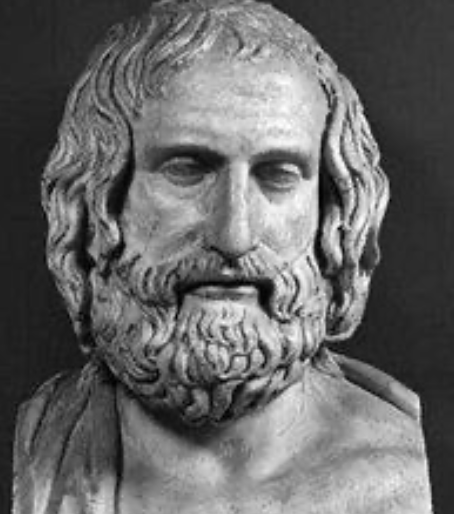
Fig 1: Protagoras
Chapter 2: Truth resides in the world around us — Aristotle
Aristotle (384–322 BC) was an ancient Greek philosopher, polymath, and one of the most influential intellectual figures in Western history. When Aristotle was 17 years old, he arrived at Athens to study under the great philosopher Plato himself at the Academy. Aristotle’s theory of forms, known as hylomorphism, posits that form and matter are inseparable and exist together within individual physical objects.
After his studies at the academy, to everyone’s surprise, Plato, Aristotle’s professor, did not name him his successor to take over the academy, mainly due to their conflicting ideas. Thus, Aristotle ventured into his passion for studying wildlife, and he intensified his feelings that Plato’s theory of forms was incorrect. He could not accept the existence of another world, more real than this one, which could be the object of true knowledge. Aristotle felt that the world we are in right now is the ideal one, and we could learn more about our world by using our 6 senses and actively seeking and acquiring knowledge. It is important to understand that matter makes up a thing, while a form is what makes a thing what it is. Matter and form do not exist separately, but exist in perfect tandem with one another.
Plato actually meant by this that reality and the truth were of different worlds; Aristotle believed that every single thing had both reality and truth (both the matter and truth). Aristotle has pulled the truth from the alternate world and has placed it into objects. This has originated from Aristotle’s quote that the Truth resides in the world around us and not in another world.
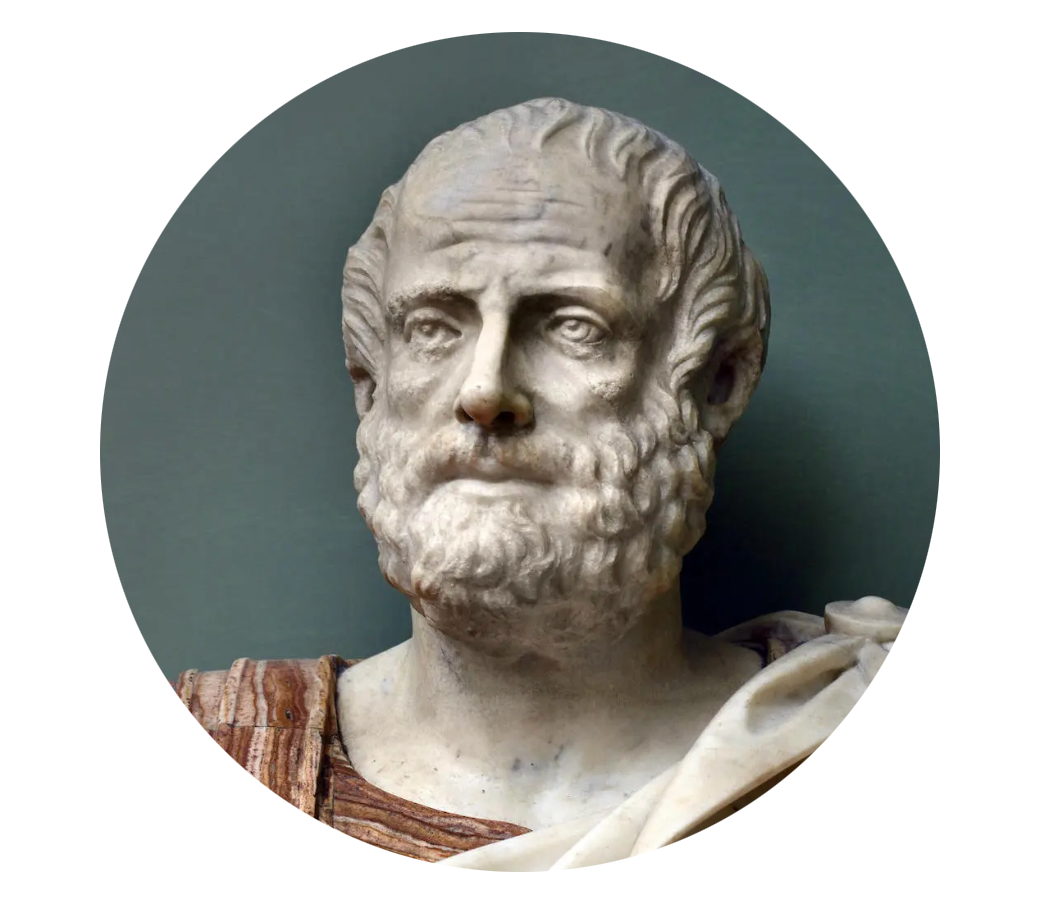
Fig 2.1 Aristotle
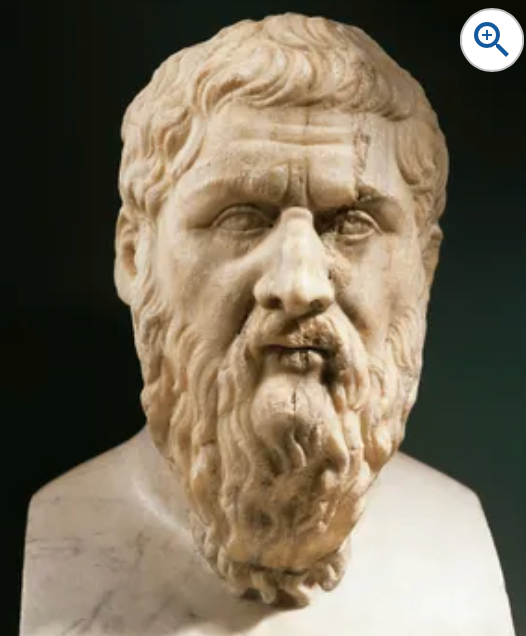
Fig 2.2: Plato — Aristotle’s Professor at the Academy
Chapter 3: Doubt is not a pleasant condition, but certainly is absurd — Voltaire
Voltaire was a French philosopher living in the Age of Enlightenment. This period was ruled by churches, and everyone sought explanations of the law and justice from them. Until the 17th century, people largely accepted the church’s explanation of defining things and what is right or wrong. Voltaire used the arguments of Issac Newton, who discovered new truths about the world, and John Locke, that no ideas were known at birth and everything originated after a person’s experience, and concluded that certainty was absurd.
Voltaire was someone who believed that, apart from a few exceptions, most of the so-called “facts” have arrived from people’s experiences and how they chose to view things. So what appeared to be a fact is actually a working hypothesis, according to him. Voltaire acknowledges the existence of doubt, meaning that only doubt exists and certainty is something people came up with, as doubt does not make a man peaceful. However, Voltaire argues that it is important to challenge these facts and to always have doubts even when they are not the most desired.
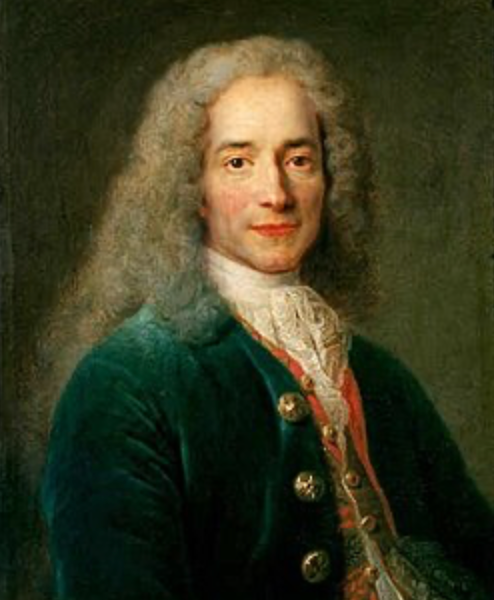
Fig 3: Voltaire
Chapter 4: Knowledge is power — Francis Bacon
We all know this phrase, but do we actually know the story behind this quote? Francis Bacon was a lawyer and a philosopher who served as the Lord Chancellor of England. He is known as the Father of Empiricism and modern scientific inquiry. Empiricism is the philosophical theory that all knowledge comes from sensory experience — what we can see, hear, touch, taste, and smell. This is in complete contrast to rationalism, which is the belief that knowledge is built on reason and logic known since birth.
Bacon believed that churches were partially right; however, religion and science were completely different. He believed that following religious methods was actually a hindrance to consuming knowledge and improving people’s lives through the knowledge obtained. This led to the creation of the Baconian method, where Bacon wanted scientists to not only conduct a series of experiments in the same direction, but to also test negatives and the exceptions to form the complete theory of science and knowledge, therefore pressing more than “Knowledge is Power”.
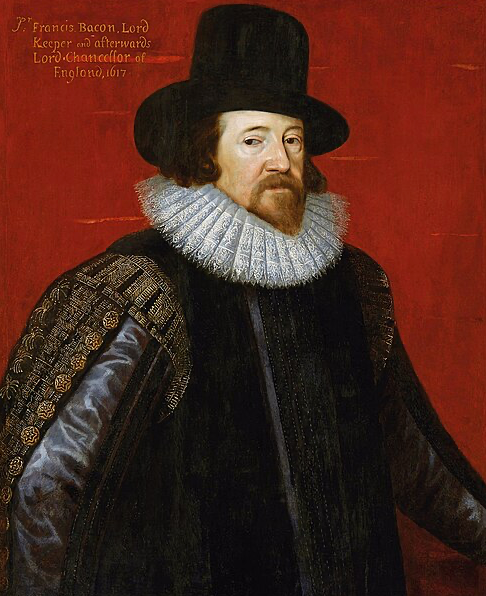
Fig 4: Francis Bacon
Chapter 5: Ship of Theseus — Plutarch
Plutarch was an ancient Greek historian and philosopher in the 1st century. According to Greek mythology, the hero Theseus returns to Athens, Greece, after defeating the Minotaur on a ship. To preserve this memory, the people of Athens continued to preserve the ship by changing the planks in the ship when they decayed, and eventually replaced every single plank on that ship with more durable materials. Plutarch noticed this and raised the paradox of whether the ship of Theseus was the same as it was before, or was it a different ship.
This paradox was not just about ships, but about human existence. Humans regenerate cells daily to replace old and damaged cells. If every single cell were replaced in our body since our birth, does that mean that we are a different person, or are we still the same person?
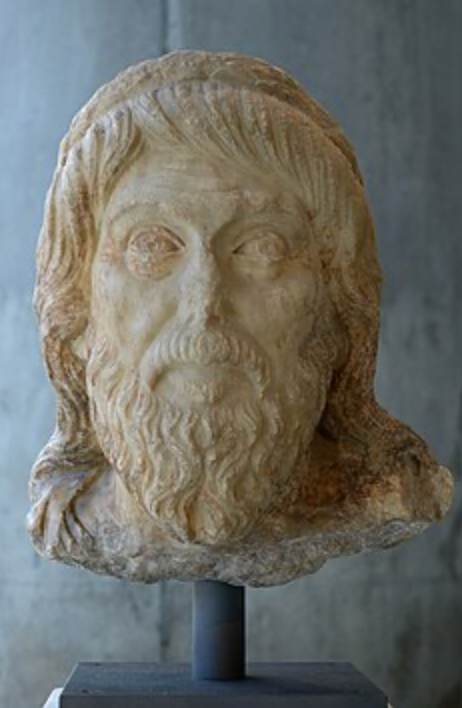
Fig 5: Plutarch
Conclusion:
Philosophical questions challenge the fundamental concepts of facts, truth, reality, and our morals and ethics. They do not depend on facts alone but on the basis on which these facts have been established in this world. Philosophy challenges our knowledge’s credibility and implores us to find out more about what is out there. That being said, I hope this article has questioned your beliefs about some facts.
Bibliography:
Fig 1: Poster, Carol. n.d. “Protagoras | Internet Encyclopedia of Philosophy.” Internet Encyclopedia of Philosophy. https://iep.utm.edu/protagor/.
Fig 2.1: Aristotle — Wordsworth Editions.” Wordsworth Editions, https://www.facebook.com/wordsworth.editions/, https://wordsworth-editions.com/book-author/aristotle/?__cf_chl_f_tk=dpC6bqk3inaym.8iSPQY3nU5PLocycmydJfaAjKM.WE-1782959697-1.0.1.1-VPusXGkKXzMiozNzVPZCWRI9pab9plFItRApqDzuT9A. Accessed 2 July 2026.
Fig. 2.2: Meinwald, Constance. 2018. “Plato | Life, Philosophy, & Works.” In Encyclopædia Britannica. Britannica. https://www.britannica.com/biography/Plato.
Fig 3: Voltaire, or about: n.d. “Voltaire — Wikiquote.” En.wikiquote.org. https://en.wikiquote.org/wiki/Voltaire.
Fig 4: Wikipedia Contributors. 2019. “Francis Bacon.” Wikipedia. Wikimedia Foundation. February 6, 2019. https://en.wikipedia.org/wiki/Francis_Bacon.
Fig 5: Wikipedia contributors. (2026, June 16). Plutarch of Athens. Wikipedia. https://en.wikipedia.org/wiki/Plutarch_of_Athens
메타데이터
- post_id
- a94cf7d4e2d6
- slug
- is-your-ship-still-your-ship-five-philosophers-who-questioned-everything-a94cf7d4e2d6
- url
- https://medium.com/@sddc.sajc/is-your-ship-still-your-ship-five-philosophers-who-questioned-everything-a94cf7d4e2d6
- canonical_url
- https://medium.com/@sddc.sajc/is-your-ship-still-your-ship-five-philosophers-who-questioned-everything-a94cf7d4e2d6
- author_url
- https://medium.com/@sddc.sajc
- status
- ok
- fetched_at
- 2026-07-30 04:20:30