Why “No Liquidation” Does Not Mean “No Impact” in Trading Platform Outages
Disclaimer
Why “No Liquidation” Does Not Mean “No Impact” in Trading Platform Outages

Disclaimer
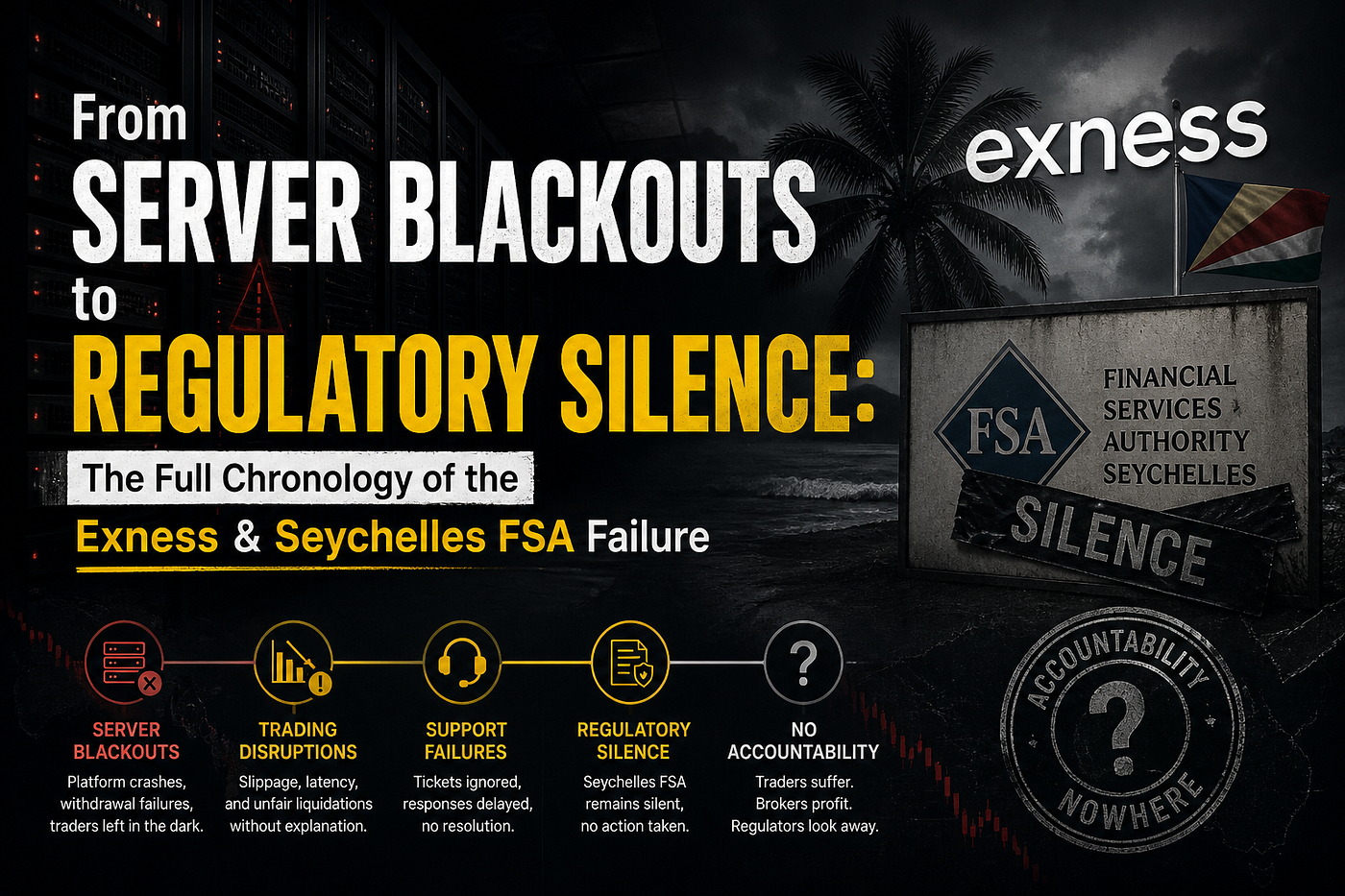
This article documents personal experience, archived communications, and public observations related to a trading infrastructure incident involving Exness. It does not claim affiliation with, endorsement by, or representation of Exness or any regulatory authority. All referenced timelines and statements are presented as part of a personal chronology and documentation effort.
One of the most common assumptions in trading disputes is surprisingly simple:
“If the account was not liquidated, then there was no real damage.”
At first glance, this sounds reasonable.
But after experiencing a prolonged platform outage during a period of extreme market volatility, I began to realize how incomplete this framework actually is.
Because in leveraged trading, damage is not limited to liquidation.
Sometimes the most important loss is the loss of control itself.
The Hidden Layer of Trading Risk
Most discussions about trading risk focus on market direction.
Price goes up. Price goes down. A position wins or loses.
But modern leveraged trading depends on something deeper:
Operational access.
The ability to:
- close positions
- reduce exposure
- hedge risk
- adjust stops
- rotate capital
- respond to volatility
Without these functions, risk management stops being active and becomes passive exposure.
That distinction matters enormously during periods of abnormal market movement.
What Happens During an Outage
In my own case, the issue was not simply price volatility.
The issue was that platform access became unavailable during a major gold movement.
Multiple accounts became inaccessible during the same outage window.
One account later experienced liquidation and received partial compensation.
Other accounts, despite being inaccessible during the same infrastructure event, were categorized differently because they did not experience immediate liquidation.
This revealed a deeper question:
How should “impact” actually be measured during a trading infrastructure failure?
The Problem With Binary Logic
Many post-incident reviews appear to rely on binary logic:
- Liquidated = affected
- Not liquidated = unaffected
But trading reality is rarely that simple.
A trader may still experience significant operational consequences without full liquidation:
- inability to reduce risk
- inability to secure unrealized profit
- inability to exit deteriorating conditions
- inability to rebalance exposure
- inability to respond psychologically to rapidly changing markets
These effects are harder to quantify than liquidation.
But they are still real.
Especially during leveraged volatility events.
Infrastructure Access Is Part of Risk Management
This experience changed the way I think about trading infrastructure.
Most traders assume the platform itself will remain operational during market stress.
But when infrastructure fails during volatility expansion, the platform itself becomes part of the risk event.
At that point, the trader is no longer managing only market exposure.
They are also exposed to execution infrastructure risk.
And unlike market risk, infrastructure risk is not something traders can independently hedge.
Why Documentation Matters
One lesson became increasingly clear throughout this process:
Infrastructure disputes become extremely difficult to evaluate without chronology.
Screenshots matter. Timestamps matter. Archived communications matter. Platform announcements matter.
Without documentation, operational failures quickly become abstract discussions.
With documentation, at least a public historical record remains available.
That is ultimately why this archive exists.
Not to amplify outrage.
But to document how infrastructure failures can reshape risk itself during periods of market instability.
메타데이터
- post_id
- a97c4055c2d5
- slug
- why-no-liquidation-does-not-mean-no-impact-in-trading-platform-outages-a97c4055c2d5
- url
- https://medium.com/@fkex/why-no-liquidation-does-not-mean-no-impact-in-trading-platform-outages-a97c4055c2d5
- canonical_url
- https://medium.com/@fkex/why-no-liquidation-does-not-mean-no-impact-in-trading-platform-outages-a97c4055c2d5
- author_url
- https://medium.com/@fkex
- status
- ok
- fetched_at
- 2026-06-22 05:41:33