Chains Broken by Ink
The Story of Frederick Douglass and the Power of Literacy
Chains Broken by Ink
The Story of Frederick Douglass and the Power of Literacy
Introductions
Imagine being born into a life where your freedom is stolen before you even understand what it means. This was the reality for Frederick Douglass, whose story in The Narrative of the Life of Frederick Douglass, an American Slave, would shock a nation and inspire a movement. Frederick Douglass’s life was marked by hardship and injustice, as he was born into slavery, separated from his mother, and forced to endure brutal treatment. Yet through determination, intelligence, and courage, Douglass escaped slavery and authored a work that became a powerful tool in the fight against the institution. His story serves as an example of the everlasting value of moral conviction, personal determination, and literacy. Douglass motivated generations to fight for justice by sharing his narrative and challenging long-standing social standards.
About the Author
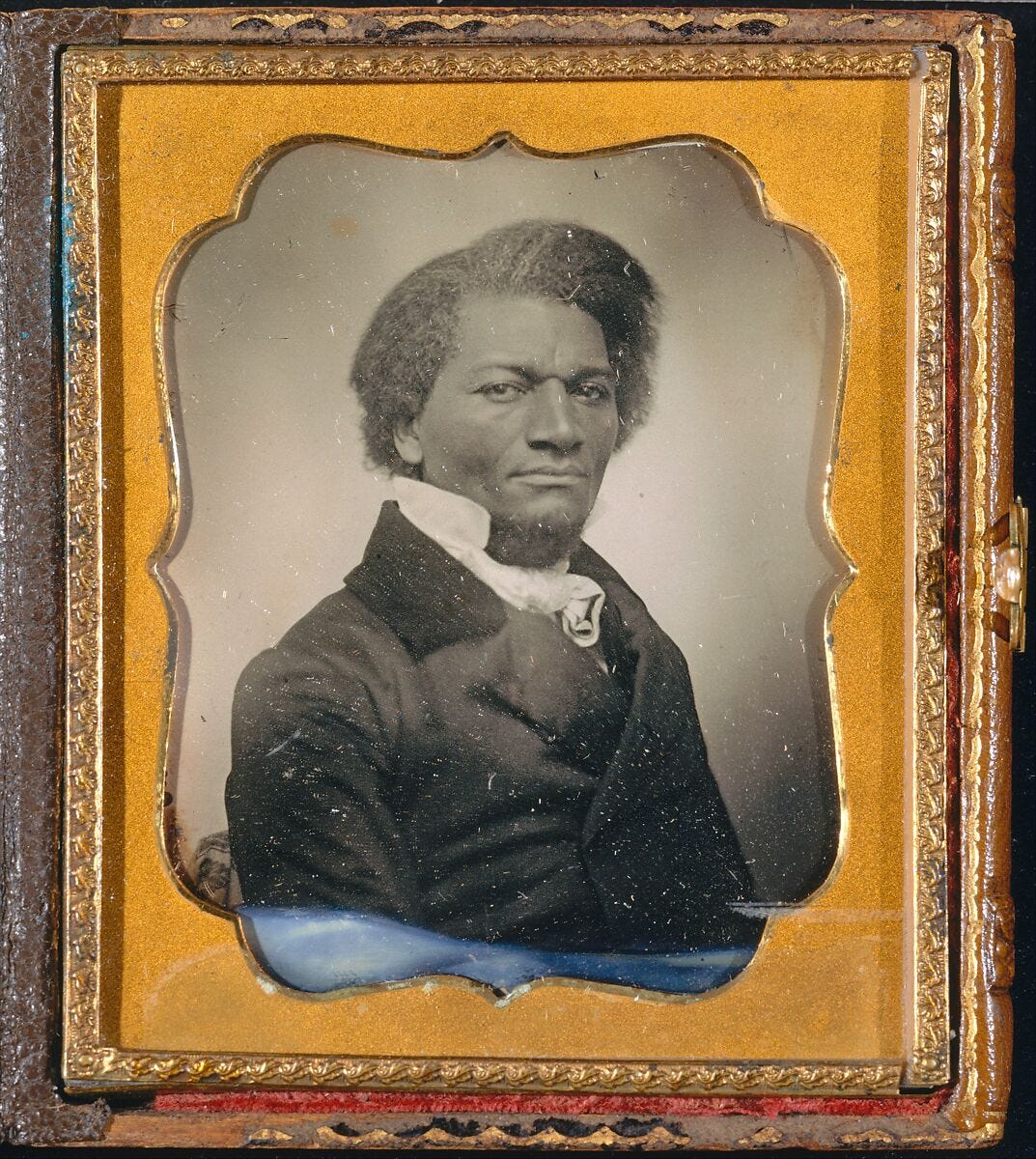
Frederick Douglass, ca. 1855. Daguerreotype by an unknown artist. This portrait, held at The Met Museum, reflects Douglass’s enduring commitment to freedom, justice, and equality (Unknown artist).
Frederick Douglass was born around 1817 in Tuckahoe, Maryland. He spent much of his childhood separated from his mother and raised by his grandmother, who gave him care and guidance. Even as a child, Douglass started to notice how wrong slavery was and how harsh life was for enslaved people. “Every tone [of the slave songs] was a testimony against slavery, and a prayer to God for deliverance from chains” (Matlack, pp. 19).
Douglass’s education didn’t come easy. When he lived with the Auld family in Baltimore, Mrs. Auld started teaching him to read — but her husband quickly told her to stop. That moment showed Douglass just how dangerous learning was to the system of slavery, and instead of giving up, he taught himself in secret. Learning to read and write became a lifeline for him. It gave him the tools to fight against slavery and later shaped his work as a writer and abolitionist (HISTORY.com Editors).
After escaping in 1838, Douglass didn’t stop. He traveled throughout the United States and Europe, speaking out against slavery, writing for newspapers, and publishing his autobiographies. He even advised President Abraham Lincoln on recruiting Black soldiers during the Civil War. As Douglass wrote, “I prefer to be true to myself, even at the hazard of incurring the ridicule of others, rather than to be false, and incur my own abhorrence” (Douglass, 1875, pp. 110). His life demonstrates how determination, intelligence, and courage allowed him to challenge injustice and create lasting social and political change. His courage and determination still inspire people to stand up for justice and equality today.
About the Book
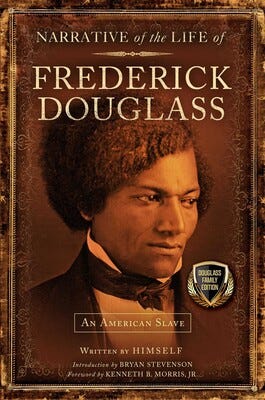
Narrative of the Life of Frederick Douglass by Frederick Douglass (Forefront Books, Simon & Schuster) (Douglass, 2021).
The Narrative of the Life of Frederick Douglass, an American Slave is more than just a story about one man — it is a powerful look at the injustice of slavery and the strength of the human spirit. Douglass blends his personal experiences with strong moral arguments, showing how slavery harmed people not just physically, but emotionally and socially. He writes in a clear, direct style that mixes storytelling with reflection, making it easy for readers to understand both the cruelty of the system and the importance of freedom.
Education and self-determination are central themes in the book. Douglass recalls that his master once said teaching a slave to read would “forever unfit him to be a slave” (Douglass, 1875, pp. 33). Instead of giving up, Douglass taught himself and even helped other enslaved people learn, showing how literacy became a path to freedom. Resistance to oppression is another major theme. Douglass’s refusal to be broken by Edward Covey, a man known for brutal treatment of slaves, demonstrates his courage and determination to take control of his life.
The narrative also shows how slavery damaged families, identities, and relationships. Douglass writes, “Thus is slavery the enemy of both the slave and the slaveholder” (Douglass, 1875, pp. 70), highlighting that the system’s cruelty affected everyone. By combining personal storytelling, moral reasoning, and vivid examples, Douglass makes his narrative both a deeply personal account and a universal call for justice and equality.
Historical Context and Influence
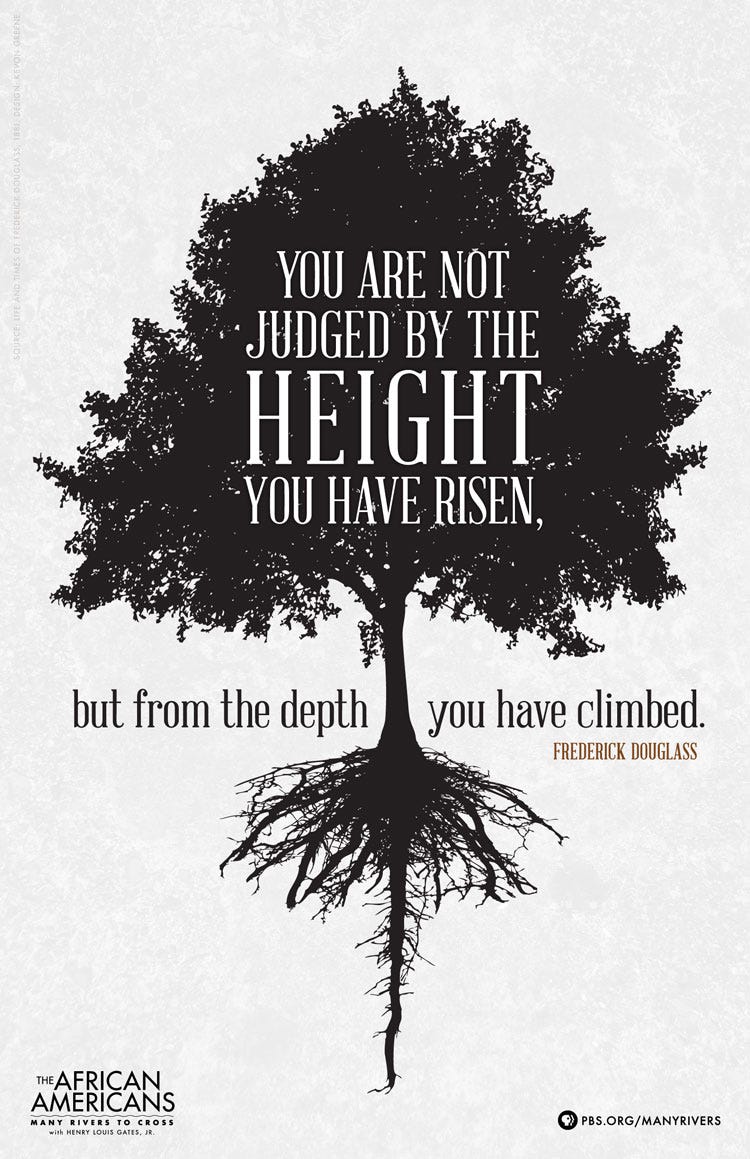
Kevon Greene’s design of a tree with deep roots symbolizes Douglass’s journey from slavery to freedom, highlighting his resilience, perseverance, and fight for equality (Greene).
Douglass wrote his autobiography during a time when slavery was legal and deeply rooted in American society. Laws like the Fugitive Slave Acts made life even harder for enslaved people and punished anyone who tried to help them escape. Publishing a book about his life as a slave was a brave move that could have put him in danger of being caught.
The book received significant attention from abolitionists in the North and abroad. Scholar James Matlack points out that Douglass exposes the hypocrisy of a country that talks about freedom while keeping people enslaved, highlighting the moral contradictions of the time (Matlack, pp. 18).
Douglass’s story also became an example for future African American writers. According to the HISTORY.com Editors, Douglass’ work “served as an inspiration to the Civil Rights Movement of the 1960s and beyond” (HISTORY.com Editors). This shows that Douglass’s courage, determination, and way with words not only challenged the wrongs of his own time but also set an example for generations after him to fight for justice and equality.
Legacy
The significance of Douglass’s narrative lies in its continued relevance and ability to inspire change. It serves as a historical document and a moral guide, emphasizing the importance of education and courage in achieving freedom. Scholars analyzing The Narrative of the Life of Frederick Douglass note, “For Douglass, the city is not just relatively more free than the country, it is also a place that offers hope of the ultimate freedom: escape” (“Narrative of the Life of Frederick Douglass”).
In classrooms and public discourse, Douglass’s narrative remains a cornerstone for discussions of civil rights, education, and human dignity. Its message — that literacy empowers and knowledge liberates — resonates in contemporary struggles for social justice. The narrative also demonstrates the power of literature as activism, showing that personal stories can influence public opinion and promote systemic change.
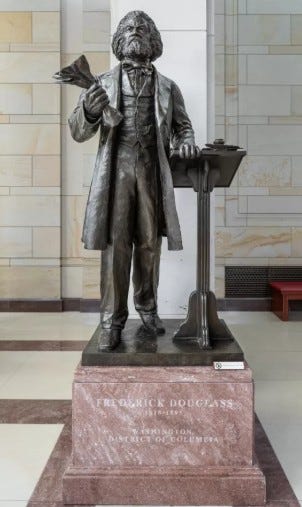
Frederick Douglass, by Steven Weitzman (2013), stands in Emancipation Hall, U.S. Capitol Visitor Center, honoring his legacy (Weitzman).
Conclusion
Frederick Douglass’s Narrative of the Life of Frederick Douglass, an American Slave illustrates the transformative power of courage, education, and moral conviction. Through his life and writing, Douglass exposed the cruelty of slavery, challenged societal norms, and inspired generations to fight for justice. His autobiography remains a seminal work in American literature and history, demonstrating that the written word can profoundly shape individuals and society. Douglass’s enduring legacy emphasizes that knowledge, resilience, and advocacy are essential in the pursuit of freedom and equality.
Work Cited
Douglass, Frederick. Narrative of the Life of Frederick Douglass, an American Slave. Simon & Schuster, 2021, https://www.simonandschuster.com/books/Narrative-of-the-Life-of-Frederick-Douglass/Frederick-Douglass/9781637631706. Accessed 9 Mar. 2026.
Douglass, Frederick. Narrative of the Life of Frederick Douglass, Written by Himself. 1845, pp. 1–125. The Internet Archive, https://ia802800.us.archive.org/13/items/douglasfred00dougrich/douglasfred00dougrich.pdf. Accessed 4 Mar. 2026.
Greene, Kevon, designer. Frederick Douglass Quotation Poster. “Life and Times of Frederick Douglass” (1881), PBS, https://www.pbs.org/wnet/african-americans-many-rivers-to-cross/african-american-quotation-posters/frederick-douglass/?utm_source=chatgpt.com. Accessed 9 Mar. 2026.
HISTORY.com Editors. “Frederick Douglass — Narrative, Quotes and Facts.” HISTORY, 26 Jan. 2026, www.history.com/articles/frederick-douglass. Accessed 4 Mar. 2026.
Matlack, James. “The Autobiographies of Frederick Douglass.” Phylon (1960-), vol. 40, no. 1, 1979, pp. 15–28. JSTOR, https://doi.org/10.2307/274419. Accessed 4 Mar. 2026.
“Narrative of the Life of Frederick Douglass, An American Slave, Written by Himself.” Nineteenth-Century Literature Criticism, edited by Russel Whitaker, vol. 141, Gale, 2004. Gale Literature Resource Center, link.gale.com/apps/doc/H1410001138/LitRC?u=lincclin_ecc&sid=bookmark-LitRC&xid=7a9548db. Accessed 5 Mar. 2026.
Unknown artist. Frederick Douglass. ca. 1855, daguerreotype. The Met Museum, The Rubel Collection, Gift of William Rubel, 2001, https://www.metmuseum.org/art/collection/search/282066. Accessed 9 Mar. 2026.
Weitzman, Steven. Frederick Douglass Statue. 2013, bronze, Emancipation Hall, U.S. Capitol Visitor Center, Washington, D.C., https://www.aoc.gov/explore-capitol-campus/art/frederick-douglass-statue. Accessed 9 Mar. 2026.
메타데이터
- post_id
- a97d7f43ccf7
- slug
- chains-broken-by-ink-a97d7f43ccf7
- url
- https://medium.com/@eborrego/chains-broken-by-ink-a97d7f43ccf7
- canonical_url
- https://medium.com/@eborrego/chains-broken-by-ink-a97d7f43ccf7
- author_url
- https://medium.com/@eborrego
- status
- ok
- fetched_at
- 2026-06-09 15:37:30