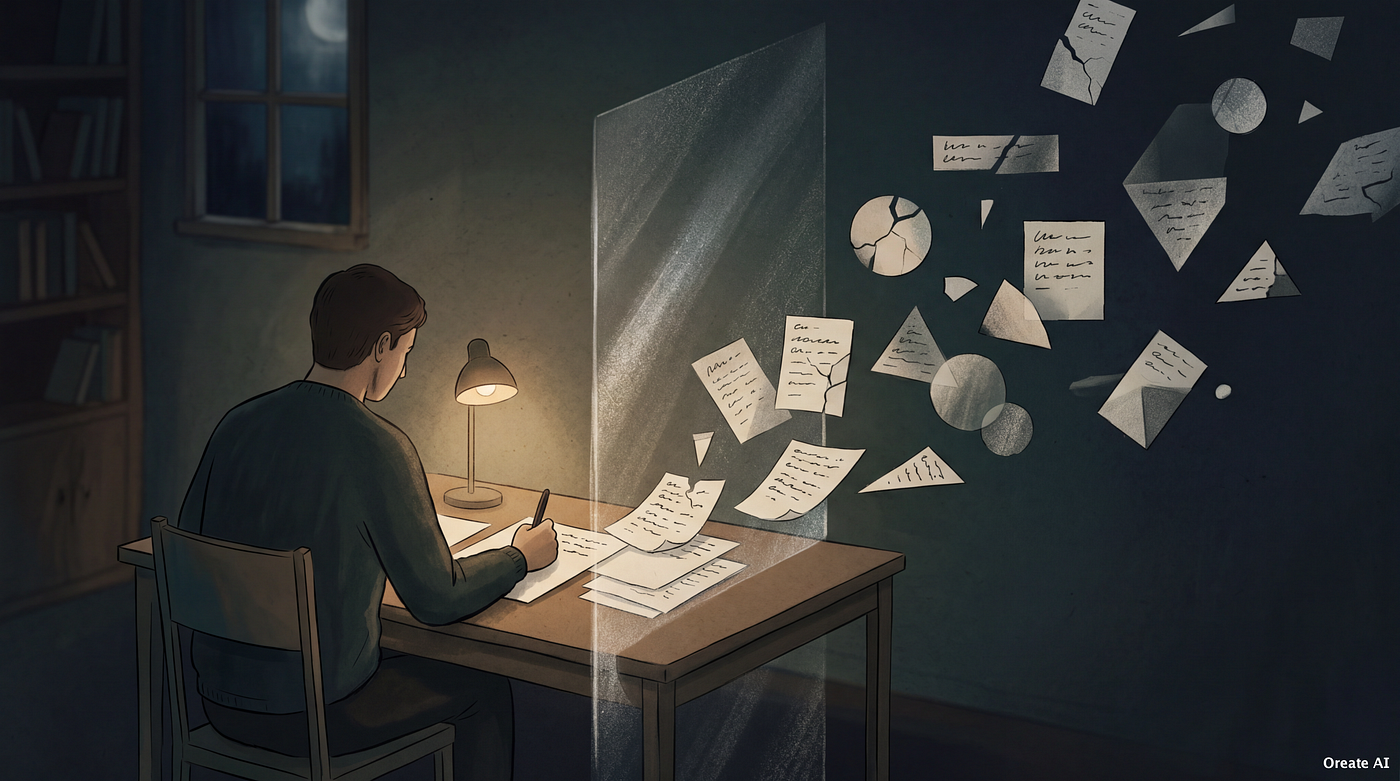
Video Games: The Art You Live Through
Why that video games are among the best forms of entertainment.
Video Games: The Art You Live Through
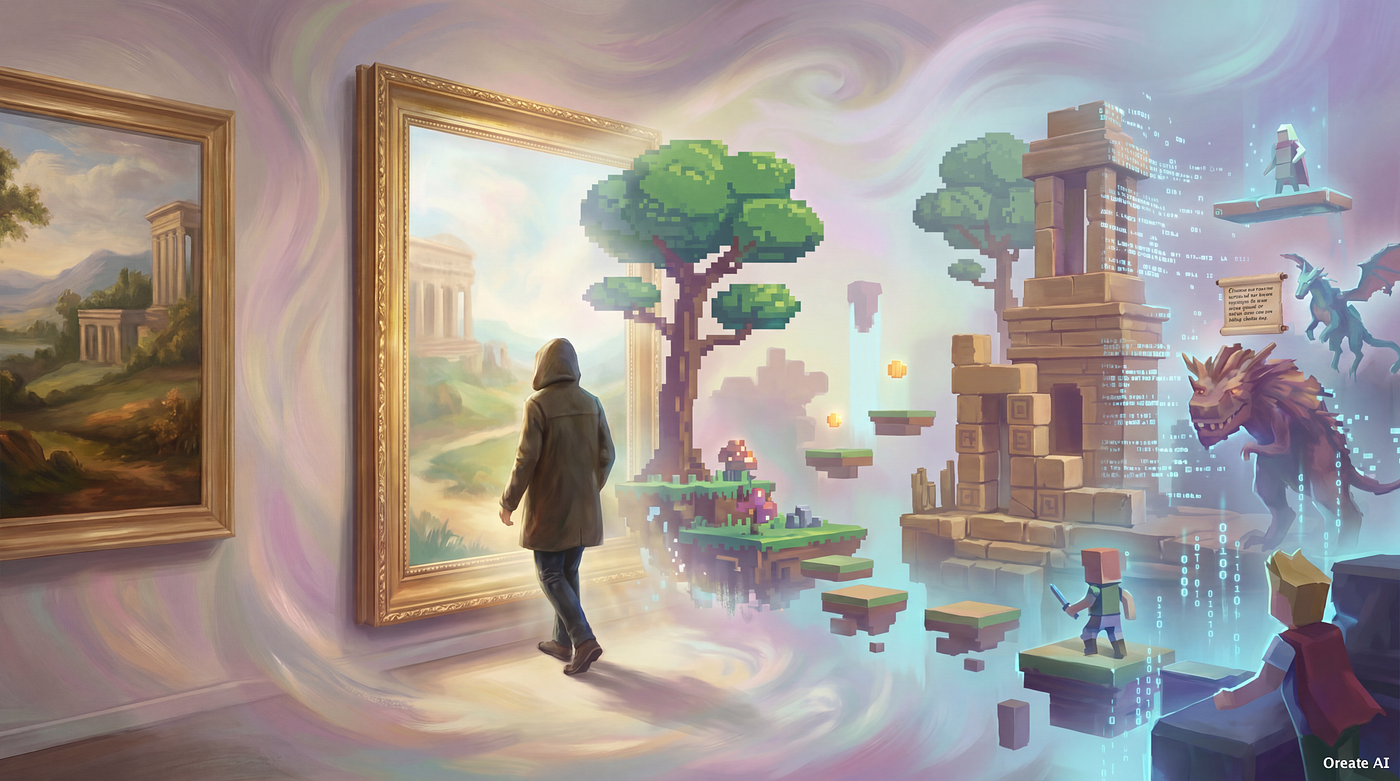
Image generated by the author using Oreate AI
Why that video games are among the best forms of entertainment.
because they allow you to live in the present moment and remain in control of the experience, rather than letting it control you. This stands in contrast to many forms of entertainment that have become popular today, such as short-form videos, which are often consumed out of habit or addiction rather than genuine enjoyment. Games such as Hollow Knight, God of War, and Resident Evil, along with many others that do not rely on addictive reward systems, embody this idea. They are artistic masterpieces in the truest sense of the word.
What distinguishes video games from cinema is the player’s ability to interact rather than merely observe. Your mind remains engaged throughout the experience, especially in games that respect the player’s time and avoid repetitive tasks unlike Ubisoft games. Even when a game is difficult, every minute spent playing contributes to your understanding, skill, or progress, so it rarely feels wasted. There is also the sense of accomplishment that comes from overcoming a challenge, such as defeating a difficult boss. That feeling of achievement can stay with you long after you stop playing. In cinema, you remember what happened to the characters; in video games, you remember what happened to you.
Art is the expression of ideas in a creative way that aims to produce an intellectual or emotional impact on its audience. Video games achieve this through music, environments, visual design, and storytelling. A boss battle accompanied by the right music can create a memory that remains vivid for years; hearing that same soundtrack later can instantly bring back the emotions of that moment. Beautiful environments, memorable scenes, and uniquely designed enemies can communicate political, social, or universal themes such as war, loss, or human struggle. What makes games a unique artistic medium is that the audience does not merely watch the work — they become part of it through their decisions, exploration, and interaction with the world.
Failure as Part of the Experience
In most forms of entertainment, the audience cannot fail. In video games, however, failure is often an essential part of the experience. Players learn from their mistakes and return stronger than before. In that sense, games resemble life itself.
Physicist Richard Feynman once said: “The test of all knowledge is experiment. Experiment is the sole judge of scientific truth.” The player follows a similar process while playing. They try, fail, learn from the result, adjust their approach, and try again. Although a video game is not a scientific laboratory, the underlying pattern is remarkably similar. Progress comes not from avoiding mistakes but from learning through them.
The history of science has shown that experimentation and learning from failure are among the most effective methods for understanding the world and solving problems. Good games reward the same mindset, turning failure from a punishment into an opportunity for growth.
Games as a Tool for Self-Discovery
Some games reveal aspects of a player’s character:
- Are they patient?
- Do they enjoy exploration?
- Do they give up easily?
- How do they respond to failure?
While many aspects of life can reveal these traits — from the food we enjoy to the media we consume — the diversity of video games often provides a more precise way of understanding ourselves and our preferences.
Many people assume that good games make players more focused or better able to appreciate the present moment. However, part of the explanation may be that people who naturally seek challenge and meaningful experiences are drawn to good games in the first place, while those who seek quick stimulation are attracted to other forms of entertainment. This idea resembles the “Swimmer’s Body Illusion”: do swimmers have athletic bodies because they swim, or do they become successful swimmers because they already possess bodies suited to the sport? Likewise, not everyone develops artistic taste simply by playing thoughtful games. It may also be true that people with artistic sensibilities are more likely to seek out such games from the beginning.
We have talked about good games, but what are good games? A strong game often possesses the following qualities:
- It respects the player’s time.
- It derives enjoyment from the act of playing itself.
- It provides a sense of progress and achievement.
- It has a clear artistic vision.
- It does not rely on psychological manipulation to keep players engaged.
In the end, the value of great games does not lie in helping us escape reality. Rather, it lies in allowing us to experience something meaningful within it. They demand attention, patience, and learning, and in return they offer a feeling that comes not from merely consuming time, but from actively participating in it.
Edited for Word Garden by Wandering Mind
메타데이터
- post_id
- a9aff89c9b27
- slug
- video-games-the-art-you-live-through-a9aff89c9b27
- url
- https://medium.com/word-garden/video-games-the-art-you-live-through-a9aff89c9b27
- canonical_url
- https://medium.com/word-garden/video-games-the-art-you-live-through-a9aff89c9b27
- author_url
- https://medium.com/@hassn20777
- status
- ok
- fetched_at
- 2026-07-13 11:24:01