How to Improve Reliability in Electrical Substations: Key Design Considerations
Electrical substations are critical parts of modern power systems. They connect transmission and distribution networks, transform voltage…
How to Improve Reliability in Electrical Substations: Key Design Considerations
Electrical substations are critical parts of modern power systems. They connect transmission and distribution networks, transform voltage levels, control power flow, and protect electrical equipment from faults.
A substation failure can interrupt power supply to industrial facilities, commercial buildings, infrastructure, and entire distribution areas.
For this reason, substation reliability depends not only on the quality of individual components, but also on how the entire system is designed, protected, operated, and maintained.
1. Design Appropriate Redundancy
Redundancy is one of the most common approaches to improving substation reliability.
For example, a substation may use:
- Multiple power transformers
- Duplicate protection systems
- Multiple incoming power sources
- Sectionalized busbars
- Alternative power supply paths
However, more redundancy does not automatically mean higher reliability.
If two redundant systems share the same control power supply, communication system, cable route, or other common component, a single failure could affect both systems.
Good redundancy therefore requires independence, not simply additional equipment.
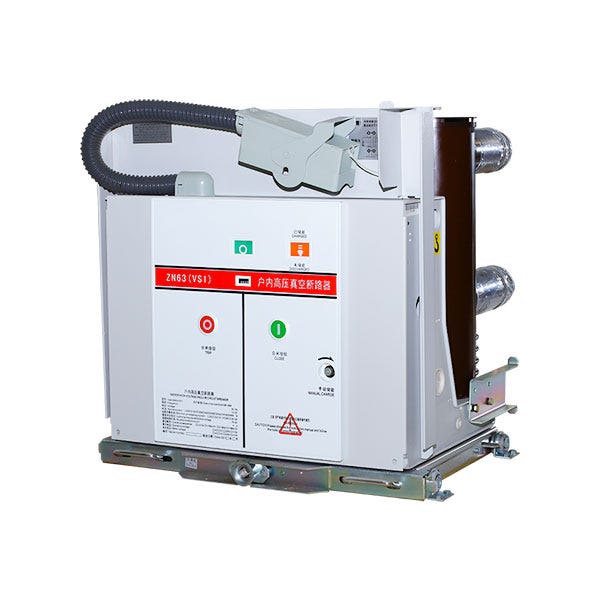
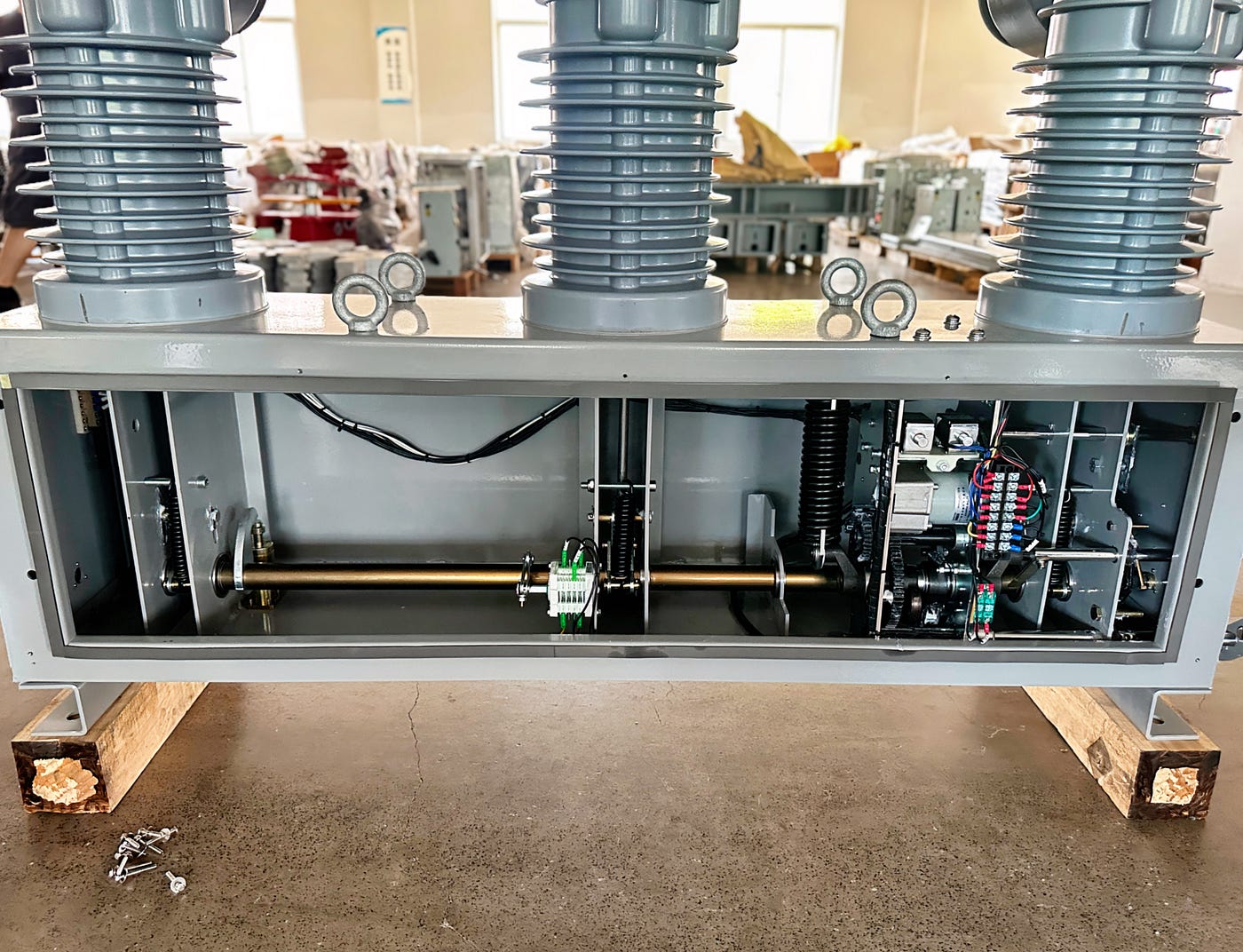
2. Use Reliable Circuit Breakers and Switchgear
Circuit breakers and switchgear are essential for controlling and protecting electrical circuits.
When a fault occurs, the protection system must identify the problem and isolate the affected section quickly.
Medium voltage vacuum circuit breakers are widely used in distribution and industrial substations because they provide reliable switching and fault interruption.
Proper equipment selection should consider:
- Rated voltage
- Rated current
- Short-circuit breaking capacity
- Operating frequency
- Mechanical endurance
- Installation environment
Correctly specified equipment helps reduce the risk of equipment failure and unnecessary outages.
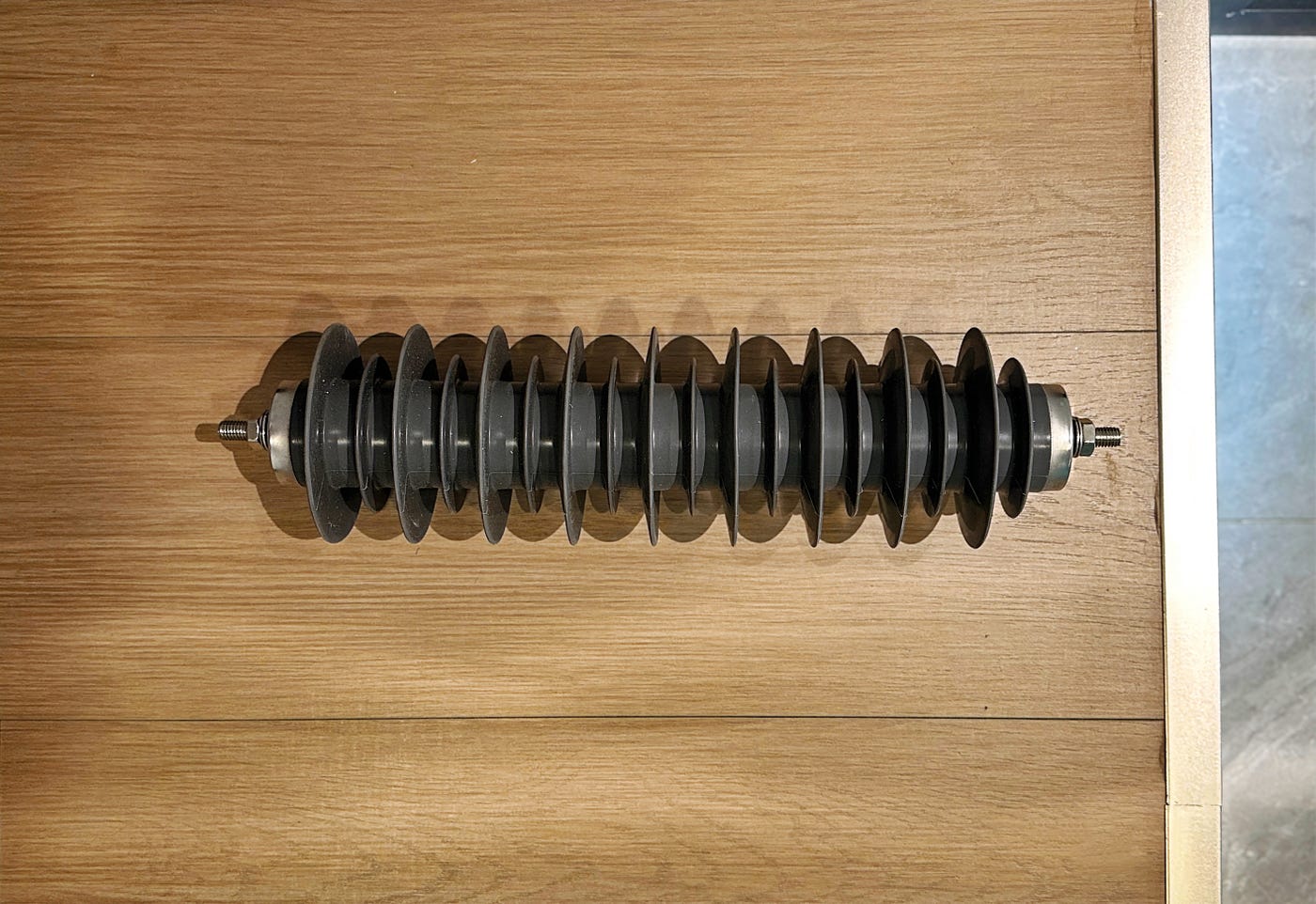
3. Protect Equipment Against Overvoltage
Lightning strikes and switching operations can create transient overvoltages that may damage transformers, switchgear, and other substation equipment.
Surge arresters provide an important layer of protection by limiting excessive voltage and diverting surge energy safely toward ground.
The correct surge arrester should be selected according to the system voltage, grounding arrangement, continuous operating voltage, and expected surge conditions.
4. Improve Protection Coordination
A reliable substation needs more than high-quality equipment.
Protection devices must work together correctly.
Protection coordination ensures that when a fault occurs, the device closest to the fault operates first whenever possible.
For example, if a fault occurs on a downstream feeder, the feeder circuit breaker should normally isolate the fault without unnecessarily disconnecting the entire substation.
Poor coordination can turn a localized fault into a much larger outage.
5. Consider Common-Mode Failures
One of the most important reliability considerations is identifying common points of failure.
Two transformers may appear redundant, but their reliability advantage can be reduced if both depend on the same:
- Control power supply
- Protection system
- Communication network
- Cooling system
- Cable route
- Physical structure
Engineers should therefore examine whether supposedly independent systems can actually fail together.
6. Make Maintenance Easier
Substation reliability is strongly influenced by maintenance.
Equipment should be designed and installed so that inspection, testing, replacement, and maintenance can be performed safely and efficiently.
Condition monitoring can also help identify potential problems before they become major failures.
Regular maintenance may include:
- Circuit breaker inspection
- Insulation testing
- Transformer testing
- Protection relay testing
- Connection inspection
- Surge arrester inspection
Preventive maintenance can reduce unexpected equipment failures and improve equipment service life.
7. Use Monitoring and Automation
Modern substations increasingly use digital monitoring and automation systems.
SCADA and intelligent electronic devices can provide operators with information about:
- Voltage
- Current
- Equipment status
- Fault conditions
- Alarms
- Power flow
Real-time information can help operators respond more quickly when abnormal conditions occur.
Automation can also reduce outage duration by allowing certain switching operations to be performed remotely.
8. Plan for Future Expansion
Substation infrastructure often operates for decades.
Therefore, reliability planning should consider not only current demand but also future changes in the power system.
Factors may include:
- Increasing electricity demand
- Renewable energy integration
- Battery energy storage
- Industrial expansion
- Electric vehicle charging
- Distributed generation
A substation designed with future expansion in mind can avoid costly modifications later.
Reliability Is More Than Redundancy
A highly reliable substation is not necessarily the one with the largest number of components.
Reliability comes from the combination of:
Good system design + reliable equipment + coordinated protection + independent backup systems + effective maintenance + intelligent monitoring.
Adding equipment without considering system complexity can sometimes create new failure modes.
The objective should therefore be to design a system that is both resilient and manageable.
Building More Reliable Power Infrastructure
As electricity demand continues to grow, substations will face increasingly complex operating requirements.
Renewable energy, energy storage, industrial electrification, and large-scale digital infrastructure are all changing the way electricity is generated and distributed.
Reliable circuit breakers, switchgear, surge arresters, transformers, protection systems, and monitoring technologies will continue to play an important role in maintaining stable power networks.
MinRong provides high voltage electrical equipment and power distribution solutions for substations, industrial facilities, renewable energy projects, and other power infrastructure applications.
Conclusion
Improving substation reliability requires a system-level approach.
Engineers need to consider redundancy, equipment selection, protection coordination, common-mode failures, maintenance, monitoring, and future expansion together.
The most reliable substation is not necessarily the most complicated one. It is the one where every component and backup system has a clear purpose and where failures can be isolated without unnecessarily affecting the rest of the power network.
As power systems continue to evolve, thoughtful substation design will remain essential for delivering safe, stable, and reliable electricity.
메타데이터
- post_id
- a9b3f0235ff6
- slug
- how-to-improve-reliability-in-electrical-substations-key-design-considerations-a9b3f0235ff6
- url
- https://medium.com/@minrong202303/how-to-improve-reliability-in-electrical-substations-key-design-considerations-a9b3f0235ff6
- canonical_url
- https://medium.com/@minrong202303/how-to-improve-reliability-in-electrical-substations-key-design-considerations-a9b3f0235ff6
- author_url
- https://medium.com/@minrong202303
- status
- ok
- fetched_at
- 2026-08-19 09:45:39