I Didn’t Realize I Wasn’t Living. I Was Just Managing Myself.
The difference between curating your life and actually living it — and why the version of “self-improvement” we’re sold might just be…
I Didn’t Realize I Wasn’t Living. I Was Just Managing Myself.

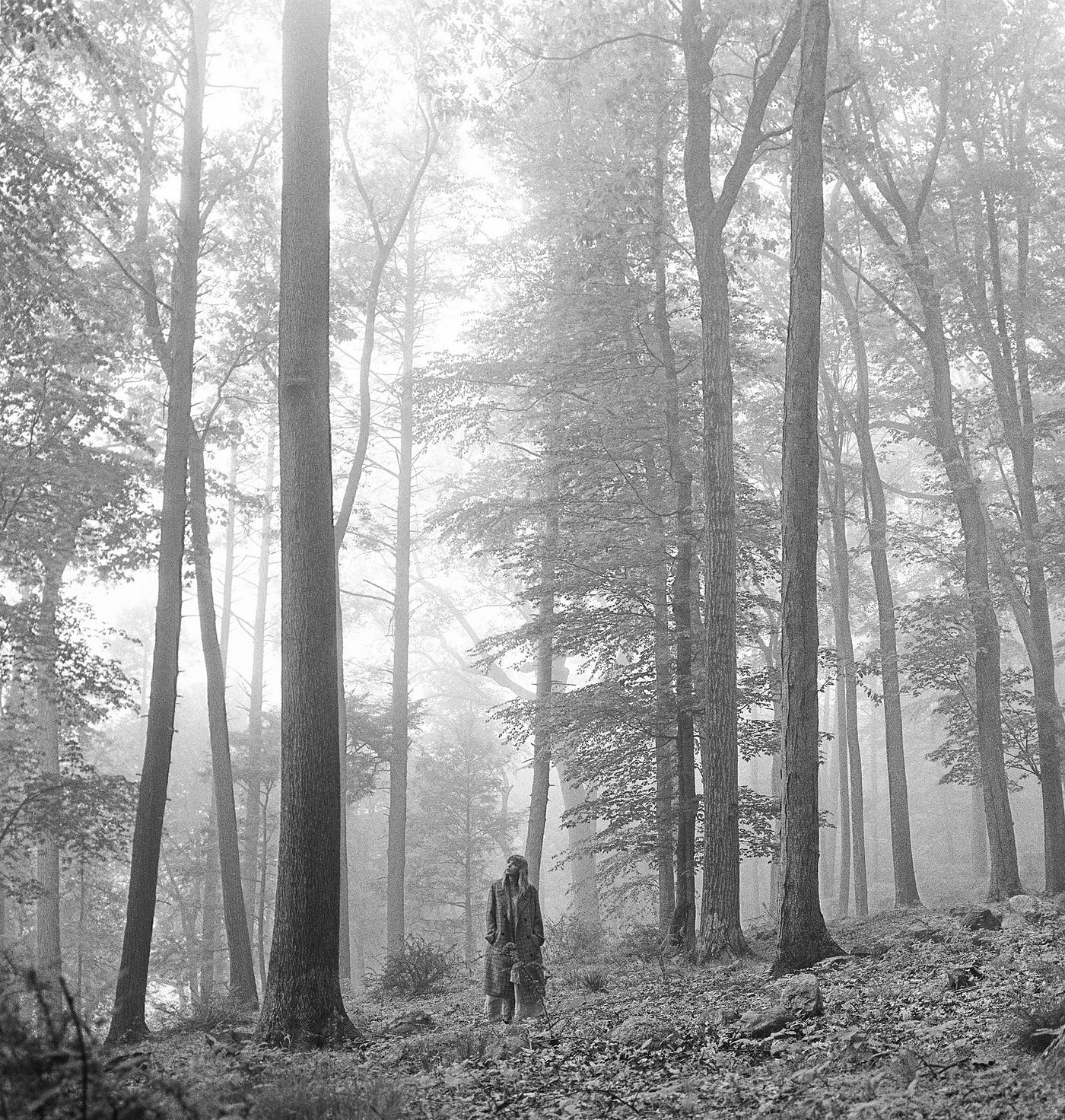
An uninhabited life.
The difference between curating your life and actually living it — and why the version of “self-improvement” we’re sold might just be sophisticated self-rejection.
I didn’t crash my life.
There was no public meltdown, no rock bottom that made everyone gasp and say, “Yeah, they had it coming.”
From the outside, I looked fine.
I had routines. I had goals. I had plans. I had language for all of it: discipline, focus, self-respect, standards.
If you’d asked me, I would’ve told you I was doing the work.
But underneath all the progress, there was this low, constant hum I couldn’t get rid of.
Not panic. Not drama. Just a steady feeling that something wasn’t right.
I didn’t have words for it at the time.
Later I realized: I wasn’t actually living my life. I was managing it.
The Project Version of You
When your life becomes a project, you stop being a person and start being a task.
I didn’t wake up one day and decide, “I’m going to turn myself into a brand.”
It happened slowly.
One habit app here. One morning routine there. One more “how to become your best self” video. More systems. More rules. More optimization.
On the surface, nothing looked toxic.
I wasn’t numbing out with substances. I wasn’t destroying relationships left and right. I was doing the respectable thing: trying to get better.
But the energy underneath wasn’t curiosity. It was fear.
Fear of failing. Fear of being seen as average. Fear that if I relaxed for even a second, everything would fall apart.
So I treated myself like something fragile and slightly defective that needed constant supervision.
On a good day, it looked like “high standards.” On a bad day, it felt like self-hatred with better branding.
The strange part is how normalized this became. I’d wake up and immediately audit myself: Did I sleep enough? Did I wake up on time? Am I behind already? The day hadn’t even started, and I was already grading myself.
Every choice became a referendum on my worth. Skipped the gym? Failure. Ate something “off-plan”? Weakness. Spent an hour doing nothing? Wasted potential.
I was running a performance review on my own existence — 24/7, no breaks, no grace period.
Self-Improvement as Self-Rejection
There is a version of self-improvement that’s really just self-rejection in a nicer outfit.
It sounds like:
“I’ll be okay once I fix this.”
“I’ll be lovable once I upgrade that.”
“I’ll deserve rest once I stop being messy.”
It sounds responsible. It sounds mature. It even gets praised.
But if you strip away the language and sit with the feeling, the message is simple: “Who I am right now is not acceptable.”
So you grind.
You optimize your body, your schedule, your diet, your productivity, your social life, your mindset.
You do it in the name of growth, but the goal is never understanding. The goal is permission.
Permission to exist without constantly apologizing for yourself.
The problem is: that permission never actually comes.
You “improve” one part of your life and immediately notice three new flaws.
No matter how far you get, you still feel like you’re waiting in the lobby of your own life, hoping someone will finally call your name and say: “Congratulations. You’re allowed to relax now.”
They don’t.
Because the person who’s withholding that permission is you.
And here’s the part I didn’t see for years: I thought I was being responsible. I thought I was taking my life seriously. I thought the pressure I put on myself was what successful, disciplined people do.
But there’s a difference between wanting to grow and treating your current self like an embarrassment you’re trying to outrun.
Growth asks: “What’s next?” Self-rejection asks: “Why aren’t you there yet?”
One is curious. The other is contemptuous.
The Curated Life
I started noticing it most in the small interactions.
Someone would ask, “How are you?”
And instead of checking in with myself, I would scan for the right answer. Not the true answer — the controlled one.
Online it was worse. Every moment became a potential piece of content, a performance, a signal.
I started editing myself in real time:
This opinion is safe, that one isn’t.
This part of my story is inspirational, that part is too dark.
This emotion is relatable, that emotion will make people pull away.
It wasn’t some influencer-level production. This was all happening at the level of internal dialogue.
I was both actor and director in my own life.
If something didn’t fit the image of the person I thought I should be, I hid it. If something did fit, I amplified it.
On the surface, it looked like I was building a stable identity.
Inside, it felt like I was constantly performing a version of myself that never had my full consent.
It’s easy to call this “being intentional.” It’s harder to admit that a lot of it is just fear of being seen as you actually are.
The worst part? I stopped knowing what was real. When you spend enough time performing, the performance starts to feel like truth. You forget which thoughts are yours and which ones are just what you think you’re supposed to think.
You lose the thread of your own preferences. Someone asks what you want for dinner, and you genuinely don’t know — because you’ve spent so long asking “What would be easiest for everyone?” that your own desires went dormant.
Being Monitored by Yourself
When you live like that long enough, you don’t feel free.
You feel watched.
And the watcher isn’t society, or your parents, or some faceless algorithm.
The watcher is you.
You become your own security camera: policing your reactions, censoring your words, auditing your feelings, rewriting your story on the fly.
You don’t ask, “What do I need?” You ask, “What’s the right move here? What keeps the image intact?”
It’s a subtle kind of self-betrayal.
From the outside, everything looks functional. From the inside, you’re never at rest.
The anxiety isn’t fireworks. It’s background noise. A constant sense that if you stop managing for even a moment, the whole thing will collapse.
I remember sitting in conversations where I should’ve been present — dinners with friends, dates, family gatherings — and realizing I wasn’t actually there. I was narrating. I was three steps ahead, planning what to say next, adjusting my tone, making sure I was coming across the right way.
I looked engaged. But I was never really in the room.
Because being in the room meant letting go of control. And I couldn’t afford that. What if I said something stupid? What if I reacted wrong? What if someone saw the version of me I was trying to hide?
So I stayed in observer mode. Always monitoring. Never participating.
The Quiet Realization
The moment I realized how bad it was… wasn’t dramatic.
I wasn’t crying on the floor. There was no broken glass. No one left me. Nothing exploded.
I was just sitting there, feeling tired in a way that sleep doesn’t touch.
And the thought arrived, annoyingly clear: “You’re not actually in your life. You’re just maintaining it.”
Not fixing it. Not deeply changing it.
Maintaining it. Keeping it presentable. Keeping it aligned with some invisible standard you never agreed to out loud.
It was like realizing I’d been staring at the menu for years and never eating the actual food.
I'd read all the language about presence, authenticity, being "here now."
But I was rarely here. I was in my head, monitoring the version of me that was supposed to be here.
That's when something in me just snapped. Not into chaos. Into honesty.
The Hidden Blueprint
Whether you know it or not, you've been trained to chase a polished life: clean lines, stable identity, consistent narrative, no obvious cracks.
We scroll through proof that other people are "figuring it out" faster than we are. We compare ourselves to fictional standards and then punish ourselves for not matching a life that isn't even real.
Underneath all of that is a simple mistake: we think the goal is to become finished.
What if the goal is to become real instead?
Real isn't neat. Real isn't stable. Real isn't flattering all the time.
Real is unpolished.
And as strange as it sounds, that unpolished way of being — messy, present, imperfect — is closer to how life actually works than the curated world we've been sold.
You don't need to adopt a culture, or cosplay as something you're not. You just need to learn how to stop running from your reality and start working with it.
Where This Leaves You
I'm not here to tell you to burn down your life and start over.
I'm not here to promise that if you just accept yourself exactly as you are, everything will feel light and easy forever.
That's not how it works.
Life moves. Life breaks things. Life rebuilds them. Life breaks them again.
The question isn't: "How do I stop things from breaking?"
The question is: "How do I live honestly in a world where nothing is ever final?"
You don't have to have it all figured out. You don't have to suddenly become someone who's comfortable with chaos and impermanence.
But you can start asking yourself:
Where am I managing my life more than I'm living it?
What part of me feels like a project I'm constantly trying to fix?
If I stopped performing for one day, what would actually change?
You don't need to answer perfectly. You just need to be slightly more honest than usual.
That's it. That's where it starts.
Not with a bold declaration. Not with a 90-day plan.
Just with the quiet admission: "I might not be fully in my own life right now."
If that lands, you're not alone. And you're not broken.
You're just awake to something most people spend their entire lives avoiding.
That's not failure. That's the beginning.
But here's the harder question: if this is happening to you, it's probably not just you. There's a reason so many of us are managing our lives instead of living them. There's a reason optimization became our default religion — even though no one ever asked us to convert.
In the next piece, I'll break down how we got here, why the self-improvement industrial complex keeps us trapped, and what happens when "growth" stops being about becoming yourself and starts being about erasing yourself.
메타데이터
- post_id
- a9ca84de4089
- slug
- i-didnt-realize-i-wasn-t-living-i-was-just-managing-myself-a9ca84de4089
- url
- https://medium.com/@siddharthainsolitude/i-didnt-realize-i-wasn-t-living-i-was-just-managing-myself-a9ca84de4089
- canonical_url
- https://medium.com/@siddharthainsolitude/i-didnt-realize-i-wasn-t-living-i-was-just-managing-myself-a9ca84de4089
- author_url
- https://medium.com/@siddharthainsolitude
- status
- ok
- fetched_at
- 2026-08-08 14:42:09