Dies Dominicus Non Est Juridicus
(or We can’t darling, not on a Sunday…)
Dies Dominicus Non Est Juridicus
(or We can’t darling, not on a Sunday…)
Translation is necessarily ambiguous. It is, after all, something which is carried across: trans + latus, the past participle of ferre, to bring or to carry. Which makes transfer and translate cousins with a bit of history, not so surprising perhaps?
On the east coast of Australia, different lawyers do different things to quicquid plantatur solo solo cedit. In Melbourne’s conservative elegance, conveyancers co-opt “that which is planted in the soil yields to the soil”; in sun dried irony the Brisbane bar tell the jury “if it’s fixed, it’s rooted”; in Sydney, “debt travels with the land”.
Herbert Broom’s translations are sometimes literal and sometimes cultural. With dies dominicus non est juridicus, we have the latter. His subheading is “Sunday is not a day for judicial or legal proceedings.” Where pray is “Sunday” in the maxim? And what exactly is “Sunday”?
Earl Jowitt is literal and then cultural, although note the delightful circularity at the end:
(The Lord’s Day is not juridical.) Sunday is not a day for legal proceedings. See SUNDAY.
The etymology is uncontroversial; either by English or by Saxon or by German and in any case with a push from the Romans, we have “the sun day”. But why is it so important? Why do so many cultures have it as the first or the last day of the week? For that matter, is it the first or the last? The OED compounds without clarification:
The first day of the week, observed by Christians as a day of rest and worship, in commemoration of Christ’s resurrection; the Lord’s Day.
The word “observe” comes from observare. While translated as “to watch”, there are the same distinct meanings we give to ours; there is the simple act of A watching B; then there is the more complex process by which the As, Bs and Cs of a community D “observe”, or attend to, D’s laws, a process which can go from merely codifying the commonsense of living together to the fulltime watching of the Es, Fs and Gs, just to make sure we’re all feeling safe. We call it “the rule of law” when we are the As or the Bs or the Cs and “an unwarranted intrusion into our freedoms” when we are further down the alphabet. For those who like a bit of safety in their law, please see my article on Mr Broom’s first maxim but don’t forget Sir John Latham’s warnings therein.
Sometimes lawyers get very particular about Sunday. Witness section 2(b) of The Lord’s Day (Saskatchewan) Act:
“Lord’s Day” means the period of time that begins at twelve o’clock midnight on Saturday and ends at twelve o’clock midnight on the Sunday next following
![The federal version of the Lord’s Day never made it past the Charter. [Sourced slideplayer.com/slide/6240252/]](https://miro.medium.com/v2/resize:fit:960/1*mgwZM6FK69nNRaZrEaYFcA.jpeg)
The federal version of the Lord’s Day never made it past the Charter. [Sourced slideplayer.com/slide/6240252/]
Sunday has a bit of a history in English law. A good summary is found in the 1677 Act, An Act for the better Observation of the Lords day commonly called Sunday. Two brief, er, observations in praise of the long title.
First, the “better” observation. This is a basis of “good government” everywhere: there is a norm but the norm falls short and has to be corrected; the authorized source to codify the norm is the government; the product of the codification is legislation. You will, in traditional Sunday-speak, be saved, by your government if not by your God.
Secondly, the “commonly called”. I like this; pace the parliamentary counsel of Saskatchewan in whenever, in the 21st century I think it’s better to leave to the judges whether Sunday on a given set of facts is always and unequivocally Sunday, midnight to midnight. Shutting a pub is one thing; turning off a download may be quite another.
I. Tradesmen, &c. working on Sunday; Exception.
Penalty 5s.; exposing to sale Wares, &c.; Penalty.
For the better observation and keeping holy the Lords day commonly called Sunday Bee it enacted by the Kings most excellent Majestie by and with the advice and consent of the Lords Spirituall and Temporall and of the Commons in this present Parlyament assembled and by the authoritie of the same. That all the Lawes enacted and in force concerning the observation of the Lords day and repaireing to the Church thereon be carefully putt in execution. And that all and every person and persons whatsoever shall on every Lords day apply themselves to the observation of the same by exerciseing themselves thereon in the dutyes of Piety and true Religion publiquely and privately And that noe Tradesman, Artificer Workeman Labourer or other Person whatsoever shall doe or exercise any worldly Labour, Busines or Worke of their ordinary Callings upon, the Lords day or any. part thereof (Workes of Necessity and Charity onely excepted) And that every person being of, the age of fourteene yeares or upwards offending in the Premisses shall for every such Offence foreit the, summe of, five shillings, And that noe person or persons whatsoever shall publickly cry shew forth; or expose to sale any Wares Merchandizes, Fruit, Herbs Goods or Chattells whatsoever upon the Lords day or any part thereof upon paine that every person soe offending shall forfeite the same Goods soe cryed or shewed, forth or exposed, to sale.
II. Drovers, &c. travelling, &c. Penalty 20B.
Using Boats, Barges, &c.; Penalty 5s.; Proceedings on Conviction.; Goods cryed may be seized.; Penalties how to be levied.; In case of Insufficiency, Stocks.; Penalties how to be disposed of.; Reward to Informer.
And it is further enacted That noe Drover Horsecourser Waggoner Butcher Higler their or any of their Servants shall travell or come into his or their Inne or Lodgeing upon the Lords day or any part thereof upon paine that each and every such offender shall forfeite twenty shillings for every such offence, And that noe person or persons shall use imploy or travell upon the Lords day with any Boate Wherry Lighter or Barge except it be upon extraordinary occasion to be allowed by some Justice of the Peace of the County or Head officer or some Justice of the Peace of the Citty Burrough or Towne corporate where the Fact shall be committed upon paine that every person soe offending shall forfeite and lose the summe of five shillings for every such offence, And that if any person offending in any of the premisses shall be thereof convicted before any Justice of the Peace of the County or the Cheife Officer or Officers or any Justice of the Peace of or within any Citty Burrough or Towne Corporate where the said Offences shall be committed upon his or their view or confession of the party or proofe of any one or more Witnesses by Oath (which the said Justices Cheife Officer or Officers is by this Act authorized to administer) the said Justice or Cheife Officer or Officers shall give Warrant under his or their Hand and Seale to the Constables or Churchwardens of the Parish or Parishes where such Offence shall be committed to seize the said Goods, cryed, shewed forth or putt to sale as aforesaid and to sell the same and to levy the said other Forfeitures or Penaltyes by way of distresse and sale of the Goods of every such Offender distrained rendering to the said Offenders the overplus of the moneys raised thereby and in default of such distresse or in case of insufficiency or inability of the said Offender to pay the said forfeitures or penalties that then the party offending be sett publickly in the Stocks by the space of two houres, And all and singular the forfeitures or penaltyes aforesaid shall be imployed and converted to the use of the Poore of the Parish where the said [Offence (fn. 1) ] shall be committed saveing onely that it shall and may be lawfull to and for any such Justice Maior or Head Officer or Officers out of the said forfeitures or penalties to reward any person or persons that shall informe of any Offence against this Act according to their discretions soe as such Reward, exceede not the third part of the Forfeitures or penalties.
III. Proviso for private Families, Inns, &c. and for crying Milk.
Provided That nothing in this Act contained shall extend to the prohibiting of dressing of Meate, in Families or dressing or selling of Meat in Inns Cookeshops or Victualling Houses for such as otherwise cannot be, provided nor to the crying or selling of Milke before nine of the clocke in the morning or. after foure of the clocke in the afternoone.
An interlude. The verb to cry is regularly paired by parliamentary counsel with to sell. The gist appears to be no sales and no advertisements, either. But the crying of milk? In Ireland, I have found a couple of references to the crying or selling of “milk or fish”. (The selling of milk and fish, I hope, needs no law to make it bad.) See for example Figgis Hodges’ The Justice of the Peace for Ireland, 1890, p 1365.IV.
Limitation of Prosecution.
Provided alsoe that noe person or persons shall be impeached prosecuted or molested for any offence before mentioned in this Act unlesse he or they be prosecuted for the same within ten dayes after the offence committed.
An interlude. On the one hand, the Act is hardly small business friendly; rather it seems to suit the varied interests of Church, Labour and the largest of Employer. On the other, there had to be a reality check and this strict limit was it.
V. Hundred not responsible for Robberies committed on the Lords Day; But shall make fresh Suit after the Offenders. 27 Eliz. c. 13.
Penalty.
Provided and bee it further enacted by the authoritie aforesaid That if any person or persons whatsoever which shall travell upon the Lords Day shall be then robbed That noe Hundred nor the Inhabitants thereof shall be charged with or answerable for any Robbery soe committed but the person or persons soe robbed shall be barred from bringing any Action for the said Robbery, Any Law to the contrary, notwithstanding. Neverthelesse the Inhabitants of the Countyes and Hundreds (after notice of any such Robbery to them or some of them given, or after Huy and Cry for the same to be brought) shall make or cause to be, made, fresh Suite and Pursuite, after the Offenders with Horsemen and Footemen according to the Statute made in the twenty seventh, yeare of the Raigne of Queene Elizabeth upon paine of forfeiting to the Kings Majestie his Heires and Successors as much money as might have beene recovered against the Hundred by the partie robbed if this Law had not beene made.
An interlude. The hundred was an administrative division smaller than a shire or a county. Some say the name comes from the obligation of the area to provide 100 soldiers. Anyway, it’s been done away with except for the delightful fiction of the Chiltern Hundreds. United Kingdom MPs are not allowed to resign. This is because — extraordinarily to the modern ear — they could be voted in against their will and their resignations created all sorts of problems. Enter a legal fiction. The position of Crown Steward and Bailiff of the Chiltern Hundreds lives and, importantly, is an office of profit under the Crown. I don’t know if actual money changes hands, but it’s the classification which is all important. You can’t be an MP and hold such an office.
![The home for sober politicians. [Sourced PubsAndBeer.co.uk]](https://miro.medium.com/v2/resize:fit:500/1*UCyYXHXEjBucai58bruAnA.jpeg)
The home for sober politicians. [Sourced PubsAndBeer.co.uk]
VI. Service of Process on the Lord’s Day (Exception) void.
*Persons serving the same liable to Action.*
Provided alsoe That noe person or persons upon the Lords Day shall serve or execute or cause to be served or executed any Writt, Processe, Warrant, Order Judgement or Decree (except in cases of Treason Felony or breach of the Peace) but that the service of every such Writt, Processe, Warrant, Order Judgement or Decree shall be void to all intents and Purposes whatsoever And the person or persons soe serveing or executeing the same shall be as lyable to the Suite of the Partie grieved and to answere damages to him for doeing thereof as if he or they had done the same without any Writt, Processe Warrant Order Judgement or Decree at all.
In New South Wales, how the mighty have fallen. Sunday has been standardized, unless it has the good sense to fall on Christ’s birthday, with section 3 of the Sunday (Service of Process) Act 1984 providing:
(1) Any writ, process, warrant, order, judgment or decree may be served on a Sunday.
(2) Notwithstanding subsection (1), service of any writ, process, warrant, order, judgment or decree (except in the case of an offence, breach of the peace or any warrant, writ or process for the apprehension of any person or for the entry into or search of any premises) on a Sunday on which Christmas Day falls shall be void.
Like many things Christian, a Jewish perspective helps. The Bible makes no reference to Sunday, at least in the King James Version. If I were in the Garden of Eden, I would opt for the last day and not the first:
And on the seventh day God ended his work which he had made; and he rested on the seventh day from all his work which he had made.
And God blessed the seventh day, and sanctified it: because that in it he had rested from all his work which God created and made.
This is consistent with the commandments:
Remember the sabbath day, to keep it holy. Six days shalt thou labour, and do all thy work: But the seventh day is the sabbath of the Lord thy God: in it thou shalt not do any work, thou, nor thy son, nor thy daughter, thy manservant, nor thy maidservant, nor thy cattle, nor thy stranger that is within thy gates: For in six days the Lord made heaven and earth, the sea, and all that in them is, and rested the seventh day: wherefore the Lord blessed the sabbath day, and hallowed it.

Charlton didn’t film on a Sunday.
In passing it occurs that what I would regard as the most important of the commandments (1 & 5 to 8) are the shortest and this (the third) is the longest. Go figure, but not with a transactional lawyer.
The Online Etymology Dictionary again and now surprisingly puts the link to Sunday with the English and not the Jews, at least not directly:
Old English sabat “Saturday as a day of rest,” as observed by the Jews, from Latin sabbatum, from Greek sabbaton, from Hebrew shabbath, properly “day of rest,” from shabath “he rested.” Spelling with -th attested from late 14c., not widespread until 16c.
The Babylonians regarded seventh days as unlucky, and avoided certain activities then; the Jewish observance might have begun as a similar custom. Among European Christians, from the seventh day of the week it began to be applied early 15c. to the first day (Sunday), “though no definite law, either divine or ecclesiastical, directed the change” [Century Dictionary], but elaborate justifications have been made. The change was driven by Christians’ celebration of the Lord’s resurrection on the first day of the week, a change completed during the Reformation.
But why the first day? In the UK’s Daily Telegraph for 4 November 2009 (a Wednesday), the letter writers were given an outing under the heading “Officially, Sunday is not the first day of the week”
![Georges-Pierre Seurat’s study for ‘A Sunday Afternoon on the Island of La Grande Jatte’ [Sourced from The Bridgeman Art Library]](https://miro.medium.com/v2/resize:fit:460/1*MbQO2DA48XyrpFQrxa7aTA.jpeg)
Georges-Pierre Seurat’s study for ‘A Sunday Afternoon on the Island of La Grande Jatte’ [Sourced from The Bridgeman Art Library]
SIR — It is difficult to find calendars with Sunday as the first day of the week (Letters, November 2) because it no longer is. Some years ago, the International Organisation for Standardisation specified Monday as the first day.
If we fully subscribed to the ISO recommendations, dates should be written YY MM DD.
**W. T. Foster Comber, County Down**
SIR — The diary I purchased in France this summer shows each week commencing on a Sunday, which is printed in red, as are all public and religious holidays.
**Anne Everest-Phillips Sidmouth, Devon**
SIR — Those looking for a diary that makes Sunday the first day of the week should buy The Parson’s Pocket Book, which also lists festivals of the Church and saints’ days.
**Rev Peter Mullen London EC1**
SIR — When I worked in Saudi Arabia, we were endlessly telling British-based businesses that it was a waste of time trying to visit on a Thursday because it was the start of our weekend.
However, they kept doing it and had to kick their heels until Saturday morning, when we were back at our desks.
**Hugh Willmore Crowborough, East Sussex**
SIR — Could it be that Sunday is at the end of the week because it was God’s day of rest after six days of work?
**David Stevens Odiham, Hampshire**
For my part, my version of Outlook has Mondays as the first days of the week in the calendar, while my Samsung has Sundays, in red…
Saturday 11 July 1925 was the second day of the Scopes Trial, the first outside day, the presiding magistrate having ruled that the floor might give way, (whatever the verdict?)

“My boy’s at Hell High. Where’s yours?”
On that day, the godless/Jewish/liberal (your choice) New York Times published an article headed “Cranks and Freaks Flock to Dayton”. On the same day, the New Yorker introduced a truly 20th century take:
The Sunday painter is to the art-artist what the Sunday driver is to the owner of the Hispano or Rolls-Royce.
Stephen Lushington lived from 1776 to 1868 and had a mediocre parliamentary career tending to the anti-Catholic.
Do not confuse him with Dr Stephen Lushington, b1782 d1873, whose distinguished career included a parliamentary stint where his sympathies almost invariably with Catholic relief. He also worked for the abolition of slavery and the end of capital punishment. (I do not mean to suggest that mediocrity and anti-Catholicism go hand in hand. Witness Lord Eldon. But there we are.)
Dr Lushington appeared before the House of Lords for the appellants “Poor David Phillips and William Phillips his Son”. The respondent was Daniel Innes, barber and hairdresser. The case is flagged by Mr Broom.
Caput means head and hairdressing is a form of capital punishment, yet young David was not quite a slave. He was Daniel’s apprentice, entering into the lion’s den on 1 July 1833 and regularly rolling up on Sundays until 4 May 1834. He also funked the following Sunday. Daniel came to judgment or at least he came before the magistrates to complain.
David’s indenture was clear enough; he was bound “not to absent himself from his master’s business, holiday or week-day, late hours or early, without leave first asked and obtained”.
On the other hand, since 1579 the written law of Scotland had provided “And siclike that na handy lauboring or wirking be used on the Sonday”. No, I didn’t fall on the keyboard. We’re in renaissance Scotland, sillie.
In the middle hand was the qualifying law of 1690:
This Sabbath is then kept holy unto the Lord, when men, after a due preparing of their hearts and ordering of their common affairs beforehand, do not only observe a holy rest all the day from their own works, words, and thoughts about their worldly employments and recreations, but also are taken up the whole time in the public and private exercise of His worship, and in the duties of necessity and mercy.
Lord Wynford must have worn a wry smile when he observed that:
It cannot be said that it is absolutely necessary that people should be shaved on a Sunday in a public shop. It cannot be said that it is an act of mercy; there may be cases of shaving in which it would be an act of mercy to do it.
However, he also spoke with decorum:
… no doubt it would be a convenient practice that the barbers shops should be open on the Sunday, as the lower class cannot shave themselves, and without being shaved they would not be fit to go to a place of worship; but we are called upon to say what is the law; and upon looking at the statutes which have been referred to by my noble and learned friend, I cannot doubt for a moment that those statutes embrace every mode of working in Scotland…
Doubtless the working class thought Wynford knew best, and so he did; he had been William Best.
![William Draper Best, 1st Baron Wynford, when Sir William Best. [Sourced English NPG.]](https://miro.medium.com/v2/resize:fit:356/1*5jmUd03UkUfTSS5S9t15dg.jpeg)
William Draper Best, 1st Baron Wynford, when Sir William Best. [Sourced English NPG.]
Working class whisker removal did not move Lord Brougham:
It is said… that unless the labouring classes, who can have themselves shaved only once a week, are allowed to resort to the barber’s shop on Sunday morning, they will not be in a condition to attend divine service, or to associate with their families on the Sabbath-day. The answer to that (and which I think is given in the proceedings below) is, that there is no necessity for that shaving being performed on the Sunday morning, that it can be very well performed on the Saturday evening; and in many towns in Scotland, for instance in Glasgow, that is known to be the practice, and the magistrates have prohibited the barbers shops from being kept open on the Sunday.
The issue of Brougham and beards is intriguing. The Australian National Portrait Gallery’s exhibition on Beards has the Brougham as:
A philosopher-style of beard — thick and lengthy; a greyer, hence wiser version of the Burke; and suited to older men who saw themselves as sagacious or statesmanlike.
But I find no reference to the brougham as a beard elsewhere. Perhaps it’s tongue-in-cheek, but how would we know?
![The brougham modelled by Edward John Eyre in Julia Margaret Cameron’s 1867 work. [Sourced from the NPG]](https://miro.medium.com/v2/resize:fit:638/1*nO6ZvaRba7KOFu5835qrMg.jpeg)
The brougham modelled by Edward John Eyre in Julia Margaret Cameron’s 1867 work. [Sourced from the NPG]
In 1868, a year after Eyre’s portrait, one William Carter wrote Rhythmical Essays on the Beard Question. In it we find
The philosopher’s face was not held in shade,
His fine mental power to mask and degrade;
With profound delight we look and admire
A face quite as neat as art could desire,-
Beautiful and clean, by the use of the razor
Doing good to himself and good to his neighbor.
The noble Lord Brougham, the vigorous and wise,
And Huskisson also, a national prize,
In science and commerce they each held a place,
As promoters of all that was good for our race,-
To the world a blessing, to the nation a gain;
The coarseness of nature formed no part of their plan,
For unfolding what some call the glory of man.
To cultivate beards! What offensive rant!
As though the face were soil, and the beard a plant;
A lawyer so noble, a statesman so bold,
Could much better work to mankind unfold…
By the bye, Huskisson’s bold statesmanship (and place in science) was gained painfully; his was the first rail death when he was fatally injured by George Stephenson’s Rocket.
Lords law and lay would remain obsessed with Sundays, haircuts and the working classes. Almost exactly a century later, the Hairdressers and Barbers’ Shops (Sunday Closing) Bill stood for debate.
Earl de la Warr was an hereditary peer who served in Labour, National Labour and Tory ministries, and the first (at 23 years of age) to serve in a Labour ministry. His family motto was Jour de ma vie (“Day of my life”), so he was the appropriate person to urge the second reading. On 27 May 1930 he said:
My Lords, I beg to move that the Bill be read a second time. The Bill has been promoted by the hairdressing trade with a view to securing the closing of hairdressers’ shops on Sunday. The trade at the present moment is outside the scope of the Lord’s Day Observance Act, 1677, as it was held in a certain case in 1900 that a barber was not a tradesman within the meaning of that Act. It is therefore lawful at the present moment for a barber to carry on business on Sunday, although I think your Lordships will recognise the hardship of having to work seven days a week. The trade has for many years endeavoured to escape this hardship by voluntary agreement among themselves, but such agreements have continually broken down under the force of competition.
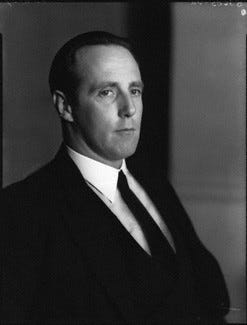
The Earl had no face hair.
The Earl makes a return to the Saturday/Sunday split between the Christians and the Jews:
Clause 3 is, I think, a rather more difficult clause. It permits the Jewish barber to close on Saturday instead of Sunday, and to close for his weekly half-holiday on Friday, or some other day, instead of Saturday, or some other day, as required by the Shops Acts. It enables the Jewish barber to arrange for his weekly day of rest and weekly half holiday between sunset on Friday and sunset on Saturday. Jew and Christian alike must close for a day and a half in each week. To Clause 3, possibly, some of your Lordships may object, but it was one which had to be agreed to by the promoters of the Bill because there are a very great number of Jews in the hairdressing trade. It was arranged for, I think, by the Under-Secretary for Home Affairs in the last Government, and finally accepted as a compromise by the hairdressers when the Bill was promoted last year. I think this Bill is really a very uncontroversial Bill, as your Lordships will realise from hearing its clauses and hearing its record in another place.
It was not as uncontroversial as de la Warr had hoped. On 22 July, Lord Banbury of Southam rose:
I was always under the impression that this was a free country, and that if a man chose to work seven days in the week, or six days in the week, or three days in the week, he was at liberty to do so. But now, apparently, the Socialists and Liberals are not in favour of freedom except freedom as they think right; and I as a Tory — and the longer I live the more Tory I become — am in favour of liberty, and have always been in favour of liberty. I do not see why on earth a man of twenty-one years and upwards, who, as the Socialists used to say in another place, is capable of fighting for his country, should not be able to cut somebody’s hair or shave somebody, if he likes to do so, on Sunday.
Lord Balfour of Burleigh took a different cut:
I am assured by the representatives in the trade who are promoting this Bill that the Sunday morning business is very much less important than formerly, and that is due to two causes. It is due to the fact that so many people nowadays use the safety razor, and shave themselves, and, therefore, modern development is that the Sunday work is very largely haircutting and shampooing, which could be just as well done at any other time of the week. I believe it is the fact that a certain number of people have the habit of going along on Sunday morning to be shaved. Very often the workman is at a loose end on Sunday morning. I have no doubt his wife may he cooking the Sunday dinner and the public-house is not open at that time. There he is at a loose end, and he gets into the habit of drifting along to the barber’s shop to fill in time. To say that he has not to do that, but has to make other arrangements, is not a serious infringement on his liberty or a serious inconvenience. If, as the price for his doing that, you have to deprive these unfortunate barbers of the Sunday closing, then I say unhesitatingly you are paying too high a price.
I think it was Lord Banbury who moved an amendment to delete an exception which would allow a hairdresser or barber to attend someone in a hotel.

Lord Banbury by a whisker.
Banbury found support from Viscount Bertie of Thame. Bertie had read as a barrister and, given the pronunciation was Bartie of Tame, may have been wrestling with his family’s motto, virtus ariete fortior (virtue is stronger than a battering ram):
I hope your Lordships will accept this Amendment, because I feel you cannot have much respect for a person who can afford to live in an hotel and yet cannot take the trouble to buy a safety razor to shave himself.
Lord Jessel (brother of the famous Master of the Rolls and member of a strong Jewish family) spoke for commercial reason when he explained:
I hope your Lordships will not accept the Amendment. I belong to an association called the Travel Association. We are doing our very best to get Americans and other foreigners to come to this country. They do not shave in the same way as we do, and for the purposes of those who travel it is very inconvenient if they cannot get a shave from Saturday night until Monday morning. It is really for the benefit of those who travel, and for the foreigners who come to this country, that this exemption is asked for in the Bill. I do not think it is a question of rich or poor or anything of that sort. It is really for the benefit of those who come to this country. If we are to make it more uncomfortable for them, we shall not get the benefit of the American dollars which we are hoping will flow in.
Going back again a century, I confess I prefer Lord Brougham’s more inclusive attitude to class. With yet another delay in the empire to the end of slavery in fact as well as law, he railed at his colleagues:
The slave … is as fit for his freedom as any English peasant, ay, or any Lord whom I now address. I demand his rights; I demand his liberty without stint… . I demand that your brother be no longer trampled upon as your slave!”
Brougham was a key supporter of the Reform Bill and a Lord Chancellor with an influence far beyond the law books. In 1808 he had written a famously scathing review of Byron’s first effort. The title page to the precocious poet’s work read Hours of Idleness; a Series of Poems, original and translated. By George Gordon, Lord Byron, a Minor.
The lawyerly Brougham retorted:
The poesy of this young lord belongs to the class which neither gods nor men are said to permit. Indeed, we do not recollect to have seen a quantity of verse with so few deviations in either direction from that exact standard. His effusions are spread over a dead flat, and can no more get above or below the level, than if they were so much stagnant water. As an extenuation of this offence, the noble author is peculiarly forward in pleading minority. We have it in the title-page, and on the very back of the volume; it follows his name like a favourite part of his style. Much stress is laid upon it in the preface; and the poems are connected with this general statement of his case, by particular dates, substantiating the age at which each was written. Now, the law upon the point of minority we hold to be perfectly clear. It is a plea available only to the defendant; no plaintiff can offer it as a supplementary ground of action. Thus, if any suit could be brought against Lord Byron, for the purpose of compelling him to put into court a certain quantity of poetry, and if judgment were given against him, it is highly probable that an exception would be taken, were he to deliver for poetry the contents of this volume. To this he might plead minority; but, as he now makes voluntary tender of the article, he hath no right to sue, on that ground, for the price in good current praise, should the goods be unmarketable.
Ouch. Byron got even in 1809 with his satire English Bards and Scotch Reviewers; there is a good wholesome reference to “blundering Brougham”.
An online antiquarian bookshop has an 1820 publication of Brougham’s criticism for sale:
A separate printing of Henry Peter Brougham’s famous stinging criticism in the Edinburgh Review of Byron’s Hours of Idleness, to which Byron replied with his equally famous English Bards and Scotch Reviewers. Exactly why this was published 12 years after the controversy is unclear, other than perhaps the publisher’s desire to capitalize on all things Byron.
Undoubtedly. Online commentator Amy Hellam says of Byron’s deeply dysfunctional marriage with Annabella:
A copy of “Fare Thee Well and “A Sketch” fell into the hands of Henry Brougham who was a “mediator in the separation, and the man whom Annabella described as her warmest champion” (Grosskurth 264). The poem “A Sketch” was written on March 28, 1816 and was a vengeful poem aimed at Annabella’s childhood nurse Mrs. Clermont. Byron blamed Mrs. Clermont for raising Annabella in such a cold manner. The poem “A Sketch” turned public opinion against him. Brougham had the two poems published in a paper called the Champion on April 14, 1816. On April 17, the Morning Post took Annabella’s side of the separation while the rival newspaper the Morning Chronicle took Byron’s side (Grosskurth 264). The poem was once again published without authorization on April 21, 1816 in the Examiner (Nicholson 83). On this same day Byron signed the papers to legalize the separation between Annabella and himself.
All of which was against a wider background of Caroline of Brunswick’s travails with her louche husband George. It is simple and not too simplistic to say that the radicals (including Brougham, whose career would be made by it, and Lushington) took up Caroline’s cause while Tories (such as Lord Eldon, as I recall) were for George.

A tad Byronic, for a king.
In January 1817, Byron had done his bit by writing to his publisher that Caroline and her head of household Bartolomeo Pergami were lovers. By 1820, Brougham and Lushington would be acting for the Queen in the King’s Divorce Putsch, an affair orchestrated in the House of Lords. It will be recalled that one of George’s early efforts was a marriage to Maria Fitzherbert. Caroline used to joke to her friends that her own adultery was limited to one effort, sleeping with Mrs Fitzherbert’s husband. Was the divorce lawyer in Brougham behind the joke?
Brougham designed the brougham, doubtless to show off his Sunday bests, and it was his patronage that created the Cannes we know today.

Lord Brougham looks away from the Palais des Festivals et des Congrès. Don’t mention des Congrès on de Sunday but. It’s not Nice. (It’s Cannes.)
메타데이터
- post_id
- a9caf40be45a
- slug
- dies-dominicus-non-est-juridicus-a9caf40be45a
- url
- https://medium.com/the-jurisprude/dies-dominicus-non-est-juridicus-a9caf40be45a
- canonical_url
- https://medium.com/the-jurisprude/dies-dominicus-non-est-juridicus-a9caf40be45a
- author_url
- https://medium.com/@Davidus
- status
- ok
- fetched_at
- 2026-07-30 09:39:55