The Sultan’s Dream: Fatih’s Prophecy
There are some figures in history who are remembered not only for what they accomplished in life but also for the legacies and mysteries…
The Sultan’s Dream: Fatih’s Prophecy
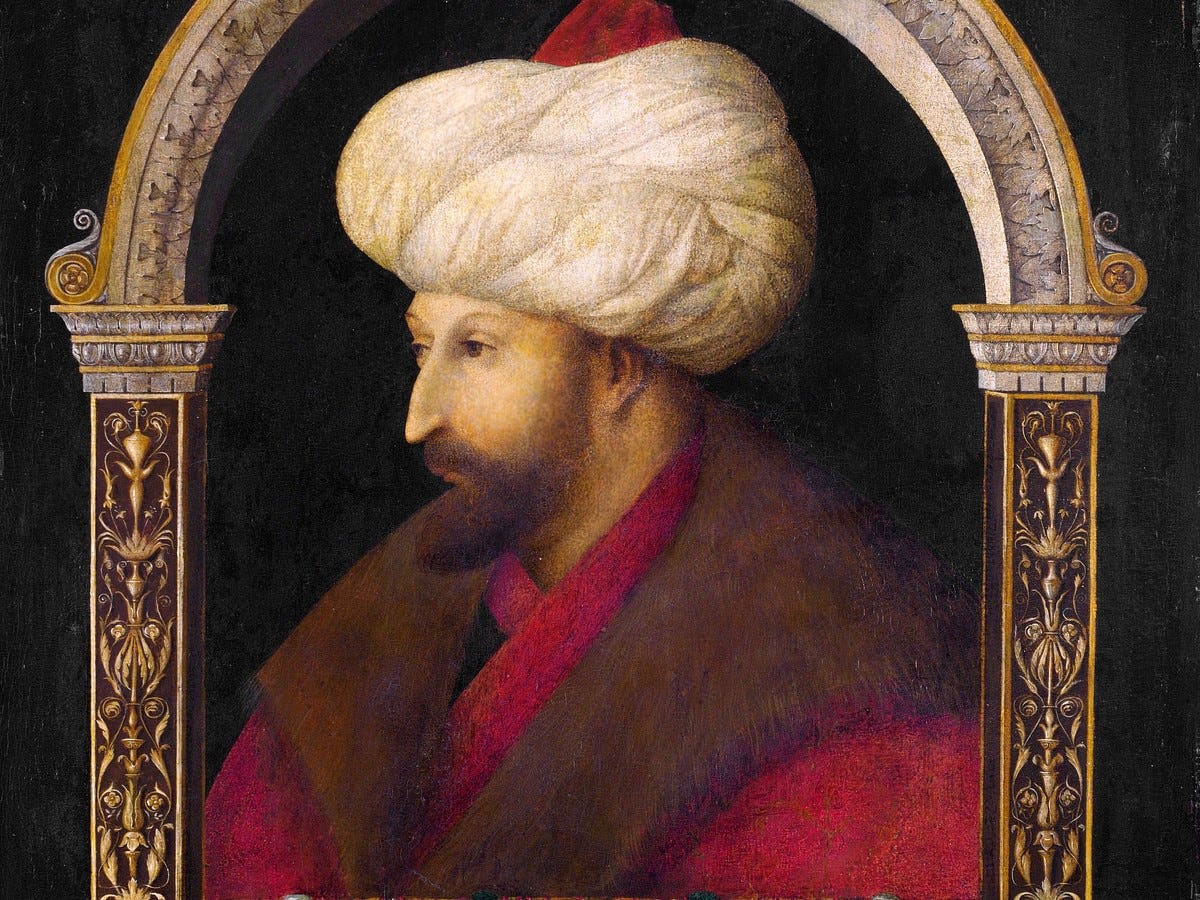
There are some figures in history who are remembered not only for what they accomplished in life but also for the legacies and mysteries they left behind after death. Fatih Sultan Mehmet was not just one of the greatest rulers of the Ottoman Empire — he was also a visionary leader, a strategist, and a man whose dreams and prophecies continue to fascinate people even centuries later.
One of the most intriguing stories about him is the dream he had after the conquest of Constantinople — a dream that some say shaped the very fate of the empire.
Fatih’s Dream: A Prophecy or a Warning?
It is said that a few years after the conquest of Constantinople, Fatih Sultan Mehmet began experiencing restless nights. The disciplined and determined ruler appeared increasingly pensive, his sharp gaze occasionally drifting into deep thought. Then, one fateful night, he had a dream — one that would haunt him for the rest of his life.
In his dream, he found himself standing inside Hagia Sophia, but it was not as he remembered it. The grand walls were cracked, beams of light seeped through the broken dome, and the once-magnificent structure seemed to be in ruins. In front of the pulpit stood a mysterious yet strangely familiar figure — an old man with a long white beard, dressed in flowing robes, emanating an aura of wisdom and authority.
Slowly, the man turned to Fatih and spoke in a voice that echoed through the vast, empty halls:
“This city rose with you, but one day, when your descendants forget this legacy, these walls will crack. If justice is lost, the domes will collapse. The fate of the Ottoman Empire began with you, but it will not end with you. One day, a new era will begin in these lands. But remember, the soul of a state is its justice. If justice falls, so too will the city.”
Fatih awoke in a cold sweat. His heart was pounding. Was this a warning? A sign of destiny? The next morning, still shaken by the dream, he summoned his closest scholars and advisors. As he recounted the vision, his voice trembled — for the first time, the Conqueror of Constantinople feared the future.
The Shadow of the Dream and the Empire’s Fate
The dream lingered in Fatih’s mind for years. He became even more devoted to ensuring that justice and meritocracy remained at the core of his empire. Historians note that, in the years following the dream, he intensified efforts to improve law, governance, and the city’s infrastructure.
However, as time passed, the Ottoman Empire began to drift from these ideals. Centuries later, during the empire’s decline, some historians and intellectuals recalled Fatih’s dream as a forewarning — a sign that the empire had strayed too far from its founding principles. When the scales of justice became unbalanced, the cracks in the empire’s walls had already begun to form.
Was this truly a prophecy from Fatih Sultan Mehmet, or was it a legend created by later generations to explain the empire’s downfall? Regardless of its origin, the message remains clear: power and conquest mean nothing without justice.
Even today, when we look up at the dome of Hagia Sophia, we may not see the cracks from Fatih’s dream. But history reminds us that the fate of civilizations is not determined by swords alone — it is shaped by the conscience of those who rule.
Perhaps, on that fateful night, Fatih did not simply have a dream. He received a message from history itself.

a description of the dream he had.
The Life and Vision of Fatih Sultan Mehmet
Born in 1432, Fatih Sultan Mehmet (Mehmed the Conqueror) was one of the greatest and most visionary rulers of the Ottoman Empire. At just 21 years old, on May 29, 1453, he conquered Constantinople, ending the Byzantine Empire and marking the beginning of the Ottoman rise to global power.
But to see him only as a conqueror would be an understatement. Fatih was also a statesman, a strategist, and an intellectual. He was known for his deep appreciation of science, art, and literature, and he was fluent in several languages, including Arabic, Persian, Greek, Latin, and Hebrew. He merged Eastern and Western knowledge, shaping the Ottoman Empire into a cultural and intellectual powerhouse.
His greatest ambition was to make the Ottoman Empire a world civilization. While military conquests played a role, his real legacy lay in how he restructured the state and built a powerful administrative system.
Fatih was also known for his strong sense of justice. After conquering Constantinople, he allowed the city’s multicultural identity to thrive, ensuring that people of all religions and backgrounds could live freely. While converting Hagia Sophia into a mosque, he simultaneously allowed Christians to continue practicing their faith without persecution.
The Dream, the Legacy and the Future
Fatih Sultan Mehmet’s rule was a turning point in history, not just because he took a city, but because he built an empire. And yet, the dream he had — whether real or legend — served as a reminder that no empire is eternal unless it is built upon justice.
So, was it truly a prophecy? Or was it simply a reflection of the fears of a ruler who understood the fragile nature of power?
Maybe Fatih’s greatest conquest was not a city, but the realization that justice is the only force strong enough to sustain an empire.
메타데이터
- post_id
- a9e46a2adbfc
- slug
- the-sultans-dream-fatih-s-prophecy-a9e46a2adbfc
- url
- https://medium.com/@harundumanbusiness/the-sultans-dream-fatih-s-prophecy-a9e46a2adbfc
- canonical_url
- https://medium.com/@harundumanbusiness/the-sultans-dream-fatih-s-prophecy-a9e46a2adbfc
- author_url
- https://medium.com/@harundumanbusiness
- status
- ok
- fetched_at
- 2026-07-28 18:11:31