Insights from My Second PhD Year
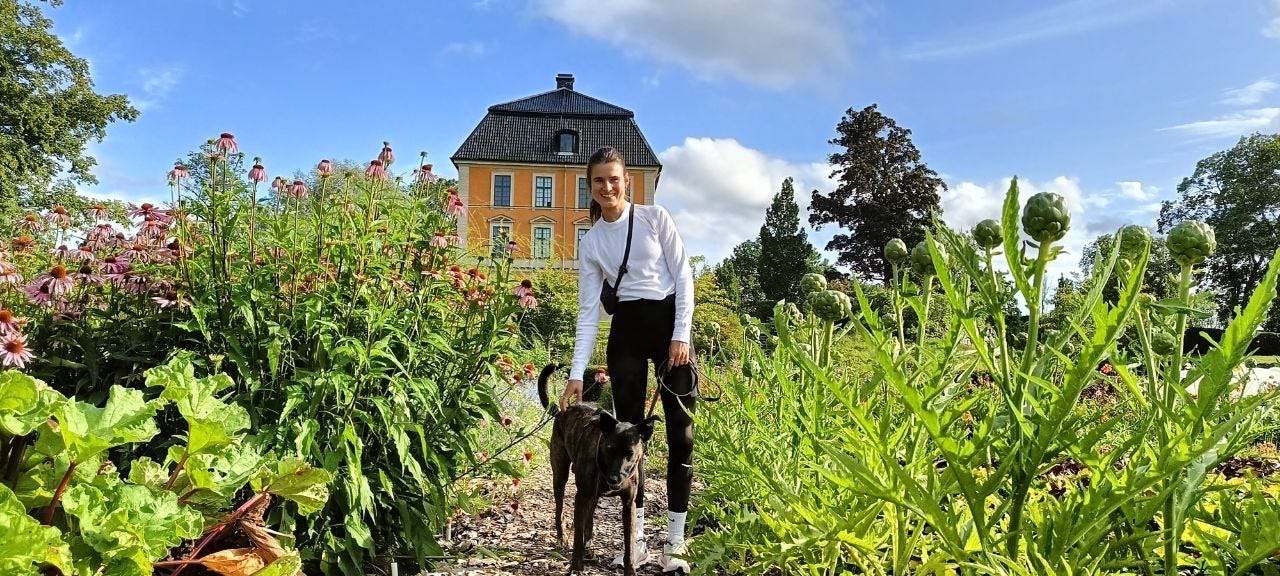
Hi! I’m Chaima Mobarak, a doctoral researcher at the “Social-Ecological Interactions in Agricultural Systems” Group

Photo from Parc national de la Vanoise in the French Alps. Photo: Lea Tamberg.
Insights from My Second PhD Year
Hi! I’m Chaima Mobarak, a doctoral researcher at the “Social-Ecological Interactions in Agricultural Systems” Group at the University of Kassel. In this post, I want to introduce myself and reflect on the journey of my first year as a PhD student.
My PhD officially started in October 2024 - full of plans, ideas, and carefully designed research steps. After one year in, I’m writing to share what has changed, how things are going, and what I’ve learned after completing my first PhD year.
One of the earliest lessons I’ve learned is that flexibility is not a weakness in a PhD — it’s a strength. A detailed PhD plan is never fixed; it’s a living, evolving roadmap.
While the core research questions often remain, methods, papers, and smaller work packages continuously adapt as new insights, constraints, and opportunities emerge.
Before starting my PhD, my MSc research focused on landscape change and involved a biocultural study of traditional farming systems. It resulted in two research articles: One on cultural keystone species (published — link here), highlighting why conservation strategies must account for cultural meaning of tree species, not only their utility and another on landscape changes, which is currently under review.
Together, these studies highlighted how deeply ecological elements are embedded in cultural practices and social memory — insights that strongly shaped the direction of my PhD.
From Landscapes to Food Systems
Building on this foundation, I decided to engage more deeply with traditional food systems and explore how Traditional Ecological Knowledge (TEK) informs food security in the High Atlas Mountains of Morocco.
My most recent fieldwork in spring has focused on three Amazigh communities with contrasting sizes and socio-economic contexts:
- Imi Nifri (largest): shaped by tourism, market integration, and growing external connections
- Ait Blal (mid-sized): characterized by mixed livelihoods, seasonal mobility, and strong community-based resource management
- Isslk (smallest): more remote, with subsistence-oriented farming and a strong reliance on local knowledge and kinship networks

Location of the three study sites (Imi nifri, Ait Blal, and Isslk) in the High Atlas Mountains of Morocco. Map created by Chaima Mobarak in ArcGIS Pro.
These sites were intentionally selected to reflect the diversity of agroecological knowledge, livelihood strategies, and adaptive pathways across the region.
TEK at the core of Amazigh Food Systems
Traditional Ecological Knowledge stands at the heart of Amazigh food systems. It shapes the cultivation of staple crops such as barley, wheat, and legumes, alongside fruit and nut trees like apples, apricots, olives, almonds, walnuts, and figs.
However, these long-established systems are increasingly being tested. Climate change, global markets, out-migration, socio-economic transformation, and modernization are placing growing pressure on practices that were developed, refined, and transmitted over generations.

Upper photo: Olive orchards in Imi nifri study site. Buttom photo: Ait Blal study site landscape and farming systems. Photos: Chaima Mobarak.
Sharing, Learning, and Reflecting
During the summer, I had the opportunity to present and discuss my research across several academic platforms. These exchanges allowed me to engage with a broader research community and to critically reflect on my future research directions.
I attended the IALE Conference in Bratislava, where I presented my two studies — one as part of an oral histories session and the other as a poster in the cultural keystone species session.

Pictures of my oral and poster presentation at the IALE conference. Photos: Roxane Bradaczek.
Later, I participated in the Agroecology Forum in Malmö, Sweden, where I co-hosted a workshop with my colleagues Maria Chiara and Roxane. Our session focused on mental models for understand traditional food systems — a topic I’ll explore further in an upcoming Medium post.

Impressions from the Agroecology Forum in Malmö. Photos: Chaima Mobarak and Maria Chiara Camporese.
In mid-October, I joined the 4th Autumn School of the Pathways Initiative (Future Earth) in Aussois, in the French Alps. This interdisciplinary school brought together around 50 researchers to explore the topic “Towards Sustainable and Just Futures: Concepts, Challenges, and Practices.”

Left: Participants in the pathways autumn school. Right: The town of Aussois. Photos: Pavel Kambersky and Chaima Mobarak.
Beyond the academic discussions, hiking in Vanoise National Park was a powerful accompanying experience. Long hours of walking through landscapes increasingly threatened by avalanches, drought, wild wolves, and extreme weather events offered a tangible reminder of the vulnerabilities — and resilience — of mountain systems.

Left: Avalanche warning sign. Right: Our hiking group from the autumn school. Photos: Chaima Mobarak.
One of the most meaningful moments of this year was returning to the classroom — this time as a teacher. I taught my first MSc class at the University of Kassel on participatory research methods for sustainability, co-hosted with colleagues from the SEIAS department.

My first time teaching in the participatory research methods class. Photo: Maria Chiara Camporese.
Standing on the other side of the classroom was both grounding and energizing, and it reshaped how I see my role as a researcher.
Looking Ahead
Now, entering my second PhD year, I find myself with renewed enthusiasm and an expanding set of research questions. My next steps will explore local farmers’ markets, tourism, local economies, and livelihoods, and how these intersect with food systems and landscape change.
These themes will frame my upcoming research articles and continue shaping my PhD journey — one that is increasingly grounded in listening, learning, and staying open to change.
Connect with me to see more of my research, updates, and activities:
Linkedin: Chaima Mobarak-LinkedIn
ResearchGate: Chaima Mobarak-ResearchGate.
Further reading
Kmoch, L. M., Bou-Lahriss, A., Ait Babahmad, R., & Plieninger, T. (2025). Compounding social-ecological crises drive spatial mobility and land abandonment in Morocco’s High Atlas. Ambio. https://doi.org/10.1007/s13280-025-02323-5
Mobarak, C., Hatoum, L., Kmoch, L., Torralba, M., Lieblein, G., Wezel, A., & Plieninger, T. (2025). Farm Trees as Cultural Keystone Species: Bridging Biocultural Conservation and Sustainable Development in the Morocco High Atlas Mountains. Mountain Research and Development, 45(1), R11–R22. https://doi.org/10.1659/mrd.2024.00024
메타데이터
- post_id
- a9ff1bedd92e
- slug
- insights-from-my-second-phd-year-a9ff1bedd92e
- url
- https://medium.com/people-nature-landscapes/insights-from-my-second-phd-year-a9ff1bedd92e
- canonical_url
- https://medium.com/people-nature-landscapes/insights-from-my-second-phd-year-a9ff1bedd92e
- author_url
- https://medium.com/@chaima-mobarak
- status
- ok
- fetched_at
- 2026-06-15 20:49:13