The Ancient Anatomy of a Modern War: Gaza’s Siege and the Persistence of Tribal Violence
Long before drones streaked across the sky and missiles turned cities to ash, war was a raw, brutal dance, a primal struggle fought with…
The Ancient Anatomy of a Modern War: Gaza’s Siege and the Persistence of Tribal Violence
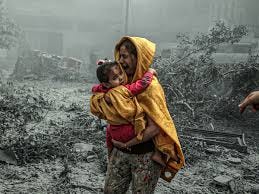
Long before drones streaked across the sky and missiles turned cities to ash, war was a raw, brutal dance, a primal struggle fought with fire, blood, and sacred rites. Today’s conflict between Israel and Hamas is not just a modern battle; it’s an ancient war reborn, where siege and ritual, raids and kidnappings, echo the primal code of tribal violence that humanity has never fully escaped.
The violence between Israel and Hamas is not merely a geopolitical struggle. Beneath the headlines lies a war fought with tactics belonging to a far older, more primal era, when battle was as much about spiritual domination, communal identity, and ritual as it was about territory or resources. This is tribal warfare reimagined in a contemporary setting, where the rules of engagement are bent, broken, or ignored, and the stakes are measured in collective survival, sacred honor, and spiritual destiny.
The blockade of Gaza, imposed by Israel since 2007 after Hamas seized control, echoes siege tactics of ancient tribes who surrounded fortified villages, starving them into submission. Since the outbreak of the current war, this blockade has escalated into catastrophic strangulation, drastically restricting access to food, water, medicine, and fuel, turning Gaza into an open-air prison where basic survival itself is under siege. Nearly two million Palestinians remain trapped, pushed to the brink of humanitarian catastrophe. Framed as a security measure to limit Hamas’s military capacity, this blockade is siege warfare as old as war itself. Starvation is the oldest siege weapon — a slow, merciless predator that gnaws at the body and soul alike. Cutting off supplies is no collateral damage but a deliberate strategy to break the will of a people through systematic deprivation.
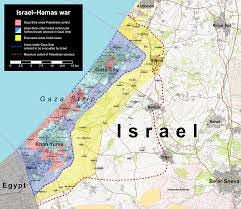
This slow strangulation reflects a timeless calculus of war where breaking an enemy’s will is as crucial as defeating their forces. Unlike the grand armies of empires past, this siege employs asymmetrical and tribal methods: encirclement, blockade, starvation — tactics born of limited resources but brutal necessities. The suffering of entire communities has always been weaponized, regardless of century, creed, or law.
In the shadow of this siege, Hamas’s October 7 raids functioned like hit-and-run strikes of ancient war bands. These swift, unpredictable attacks are not mere terrorism; they are deeply tactical and culturally resonant. Raids have long been the heartbeat of primitive conflict, designed to seize resources, capture prisoners, assert dominance, and exact revenge. They sow terror as much as they seize goods, a calculated strike at the enemy’s morale, ritualized in sudden violence.
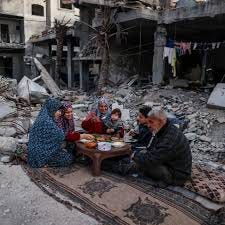
Like tribal warriors before them, Hamas fighters deployed these raids to unsettle and degrade their opponents, maximizing disruption while minimizing prolonged combat risks. These raids are rites of passage, tribal affirmations, and survival strategies all at once, embodying the agility and ferocity of centuries-old tactics.
Kidnappings and hostage-taking, another inheritance from ancient conflict, played a central role in this fight. Hamas’s capture of civilians and combatants aligns with long-standing strategies to extract political leverage, negotiate concessions, or demonstrate strength. Hostage-taking is a brutal bargaining chip, a living symbol of power and a grim reminder that in tribal war, every captive holds the weight of a community’s fate. In ancient contexts, capturing an enemy could mean absorbing or neutralizing their power, sometimes through ritual transformation or sacrifice to restore cosmic order. Though condemned by international laws, these practices in Gaza carry haunting echoes of ritualized violence wielded far beyond the battlefield.
Moreover, ancient tribal wars often blurred the lines between combatant and non-combatant. Entire communities — men, women, and children — could be legitimate targets under the brutal logic of survival. Gaza’s civilians, trapped amid siege and conflict, endure a similar fate, caught in a primal calculus that predates modern protections. The distinction central to contemporary humanitarian law is tragically elusive here, revealing the limits of modern frameworks in conflicts governed by tribal logic and existential stakes.

Beyond physical combat lies an equally fierce spiritual war. Both sides invoke divine protection, blessings, and sacred rites reminiscent of tribal cultures worldwide. From war dances and chants to symbolic tattoos and ideological amulets, this conflict is saturated with ritual, spiritual symbolism, and a deeply ingrained sense of cosmic struggle. Religious leaders and ideologues fulfill roles once held by shamans and war priests, sanctifying violence and binding fighters into communal causes larger than themselves. Enemies become carriers of spiritual danger, cursed and demonized, justifying extreme violence. As anthropologist René Girard observed, “Violence is not the opposite of religion, but its logical extension when the sacred is desecrated.” Here, the enemy embodies chaos and sacrilege, fueling a tragic, self-perpetuating cycle.
This is not simply a clash of modern political ideologies or territorial claims. It is a regression into a war fought with ancient tools: siege and starvation, raids and kidnappings, spiritual sanctions and ritual violence. The Israel-Hamas conflict starkly exposes how the brutal legacy of tribal warfare persists beneath modern geopolitics.

In an era prizing progress, human rights, and international law, this war forces a reckoning: how effective are humanitarian frameworks when the rules are tribal and brutally primitive? Despite technological advances, military historian Max Hastings warns, “Despite all our technical progress, the fundamental nature of war remains unchanged: a contest of wills where human savagery still rules.”
Yet the contrast could not be more striking. We live under Geneva Conventions designed to limit war’s horrors and protect civilians. We inhabit an age affirming the dignity and rights of every human being. We have global courts and norms to hold violators accountable. And social media broadcasts war’s horrors in real time to a global audience demanding justice.
But in Gaza and Israel, these modern frameworks are continuously tested and too often broken. The ancient tribal logic of siege, raids, kidnapping, and ritual violence crashes headlong into 21st-century ideals, producing a tragic dissonance where archaic brutality unfolds beneath the gaze of the modern world.
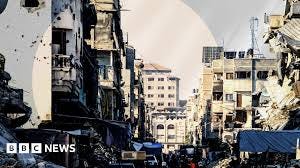
This clash between the ancient and the modern, between tribal war’s primal code and global aspirations, defines the agony of this conflict. It reveals how far humanity must go before peace can be more than a fragile hope, and how enduring the shadows of ancient war remain even in our most advanced era.
In 2025, the world must confront this uncomfortable truth: despite our advances, some wars are still fought as they were thousands of years ago. The brutal, archaic rhythms of tribal warfare beat on, challenging our assumptions and forcing us to reckon with the enduring darkness at the heart of human conflict.
In the shadow of this ancient-modern war, the world must ask: how do we break free from the cycles of fear, faith, and ritualized violence to forge a new path toward peace, one worthy of our most advanced ideals?
메타데이터
- post_id
- aa3b334982e7
- slug
- the-ancient-anatomy-of-a-modern-war-gazas-siege-and-the-persistence-of-tribal-violence-aa3b334982e7
- url
- https://medium.com/@icaj2000/the-ancient-anatomy-of-a-modern-war-gazas-siege-and-the-persistence-of-tribal-violence-aa3b334982e7
- canonical_url
- https://medium.com/@icaj2000/the-ancient-anatomy-of-a-modern-war-gazas-siege-and-the-persistence-of-tribal-violence-aa3b334982e7
- author_url
- https://medium.com/@icaj2000
- status
- ok
- fetched_at
- 2026-07-18 06:59:57