Industrial Motor Control Solutions: A Guide to Starters, Soft Starters, and Electric Motors
In the world of industrial automation and electric motor control, choosing the right components is the foundation for ensuring reliability…
Industrial Motor Control Solutions: A Guide to Starters, Soft Starters, and Electric Motors
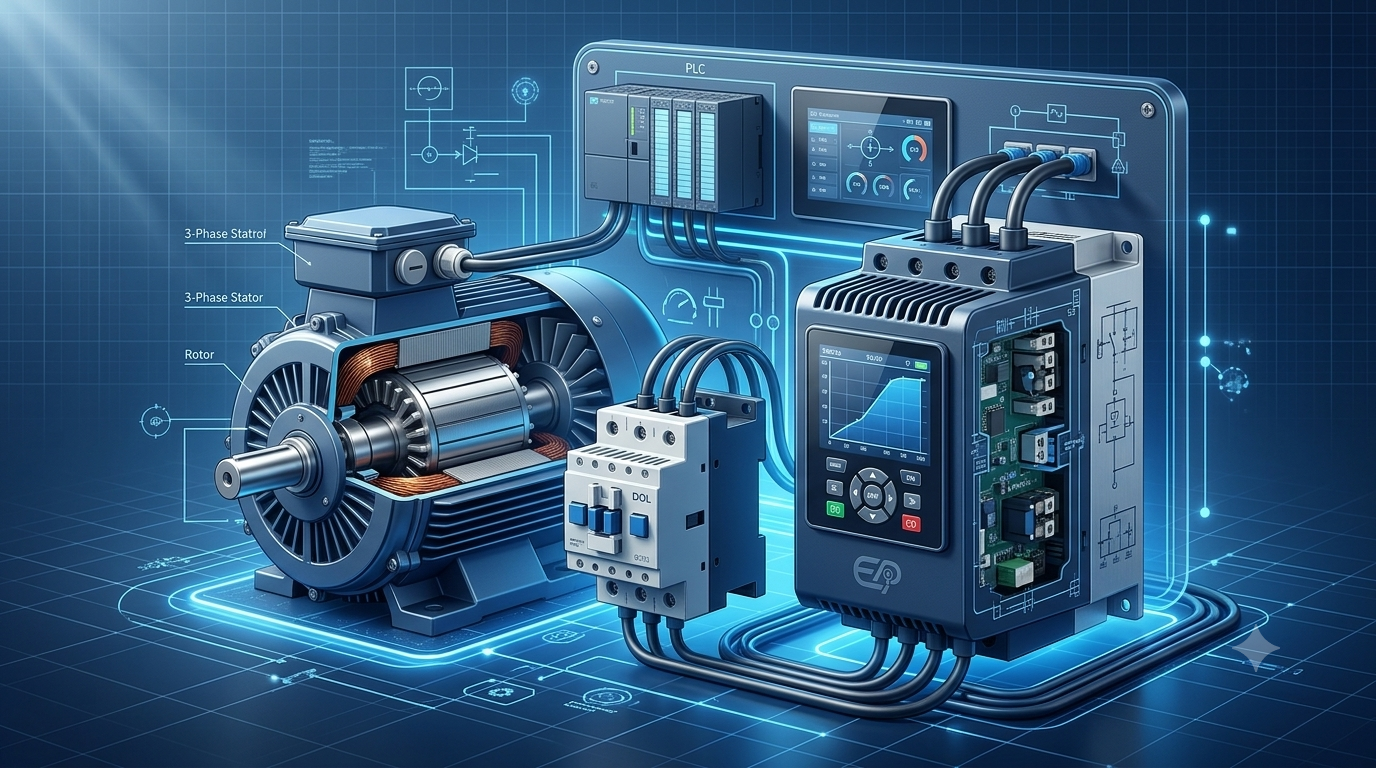
In the world of industrial automation and electric motor control, choosing the right components is the foundation for ensuring reliability, energy efficiency, and long equipment life. Two critical components in motor control systems are Motor Starters and Soft Starters. Both have fundamental functions but approach the operation of electric motors-especially three-phase induction motors-in distinctly different ways.
This article will thoroughly explore the differences, advantages, and ideal applications for each device, providing practical guidance for selecting the best solution for your industrial needs. We will dive deep into industrial electric motors, electromagnetic motor starters, and advanced soft-starting technology.
Understanding the Basics: Industrial Electric Motors
The first step before determining a control system is understanding the load to be controlled-the Industrial Electric Motor. These motors are the backbone of various sectors, from manufacturing and water treatment to mining and heavy industry. Selecting a motor with the correct specifications (power, voltage, enclosure type, and duty cycle) is a critical first step. For a comprehensive exploration of available motor types and specifications, you can browse the product catalog for Industrial Electric Motors to find the perfect match for your application requirements.
Motor Starters: The Classic and Reliable Electromechanical Solution
Motor Starters are electromechanical devices designed to safely start and stop an electric motor. They typically consist of a contactor (to switch the power) and an overload relay (for protection against overcurrent). They are the traditional workhorses of motor control, offering robust and straightforward operation.
For applications requiring simple on/off control with thermal protection, a NEMA-rated motor starter from a trusted brand is an excellent choice. These starters are known for their durability and ease of maintenance in demanding industrial environments. High-quality starters, such as those in the Square D and TeSys series, provide reliable performance for a wide range of horsepower ratings. To explore a wide selection of high-performance motor starters, including various NEMA sizes and coil voltages, visit the Schneider Electric Motor Starters collection.
Soft Starters: Advanced Control for Demanding Applications
While traditional motor starters are effective, they apply a sudden full-voltage start to the motor, which can cause mechanical stress, high inrush current, and voltage dips in the electrical system. This is where Soft Starters come into play. A soft starter is an electronic device that gradually increases the voltage supplied to the motor during startup, providing a smooth, controlled acceleration.
This “soft start” dramatically reduces mechanical shock to the driven load (such as conveyors, pumps, and fans), extends motor life, and minimizes stress on the power distribution network. Many soft starters also offer features like adjustable starting torque, current limiting, and soft stop to prevent water hammer in pumping applications. For heavy-duty, high-power applications, robust soft starter panels with NEMA 4X stainless steel enclosures are available, designed for washdown duty and harsh environments. Discover a comprehensive range of advanced soft starter panels, with options from 150 HP to 850 HP and various enclosure types, at the Soft Starters product page.
Key Differences and Selection Criteria
Choosing between a motor starter and a soft starter depends on several factors:
- Application Requirements: For simple, constant-speed applications with low starting torque requirements (like fans or small pumps), a traditional motor starter is often sufficient and cost-effective.
- Mechanical Stress: If your application involves high-inertia loads (like crushers, mixers, or large conveyors) where sudden starts can cause belt slippage or gearbox damage, a soft starter is highly recommended.
- Electrical System Limitations: If your facility has a limited power supply and cannot tolerate the high inrush current of a direct-on-line (DOL) start, a soft starter with current-limiting capabilities is essential.
- Environmental Factors: For applications in wet, dusty, or corrosive environments, look for soft starter panels with NEMA 4X or 3R enclosures, such as those listed in the Soft Starters category.
Conclusion
Both motor starters and soft starters play vital roles in industrial motor control. Traditional motor starters offer a simple, durable, and reliable solution for many standard applications. Soft starters, on the other hand, provide sophisticated control that protects both the motor and the mechanical system, making them indispensable for challenging and high-value applications.
By carefully evaluating your motor’s specifications and your application’s specific demands, you can select the ideal control solution to optimize performance, reduce downtime, and lower maintenance costs. Explore the full range of Industrial Electric Motors, Schneider Electric Motor Starters, and Soft Starters to find the perfect components for your next project.
Originally published at https://erik-prayoga.com on June 18, 2026.
메타데이터
- post_id
- aa4a1cd5c664
- slug
- industrial-motor-control-solutions-a-guide-to-starters-soft-starters-and-electric-motors-aa4a1cd5c664
- url
- https://medium.com/@erikprayogagroup/industrial-motor-control-solutions-a-guide-to-starters-soft-starters-and-electric-motors-aa4a1cd5c664
- canonical_url
- https://medium.com/@erikprayogagroup/industrial-motor-control-solutions-a-guide-to-starters-soft-starters-and-electric-motors-aa4a1cd5c664
- author_url
- https://medium.com/@erikprayogagroup
- status
- ok
- fetched_at
- 2026-08-16 15:25:03