Where to go in Greece? A guide by island chains and regions before summer
Over thirty trips. Probably more. After all these returns, the same question comes back every spring like a ritual before summer: where to…
Where to go in Greece? A guide by island chains and regions before summer
Over thirty trips. Probably more. After all these returns, the same question comes back every spring like a ritual before summer: where to go in Greece this year? Not a destination — a riddle. An archipelago-country of more than 6,000 islands, 227 of them inhabited, six distinct island chains, and a mainland the size of a small subcontinent. You could devote a lifetime to it and barely scratch the surface.
This is not a ranking. It’s a mental map — mine — to help decide before the summer holidays. Chain by chain, region by region, with their characters, their light, their drawbacks. Over the coming days I’ll dive into specific destinations one by one. For now, here is the overview.
Why Greece is never chosen at random
Choosing a Greek destination means first choosing a mood. The white marble and cobalt of the Cyclades have nothing in common with the dark, almost Tuscan green of the Ionian islands. The mineral austerity of the Mani peninsula is the opposite of Mykonos worldliness. The Sporades smell of maritime pine; the Dodecanese smell of the Levant and medieval stone. Crete is a continent of its own. Athens, a capital that reinvents itself every five years.
The second variable is tempo. One island, sinking roots. Two or three islands of the same archipelago, by slow ferry. Or a mainland thread — Peloponnese, Epirus, Macedonia — by car. The three logics don’t mix well: you have to choose.
The Cyclades: the icon, and its flipside

The archipelago we spontaneously associate with Greece: Mykonos, Santorini, Paros, Naxos, Milos, Ios, Sifnos, Folegandros, Amorgos, Serifos, Tinos, Andros, Syros, Kea, Kythnos, Anafi… and the sacred Delos, Apollo’s ghost city, a day trip from Mykonos.
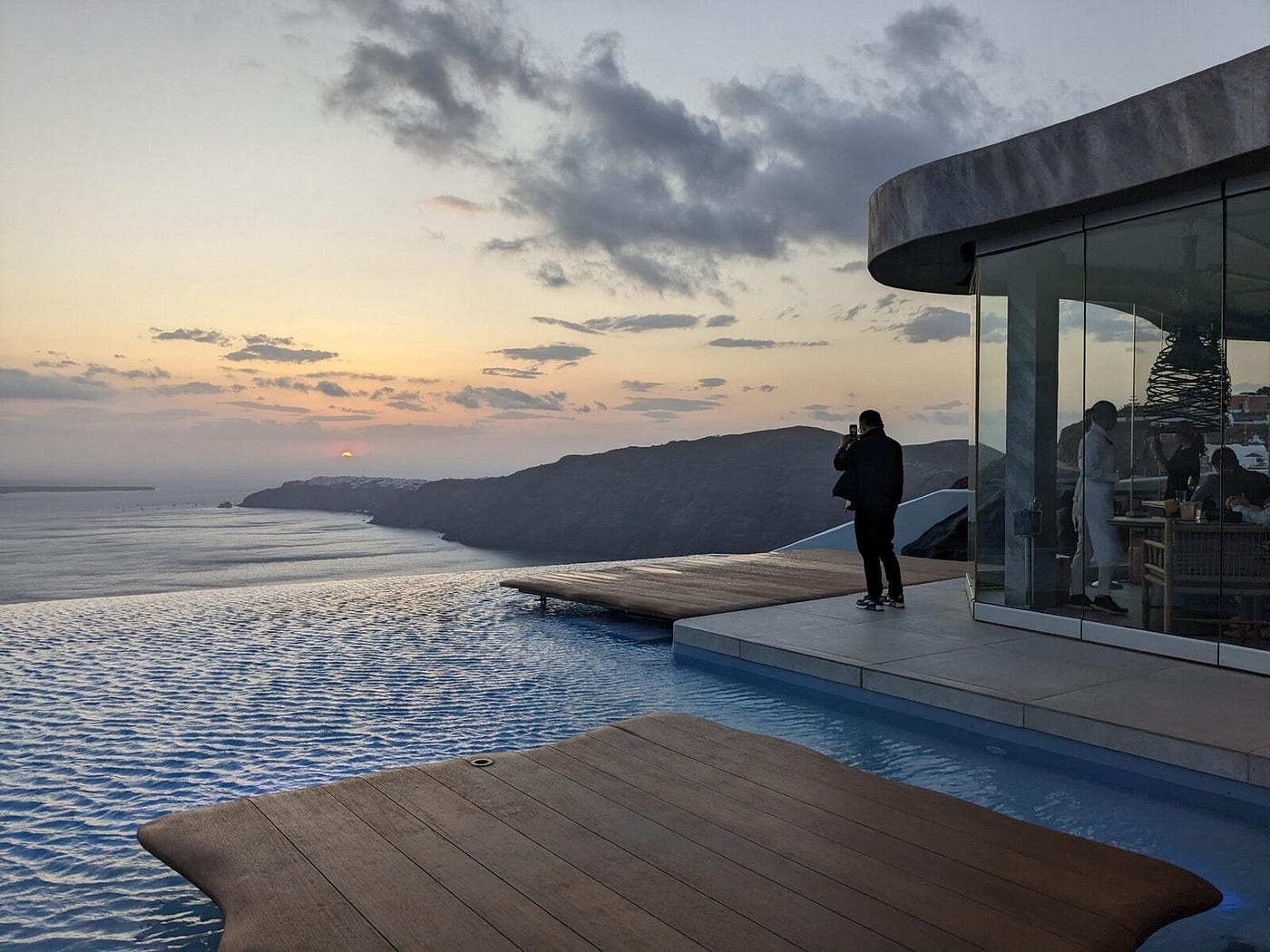
The unwritten rule: the two stars (Mykonos, Santorini) have become victims of their success. Cruise crowds, vertiginous prices, restaurants that no longer speak to Greeks. They are not worthless — the Santorini caldera at sunset is still a geological shock — but go off-season (May, October) or steer around them.
The real finds are elsewhere: Sifnos for its peasant cuisine and hiking trails, Folegandros for its perched Chora, Amorgos for the Hozoviotissa monastery clinging to the cliff, Tinos for its marble villages and Venetian dovecotes, Naxos for its rare balance of mountain, beaches and food autonomy (the only Cycladic island that really grows everything).

The Dodecanese: the Levant within ferry reach
East, against the Turkish coast: Rhodes, Kos, Patmos, Symi, Karpathos, Kalymnos, Leros, Tilos, Nisyros, Astypalea, Kastellorizo… Twelve principal islands (dodeka = twelve) plus another twenty smaller ones. The chain richest in layered history: Byzantine, Hospitaller, Ottoman, Italian. You eat pitaroudia, drink souma, and muezzins sometimes answer Orthodox bells.
Symi is the most photogenic — an amphitheatre of ochre and pastel neoclassical houses in a bottleneck harbour. Patmos, sacred to Christians (the cave of the Apocalypse), keeps an austere elegance discreet luxury has not spoiled. Karpathos, especially the village of Olympos, is a living anthropology sanctuary: dialect, costumes, communal bread oven. Kastellorizo, the easternmost, is a dot on the map facing Turkey — three streets, a memory and a silence.
The Sporades: green, wood, calm
Skiathos, Skopelos, Alonissos, Skyros. Four principal Aegean islands, but from another world: dense pine woods down to the sea, opaque turquoise waters, coves reachable only by boat. Skopelos, the Mamma Mia! set, became more famous than it wished. Alonissos shelters Europe’s most protected marine park (monk seals survive there). Skyros, southern and isolated, has stayed the most authentic of the four.
The Ionian islands: the other Greece
West, in the Ionian Sea — another climate (wetter, greener), another history (Venetian, British, never Ottoman), another cuisine. Corfu, Paxos, Lefkada, Ithaca, Kefalonia, Zakynthos, Kythira. The Greece that sometimes looks like Tuscany or Dalmatia.
Paxos, tiny, is a rare, discreet jewel of the Italian aristocracy. Lefkada is connected to the mainland by a bridge, which changes everything: you arrive by car, and find some of the most spectacular beaches in Greece (Porto Katsiki, Egremni). Kefalonia is vast, mountainous, with cuisine influenced by Venice. Corfu, a UNESCO city, blends Venetian, British esplanade and Orthodox monasteries.
The Saronic islands: Athens’ weekend escapes
Aegina, Hydra, Spetses, Poros, Salamis, Agistri. One to two hours by ferry from Piraeus. This is where you breathe when you have two or three days before flying home, or want an island without giving up mainland culture. Hydra is unique: no cars, no scooters — only donkeys and mules. Eighteenth-century shipowner houses are intact. Spetses, more worldly, keeps its reputation as the summer retreat of the Athenian bourgeoisie.
The North Aegean: the Greece that resists
Lesbos, Chios, Samos, Ikaria, Limnos, Thasos, Samothrace. Bigger, less touristy, more focused on production (Samos wine, Chios mastic, Lesbos ouzo, Thasos olive oil). Ikaria is one of the world’s five blue zones — people live on average ten more years than elsewhere in Europe, and nobody really knows why. Nocturnal festivals, resinated wine, vegetable gardens, declared indifference to passing time.
Crete: a continent in itself

260 km east to west. Four prefectures (Chania, Rethymnon, Heraklion, Lassithi). Minoans at Knossos, Venetian fortresses, Turkish villages, gorges (Samaria, Imbros), the Lassithi plateau, and the cuisine — Cretan cuisine — recognised as the archetype of the Mediterranean diet.
You don’t do Crete in a week. The west (Chania, Falassarna, Elafonissi, Samaria gorge) for tropical beaches and Venetian beauty. The centre (Heraklion, Knossos, Matala) for archaeology. The east (Sitia, Vai, Zakros) for the palm grove and solitude. The south, facing Libya, for fishing villages reachable only on foot.
Athens and Attica: underrated
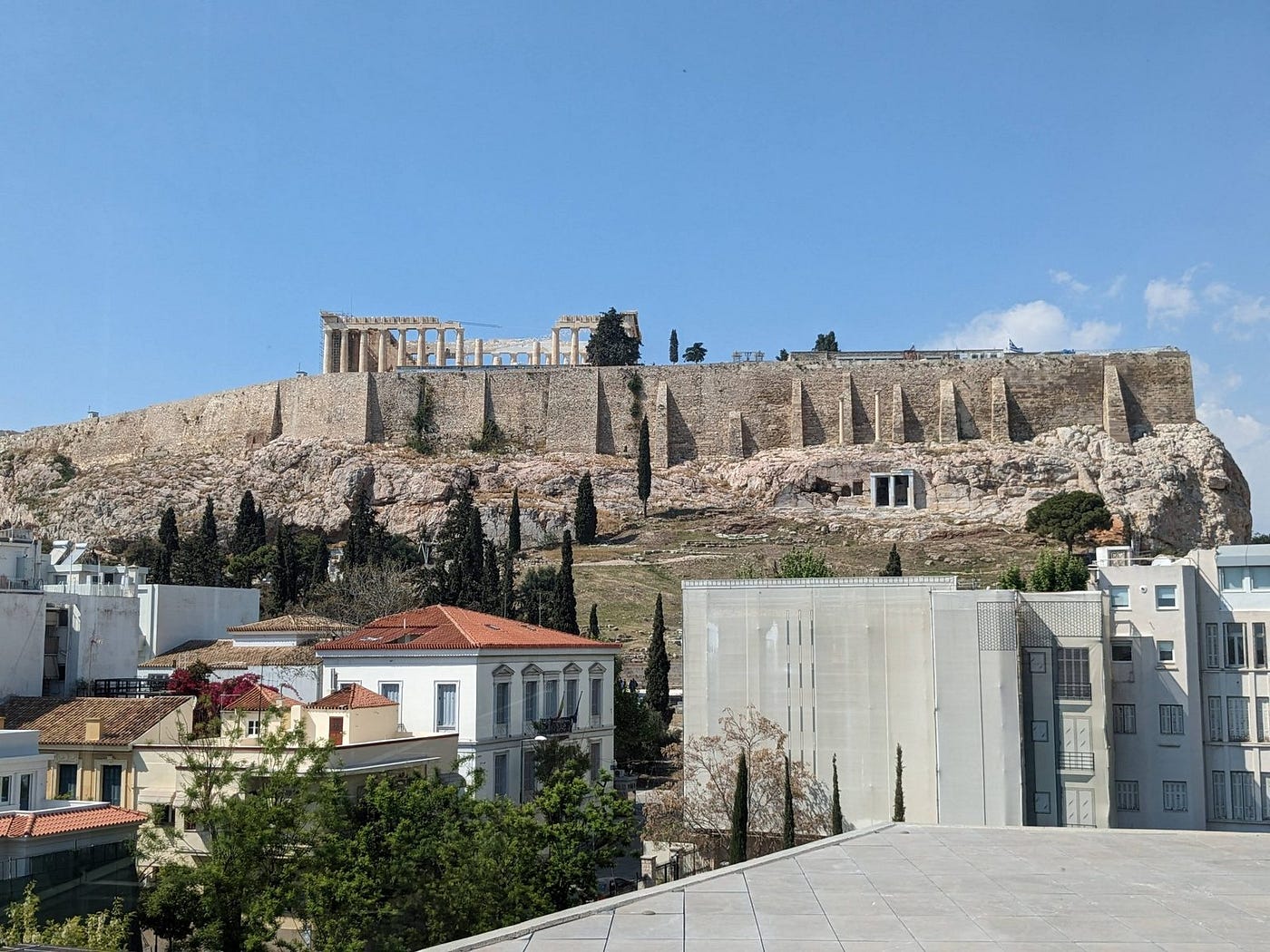
We pass through in transit, mistakenly. Athens has changed. The neighbourhoods of Koukaki, Pangrati, Metaxourgio, a café and restaurant scene that now rivals Lisbon or Tbilisi. The Acropolis Museum remains one of Europe’s most intelligent. And Attica beyond — Sounion and the temple of Poseidon, the Apollo coast, the Daphni monastery — easily justify two more days.
The Peloponnese: the ultimate mainland Greece

If I had to keep one mainland region, this would be it. The Peloponnese stacks: Mycenae, Olympia, Epidaurus, Mystras (the Byzantine ghost town near Sparta), Monemvasia (the « Greek Gibraltar »), Nafplio (the prettiest small town in the country), the stone villages of the Mani, the Mediterranean cuisine of Messenia, the vineyards of Nemea.


The bonus: you drive, sleep in archondika (restored notables’ houses), and can combine sea (Messenian coast, Voidokilia beach) with mountain (Arcadia, Taygetos).
Northern Greece, Meteora, Epirus, Zagori: the Greece we don’t talk about
Thessaloniki, the second city, is the most Levantine — Sephardic Jewish, Ottoman, Byzantine heritage. Halkidiki (the three fingers: Kassandra, Sithonia, Athos) remains very Greek in its tourism. Further west, the Meteora monasteries perched on sandstone needles form one of the most spectacular landscapes of the Mediterranean basin. And in the far north-west, in Epirus, the Zagori villages (Papingo, Vikos) are another country: stone, Ottoman donkey-back bridges, deep gorges, hiking, mountain cheeses.
Decision logic: which traveller are you?
- First time in Greece? Classic Cyclades (Naxos + Paros + Delos), or western Crete.
- Looking for authenticity / slowness? Sifnos, Folegandros, Tinos, Ikaria, Karpathos, Mani.
- Travelling with children? Lefkada (by car, calm beaches), Naxos (long beaches, agricultural hinterland), Peloponnese (culture/beach mix).
- Couple / honeymoon? Folegandros, Patmos, Hydra, Monemvasia, Symi.
- Hiking / nature? Crete (Samaria), Sifnos, Andros, Zagori, Alonissos.
- Dense culture / history? Peloponnese, Athens + Attica, Crete, Delos.
- No ferries, car only? Peloponnese, Epirus, Zagori, Meteora, Halkidiki, Lefkada.
- Most spectacular beaches? Lefkada (Porto Katsiki), Milos, Elafonissi (Crete), Voidokilia (Peloponnese).

When to go (and when really not)
Mid-May to mid-June and September to mid-October: the golden window. Warm sea, soft light, no crowds, reasonable prices. July-August: avoid the star Cyclades, still bearable in the Ionian, Dodecanese outside Rhodes, mainland Peloponnese, Epirus. The meltemi, a northern wind, blows hard in the Aegean in August — lovely for sailing, brutal for ferries.

Our editorial take
The best Greece is not the Greece you see on Instagram. It’s the Greece you return to a second time on an island you thought you understood, only to find you’d seen nothing. Choosing Greece means accepting you won’t see everything — and that you’ll return.
To dig beyond the Hellenic Mediterranean, also read our Sicily passion itinerary, our Greek heritage in western Sicily and our Delos sacred city piece — three complementary ways of understanding the eastern Mediterranean.

Athens, the anchor we too often skip
Everyone talks about islands, beaches, sunsets — and skips Athens. A mistake. The Greek capital has become, over the past few years, one of the most alive cities in the Mediterranean: a roaring art scene in Metaxourgeio and Kerameikos, neighbourhood cuisine that has shed mass tourism, and a historical depth no island can match. Three days in Athens before or after the Cyclades isn’t a detour — it’s the frame around the picture.

The Athens Metropolis (Mitrópoli), just above Plaka, is a rare pause: ceilings painted a starry midnight blue, gilded mosaics, the coolness of marble at the height of summer. You step in out of curiosity and stay for the silence — a dense, Orthodox silence that reminds you Greece isn’t merely a Mediterranean postcard but a still-living liturgical world.

Syntagma remains the pivot of the city. The neoclassical Parliament, the evzones changing guard every hour, and — a detail rarely noticed — those hedges of pink oleanders flowering well into August, softening the ochre stone. From here, everything unfolds: Plaka to the southwest, Kolonaki to the east, Exarcheia to the north. An hour on foot is enough to read the city’s social geography.

What keeps me coming back is also this aesthetic of the uncorrected everyday: yellow phone booths still standing, covered in stickers and graffiti, painted iron shutters, cats sleeping on dusty Fiat hoods. Athens owns its patina. No other Mediterranean city has kept this exact mix of ancient pride and contemporary permission to be messy. For street photographers, it’s an endless playground.
The Greek table: moussaka, freshness, and the myth of the seaside dinner

You don’t go to Greece without eating a real moussaka — not the express version served on tourist terraces, but the slow one, where the aubergine has been salted, fried, then layered with minced meat scented with cinnamon and clove, all crowned with a thick oven-gratinated béchamel. The best versions are found in the mageireia (lunchtime canteens) of central Athens, or with grandmothers in Peloponnese villages. In Nafplio, Ta Phanaria serves a memorable one. In the Cyclades, asking for moussaka tis yiayias (grandmother’s) signals you’re after the real thing.

The Greek seaside dinner isn’t a cliché — it’s an institution. In Naoussa (Paros), Skala Eressou (Lesbos), Loutro (southern Crete), you sit down the moment the heat breaks, order mezedes (taramosalata, grilled octopus, stuffed tomatoes), and wait for the precise minute the sun touches the water. Fifteen minutes of collective silence, then the night takes over. That’s the moment you keep coming back for, summer after summer.
The cultural summer: festivals, lit ruins, open-air cinemas

Many forget that the Greek summer is also a major cultural season. The Athens & Epidaurus Festival has been programming ancient theatre since 1955 in the Odeon of Herodes Atticus, at the foot of the Acropolis, and at Epidaurus, whose acoustics remain a mystery. On the music side, Release Athens, Rockwave and Ejekt draw international headliners (Nick Cave, Alice Cooper, Massive Attack) to suburban Athens venues. And everywhere — really everywhere, down to the smallest village — open-air cinemas (therinó sinemá) screen at 9:30 PM, jasmine, folding chairs, a cold beer. In Athens: Cine Paris in Plaka, Cine Thisseion facing the Acropolis, Aigli at the Zappeion. An experience no other Mediterranean country matches.
Frequently asked questions about where to go in Greece
How many island chains does Greece have?
Six main chains: the Cyclades, the Dodecanese, the Sporades, the Ionian islands, the Saronic islands and the North Aegean. Crete forms a category of its own, alongside isolated islands like Kythira or Euboea.
Which Greek island should I choose for a first trip?
For a first time, Naxos or Paros in the Cyclades offer the ideal balance of postcard, infrastructure, beaches and preserved Greek identity. Western Crete (Chania) is the other very safe choice.
Which Greek islands should be avoided in July-August?
Santorini and Mykonos saturate from mid-June, with prices tripled and queues everywhere. Better to visit in May or October, or switch to Sifnos, Folegandros, Amorgos, Tinos.
Can you visit Greece without taking a ferry?
Yes, and it makes for a very complete trip. The Peloponnese, Epirus with the Zagori villages, the Meteora, Halkidiki and Lefkada (linked by a bridge) can be done entirely by car, over one to three weeks.
What is the best time to visit Greece?
Mid-May to mid-June and September to mid-October. The sea is already or still warm, the light soft, the crowds gone, the restaurants run by their actual owners. April is superb for the mainland (Peloponnese, Meteora), though the sea is cool.
메타데이터
- post_id
- aa4be842ae92
- slug
- where-to-go-in-greece-a-guide-by-island-chains-and-regions-before-summer-aa4be842ae92
- url
- https://medium.com/@gabsous/where-to-go-in-greece-a-guide-by-island-chains-and-regions-before-summer-aa4be842ae92
- canonical_url
- https://medium.com/@gabsous/where-to-go-in-greece-a-guide-by-island-chains-and-regions-before-summer-aa4be842ae92
- author_url
- https://medium.com/@gabsous
- status
- ok
- fetched_at
- 2026-06-21 07:44:09