The Organics Mandate Wave Is Hitting Local Systems Faster Than Infrastructure Can Catch Up
Organics diversion mandates are accelerating across the United States.
The Organics Mandate Wave Is Hitting Local Systems Faster Than Infrastructure Can Catch Up
Organics diversion mandates are accelerating across the United States.
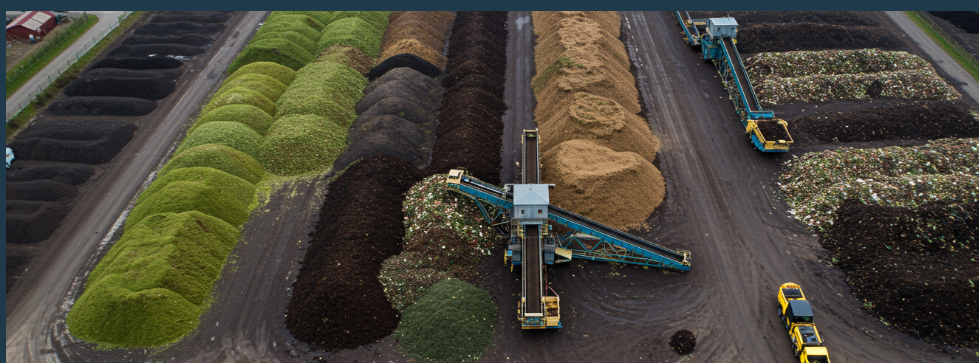
States are moving aggressively to reduce methane emissions from landfills by requiring food scraps and organic waste to be diverted into composting or anaerobic digestion systems. On paper, this transition appears straightforward:
Divert organics → reduce methane → meet climate targets.
In practice, the system underneath this transition is not keeping pace.
The Structural Gap
Across jurisdictions, the same constraint is emerging:
Policy timelines are moving faster than infrastructure readiness.
Mandates are being enacted with:
- defined diversion targets
- compliance deadlines
- enforcement mechanisms
But the physical and operational systems required to meet those mandates — collection routes, processing capacity, contamination controls, end markets — are lagging behind.
This creates a structural gap:
Cities are being required to comply with systems that do not yet fully exist.
Where the System Is Breaking
This gap is not theoretical. It is showing up in specific, repeatable failure points:
1. Processing Capacity Constraints
Composting and anaerobic digestion infrastructure is unevenly distributed.
Many regions:
- lack sufficient facilities
- rely on long-haul transport
- or depend on facilities already operating at capacity
This leads to:
- bottlenecks
- increased costs
- and program instability
2. Collection Without System Design
Organics collection programs are being launched rapidly, often without:
- route optimization
- contamination mitigation strategies
- participation modeling
The result:
- high contamination rates
- rejected loads
- reduced processing efficiency
3. Procurement Misalignment
RFPs are being issued to meet mandate timelines rather than system realities.
This leads to:
- contracts that assume infrastructure availability
- vendor proposals optimized for compliance optics, not performance
- limited flexibility as conditions change
4. Enforcement vs. Participation
Mandates often include enforcement mechanisms before participation systems are stable.
Cities face:
- pressure to enforce compliance
- limited ability to support behavior change
- political risk if programs fail publicly
Signals We’re Tracking Now
These pressures are not isolated — they are appearing across multiple jurisdictions simultaneously.
From live tracking across policy and infrastructure signals:
- States are tightening organics diversion requirements and timelines
- Local programs are expanding faster than processing capacity
- Procurement cycles are compressing under regulatory pressure
These signals indicate a broader shift:
Organics diversion is moving from pilot programs to system-wide implementation — without a synchronized buildout of supporting infrastructure.
What This Means for Cities
The challenge is no longer whether organics diversion will happen.
It is whether systems can be designed to support it effectively.
Cities need to shift from:
- mandate compliance thinking
to:
- system readiness thinking
This includes:
- assessing actual processing capacity within service areas
- aligning procurement with infrastructure reality
- sequencing rollout based on operational readiness
- designing participation systems alongside enforcement
What Comes Next
Organics mandates are not slowing down.
If anything, they are accelerating — driven by climate targets, methane reduction goals, and state-level policy pressure.
The risk is not non-compliance.
The risk is:
- building systems that fail under pressure
- eroding public trust
- and locking cities into contracts that don’t reflect operational reality
Access the Full System
This analysis is part of Climate Systems Insider (CSI), where we examine how municipal waste systems behave in practice — not on paper.
- Read the full CSI series: https://wasteadvisory.com/csi
- Explore live policy and infrastructure signals: https://tracker.wasteadvisory.com/
메타데이터
- post_id
- aa4e67d0e7fd
- slug
- the-organics-mandate-wave-is-hitting-local-systems-faster-than-infrastructure-can-catch-up-aa4e67d0e7fd
- url
- https://medium.com/climate-waste-systems-advisory/the-organics-mandate-wave-is-hitting-local-systems-faster-than-infrastructure-can-catch-up-aa4e67d0e7fd
- canonical_url
- https://medium.com/climate-waste-systems-advisory/the-organics-mandate-wave-is-hitting-local-systems-faster-than-infrastructure-can-catch-up-aa4e67d0e7fd
- author_url
- https://medium.com/@camandersonforclimate
- status
- ok
- fetched_at
- 2026-07-16 15:15:08