Is Patent the Final Step or the First?Part 2 (End)
Navigating the Intersection of New Product Development & Patent Strategy
Is Patent the Final Step or the First?Part 2 (End)
Navigating the Intersection of New Product Development & Patent Strategy
Following the overview of the Stage-Gate® Model in Part 1, this article focuses on the role of patents in assisting the new product development process.
👉What Do In-House Patent Engineer Do?
Before explaining how patents assist in New Product Development (NPD), let’s look at the responsibilities of In-House patent engineer (IH patent engineer), the specialists who manage patent-related tasks throughout the NPD process.
Based on my experience, the work of an in-house patent engineer can be categorized into four core functional areas: patent cultivation, patent analysis, patent operation, and patent litigation. Their primary objectives are outlined below:
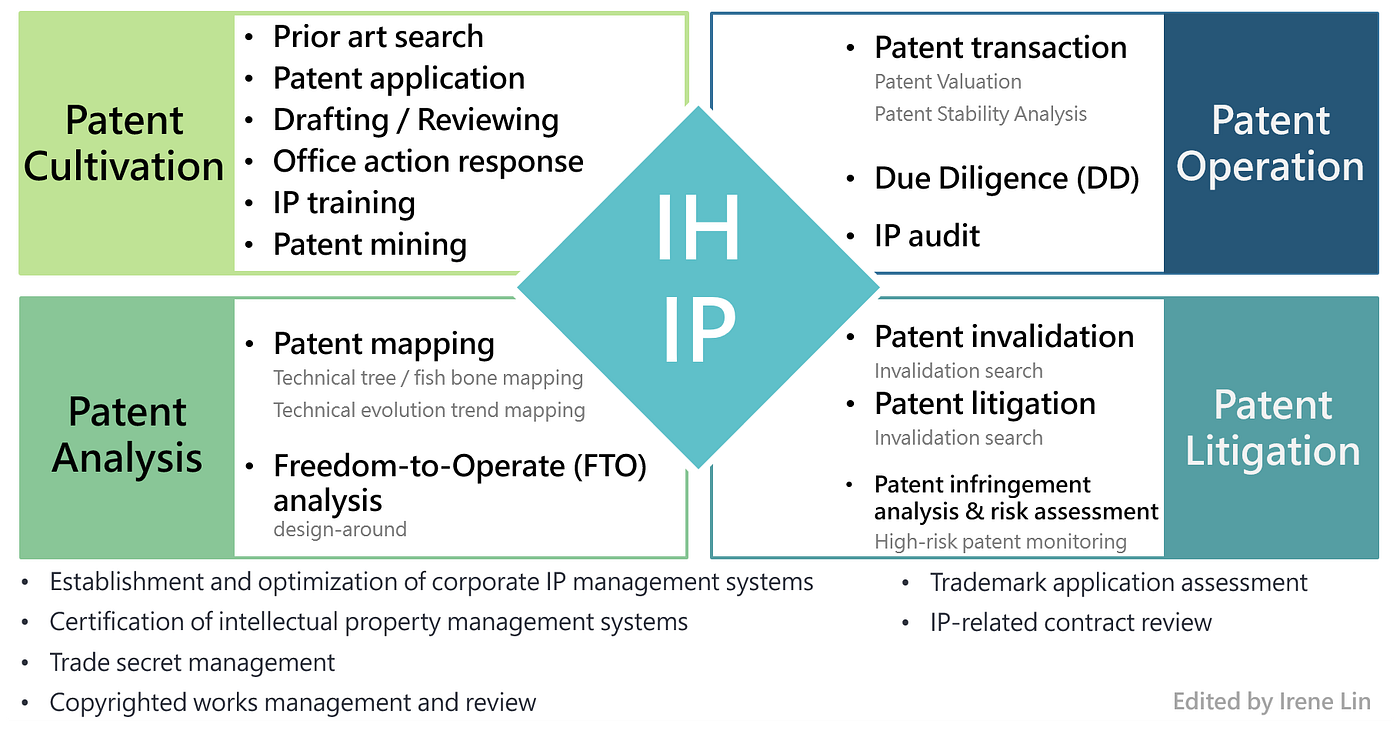
Fig.1 The four core functional areas of an in-house patent engineer.
🔶Patent Cultivation: Patent Generation
A series of tasks aimed at transforming abstract ideas into enforceable patent rights.
Key tasks: IP training, patent mining, prior art search, patent application, drafting/reviewing, and office action response
🔶Patent Analysis: Technical Insights
Focuses on interpreting large volumes of patent data to identify R&D risks and roadmaps. The goal is to mitigate development risks while enhancing the depth and breadth of the patent portfolio.
Key tasks: Patent mapping and Freedom-to-Operate (FTO) analysis
🔶Patent Operation: Value Activation
For patent holders, patents serve as both a technical moat and a tradable asset. Companies can generate cash flow by licensing or selling idle patents. Conversely, acquiring or licensing patents helps companies accelerate development and prevent infringement.
Key tasks: Patent transaction, Due Diligence (DD), and IP audit
🔶Patent Litigation: Legal Offense and Defense
To reduce risk, companies conduct patent infringement analysis and risk assessment during development. If a technical barrier arises and licensing is unavailable, they may use patent invalidation to clear the path. Conversely, patent holders may initiate patent litigation to protect their technology, market position, and legal rights.
Key tasks: Patent invalidation, patent litigation, and patent infringement analysis and risk assessment
👉How Do Patents Support New Product Development?
With a basic understanding of an IH patent engineer’s role, we can now explore how they support NPD through the Stage-Gate Model. By executing specific tasks at each stage, the IH patent engineer provides critical support from a patent perspective to meet the objectives of the development process:

Fig.2 The relationship between patent and the Stage-Gate Model.
In this context, the task of patent mapping is categorized into “Macro” and “Micro” mappings based on whether the analysis is focused on a specific technical issue:
🔸Macro patent mapping: The scope is not limited to a specific technical issue. For example, an entire system or product (comprising multiple combined technologies).
🔸Micro patent mapping: The scope is focused on specific R&D topics, technologies, or module designs. For example, resolving collision issues between multiple moving units, navigation guidance technology, or the travel module of a transport device.
1. Stage 0: Discovery
🔸Stage objective: Identify new market opportunities; generate and collect new product ideas
🔸Patent task: Macro patent mapping
🔶Why is Patent Support Needed?
Stage 0 focuses on ideation and companies typically derive new product concepts from market research, competitor analysis, or direct customer requests. Common methods for gathering this intelligence — such as monitoring online info or attending trade shows — often have two major drawbacks:
(1) Limitation 1: Focuses on the present, not future trends
Online data and public product info represent ideas that are already market-proven or commercially realized. They reflect the current market but fail to reveal future trends or untapped opportunities.
While trade shows may feature pre-market concepts, their value depends heavily on the number of participants and their technical influence. If industry leaders are absent, the insights gained may not objectively represent the future of the market.
(2) Limitation 2: Reveals surface-level strategy, not core technical strength
To keep pace with trends, companies often use media and exhibitions to showcase their R&D potential. However, without access to detailed product specifications or the actual hardware, it is impossible to verify their true technical capabilities. This lack of transparency hinders the ability to identify genuine technology partners or accurately assess competitors.
Therefore, by conducting a macro patent mapping after identifying potential product directions through traditional market research, companies can bridge these two information gaps.
🔶How Do Patents Help?
📌Macro patent mapping
The macro patent mapping focuses on the one or more product directions defined by the company. It centers on obtaining high-level patent intelligence through the following key analysis:
(1) Filing trend analysis
By analyzing the relationship between filing dates and volume, we can observe past and future patent trends to predict a product’s development trajectory.
However, it should be noted that patent applications are typically published 18 months after filing. Therefore, it is essential to cross-reference this data with current market intelligence to ensure accuracy.
![Fig.3 Example: Annual patent filing trends in smart healthcare[1].](https://miro.medium.com/v2/resize:fit:1400/1*J8yyeB-C2Dx92RRoOUO0Nw.png)
Fig.3 Example: Annual patent filing trends in smart healthcare[1].
(2) Key competitor analysis
By analyzing data from the top 5–10 applicants, companies can identify the primary competitors in a specific product field. Further examination of their patent specifications reveals their product roadmaps, providing a valuable source for mining new product ideas.
![Fig.4 Example: Top 10 patent applicants in smart healthcare[1].](https://miro.medium.com/v2/resize:fit:1336/1*4aPhXkOok1iDVWsPcbgMPA.png)
Fig.4 Example: Top 10 patent applicants in smart healthcare[1].

Fig.5 Example: Patent filing trends of the top 10 applicants in smart healthcare.
(3) Main market analysis
By identifying the primary countries where patents are filed, we can determine the key sales markets for a product. Because patents are subject to the principle of territoriality, companies typically file for protection in manufacturing hubs as well as current and future target markets.
![Fig.6 Example: Global patent landscape analysis for smart healthcare[1].](https://miro.medium.com/v2/resize:fit:870/1*h27mgSLuNtnuRWf-55SuUw.png)
Fig.6 Example: Global patent landscape analysis for smart healthcare[1].
![Fig.7 Example: Global patent filing trends in smart healthcare[1].](https://miro.medium.com/v2/resize:fit:1400/1*RRO6hijQb2r0gqvLVGNbcg.png)
Fig.7 Example: Global patent filing trends in smart healthcare[1].
(4) Technical analysis
By analyzing patent specifications, companies can assess the technical strength of applicants to identify key competitors or potential R&D partners. Additionally, patent classification codes (such as IPC or CPC) help reveal the specific technical fields where applicants are positioning their portfolios.
As patents are legal documents that formalize technical concepts — often protecting ideas that are still in development or yet to be realized — reviewing these specifications allows a company to evaluate an applicant’s technical expertise. This helps narrow the scope when mining for new product ideas and identifying true competitors.
Furthermore, every patent is assigned a classification code. Analyzing these codes provides a quick overview of the key technical areas for a product and reveals the strategic R&D direction of major competitors.
![Fig.8 Example: Top 10 IPC analysis for smart healthcare[1].](https://miro.medium.com/v2/resize:fit:1155/1*MUnAnttB4Zfmd1OgNuvDog.png)
Fig.8 Example: Top 10 IPC analysis for smart healthcare[1].
![Fig.9 Example: Top 10 IPC trend analysis for smart healthcare[1].](https://miro.medium.com/v2/resize:fit:1400/1*gOHip1MyoYSMa7VijWGXjw.png)
Fig.9 Example: Top 10 IPC trend analysis for smart healthcare[1].
In my experience, many companies take a conservative approach to ideation, often entering a market only after seeing others achieve commercial success (i.e., becoming a “late follower”). Therefore, while filing trend, key competitor, and main market analyses serve as useful supplements to market intelligence, they may offer limited strategic value to senior management. The real “high-value” information at this stage lies in technical analysis, which enables management to pinpoint critical competitors or ideal technology partners.
It should be noted that a macro patent mapping alone is rarely enough to generate new product ideas from scratch[2]. With global patent applications exceeding 3.7 million annually[3], even AI-assisted analysis can struggle with such massive data volumes, potentially diluting the quality of insights.
Therefore, it is recommended to first collect business intelligence information (through market research and competitor analysis, information provided by customers, etc.) to obtain more specific product directions before carrying out large-scale patent mapping analysis.
2. Stage 1: Scoping
🔸Stage objective: Rapidly assess the company’s technical R&D capabilities and the commercial value of a specific new product
🔸Patent task: Macro patent mapping
🔶Why is Patent Support Needed?
The core of Stage 1 is evaluating technical feasibility. To do this, companies typically try to obtain actual products or specifications similar to their new product concept as benchmarks. However, when a concept involves non-consumer electronics, these resources are often difficult to acquire through conventional channels or even from customers.
So, how can a technical assessment proceed when physical samples or specifications are unavailable? The answer lies in leveraging patents.
The fundamental spirit of the patent system is to protect an inventor’s creativity while promoting overall technological progress. In exchange for legal protection, inventors must clearly and explicitly disclose the technical features and implementation methods of their inventions. Therefore, conducting a macro patent mapping on specific competitors or industry benchmarks can bridge the information gap, providing the necessary reference resources for technical feasibility assessments.
🔶How Do Patents Help?
📌Macro patent mapping
Regarding the execution of the macro patent mapping at this stage, the analysis targets are based on specific benchmark companies (such as key competitors or industry leaders) designated by senior management after reviewing the Stage 0 report. A patent investigation is conducted on the specific products of these benchmark companies, and the patent application status of these products is presented in a modularized format.
In terms of the modularized presentation, patents are categorized into modules (such as hardware, software, and circuitry) from a product development perspective and then displayed in a tree mapping. This allows a company to:
(1) Rapidly audit which internal R&D resources are available and which essential resources are still missing for new product development; or
(2) Evaluate opportunities to identify technical white spaces, enabling the company to enter the supply market for specific product modules or components, and even “plant a flag” in the patent landscape.

Fig.10 Example: Technical tree mapping for hardware systems of company X’s product Y.
Therefore, compared to the analysis in Stage 0, the macro patent mapping in this stage is built upon more clearly defined benchmark companies. If a company has already identified its reference benchmarks through market intelligence, it may proceed directly to the Stage 1 macro patent mapping analysis.
3. Stage 2: Build business case
🔸Stage objective: Conduct an in-depth assessment of the target market, define product specifications, and plan the development roadmap to establish commercial feasibility and investment value
🔸Patent task: Micro patent mapping, and patent cultivation
🔶Why is Patent Support Needed?
The core of Stage 2 is the gradual establishment of concrete product specifications to ensure a smooth transition into development in the next stage. Therefore, at this stage, companies typically need to decide on the design direction of core modules and determine which key technologies will be adopted for the new product.
However, when evaluating modules or technical solutions, companies often struggle to obtain sufficient reference data to comprehensively analyze development trends. This forces them to invest significant R&D resources into individually testing and verifying different solutions before identifying the most effective choice.
In this context, patent information becomes an extremely valuable source of reference. The fundamental spirit of the patent system is to encourage subsequent innovators to improve and iterate upon existing foundations by disclosing technical content. Therefore, performing a systematic patent analysis and establishing an evolutionary trend mapping for specific R&D topics allows a company to quickly grasp the development context of core modules or key technologies. This enables the selection of a direction that offers both R&D feasibility and growth potential.
Furthermore, as the R&D team understands the development context through evolutionary trend mappings, they often gain inspiration for new module designs or technical solutions. At this point, patent applications can be filed for these new inspirations, proactively deploying the company’s technical advantages in new product development.
🔶How Do Patents Help?
📌Micro patent mapping
In analyzing the development trends of core modules or key technologies, the focus is on collecting patents related to specific R&D topics, modules, or techniques. These patents are categorized based on their solution methods, module designs, or technical similarities and presented on a timeline to systematically show the evolutionary context.
Since patents have citation relationships, analyzing the “forward and backward citations” between multiple patents — supplemented by market intelligence — allows for the creation of an evolutionary trend mapping for specific R&D topics.

Fig.11 Example: Technical evolution trend mapping for technology X of product B.
📌Patent cultivation
When defining specifications for a new product, companies invariably aim for market-competitive standards. Therefore, module designs or technical solutions within the specifications that offer differentiation and competitive advantages possess patent potential, and the company should evaluate whether to file applications early.
If patent applications are not filed early for these innovative concepts, and the company waits until the product is officially launched to begin its patent layout, the optimal window for protecting those innovations will be missed.
During the actual development process, companies often collaborate with component suppliers or partners to develop and test designs. Without early protective measures through patents, if innovative designs or technical ideas are leaked, they may be publicly disclosed or even preemptively patented by others. This would prevent the company’s heavy R&D investment from translating into a competitive advantage and might even allow competitors to use the technology.
4. Stage 3: Development
🔸Stage objective: Conduct new product development and preliminary testing based on market and customer requirements
🔸Patent task: Micro patent mapping, patent cultivation, FTO, patent transaction, DD, and patent invalidation
🔶Why is Patent Support Needed?
The core of Stage 3 is to formally launch R&D activities based on the product specifications established in Stage 2, and to test and verify preliminary development results.
However, during the actual development process, R&D teams may encounter the following two scenarios:
(1) Scenario 1: The originally planned product specifications are difficult to fully implement, requiring changes to module designs or technical solutions
(2) Scenario 2: The planned module designs or technical solutions have already been patented by others
How can these situations be resolved?
In Scenario 1, companies can follow the approach taken in Stage 2, using a micro patent mapping to analyze the development context of core modules or key technologies under specific R&D topics. Alternatively, they can further explore technical branches at specific nodes within the evolutionary trend mappings created in Stage 2 to serve as a reference for design changes. Furthermore, new inspirations for module designs or technical solutions proposed by the R&D team can once again be protected through patent applications.
If a company faces Scenario 2, and the planned designs or solutions are essential or offer the best efficiency for the new product, the company may consider acquiring the necessary technical resources through patent licensing, patent purchase, or even the acquisition of the relevant patent holder. If the patent holder is unwilling to license or sell, the company can evaluate the legal validity of the patent and attempt to remove the development barrier through patent invalidation.
In addition to these two scenarios, while a company develops new products and applies for patent protection, its competitors are simultaneously advancing R&D and patent filings for similar products. To mitigate these risks, companies can conduct Freedom-to-Operate (FTO) analysis to periodically review whether current module designs or technical solutions are already being utilized by competitors.
🔶How Do Patents Help?
📌Micro patent mapping
Same as described in Stage 2.
📌Patent cultivation
Same as described in Stage 2.
📌Freedom-to-Operate (FTO) Analysis
FTO analysis can be initiated as soon as preliminary concepts for core module designs or key technologies are formed (e.g., when mechanical drawings or implementation flowcharts are available).
In executing FTO, a search is conducted based on the latest technical information from the R&D team to identify high-risk patents whose technical details highly overlap with the core modules or key technologies. Additionally, based on competitive intelligence and market information provided by R&D and business units, corresponding competitor patents are searched. If identified, these patents are analyzed to determine if their technical details overlap significantly with the core technologies, thereby identifying them as high-risk patents.
If high-risk patents are discovered through FTO, the IH patent engineer will issue a legal risk warning and simultaneously guide the R&D team in performing design-around maneuvers. Patent applications will then be filed for the new designs. Simultaneously, the identified high-risk patents will be tracked periodically to monitor the scope of risk.
And it is note that once high-risk patents are identified, the company must strictly control information shared with customers or during project bidding. At this stage, any information regarding design changes or FTO results is critical to the success of potential patent litigation; if leaked, the company may face significant litigation risks.
📌Patent transaction
When a company decides to obtain usage rights for specific modules or technologies through licensing or purchase, the R&D team must first assist the IH patent engineer in identifying patents directly and indirectly related to that technology. Secondly, both parties must confirm with the patent holder that the provided technology transfer package specifically corresponds to the claimed content of the patents and is feasible for implementation.
Directly related patents cover the specific module or technology itself, while indirectly related patents may involve improved versions, extended applications, or peripheral modules that enhance implementation efficiency. A complete audit of both ensures that the acquired rights are genuinely usable and free from infringement risks.
The technology transfer package should include concrete measures such as training, operational instruction, process descriptions, and the delivery of key technical documents. Licensing or transfer contracts can be designed with a phased payment structure linked to the progress of the technology transfer. This mechanism reduces risk and incentivizes the patent holder to fulfill their transfer obligations.
📌Due Diligence (DD)
When a company evaluates that acquiring a patent holder will secure necessary technical resources or market access, the IH patent engineer conducts DD. This involves investigating patent ownership, validity, FTO status, and other IP-related legal documents and contracts to ensure the acquired technical resources are free of legal disputes.
📌Patent invalidation
If a core module or technology essential to the new product clearly infringes a specific patent, and no viable alternatives can be found via micro patent mapping or FTO, the IH patent engineer will analyze the possibility of invalidating that patent.
If the analysis reveals that the claimed technical content was actually disclosed in earlier patents or literature, the company can file for patent invalidation with the respective national patent offices, arguing the patent should never have been granted. If successful, the patent loses legal effect, removing the obstacle to product development.
In this process, the R&D team must cooperate closely with the IH patent engineer by providing all relevant technical data — including academic papers, technical reports, and product catalogs. Their deep understanding of technical details helps the engineer identify which public information is most highly relevant, thereby increasing the chances of a successful invalidation.
5. Stage 4: Testing & Validation
🔸Stage objective: Execute advanced testing of the new product to validate production, marketing, and operational plans
🔸Patent task: Patent cultivation, FTO, patent transaction, DD, and patent invalidation
🔶Why is Patent Support Needed?
The core objective of Stage 4 is to conduct advanced testing and validation of the new product within actual customer environments. At this point, the module designs and technical solutions are largely finalized and are no longer suitable for major adjustments, as any significant changes would consume substantial time and development costs.
Consequently, if the established module designs or technical solutions are found to infringe upon others’ patent rights at this stage, companies typically no longer utilize micro patent mapping to devise feasible alternative designs. Instead, they choose to remove legal obstacles through patent licensing, patent purchases, the acquisition of relevant patent holders, or even Patent Invalidation.
Compared to Stage 3, the testing in Stage 4 is closer to actual usage scenarios and involves more rigorous conditions. Simultaneously, this stage represents the final critical window for patent layout before the new product moves into mass production and official market launch.
🔶How Do Patents Help?
📌Patent cultivation
As a new product enters a customer’s actual on-site environment, various real-world usage issues and areas for optimization often begin to emerge. Examples include new usage scenarios, application modes, or optimized module designs and technical solutions tailored to specific site conditions.
These improvements and innovative ideas derived from practical applications also possess patent potential. By further strengthening the correspondence between innovative concepts and specific field requirements, a company can gradually build a patent portfolio for the new product, enhancing both the depth and breadth of its technical protection.
Furthermore, during external testing or technical exchanges with customers, patents can serve as a component of the product marketing strategy. In appropriate contexts, the company can publicly state that “this product is patent-pending or has obtained multiple patents.” This highlights the company’s technical expertise and R&D strength, thereby increasing customer trust in the new product and strengthening the company’s persuasiveness and bargaining power during bidding or business negotiations.
However, when patents are utilized in bidding or negotiations, the technical content disclosed to external parties must be carefully controlled. It is essential to avoid revealing critical technical details that have not yet completed the patent application process or secured patent protection. Excessive disclosure of technical details may weaken the possibility of obtaining patents in the future and could even provide competitors with a basis for imitation or design-around maneuvers.
📌Freedom-to-Operate (FTO) analysis
Same as described in Stage 3.
📌Patent transaction
Same as described in Stage 3.
📌Due Diligence (DD)
Same as described in Stage 3.
📌Patent invalidation
Same as described in Stage 3.
6. Stage 5: Launch
🔸Stage objective: Official market entry of the new product; commencement of production and sales
🔸Patent tasks: Patent transaction, DD, infringement analysis and risk assessment, patent litigation, and patent invalidation
🔶Why is Patent Support Needed?
Stage 5 marks the phase where the new product formally enters mass production and market sales, serving as the critical moment of public disclosure. Following the launch, positive or negative market feedback becomes a vital basis for the company to adjust marketing strategies or iterate product designs.
When market response is favorable, companies can generate additional revenue through patent licensing or sell relevant patents near the end of the product’s life cycle to maximize the value of R&D achievements. Simultaneously, external technologies can be introduced through licensing, purchasing, or acquisitions to strengthen product competitiveness.
Conversely, companies must guard against risks such as competitor imitation, patent litigation, and infringement. Maintaining a market advantage can be achieved through infringement analysis, risk assessment, design-around maneuvers, or filing for patent invalidation.
🔶How Do Patents Help?
📌Patent transaction
In addition to acquiring core modules or key technologies as described in Stage 3, patent transaction at this stage focus on transforming R&D results into actual revenue by licensing or selling the patent portfolio related to the new product.
To increase licensing royalties or sale prices, it is crucial for a company to continuously accumulate patents directly or indirectly related to the product during the R&D process. A patent portfolio that comprehensively covers the product and its usage methods provides stronger price negotiation leverage, thereby enhancing the overall transaction value.
In practice, companies primarily target three types of entities for licensing or sales:
(1) Late follower in the same industry
Latecomers with insufficient R&D resources often struggle to develop core technologies from scratch and may “reference” the products of industry leaders, leading to potential infringement. Leaders can proactively offer licensing or portfolio sales to these followers to avoid high-cost litigation while liquidating the remaining technical value of products nearing the end of their life cycle.
(2) Upstream and downstream manufacturers
There is often high technical interdependence within a supply chain. For example, a chip designer (Company A) and a packaging firm (Company B) depend on each other’s patented architectures and processes. To avoid infringement risks during collaboration, companies typically engage in cross-licensing, ensuring the legality of the entire production flow from components to final products.
(3) Non-Practicing Entities (NPE)
When a product approaches the end of its life cycle or its technical solutions lose market competitiveness, selling patents to an NPE can help convert patent assets that are difficult to monetize internally into immediate financial gains.
📌Due Diligence (DD)
Same as described in Stage 3.
📌Patent infringement analysis and risk assessment
<For non-patent holders>
Public disclosure of a product subjects its module designs and technical solutions to scrutiny by the market and competitors. Stage 5 is the critical phase for verifying whether Freedom-to-Operate (FTO) and design-around efforts from Stages 3 and 4 were effectively implemented.
In markets like Taiwan and the U.S., patent holders can legally request customs to block the import of suspected infringing products. If accused of infringement, a company must respond swiftly and determine if the accusation is a strategic maneuver or malicious interference by a competitor.
The response process involves:
(1) assessing the validity of the opponent’s patent;
(2) performing an infringement comparison analysis to see if the product falls within the patent’s scope; and
(3) formulating a strategy based on risk levels. High-risk cases may require halting sales or seeking pre-litigation licensing. Note that the 18-month publication rule means infringement risks may still exist despite thorough FTO analysis due to information gaps.
<For patent holders/licensees>
If a company believes its patents are being infringed, it should take legal action to consolidate its market leadership. This involves collecting physical samples or catalogs of the infringing product for comparison. Sending a warning letter with a detailed comparison analysis increases deterrence. If the infringer refuses to stop, the company may pursue a patent infringement lawsuit.
📌Patent litigation
<Plaintiff (Patent holder/Licensee)>
Litigation is often the last resort when a warning letter fails. Because it is time-consuming and expensive, companies should evaluate:
(1) Concrete benefits: Will it reclaim market share or deter other competitors?
(2) Impact of the technology: Is the patent related to a core module of a flagship product?
Decisive strategic action can effectively disrupt a competitor’s market layout.
<Defendant (Non-patent holder)>
Litigation is a costly battle that can significantly impact corporate image. Initial response measures include:
(1) unifying the external communication channel and avoiding specific comments on infringement before a verdict;
(2) suspending sales or recalling products to mitigate further risk;
(3) conducting an internal audit of R&D records to assess the patent-in-suit and evaluating the feasibility of an invalidation claim.
📌Patent invalidation
Same as described in Stage 3.
👉Conclusion
In most companies, patents are often viewed as isolated procedural actions, initiated only after a new product has been developed and is ready for launch. However, as this series of articles demonstrates, patents can provide phased assistance as the new product development process progresses. So, how can we promote the integration of patents into the New Product Development (NPD) process? Here are several recommendations:
1. Incorporate patent reviews into Gate 2 and Gate 4 reviews of the NPD process
(1) Gate 2 — Second Screen: Verify if a patent mapping has been executed and list the expected number of patent applications.
At this gate, companies re-evaluate whether to continue investing resources based on the preliminary assessment report from Stage 1. Therefore, adding a legal risk assessment at this stage strengthens the scope of the preliminary evaluation.
Correspondingly, the Stage 1 report should state whether a patent mapping analysis has been conducted and provide the results along with proposed countermeasures. This enhances the identification of legal risks and the assessment of technical feasibility beforehand.
Furthermore, requiring a list of expected patent applications establishes a clear performance goal for the development process.
(2) Gate 4 — Go to Testing & Validation: Verify if FTO has been executed and check the achievement rate of patent applications.
This gate reviews whether the product prototype meets expectations and re-evaluates commercial feasibility before deciding to commit resources to mass production. Including a legal risk assessment here ensures that risks are effectively mitigated before the official market launch.
Correspondingly, an FTO (Freedom-to-Operate) analysis should be required during Stage 3 to identify legal risks in the production and sales markets. If risks exist, the review must confirm whether countermeasures — such as design-arounds, licensing, or patent purchases — have been proposed.
Additionally, the achievement rate of patent applications (relative to the goals set in Stage 1) should be reviewed to ensure initial objectives are fulfilled.
Furthermore, this gate may include a Trademark Review to ensure that any new trademark applications are on track to be completed before the product launch.
2. Hold regular cross-functional meetings
Invite IP leads, project managers, and other designated stakeholders to participate in regular meetings. This allows the IP lead to track the status of product development, identifying potential risks related to patents, trademarks, and trade secrets in real-time, while providing immediate legal support.
3. Appoint dedicated IP communication liaisons once the NPD plan starts
Upon the formal launch of an NPD project, both the R&D team and the IP department should appoint a dedicated person to serve as a bridge for IP-related issues.
In the initial phase of implementation, the IP liaison can focus on assisting with easily identifiable IP issues, such as patent cultivation and infringement analysis, to build a collaborative relationship. This helps the R&D team develop the habit of seeking assistance from the IP department first, rather than the legal department, when facing IP issues.
Once the R&D team proactively seeks IP support, the IP department can then offer strategic support — such as patent mapping and FTO — at different stages, gradually embedding patents into the decision-making process.
The R&D Liaison must provide corresponding assistance, such as inviting the IP liaison to R&D meetings to identify patentable items, advancing patent proposals, proactively informing the IP department of design changes for FTO evaluation, and providing competitor/market information for risk monitoring.
Finally, it must be emphasized that NPD processes vary across industries due to product characteristics. For example, the pharmaceutical and medical device industries involve regulatory and safety requirements, often requiring official review mechanisms that make their processes more complex than the traditional Stage-Gate Model.
However, regardless of the industry, one core principle remains unchanged: a patent is essentially an information carrier that systematizes and documents technical concepts. Because of this, the value of a patent should not be limited to its role as a “defensive” legal tool. By consciously embedding patents into the NPD process and utilizing the technical information they disclose, companies can transform patents into a resource that actively supports decision-making, guides R&D direction, and mitigates risk — effectively upgrading patents into vital capital that empowers the enterprise.
👉Reference
- 智慧醫療專利技術分析
https://www.psc.org.tw/upload/17/2020062017361952163.pdf
-
Cooper, R. G. (2017). Winning at New Products: Creating Value Through Innovation (5th ed.). Basic Books.
-
Global intellectual property applications and active IP rights
- Christian Hackl & Sandrine Guillermin (2020). Integration of IP into the ‘classical’ Stage-Gate model. les Nouvelles: Journal of the Licensing Executives Society.
5.Stage-gate process for the development of medical devices.
This literature takes the Stage-Gate Model as its starting point and integrates official regulatory review processes, such as the FDA, into the entire New Product Development cycle for medical devices. It clearly defines the specific tasks that each department must execute during every stage and gate. I highly recommend this literature to professionals in the medical device industry.
-
John A. Bers, John P. Dismukes, Diana Mehserle & Christopher Rowe (2007). Extending the Stage-Gate model to radical innovation: The accelerated radical innovation model. PICMET ’11: Technolog Management in The Energy-Smart Word (PICMET).
-
WIPO (2003). Secrets of Intellectual Property: A Guide for Small and Medium-Sized Exporters. Publisher.
-
Alešnik, P., Vrečko, I., Palčič, I (2025). From Zero to One: A New Perspective on the Fuzzy Front End of Innovation and the Stage-Gate® Model. Advances in Production Engineering & Management.
메타데이터
- post_id
- aa923d24482d
- slug
- is-patent-the-final-step-or-the-first-part-2-end-aa923d24482d
- url
- https://medium.com/@Irenesiplearningrecord/is-patent-the-final-step-or-the-first-part-2-end-aa923d24482d
- canonical_url
- https://medium.com/@Irenesiplearningrecord/is-patent-the-final-step-or-the-first-part-2-end-aa923d24482d
- author_url
- https://medium.com/@Irenesiplearningrecord
- status
- ok
- fetched_at
- 2026-07-17 08:48:32