Power Up Your Health with Multivitamins: Energy, Immunity, and Beyond
Most people assume they get all necessary vitamins and minerals from food. In practice, micronutrient gaps are widespread — even in…
Power Up Your Health with Multivitamins: Energy, Immunity, and Beyond
Most people assume they get all necessary vitamins and minerals from food. In practice, micronutrient gaps are widespread — even in populations eating varied diets.
Soil depletion, food processing, lifestyle stress, and individual metabolic variation mean that daily micronutrient support has become relevant for most adults. This is not alarmism — it is a practical reality that nutritional research has documented consistently across populations. A well-formulated multivitamin does not replace a good diet. It fills the gaps that even a good diet still leaves.
Why a daily multivitamin matters
Micronutrients are required in small amounts but play critical roles across virtually every physiological system. Deficiencies often do not produce obvious symptoms until they become significant — but suboptimal status can affect energy, cognition, immune response, and recovery over time, quietly and without clear attribution.
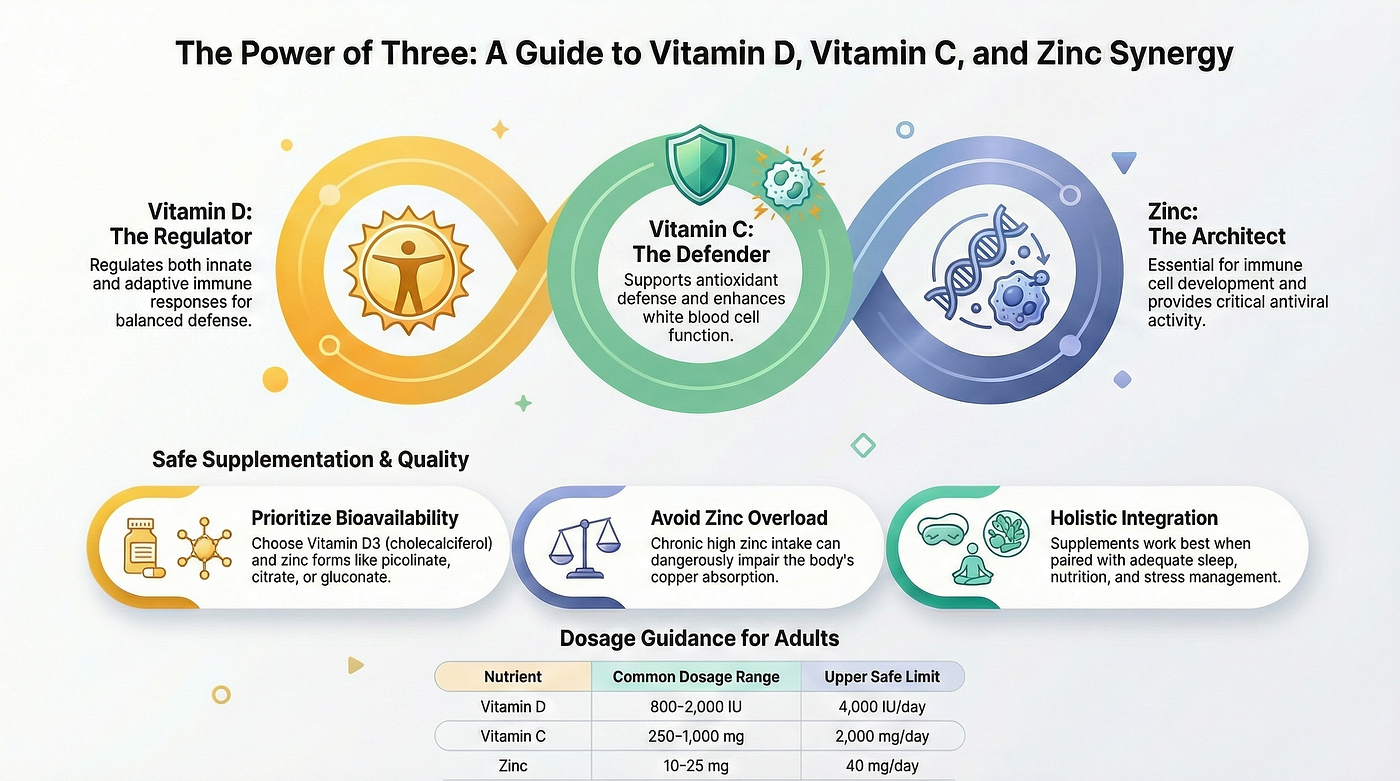
The functions supported by a comprehensive multivitamin cover an enormous range: cellular energy production via B vitamins, immune regulation via vitamins C, D, and zinc, antioxidant protection via vitamins E, C, and selenium, bone and muscle health via vitamin D, K2, and magnesium, and neurological function via B6, B12, and folate. That breadth is the point.
The role of CoQ10 — and why it belongs in a daily formula
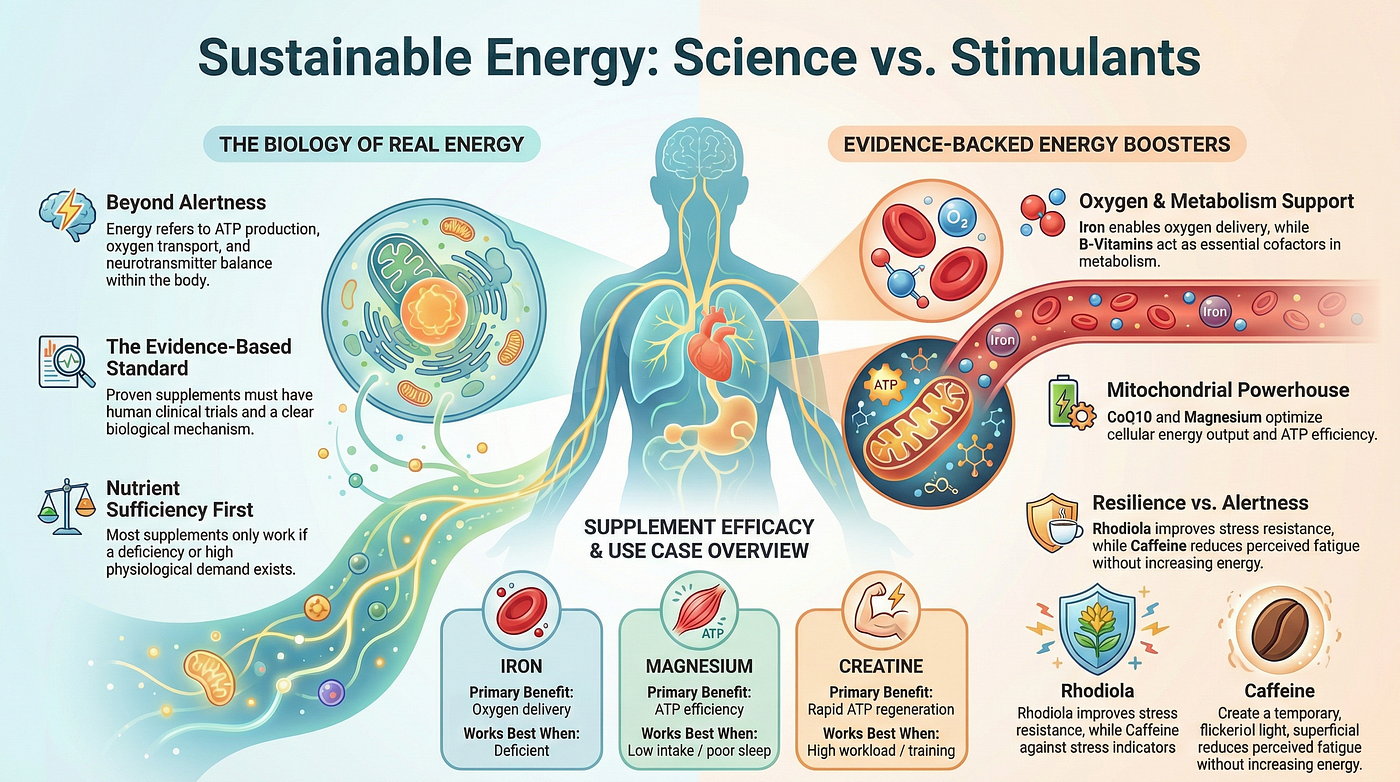
Coenzyme Q10 is a fat-soluble compound produced naturally in every cell of the body. It plays an essential role in the mitochondrial electron transport chain — the process by which cells generate usable energy. It also functions as a powerful lipid-soluble antioxidant, protecting cell membranes and mitochondria from oxidative damage.
CoQ10 levels decline naturally with age. Statin medications — widely prescribed for cardiovascular risk management — further reduce endogenous CoQ10 synthesis by blocking the mevalonate pathway. Dietary sources are limited. These factors combined make supplementation the most reliable way to support adequate tissue levels, and the reason CoQ10’s inclusion in a daily formula represents a meaningful upgrade over standard multivitamins.
A multivitamin is not a substitute for a nutrient-dense diet. It is a practical safety net against the gaps that even a good diet does not always fill.

Key micronutrients and what they actually do
Vitamin D3 — Immune regulation, bone health, muscle function.
Vitamin K2 — Calcium routing, cardiovascular and bone health. Works synergistically with D3.
B complex — Energy metabolism, neurological function, methylation support.
Vitamin C — Antioxidant defense, immune support, collagen synthesis.
Magnesium — Over 300 enzymatic reactions, muscle and nerve function, energy metabolism.
Zinc — Immune defense, protein synthesis, antioxidant enzyme activity.
CoQ10 — Mitochondrial energy production, lipid-soluble antioxidant, cardiovascular support.
What separates a quality formula from a basic one
Form matters significantly. Active forms of B vitamins — methylfolate and methylcobalamin — are better utilized than synthetic folic acid and cyanocobalamin. Vitamin D3 outperforms D2 for bioavailability. Vitamin K2 as MK-7 provides extended biological activity. Chelated or glycinate mineral forms absorb more reliably than cheaper inorganic forms. These are not premium marketing claims — they reflect documented differences in absorption and biological activity.
Who benefits most
Adults over 35 experiencing declining energy or recovery. People with restricted diets or limited sun exposure. Those taking statins or medications that deplete specific nutrients. Individuals with high physical or cognitive demands. And anyone seeking a reliable daily nutritional foundation that addresses the gaps that food alone consistently misses.
Frequently asked questions
What does CoQ10 do in a multivitamin? CoQ10 supports mitochondrial energy production and acts as a lipid-soluble antioxidant. It is not typically found in standard multivitamin formulas, making its inclusion a meaningful addition for cellular energy and long-term antioxidant support.
Who should take a daily multivitamin? Most adults can benefit, particularly those with dietary restrictions, high stress loads, limited sun exposure, older adults, or anyone using medications that deplete specific micronutrients.
Is a multivitamin a substitute for eating well? No. A multivitamin is a safety net for micronutrient gaps, not a replacement for whole foods. Diet quality remains the foundation.
Why does the form of vitamins and minerals matter? Bioavailability varies significantly by form. Active B vitamins, D3, K2-MK7, and chelated minerals are absorbed and utilized more effectively than cheaper synthetic counterparts — which means the same dose can produce a meaningfully different real-world effect.
When should I take a multivitamin? Fat-soluble vitamins and CoQ10 are best absorbed with a meal containing fat. Taking a multivitamin with your largest meal of the day supports optimal absorption of the full formula.
메타데이터
- post_id
- aa9291cef8b8
- slug
- power-up-your-health-with-multivitamins-energy-immunity-and-beyond-aa9291cef8b8
- url
- https://medium.com/@contact_26220/power-up-your-health-with-multivitamins-energy-immunity-and-beyond-aa9291cef8b8
- canonical_url
- https://medium.com/@contact_26220/power-up-your-health-with-multivitamins-energy-immunity-and-beyond-aa9291cef8b8
- author_url
- https://medium.com/@contact_26220
- status
- ok
- fetched_at
- 2026-06-23 17:05:31