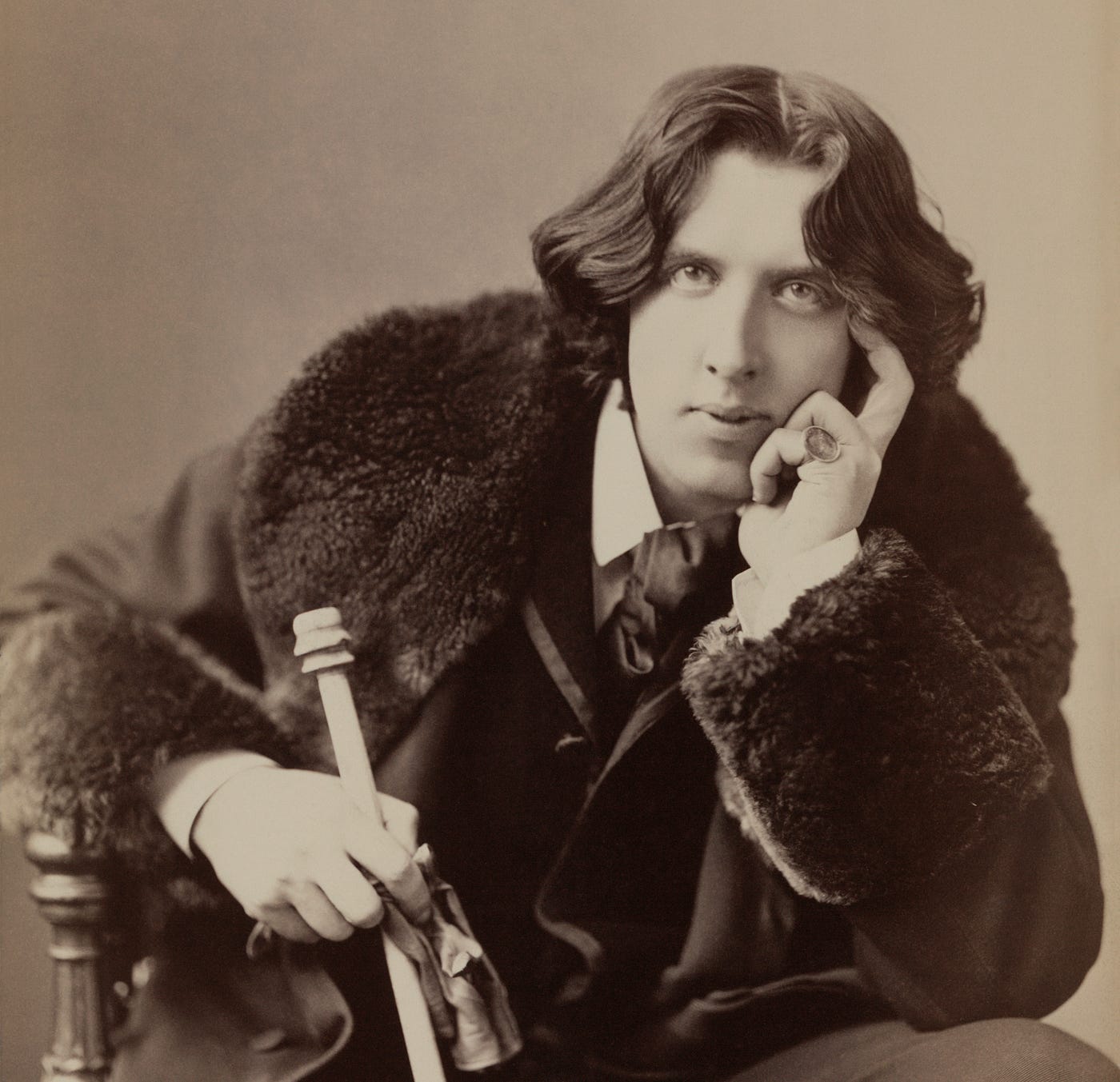
Thinking Is a Sin
There are moments in history when thinking becomes dangerous. Not because thought itself is violent. But because thought dissolves control.
Thinking Is a Sin
There are moments in history when thinking becomes dangerous. Not because thought itself is violent. But because thought dissolves control.

AI-Generated Image
Every society claims to value intelligence. Every institution praises education. Governments celebrate innovation. Religions speak about wisdom. Corporations praise creativity.
But beneath that polite surface lies a quieter rule.
Think: but not too much.
Question: but not the foundations.
Analyze: but not the structure of power.
The moment thought becomes genuinely disruptive, something strange happens. Thinking stops being admirable. It becomes suspicious. Sometimes it even becomes sinful.
The Ancient Fear of the Question
The tension between authority and thought is not new. One of the most famous executions in intellectual history began with a simple accusation. Socrates was charged in Athens with corrupting the youth and questioning the gods. What he actually did was ask questions.
Relentlessly.
What is justice? What is virtue? What is truth? What does it mean to live well?
Those questions sound harmless now. But in a society built on inherited beliefs and civic religion, they were destabilizing. Because once people begin to question assumptions, authority must justify itself. And authority rarely enjoys being interrogated. Socrates was sentenced to death.
Not for violence. For thinking too publicly.
Heresy and the Middle Ages
Move forward a thousand years, and the pattern repeats. In medieval Europe, thinking outside approved doctrine was not merely incorrect.
It was heresy. And heresy was not simply disagreement. It was considered a moral offense against the cosmic order.
Giordano Bruno suggested that the universe might be infinite and filled with other worlds. That idea did not merely challenge astronomy. It challenged theology, hierarchy, and the human-centered cosmos that sustained medieval power structures.
**Bruno was burned alive in 1600. Again, not for violence. **For thinking beyond permitted boundaries.
Galileo was luckier. He survived but only after publicly recanting ideas he knew were correct.
The lesson was clear. Truth was negotiable. Authority was not.
Enlightenment: The Dangerous Liberation
The Enlightenment is often celebrated as the victory of reason.
And to some extent, it was. Philosophers like Kant, Locke, and Voltaire pushed back against inherited authority. They insisted that individuals should use their own reason rather than blindly obey tradition. Kant summarized the spirit of the age in one famous phrase:
“Sapere aude.” Dare to know. Dare to think.
But even this movement revealed the deeper tension. The Enlightenment liberated thought but institutions quickly began shaping the acceptable boundaries of that liberation.
You were free to think. But not too radically.
Free speech was defended, but revolutionaries were still imprisoned.
Universities expanded, but intellectual dissent remained dangerous.
The world had moved from theological censorship to political censorship. The mechanism changed. The fear remained.
The Modern Version: Soft Control
Today, thinking is rarely punished with prison or execution in democratic societies. Instead, the control mechanisms have become more subtle.
Information overload replaces censorship.
Algorithms shape attention. Social pressure replaces formal punishment. If you think too critically, you may not be jailed. But you may be ignored.
Marginalized.
Ridiculed.
Deplatformed.
Or drowned out by noise.
The result is similar. People learn, often unconsciously, where the invisible boundaries are. And most stay safely within them.
The Comfort of Not Thinking
To be fair, institutions are not the only reason people avoid thinking deeply. Thinking is exhausting.
Real thinking, the kind that questions assumptions, destabilizes identity. It forces you to reconsider beliefs that define your tribe, your career, your politics, even your self-image. Most people do not resist thinking because they are oppressed. They resist because thinking threatens certainty.
**Certainty **feels safe.
Doubt feels like standing on unstable ground.
The philosopher Friedrich Nietzsche understood this tension. He believed that many people prefer comforting illusions to uncomfortable truths.
In that sense, thinking becomes socially disruptive not only because authority fears it but because communities do. The thinker becomes highly inconvenient.
Hannah Arendt and the Banality of Not Thinking
Few philosophers explored the danger of not thinking more clearly than Hannah Arendt. While covering the trial of Adolf Eichmann after World War II, Arendt expected to encounter a monstrous figure.
Instead, she found something more unsettling. Eichmann did not appear particularly evil. He appeared ordinary. He spoke in clichés. He repeated bureaucratic phrases. He claimed he was simply following orders.
Arendt described this phenomenon as the banality of evil. The horror was not that Eichmann had thought too much. It was that he had not thought at all.
He had replaced moral reflection with obedience. This is one of the most terrifying lessons in political philosophy.
Great atrocities do not always require monstrous minds. Sometimes they require only the absence of thinking.
Why Thinking Threatens Systems
Thinking threatens systems because systems depend on predictability.
Predictable workers.
Predictable voters.
Predictable consumers.
Predictable citizens.
Independent thinking introduces friction.
When individuals question narratives, they disrupt coordination. When they challenge assumptions, they slow down consensus. Institutions often frame this disruption as dangerous. Sometimes they are right. But often they simply fear losing control.
The philosopher Michel Foucault argued that power does not only operate through force. It operates through shaping what people consider normal.
The most effective control is not censorship. It is conditioning.
If people internalize limits, authority rarely needs to enforce them.
The Digital Age Paradox
We live in the most information-rich era in human history. Anyone with an internet connection can access libraries that previous generations could only dream of.
Philosophy texts.
Scientific journals.
Historical archives.
And yet.
Deep thinking seems rarer than ever.
**Why? **Because attention has become fragmented.
Algorithms reward outrage more than reflection.
Short-form content encourages reaction rather than analysis.
The result is a strange paradox.
We have unprecedented access to knowledge but declining patience for sustained thought. In that environment, thinking can feel socially abnormal. The person who pauses to analyze rather than instantly react may appear slow.
Or suspicious.
Or elitist.
Thinking and Current Events
Look at global politics today. Across continents, democratic institutions are strained. Populist movements rise and fall. Misinformation spreads rapidly through digital networks.
Public discourse becomes polarized. In that environment, thinking carefully becomes almost countercultural.
Nuance does not travel well through viral posts.
Complexity does not compete well with emotional certainty.
If you question your own side’s narrative, you risk being labeled disloyal.
If you analyze opposing views seriously, you risk being accused of sympathy.
The pressure to simplify reality becomes enormous. But reality does not simplify easily.
Thinking therefore becomes an act of resistance.
Education and the Illusion of Thinking
Education systems often claim to teach critical thinking. But in practice, many reward memorization.
Students learn to repeat established interpretations rather than challenge them. Grades depend on alignment with expectations.
Professional success often requires avoiding controversial questions.
The result is a strange contradiction.
People spend years in institutions dedicated to knowledge yet leave without the habit of questioning assumptions.
Philosophy once held a central place in education precisely because it trained this habit. It forced students to confront uncertainty. To test arguments. To refine ideas.
Without that training, thinking becomes fragile. And fragile thinking is easy to manipulate.
The Courage to Think
Thinking is not merely intellectual. It is ethical.
To think seriously is to examine the consequences of your beliefs.
To think seriously is to question inherited narratives.
To think seriously is to accept that you might be wrong.
This requires courage. Because thinking can isolate you.
When you question dominant assumptions, you disrupt comfort. You challenge group identity.
You force people to reconsider beliefs they would rather keep stable. Not everyone welcomes that disruption.
Thinking as Responsibility
The philosopher Immanuel Kant argued that enlightenment is humanity’s emergence from self-imposed immaturity.
Immaturity, he said, is the inability to use one’s own understanding without guidance from another.
**The solution was simple, but demanding. **Use your reason. Think for yourself.
But Kant also understood why many people avoid doing so. It is easier to let others think for you.
A book can dictate your beliefs.
A leader can dictate your loyalties.
An algorithm can dictate your attention.
Thinking **requires effort**.
Obedience **requires less**.
Why Thinking Still & Will Always Matter
In an age of accelerating technology, artificial intelligence, geopolitical instability, and rapid cultural change, the need for thinking is greater than ever.
Complex problems require complex analysis.
Climate change, economic inequality, technological disruption none of these issues can be solved through slogans.
They require patience.
Evidence.
Reflection.
The kind of thinking that slows you down long enough to understand the system you are inside.
That is why thinking can feel subversive. Because systems built on speed and reaction do not reward reflection.
The Real Sin
Thinking has been called dangerous throughout history. But perhaps the real danger lies elsewhere.
The real danger is not thinking too much. It is refusing to think at all.
Socrates understood this.
Arendt understood this.
Every philosopher who has confronted power understood this.
Thinking is not a sin. It is a responsibility. A responsibility to question. A responsibility to examine. A responsibility to resist the comfort of easy narratives.
Because once you stop thinking, someone else will gladly do it for you. And history shows where that road leads.
The world does not need fewer thinkers. It needs more people willing to accept the discomfort of thought.
So if thinking is treated like a sin, perhaps the real question is not why thinkers are punished. The real question is why so many people prefer silence. And whether we can afford that silence any longer.
메타데이터
- post_id
- aa972db6ff16
- slug
- thinking-is-a-sin-aa972db6ff16
- url
- https://medium.com/illumination/thinking-is-a-sin-aa972db6ff16
- canonical_url
- https://medium.com/illumination/thinking-is-a-sin-aa972db6ff16
- author_url
- https://medium.com/@cdmonteiro1988
- status
- ok
- fetched_at
- 2026-06-09 15:37:30