AI for Climate‑Smart Farming in Senegal: From Hype to One-minute Actions
Five no‑regret plays to boost yields, lower risk, and build trust with farmer‑first AI.
AI for Climate‑Smart Farming in Senegal
By Dame Gueye
Senegal’s food systems face a convergence of climate risks, erratic rainfall, soil degradation, heat stress, and increasing price volatility, while smallholders operate with thin margins and limited access to agronomic advice, inputs, and finance. Advances in AI now make it possible to deliver hyper‑local, crop‑specific guidance; de‑risk lending; coordinate supply chains; and create resilient, climate‑smart practices at scale. This research paper lays out the vision, architecture, and path to execution for an AI‑powered climate‑smart farming platform tailored to Senegal’s agro‑ecological realities.
How simple, farmer‑first AI can turn climate risk into resilient growth, and why Senegal is poised to lead West Africa.
Life Between Two Rains
In Senegal’s groundnut basin, the difference between a good season and a bad one can be a few mistimed days. Plant too early and a dry spell stunts germination; plant too late and you race against heat and pests. Farmers don’t need more jargon. They need timely, specific, trustworthy guidance that respects their reality. AI, used wisely, can deliver that, not as a black box, but as a steady hand that helps producers make better decisions, one message at a time.
This article explores the promise, the pitfalls, and the practical steps to make AI genuinely useful to Senegal’s smallholders. It is written for policymakers, lenders, agribusiness leaders, development partners, and builder‑operators who want impact and commercial sustainability.
Thesis: The winning approach is farmer‑first, low‑friction, and partnership‑driven, prioritizing a handful of “no‑regret” use‑cases that improve margins, reduce risk, and build trust season after season.
The Climate Reality, Briefly
- Rainfall is more erratic: later onset, longer intra‑season dry spells, and sudden high‑intensity events.
- Heat stress reduces yields and water efficiency, especially for cereals and legumes.
- Pest & disease pressure fluctuates faster than extension services can respond across vast geographies.
- Thin margins and limited cash flow make farmers highly sensitive to timing errors and input waste.
What “AI for Farmers” Should Actually Mean
Forget the buzzwords. In practice, AI should help answer five recurring questions:
- When should I plant? (“Wait five days — high dry‑spell risk” beats a vague monthly forecast.)
- How much input is enough? (Micro‑doses matched to soil condition and budget.)
- Is there a pest risk now? (Actionable alerts plus phone/agent support.)
- How should I irrigate this week? (Simple schedules tied to weather and crop stage.)
- When should I sell — and to whom? (Price and storage guidance with reliable pickup options.)
If an “AI solution” doesn’t make these decisions clearer and easier, it’s noise.
The Five No‑Regret Plays
1) Sowing‑Window Advisories
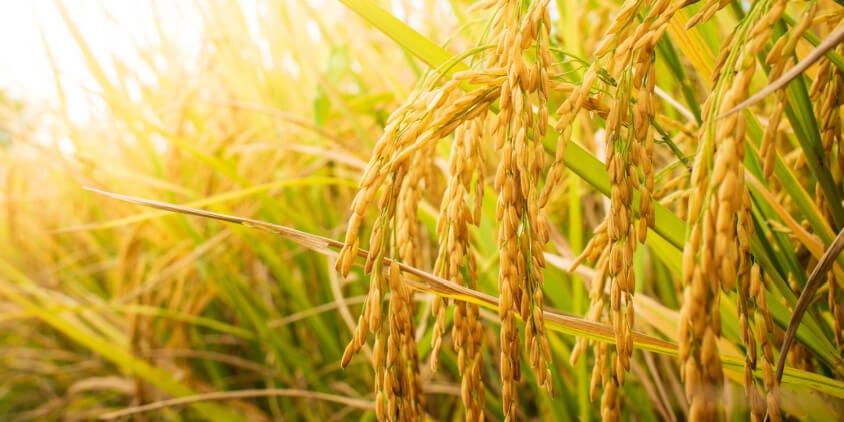
A short, well‑timed message (“Sow next week; probability of a 7‑day dry spell has dropped”) can move yields by double digits for groundnut, millet, and sorghum. The nuance is localization: advice should reflect the village’s recent rainfall pattern and historic variability — not a national average. Pair the nudge with a seed‑rate reminder and a checklist for field prep.
Farmer payoff: Fewer re‑sows, stronger early vigor, better uniformity. Partner payoff: Input suppliers see higher conversion and lower complaints; lenders see lower early‑season risk.
2) Irrigation Scheduling Where Water Flows

In the Senegal River Valley, pump runtime is money. Simple weekly schedules based on crop stage and weather (not spreadsheets) save fuel and protect yields. The key is simplicity: one screen or SMS that says “Irrigate 2× this week, 3 hours each.”
Farmer payoff: Lower fuel costs, less stress, higher water productivity. Partner payoff: Offtakers get more consistent quality; water user associations manage demand better.
3) Soil‑Health‑First Input Guidance
Small, well‑timed doses often beat large, late applications. A season plan that blends affordable micro‑doses with organic residue management protects soils while lifting margins. Build in reminders, not lectures — and link to trusted local suppliers.
Farmer payoff: Better returns per franc spent; healthier soils season to season. Partner payoff: Input suppliers earn trust through right‑sized recommendations; insurers see lower loss ratios.
4) Pest & Disease Alerts with Human Backup

Risk maps and photo triage are powerful, but human backup is non‑negotiable. A farmer who gets an alert must be able to call an agent or send a photo and receive clear, locally relevant steps within hours, not days.
Farmer payoff: Early interventions avoid cascading losses. Partner payoff: Offtakers keep quality high; insurers avoid spikes in claims.
5) Bundled Seasonal Finance & Index Insurance
Credit without viable guidance is a trap; guidance without liquidity limits adoption. Bundling small seasonal loans with parametric insurance (triggered by rainfall/heat conditions) creates resilience. Keep terms transparent, repayment tied to harvest, and grievance channels clear.
Farmer payoff: Inputs on time, protection when the season misbehaves. Partner payoff: Lenders expand portfolios with better risk signals; insurers price products that farmers actually trust.
Design Principles That Keep Solutions Honest
- One‑minute actions. Every message should enable a single, concrete step.
- Local languages & voice. Wolof, Pulaar, Serer, and French — with IVR for low‑literacy users.
- Agent‑assisted. Village‑level agents for onboarding, troubleshooting, and trust.
- No‑regret defaults. When uncertainty is high, recommend conservative actions and explain why.
- Farmer data rights. Clear consent, easy opt‑out, the ability to view/export/delete data.
- Transparent explanations. Plain‑language “why we’re recommending this.”
Partnering for Scale (Who Does What)
- Public sector & extension: align with national priorities; recruit and train agents; open key datasets; endorse simple standards for interoperability.
- Input suppliers & seed companies: guarantee supply and fair pricing; co‑fund trials; participate in loyalty programs.
- Offtakers & logistics: commit to transparent grades and pickups; share price windows in advance.
- Lenders & insurers: co‑design products using field‑level risk signals; streamline KYC with farmer groups; pay out quickly.
- NGOs & research: run randomized field validations; provide independent monitoring; build farmer feedback loops.
Two Illustrative Journeys
A) Rain‑Fed Groundnut Farmer (Kaolack)
- Week 0: Onboarded by an agent; field mapped with a phone.
- Week 2: Message: “High dry‑spell risk — wait five days.” The farmer waits; stand establishment improves.
- Week 6: Alert on pest risk; sends a leaf photo; receives IPM steps and a micro‑dose reminder.
- Week 14: Price/storage alert; joins a group pickup for better rates.
- Post‑harvest: Loan repayment deducted; loyalty credits applied for next season’s input bundle.
B) Irrigated Rice Producer (Saint‑Louis)
- Early season: Receives a simple weekly irrigation schedule; pump time drops by hours.
- Mid‑season: Nitrogen application guidance improves uniformity; a short pest alert avoids a hotspot.
- Harvest: Quality is consistent; offtaker contracts the next season at a better price.
Risks & How to De‑Risk Them
- Over‑automation: Keep humans in the loop; make escalation easy.
- Model drift under climate volatility: Re‑calibrate often; communicate uncertainty.
- Data misuse or opaque terms: Publish a farmer‑facing data policy; use consent logs; create an independent oversight panel.
- Exclusion of women/young farmers: Proactively target access with tailored onboarding, pricing, and handset strategies.
Measuring What Matters
- Agronomy: yield/ha, timely planting rates, input efficiency, water productivity.
- Economics: margin/ha, price realization, access to credit and insurance, repayment behavior.
- Resilience: income stability across seasons, loss days averted, adoption of diversification.
- Environment: residue retention, proxies for soil organic matter, emissions intensity per ton.
- Inclusion: participation of women and youth; coverage in remote areas.
How to Start (Practical 12‑Month Plan)
- Pick 2–3 districts & 2–3 crops. Keep the portfolio tight to learn fast.
- Launch two flagship services: (a) sowing‑window advisories; (b) either irrigation scheduling (where relevant) or pest alerts.
- Bundle small seasonal loans and index insurance with trusted partners and clear disclosures.
- Run a simple control vs treatment design with open reporting; commit to publishing a pilot template others can copy.
- Iterate on farmer feedback every month, not annually. Ship small improvements constantly.
What Success Looks Like by Year 2
- 50–70% of active users follow timing recommendations.
- Verified 10–20% margin uplift on treatment plots versus comparable controls.
- Lower default rates on AI‑linked loans than the portfolio average.
- Fast, trusted insurance payouts with low grievance rates.
- Partners integrating via open rails without custom rebuilds.
Build With, Not For
Senegal doesn’t need a shiny app. It needs a patient, farmer‑centered coalition that solves a few hard problems very well — and proves it with better harvests, healthier soils, and steadier incomes. If you fund, regulate, lend, aggregate, insure, or build in this space, now is the time to align pilots and publish what works. The technology is ready. The farmers are ready. Let’s meet them with solutions that respect their time and unlock their resilience.
Call to Connect
If you’re piloting similar tools in West Africa — or want to plug in as a lender, offtaker, input supplier, or research partner — reach out. Collaboration beats silos.
메타데이터
- post_id
- aab1be06aa3c
- slug
- ai-for-climate-smart-farming-in-senegal-aab1be06aa3c
- url
- https://medium.com/@dame-gueye/ai-for-climate-smart-farming-in-senegal-aab1be06aa3c
- canonical_url
- https://medium.com/@dame-gueye/ai-for-climate-smart-farming-in-senegal-aab1be06aa3c
- author_url
- https://medium.com/@dame-gueye
- status
- ok
- fetched_at
- 2026-07-28 18:11:31