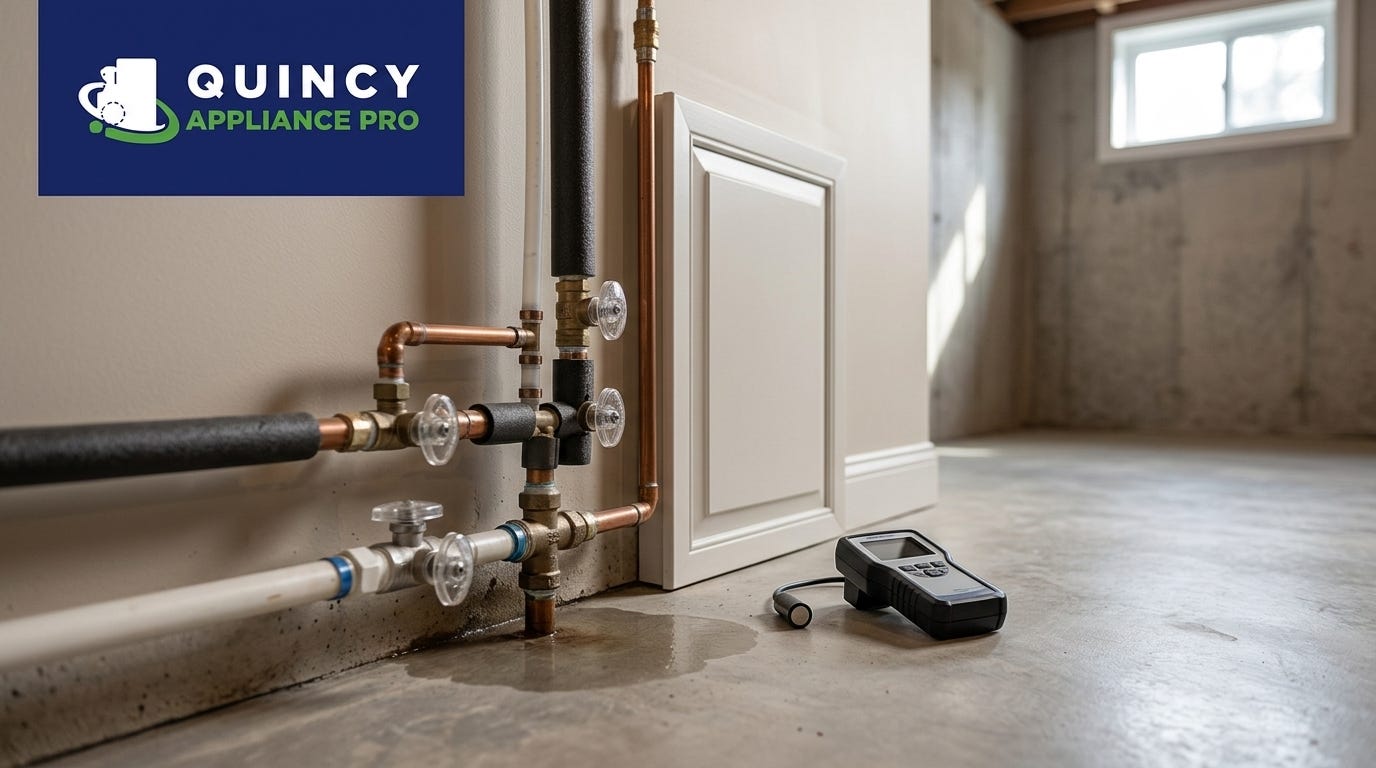
Signs Your Home Is Hiding a Leak
A slow leak rarely announces itself. It just quietly runs up your water bill until you go looking for answers.
Signs Your Home Is Hiding a Leak
A slow leak rarely announces itself. It just quietly runs up your water bill until you go looking for answers.
Most homeowners find out about a leak the hard way: a water bill that jumped for no obvious reason, a musty smell in the basement that won’t go away, or a soft spot in the drywall that gives way when you press on it. By the time any of that happens, the leak has usually been running for weeks or months.
I spend most of my time inside washing machines and refrigerators, not crawling under sinks, but the diagnostic mindset is the same no matter what’s leaking. You learn to notice the small, boring details that most people walk past every day. A refrigerator that’s working just a little too hard, a drain that’s a little slower than it used to be — those tiny signals matter. Plumbing is no different, and hidden leaks are where that habit of paying attention really pays off.
Why Hidden Leaks Are So Easy to Miss
Water doesn’t need much of an opening to cause real damage. A pinhole leak in a supply line, a slow drip behind a wall, or a cracked fitting under a slab can leak for a long time before there’s any visible sign on the surface.
According to the EPA’s WaterSense program, household leaks waste nearly 1 trillion gallons of water annually nationwide, and the average home loses thousands of gallons a year to leaks that often go unnoticed until they become expensive. That scale is easier to understand once you realize how many of those leaks start small and stay hidden — behind a wall, under a floor, or below ground where nobody’s looking.
Older homes around Newton and Chestnut Hill add another layer to this. A lot of the housing stock here has original plumbing runs, older cast iron drain lines, or additions where new pipe was tied into old. Those transition points are common places for slow leaks to develop over time.
Warning Signs Worth Taking Seriously
You don’t need special tools to catch most of these early. You just need to know what to look for and check periodically, the same way you’d glance at a dryer vent or listen for a compressor that sounds off.
Around the house:
- A water bill that climbs without a clear reason, like a new appliance or extra guests
- Warm spots on the floor, which can point to a leaking hot water line
- A faint, persistent musty or mildew smell, especially in a basement or crawl space
- Discoloration or bubbling paint on a ceiling or wall
- Flooring that feels soft, warped, or slightly uneven in one spot
- The sound of running water when every fixture in the house is off
In the basement specifically:
- Efflorescence, the white chalky residue that forms on concrete when water has been moving through it
- Puddles or damp patches that show up regardless of recent rain
- A sump pump that’s running far more often than it used to
Near fixtures:
- Water stains under a sink that reappear after you’ve wiped them away
- A toilet that rocks slightly or has water pooling at its base
- Grout or caulk in a shower that stays damp long after use
None of these guarantee a leak on their own. But if you notice two or three at once, it’s worth paying closer attention.
A Simple Test You Can Do Yourself
One of the most useful things a homeowner can do costs nothing and takes about ten minutes. Locate your water meter, make sure nothing in the house is using water — no dishwasher, no washing machine, nobody in the shower — and note the reading. Check it again after two hours. If it’s changed at all, water is moving somewhere in your system that shouldn’t be.
This is a legitimate diagnostic step recommended by water efficiency programs, and it’s a good habit to build into a seasonal maintenance routine, similar to checking a refrigerator’s door seal or cleaning a dryer vent. It won’t tell you exactly where a leak is, but it tells you whether one exists, which is often the hardest part.
When It’s Time to Call a Professional
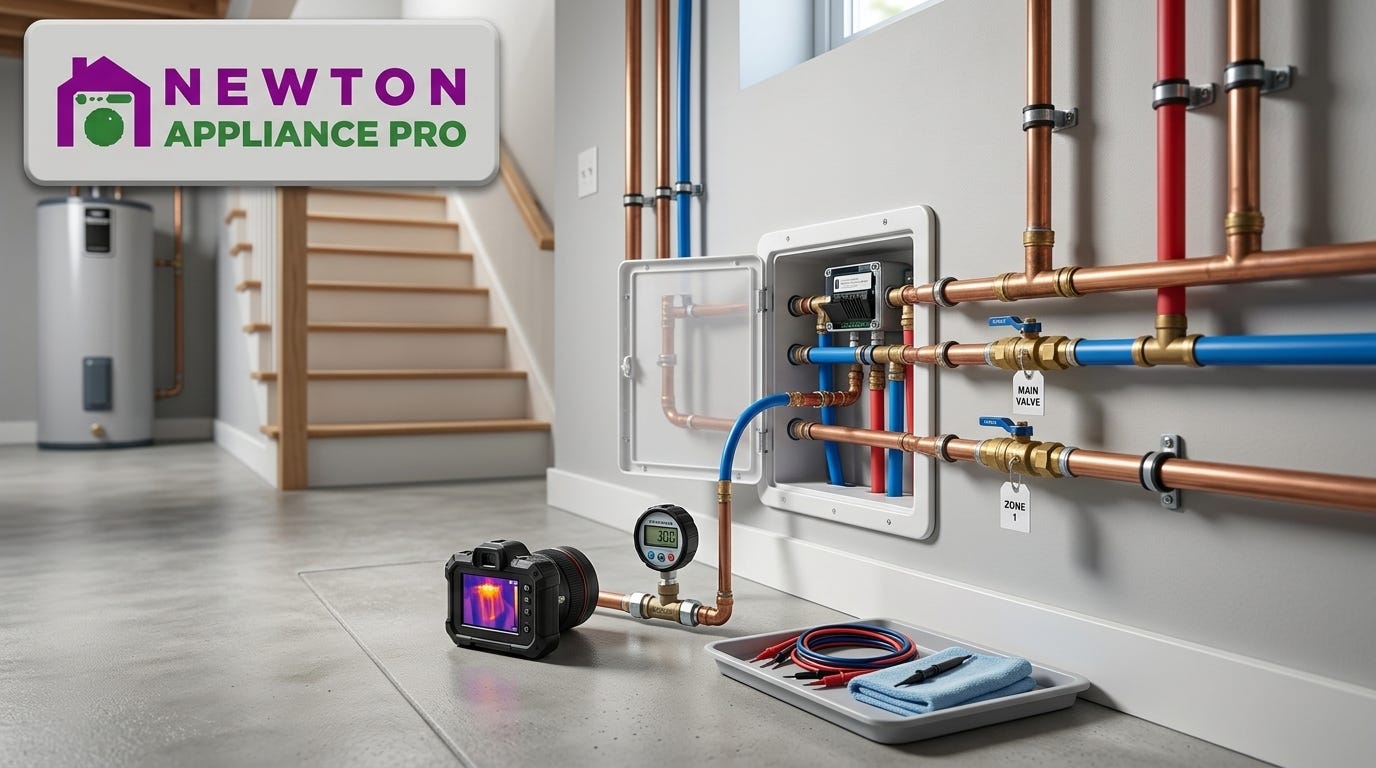
Homeowner observation is genuinely useful for catching early signs, but there’s a clear line between checking for symptoms and diagnosing the actual problem. Leaks hidden behind walls, under slabs, or below ground require equipment most households don’t have: moisture meters, thermal imaging, and camera inspection tools that can trace a pipe’s condition without tearing into a wall or floor.
If you’re seeing any of the warning signs above, or your water meter test suggests hidden water movement, that’s the point where it makes sense to bring in someone who does this daily. Businesses like Newton Appliance Pro offer plumbing services covering leak detection, drain and sewer camera inspection, and water heater maintenance for homes throughout Chestnut Hill, Newton, and the surrounding Massachusetts area, which can help pinpoint a problem before it turns into a larger repair.
A few situations should always go straight to a professional rather than a wait-and-see approach:
- Any suspected gas leak or the smell of gas near an appliance or line — leave the area and call for help immediately, don’t investigate it yourself
- Water pooling near electrical outlets or panels
- Signs of a slab leak, such as unexplained warm flooring paired with rising water bills
- Structural concerns like sagging ceilings or floors
These aren’t do-it-yourself situations, and trying to handle them without the right training or equipment can turn a manageable repair into a much bigger one.
Building a Habit Around It
The homeowners who avoid the worst plumbing surprises tend to do a few simple things consistently:
- Check the water meter test a couple of times a year, especially before and after winter
- Walk the basement periodically and actually look at the corners, not just the open floor
- Note anything that smells musty and doesn’t clear up after airing the room out
- Watch the water bill for unexplained jumps rather than just glancing at the total
- Schedule a plumbing inspection every so often, particularly in older homes, rather than waiting for a visible problem
None of this requires expertise. It just requires attention, the same kind you’d give any part of your home that quietly does its job until it doesn’t.
The Bottom Line
Hidden leaks are patient. They don’t need a dramatic burst pipe to cause damage — they just need time and a homeowner who isn’t looking. Catching the small signs early, testing your water meter periodically, and knowing when a problem has moved past DIY territory can save a lot of money and stress down the road.
If you’ve noticed persistent moisture, an unexplained rise in your water bill, or any of the warning signs above, it’s worth having a professional take a closer look before the problem grows. You can learn more about available plumbing services or reach out directly to get a hidden leak checked out properly.
메타데이터
- post_id
- aae80aa8904c
- slug
- signs-your-home-is-hiding-a-leak-aae80aa8904c
- url
- https://medium.com/@Jimy_Halpert/signs-your-home-is-hiding-a-leak-aae80aa8904c
- canonical_url
- https://medium.com/@Jimy_Halpert/signs-your-home-is-hiding-a-leak-aae80aa8904c
- author_url
- https://medium.com/@Jimy_Halpert
- status
- ok
- fetched_at
- 2026-08-12 01:36:58