Your Teeth Have ‘Tree Rings’ But Do They Survive Ancient Cremation?
A new study confirms that the cementum growth lines used in forensics survive cremation, offering precise age-at-death estimates from…
Your Teeth Have ‘Tree Rings’ But Do They Survive Ancient Cremation?
A new study confirms that the cementum growth lines used in forensics survive cremation, offering precise age-at-death estimates from burned archaeological remains.
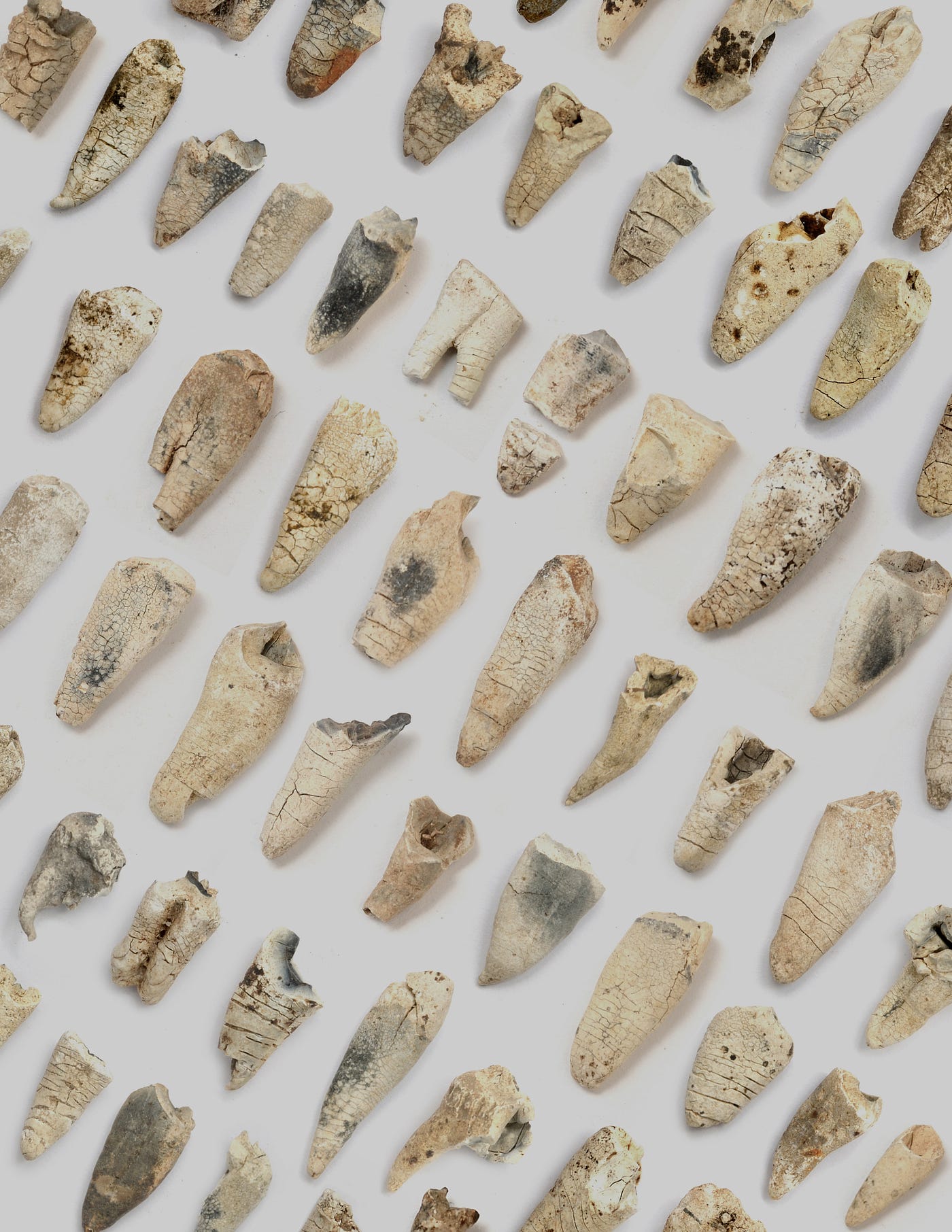
Various cremated teeth from Poland used in the study. Credit: A. Hałuszko
Apparently, this is somewhat common knowledge that teeth, or at least the roots, form growth rings, much like tree rings, which can be counted to determine age. I did not know this, and so far, whenever I have approached any of my friends, they have been just as flabbergasted as I was. Now the method has typically been applied to modern teeth, and this includes cremated modern teeth. However, what if the same method could be used on cremated archaeological teeth?
After all, cremation typically destroys the bone, leaving behind little for researchers to work with. Trying to figure out an individual’s age based on such fragmented remains is often difficult, if not impossible. But what if those growth lines on the teeth were preserved?
To determine whether this method could be used in archaeological contexts, Dr. Agata Hałuszko and her colleagues conducted a study on 62 teeth dated to Poland’s late Bronze and Early Iron Age. Not only were they able to determine whether the method could be used and replicated in other archaeological contexts, but they also made a surprising discovery they hadn’t quite expected.
Teeth and Age
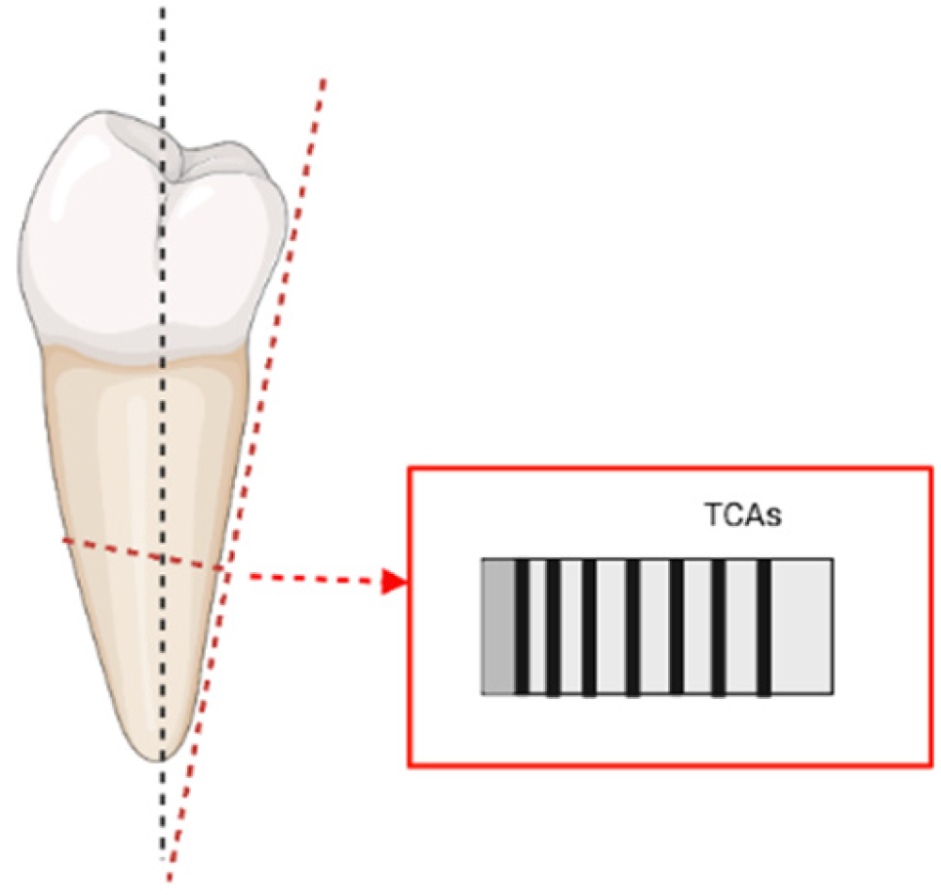
A diagram showing how thin slices are cut straight across the root so the tooth’s growth lines (TCAs/Tooth Cementum Annulations) can be seen and counted. (Based on Maat et al., made with BioRender.). Credit: Perrone et al. 2022
Age estimates can be made in a number of ways, including examining bone fusion, assessing tooth wear, and determining the number of erupted teeth and those in the process of eruption. However, each method has its limitations and often provides you with age ranges rather than the exact number of years lived.
Because teeth are so durable, often surviving even in the most extreme conditions, they are highly useful for forensic identification and age estimation. But how do you tell a person’s age based on their teeth?
Well, it works a little like counting tree rings, only a little more complicated. Your tooth is composed of different layers. The outermost layer is the enamel, below that is the dentine, and the pulp. Your roots also have something called cementum. Cementum builds up in layers around your roots as you age. By counting the alternating dark and white lines and adding the age at which that tooth erupted, you can estimate the age of an individual.
But there’s a catch: we don’t exactly know how these lines form.
‘We can observe these microscopic lines very clearly, and they appear to record biological information throughout life, but we still do not fully understand exactly how they form,’ said Dr. Hałuszko.
This neat trick has been used for decades but has so far never been tested on ancient cremated remains, except for a single study that examined 10 Pre-Roman Iron Age teeth at a site in Germany. All other studies on cremated teeth were conducted in labs, so basically, the teeth were not truly cremated but rather burned in controlled lab conditions without the associated body. Which really isn’t the same thing as proper cremations.
So, to determine whether the technique could be applied to actual cremated remains, the team needed some archaeological teeth.
‘The idea had actually been in the back of my mind for quite a long time, but until recently I simply did not have access to the kind of laboratory facilities needed…’ said Dr. Hałuszko. Since her work centers on archaeological material, ‘it felt natural to begin testing the method on cremated remains from prehistoric contexts.’
Testing Teeth
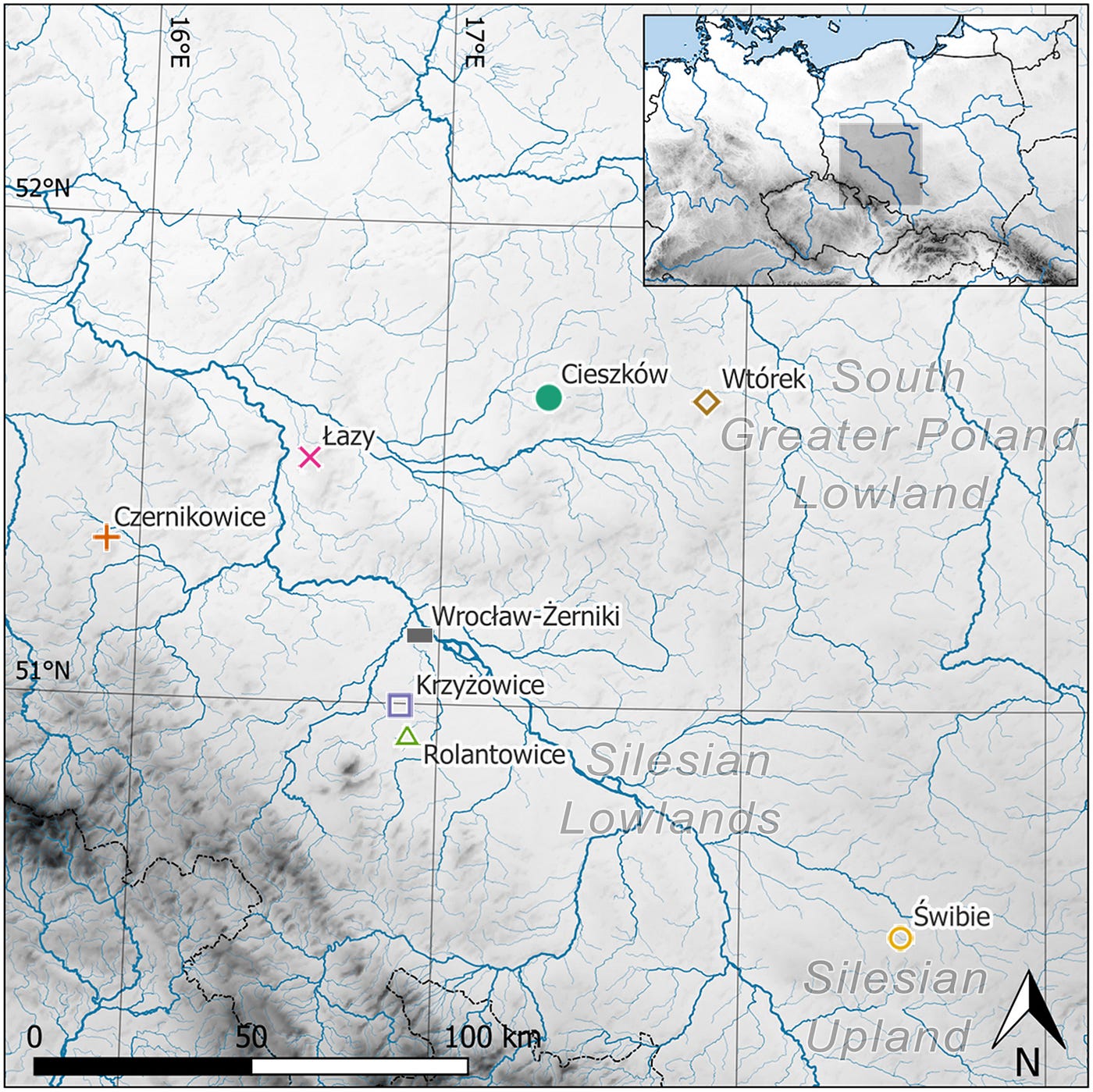
Study area and source of teeth used in study. Credit: Hałuszko et al. 2026
Teeth were sourced from 59 burials from multiple Lusatian Urnfield culture sites in Poland. The Lusatian Urnfield culture was one of the most important cultural phenomena of the Late Bronze and Early Iron Ages of central-eastern Europe and formed part of the wider European Urnfield cultures. The period spanned from around 3,300 to 2,500 years ago, and as you may have guessed, got its name from the urns in which they typically placed the cremated remains of their dead. Why cremation became so dominant is still debated.
‘Some researchers link it to profound ideological or religious changes concerning the body and the afterlife, while others have proposed more practical explanations, including responses to population growth, mobility, or even the spread of infectious diseases,’ Dr. Hałuszko explained.
It was from this culture that the researchers obtained 62 cremated teeth, which they prepared by first dehydrating the tooth roots in ethanol before embedding them in a hard plastic resin. Once this resin had hardened, the researchers could cut the tooth into ultra-thin slides until the cementum layers became visible under a microscope.
The individual cementum bands were then examined, photographed, and counted. To ensure the number of lines had been counted correctly, growth lines were counted twice, 6 months apart, by two separate observers. This ensured there was no bias between the observers and checked whether the counts provided consistent results, which, given the whole point of the study was to see whether we can use lines to estimate age, is pretty important.
Lab work, however, is not always that straightforward, and one of the teeth literally dissolved in the resin while another fragmented during cutting. To be fair, I recently had to cut some teeth for lab work using a Dremel, and well, everything was going fine until I got to a particularly ugly bovid tooth. The second my Dremel touched its surface, it burst into a million pieces. Thankfully, the sample wasn’t lost; it just scarred me to death.
So, besides observing some lab mishaps, what else did the researchers discover?
The Age of Polish Teeth
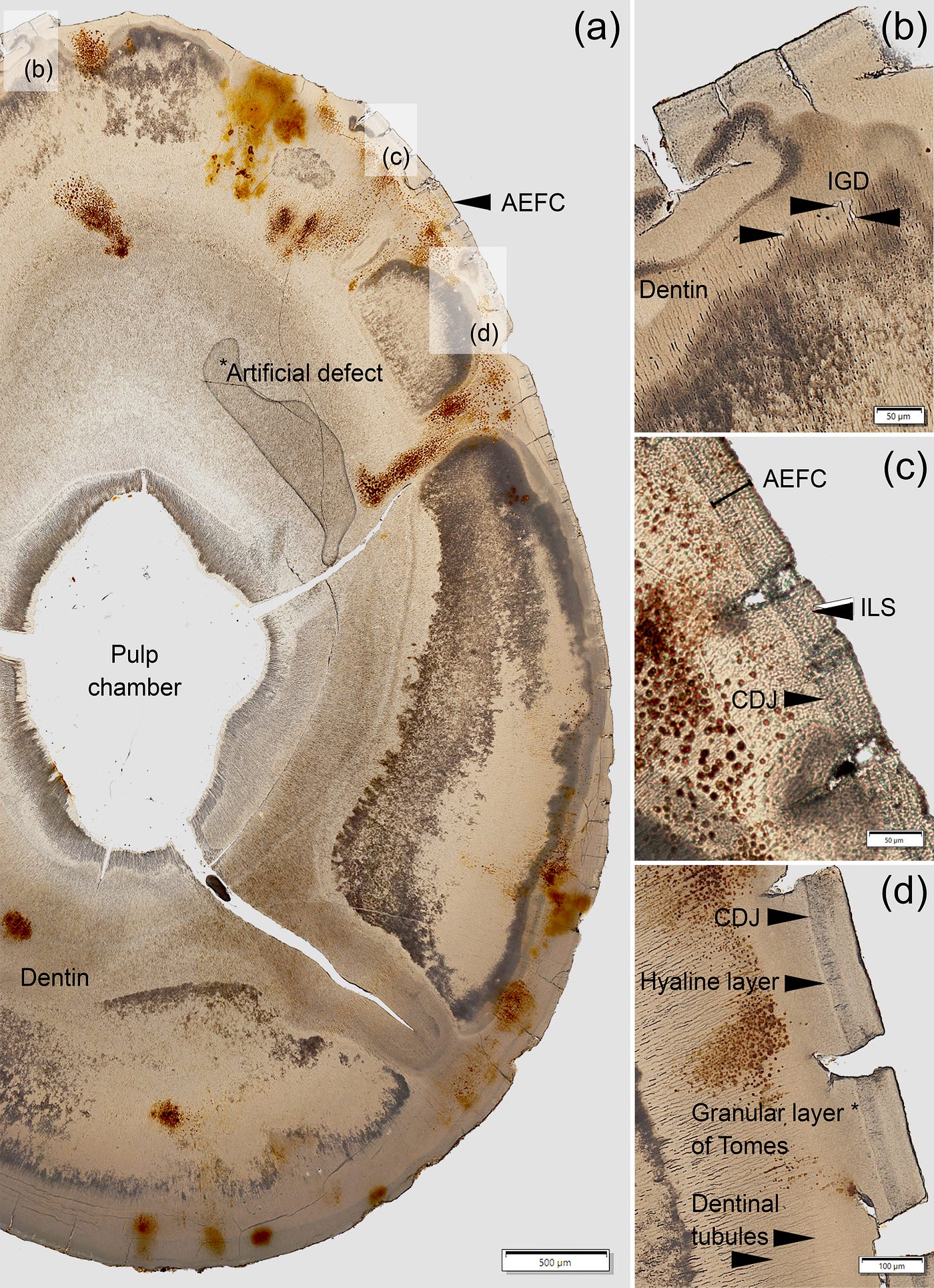
Microscope views of thin tooth root slices, showing thickness of type of tooth cementum (AEFC/acellular extrinsic fibre cementum thickness), the growth lines (ILS/Incremental Lines of Salter), the boundary where that layer meets the dentine beneath it (CDJ/Cemento-Dentinal Junction), and small irregular pockets within the dentine (IGD/Interglobular Dentine). Credit: Hałuszko et al. 2026
Counting the rings revealed that counts were typically similar, with at most 2 rings added or missed. But were these ages accurate? One problem with archaeological remains like these is that, 3000 years ago, in the Lusatian Urnfield culture, people did not record their age at death for archaeologists to find thousands of years later. But there was still a way to test their ages, at least relatively, based on other skeletal changes.
The results indicated that growth line-age estimates aligned with traditional skeletal age categories, but unlike traditional age categories, which usually give you estimates like aged 25–35, the tooth lines narrowed down those ranges.
Surprisingly, it was found that counting these tooth lines was easier in the archaeological samples than in typical lab studies. Why? Well, remember in a lab the only thing being cremated is the tooth, in a real cremation, that same tooth is protected by gum tissue and the jawbone, thus partially shielding the roots during burning.
Also of interest, two female teeth were found to have grown more lines than the number of years lived. Similar studies have also observed this phenomenon, although in some cases the total number of lines has been doubled (imagine dying at 100 years; if your tooth lines doubled over your lifetime, you would have 200 lines!). After correction, the estimated age dropped by nearly 20 years for one individual and by about 10 years for the other. As partial multiplication has been more commonly observed in animals, it is thought to be linked to oestrus (the period of heat) or winter cycles.
The results indicated that these tooth lines could indeed be used to estimate the age of cremated individuals in archaeological contexts, but they also made another discovery. Initially believed to reflect differences in width by sex, the researchers noted that the widths in their samples may have differed across populations living in different regions.
I don’t know how much you know about tree rings, but often the widths of the rings can tell you about the year in which it was formed, with wider rings signifying more favorable growing environments, while thinner ones indicate the opposite. For tooth lines, these differences in width between populations have never been observed, so the cause is unknown. It could be that different diets or local climates somehow influenced these lines. Another possibility is simply that differences in burial conditions affected the teeth after death, or that a person’s overall health did.
Not much is known about the Lusatian Urnfield diet, with most of the data derived from stable-isotope analyses of non-cremated burials. These isotopes showed that diets were mainly based on C3 plants (e.g., wheat and barley), with significant amounts of animal protein (e.g., meat, milk, cheese). While populations further east in Poland ate more C4 plants (e.g., millet). It would be interesting to see whether diet and growth line thickness can be linked; perhaps that’s a future study on the horizon.
Dr. Hałuszko and her colleagues recently set out to determine whether ancient cremated teeth still preserved growth lines and if those could be used to estimate the age of death. Figuring out the age of death is one of the fundamental goals of bioarchaeology, as it tells you about population trends, average life expectancy, and so much more. Yet cremation is inherently destructive, leaving little behind for archaeologists to study, but perhaps these tiny lines in the tooth’s cementum can provide insights otherwise lost to time.
Did you know that your tooth’s cementum has its own ‘tree rings’? I was utterly surprised, but perhaps I simply wasn’t paying attention in school when we were learning all about teeth.
Are you surprised by these findings, and do you have any of your own fun facts about teeth?
Let me know your thoughts, and if you’d like to support the countless hours I pour into researching, writing, and bringing these hidden corners of history to life, why not Buy Me A Coffee
Reference
Hałuszko, A., Tangl, S., Dobsak, T. et al. Methodological validation and inter-site analysis in Late Bronze and Early Iron Age cremations using tooth cementum annulation counts. Sci Rep (2026). https://doi.org/10.1038/s41598-026-51841-z
Kołaczek, P., Rzodkiewicz, M., Karpińska-Kołaczek, M. et al. The impact of Lusatian Urnfield and subsequent prehistoric cultures on lake and woodland ecosystems: insights from multi-proxy palaeoecological investigations at Bruszczewo, western Poland. Veget Hist Archaeobot 34, 415–437 (2025). https://doi.org/10.1007/s00334-024-01022-7
Published in Palaeopress. **Follow **to explore everything old
메타데이터
- post_id
- aaf166fac19b
- slug
- your-teeth-have-tree-rings-but-do-they-survive-ancient-cremation-aaf166fac19b
- url
- https://medium.com/palaeopress/your-teeth-have-tree-rings-but-do-they-survive-ancient-cremation-aaf166fac19b
- canonical_url
- https://medium.com/palaeopress/your-teeth-have-tree-rings-but-do-they-survive-ancient-cremation-aaf166fac19b
- author_url
- https://medium.com/@sandeeoster17
- status
- ok
- fetched_at
- 2026-06-11 10:13:20