How Bridge Cameras Got Lost in the Shuffle
And why you might want to revisit them today
How Bridge Cameras Got Lost in the Shuffle
And why you might want to revisit them today

Panasonic LUMIX FZ300 with PolarPro Shortstache filter.
When Panasonic introduced the LUMIX DMC-FZ300 in July 2015, Camera Labs wrote it was an “attractive proposition for anyone looking for a higher-end super-zoom without breaking the bank.” Calling it a super-zoom was not an exaggeration. The FZ300 featured a 25–600mm, f/2.8 Leica lens — and for less than $600.
In addition to Leica glass, the FZ300 incorporated 5-axis image stabilization, 4K video, 4K photo, a high-performance electronic viewfinder, high-speed autofocus, 1cm macro, weather sealing, and more. All of this technology was squeezed into a body that was only 5" wide and weighed a mere pound and a half. Sounds like a dream machine, right?
Yet, the FZ300 was the last camera in that series for Panasonic. What happened?
The introduction of full-frame sensor mirrorless cameras
Two years earlier, in October 2013, Sony made news by releasing the Alpha A7 and A7R. These full-frame mirrorless cameras featured high ISO performance and excellent dynamic range. Enthusiast and pro photographers were attracted to the 35mm sensor size they were comfortable with, and with all the technology bells and whistles of mirrorless bodies. The full-frame mirrorless invasion had begun.
How did this tour de force impact the likes of the Panasonic FZ300 and its bridge camera brethren? Those demure 1/2.3" 12-megapixel BSI-CMOS sensors lacked the image quality and high-ISO performance of the emerging wave of full-frame sensor wonders. Even the APS-C and Micro Four Thirds varieties felt the pressure.

It’s the small sensor in the FZ300 that makes this 600mm reach possible.
The irony was… those small sensors were the very thing that made the seemingly impossible 600mm reach of the compact FZ300 possible. To achieve that magnification with a full-frame camera would require much larger and more expensive optics.
So the cameras with small sensors that “bridged” the transition from smartphone photography to DSLRs fell out of favor. Gone, but maybe not forgotten?
Why bridge cameras make sense again
The evolution of hardware technology contributed to the demise of bridge cameras, but improvements in software may lead to their comeback. The challenging issue of image quality and pixel count from small sensors is real, no doubt. Compared to a modern full-frame sensor, a chip smaller than your fingernail just can’t compete.
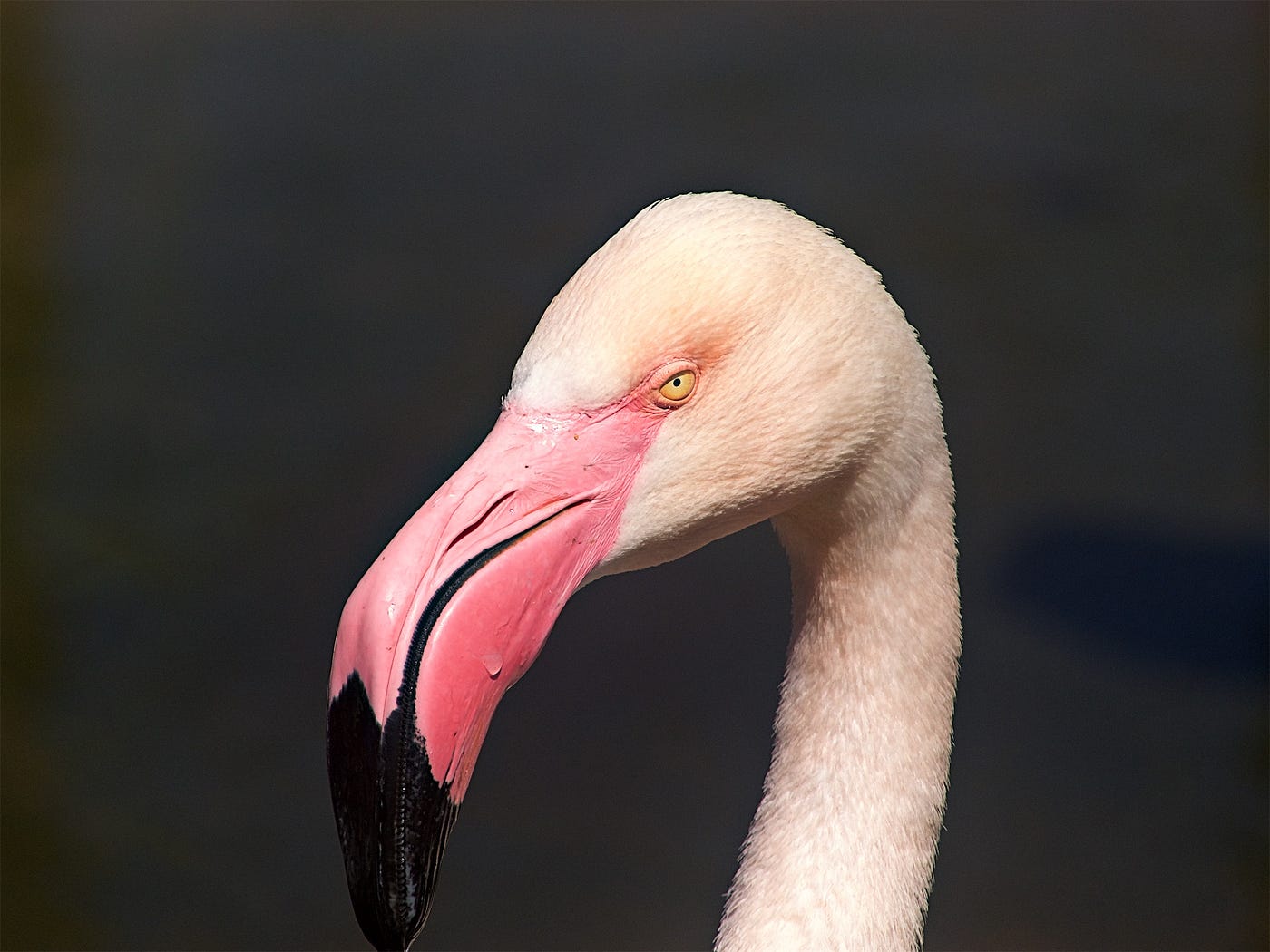
Captured with Panasonic LUMIX FZ300 — ISO 100, f/4, 1/500th of a second, 600mm with a PolarPro Shortstache diffusion+cpl filter.
Yet somehow, the images from our smartphones with their minute chips are nothing short of amazing. How is this so? The answer is that software, combined with clever merging techniques, can help compensate for the lack of chip size.
Much of this technology is available to us today through computer applications such as Lightroom, DxO PhotoLab, Photomator, Nitro, Luminar, and others. AI-powered noise reduction and resolution enhancement can bring those 12MP photos up to a reasonable size and quality. And even though those same technologies can be applied to full-frame cameras, that’s a level of detail that many of us don’t need.
Many photographers still like the idea of a compact camera with exceptional reach and reasonable image quality. Software to help those cameras compete with large sensor cameras wasn’t readily available in 2015, but it is today. So let’s see what we can do to get the most out of bridge camera pictures.
Lots of light for small sensors
A logical place to start is to understand the shooting conditions that are favorable for the FZ300 and its comrades. In short, outdoor daylight produces the best images — in fact, sometimes great images. Small sensor cameras can go toe-to-toe with the big boys on sunny days. And to be honest, those are the conditions when we most often use 400–600mm telephotos.

Captured with Panasonic LUMIX FZ300 — ISO 100, f/4, 1/250th of a second, 600mm with a PolarPro Shortstache diffusion+cpl filter.
The results can be even better with a little filtration. I like the combination of a diffuser plus a polarizer filter. My favorites are the PolarPro Everyday Shortstache and the K&F Concept 1/4 Black Diffuser plus circular polarizer. Both of these accessories seem to bring out the best in my FZ300 in sunny conditions.
Once you retreat indoors or into evening conditions, you’ll need to ditch the filters and add supplemental light, such as from a flash. Or better yet, it’s time to reach for a larger-sensor camera. I don’t push the FZ300 past ISO 800.
Shoot RAW+Jpeg
Jpegs are great for immediate sharing or for applying in-camera effects such as film simulations, but RAWs are important for squeezing as much quality as possible from the small sensors.

RAW Tuning tools in the Nitro image editor.
The RAW editing tools in DxO PhotoLab, Nitro, and Photomator are amazing for extracting detail from these RAW files while helping to control noise. In PhotoLab, there’s DxO ClearView Plus and DeepPrime. Photomator features Super Resolution and Denoise. Nitro includes RAW Tuning. And Luminar supports a variety of AI-powered adjustments.
Combining this post-production muscle with RAW files enables us to refine images from small-sensor cameras like never before.
Convert to B&W
Black-and-white images are often a great aesthetic choice for certain subjects, and they can be real problem-solvers for difficult ones. The two primary situations when I consider monochrome to “fix a shot” are when mixed lighting creates a bad color combination, or when noise is persistent and I don’t want to apply heavy reduction. Mixing a little B&W grain with existing noise can be surprisingly effective.

Captured with Panasonic LUMIX FZ300 — ISO 200, f/2.8, 1/125th of a second, 600mm with a PolarPro Shortstache diffusion+cpl filter.
Here’s an example where this adorable Lemur family was waking up from a nap. They were in the shade with backlighting and at a great distance. I extended the FZ300 to 600 mm and started snapping frames wide open at 1/125th of a second. I loved the shot, but wasn’t thrilled with the color palette or the rendering of their fur, so I opted for a B&W conversion in post.
This is a case where the reach of the FZ300 helped me get the shot, but software refined it. I needed to make some adjustments in post to compensate for its rendering of the image. Black-and-white suits these subjects beautifully.
The bottom line with bridge cameras
The software tools that are available these days have provided us with more flexible gear choices. I’m not a wildlife photographer, but there are times when I want the reach of a long lens. Being able to drop a compact bridge camera in my bag, such as the Panasonic FZ300, gives me the option to capture the shot, and great software helps me refine it and compensate for the camera’s shortcomings.
When I’m working in good light, which is most of the time, the FZ300 provides the reach I’ve wanted for years, but wasn’t willing to make the financial investment or weight sacrifice to get.
Thanks to the excellent software we have now, bridge cameras are worth a second look. They are affordable, light, and compact. And with a little understanding, you can provide beautiful images with them.
Author notes
All of the wildlife shots in this article were captured by Derrick Story with a Panasonic Lumix FZ300 bridge camera.
I provided affiliate links to the filters I used for those shots. Those links help support my research and writing.
A big thanks to the folks at Safari West in Santa Rosa, CA, for their hospitality and help with testing the FZ300. Their African wildlife preserve is open to the public.
We have more helpful photography and technology articles waiting for you on Live View, a Medium publication for visual artists.
메타데이터
- post_id
- aaf2adc97a98
- slug
- how-bridge-cameras-got-lost-in-the-shuffle-aaf2adc97a98
- url
- https://medium.com/live-view/how-bridge-cameras-got-lost-in-the-shuffle-aaf2adc97a98
- canonical_url
- https://medium.com/live-view/how-bridge-cameras-got-lost-in-the-shuffle-aaf2adc97a98
- author_url
- https://medium.com/@derrickstory
- status
- ok
- fetched_at
- 2026-07-15 13:38:05