Instagram Lied to You About Root Cellars
My grandmother had a refrigerator that was always only half full.
Instagram Lied to You About Root Cellars
My grandmother had a refrigerator that was always only half full.
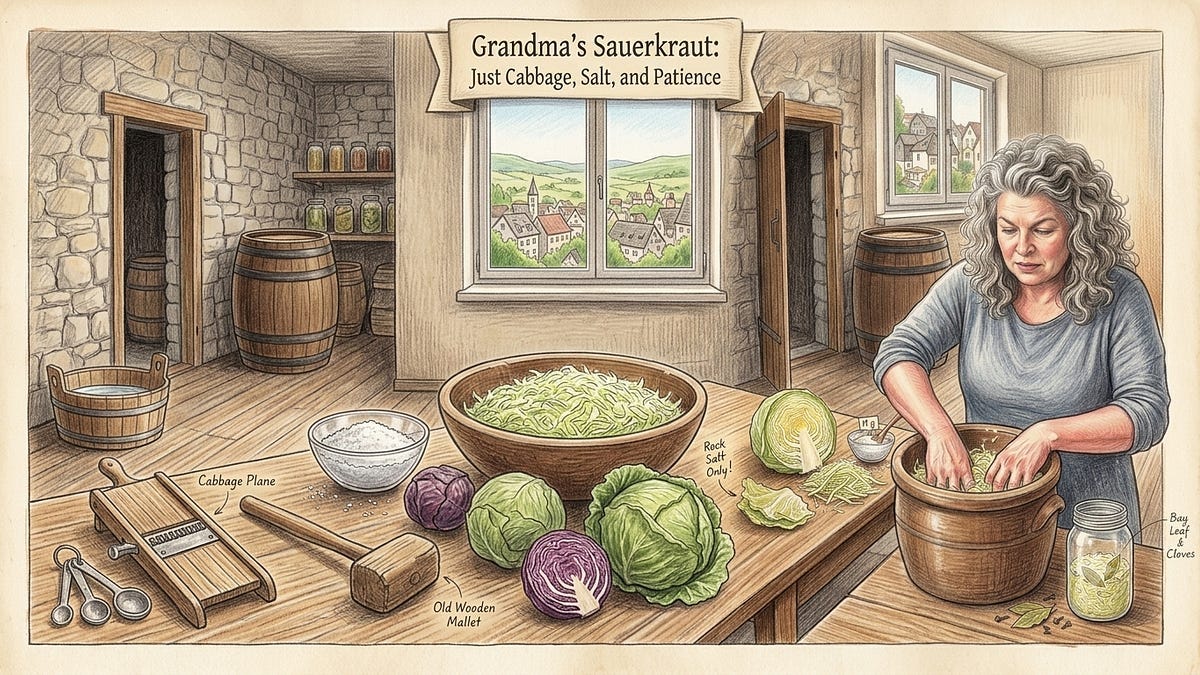
Image by Gemini
Instead: a bubbling wooden barrel in the cellar. South Tyrolean speck hanging from the ceiling in the barn. A sauerkraut barrel that smelled of such good fermentation. I stood in front of that barrel often as a child, completely fascinated by what was happening inside.
She didn’t preserve food because she read about it on a lifestyle blog. She did it because the alternative was hunger. And yes, it was 1983, not 1893. But old habits die hard when you’ve survived real food scarcity. It’s that ancient knowledge.
Not a member yet? Read This Article For Free
Root cellars are romanticized today. I see the photos in my feed: mason jars on reclaimed wood shelves, perfectly lit, with hashtags like #sustainable and #homestead underneath. Sustainable. Authentic. Beautiful.
My grandmother would have laughed until she cried.
Her cellar was a cold room, tucked behind the house against a mountain slope where the sun never reached, and the smell was a mix of damp earth, fermenting cabbage, and the sharp aroma of decades old wood into which salt and smoke had eaten their way.
The temperature had to stay between 0 and 4 degrees, the humidity near 90 percent. If it got too warm, everything sprouted. Too dry, and the vegetables shriveled faster into sad, wrinkled versions of themselves. Too damp, and mold formed everywhere, so fast you couldn’t keep up.
My grandmother knew exactly which spots were ideal for which foods, and she placed each one where it would keep best.
Wealthy families had brick cellars with ventilation systems and multiple chambers for different kinds of produce. My grandmother had the coolest corner under the house. She trusted her observation and experience.
Her potatoes lay in wooden crates full of sand, and no potato was allowed to touch another, because when one rots, it infects them all. Like dominoes, except we’re talking about your dinner.
She checked every other day and pulled out anything that felt soft or smelled off. Carrots went into damp sand. Cabbages were hung from the ceiling by their roots in the barn. Onions and garlic were braided and hung in the driest spot. She had a whole plan in her head for where everything belonged, and she had internalized all of it.
Not because she memorized it, but because she had lived it for seventy years.
Did it always work? No. At least two winters, large parts of the harvest were lost, when the winter was too wet or extremely frosty. I remember how she pulled the rotten potatoes out of the crate, shrugged, and kept working with what was left. She made no drama and no self pity. She had her own quiet certainty that you carry on with what’s still there. Also she knew exactly which neighbors had something she needed, and what she could offer in trade.
My husband once tried to cure salmon. Following a recipe from the internet. He used half the salt because it seemed like “way too much” to him. He mean, who piles kilograms of salt onto a piece of fish?
Four days later, my kitchen smelled disgusting. The salmon was gray and slimy. I will never forget it. He hadn’t understood what salt actually does. He completely underestimated the salt and it’s importance.
Traditional salting required amounts that would make any doctor today scream.
You literally pack the meat in salt until it looks like it’s been buried in snow, and then you leave it like that for weeks. Salt pulls the moisture out, and without water, bacteria can’t survive.
That’s how simple the principle is. But you need enough of it. Too little salt didn’t just mean spoiled meat. It meant danger for your family, real danger, not the kind we argue about in comment sections today.
My grandmother preserved vegetables in salt, in large stoneware crocks that stood on the cold floor of the cellar. Beans, zucchini, peppers. Everything the garden produced in summer vanished into those crocks, covered in a brine so concentrated it burned your tongue. You pull a piece out, soak it overnight, and then it seasons an entire pot of soup or stew.
In other regions, there were other methods: in Scandinavia and along the coasts of Italy, families relied on stockfish and baccalà, fish so hard and salty you had to soak them for days before they were even edible. The principle was the same: salt as insurance for survival, just a different starting material.
Smokehouses were not cute garden sheds with an Instagram worthy woodpile in front. They were serious operations that required constant attention and a genuine understanding of fire. Not just lighting it, but controlling it for hours, sometimes days.
You needed the right wood: fruitwoods for mild smoke, hardwoods for stronger flavor. Hot smoking above 65 degrees Celsius cooks the meat and preserves it at the same time. Cold smoking below 32 degrees preserves without cooking, but takes much longer, and if you make a mistake, you end up with cooked meat that won’t keep or raw meat that just tastes smoky. Neither is safe. Both are potentially dangerous.
And then the weather. A single rainy week during smoking could ruin everything: months of work, the meat from animals you’d fed all year, simply gone. My grandmother was very meticulous about this and made sure everything was done correctly. She didn’t want to waste any food. Everything was precious to her.
Sauerkraut, pickles, kimchi. These weren’t trendy health foods you pay twelve euros for at the organic market today. They were the answer to a very simple question: we have too much cabbage, winter is coming, and if we do nothing, we’ll have nothing to eat in February.
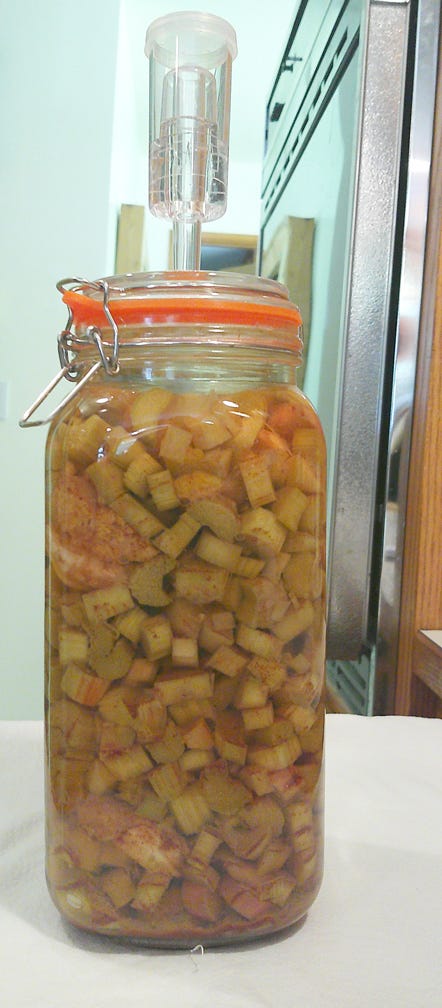
Fermentation is, at its core, controlled rotting. You’re racing to let the right bacteria win before the wrong ones kill everyone, and you do it with nothing more than the right salt concentration, a clean vessel, and the discipline to keep everything submerged under the brine. Wait a few weeks while it bubbles and smells strange. And then pray you didn’t just cultivate something toxic.
The wooden barrel in my grandmother’s cellar genuinely scared me as a child. This huge container of fermenting cabbage that made noises: it gurgled, bubbled, somehow lived. She pressed the cabbage down with a wooden lid weighed down by a stone, and every now and then she skimmed off the foam or mold from the top. Completely unfazed, as if she were pouring tea.
“Is that safe?” I asked once. I was maybe ten, standing there with wide eyes in front of that bubbling barrel.
She looked at me sideways, one eyebrow raised, as if I’d asked whether water was wet. “Hey, I’ve been eating sauerkraut from this barrel my whole life.”
Good point.
My grandmother died in 2009. By then, she’d had a proper refrigerator for three decades, and she loved it because it made so many things easier for her. But she kept going anyway, smaller scale, but still. The sauerkraut barrel. The pickled cucumbers and cherry tomatoes. The home smoked country sausage at Christmas that nobody could get right the way she did.
Oh, and the raw honey from her bees. I loved watching her spin the honey out of the comb and hand me pieces of wax dripping with honey to suck on.
“It tastes so much better, and I always know exactly what’s in it,” she said when anyone asked why she still went to all the trouble. And she was right.
Sometimes I think of her when I see “artisanal” pickles for twelve euros a jar at the farmer’s market. She would have laughed until she cried. Not out of mockery, but because what used to be sheer necessity is now a luxury product people spend money on that they don’t really have.
My grandmother swore by fermentation and said this kind of food gave her the least problems with digestion. Her favorite meal was sauerkraut with country sausages cooked right in it.
Over time, I’ve realized I love this simple meal too, sauerkraut with beef sausages. I could eat it three days in a row and still not have enough. So yummy!
Yes, these techniques always work. Of course they do. Humanity survived thousands of years with salt, smoke, and fermentation, and it wouldn’t have made it if those methods hadn’t been reliable. But they only worked because people had practice. Generational knowledge.
My grandmother knew exactly how much mold to scrape off the fermented cabbage before eating what was underneath. She knew which smell was “normal” and which one meant: “Throw it all out, now!” She knew how a potato had to feel to still be good, and how one that would infect its neighbors in three days felt.
I have no idea. I can google. But googling is not knowing. I have to try it with my own hands, smell it, touch it, and I learn best in practice.
So much I learned from my grandmother, and I took a part of her knowledge with me. It’s not just about sauerkraut. It’s about all precious food. You can’t eat your money, after all, and it’s always good to know what you can make yourself.
Everything can be overcome. With practice. With attention. With curiosity.
Take the first step. Go into your kitchen and see what’s really there.
And then decide: do you want to keep believing the cozy illusion that supermarket food is healthy (yuck, with all those additives that have no business being in food!?), or do you want to know how and where you can make yourself more independent when it comes to food?
Do you want to know what you can make yourself? Sauerkraut, fermented pickles, vinegar preserved tomatoes, and so much more.
It’s always simpler than you think. Just give it a try.
Not the cookbook version. The one she actually made, in her wooden barrel, in her cellar on the mountain slope in Northern Italy, for over seventy years.
Six steps. No special equipment. Just cabbage, salt, and your hands.
Originally published at https://bellaprepper.substack.com.
메타데이터
- post_id
- aaffeebbc772
- slug
- instagram-lied-to-you-about-root-cellars-aaffeebbc772
- url
- https://medium.com/@jumago/instagram-lied-to-you-about-root-cellars-aaffeebbc772
- canonical_url
- https://medium.com/@jumago/instagram-lied-to-you-about-root-cellars-aaffeebbc772
- author_url
- https://medium.com/@jumago
- status
- ok
- fetched_at
- 2026-07-09 13:13:48