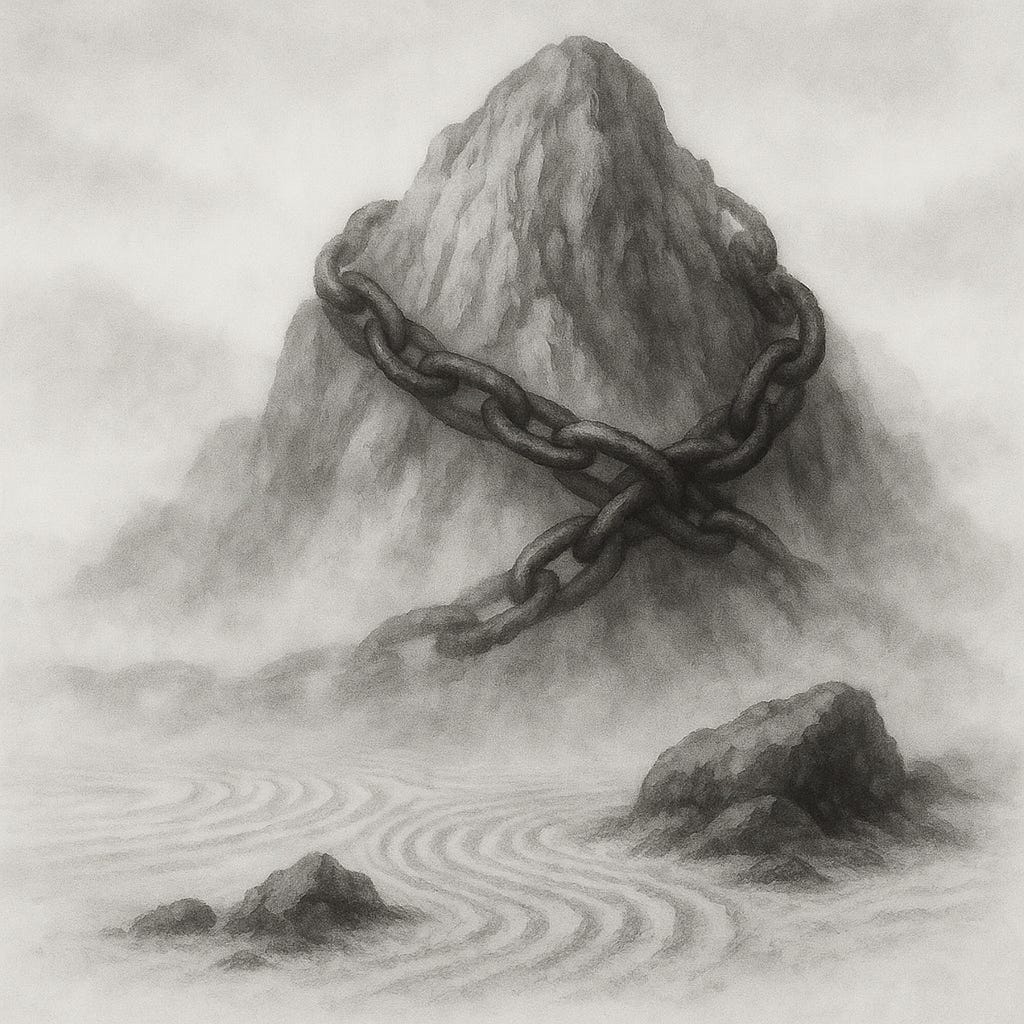
Unshaken: Prepare Your Mind, Nothing Breaks You
The Stoic Philosophy of Premeditatio Malorum
Unshaken: Prepare Your Mind, Nothing Breaks You
Life rarely announces what it’s about to throw at us. Loss, failure, rejection, illness, delay, betrayal — these experiences don’t send invitations. They arrive unannounced. The Stoics understood this truth deeply, which is why they practiced a powerful mental discipline known as premeditatio malorum — the premeditation of adversity.
Far from being pessimistic, this ancient practice was designed to build inner strength. Its purpose was simple: prepare the mind so that nothing surprises you, and nothing breaks you.
What Is Premeditatio Malorum?
Premeditatio malorum is a Stoic exercise that involves calmly imagining possible difficulties before they happen. You consider setbacks, obstacles, and losses — not to fear them, but to meet them in advance with clarity and acceptance.
Marcus Aurelius, Epictetus, and Seneca all practiced this. They knew that shock magnifies suffering. When the mind is unprepared, pain feels overwhelming. But when adversity has been mentally rehearsed, it loses its power to destabilize you.
The Stoic aim was not to eliminate emotion — but to prevent emotion from ruling reason.
Photo by JOYUMA on Unsplash
Why Surprise Is What Breaks Us
Most suffering is not caused by events themselves, but by how suddenly they shatter our expectations.
We assume:
- People will always be fair
- Plans will go as intended
- Health will remain stable
- Effort will always be rewarded
Also read — Life Doesn’t Get Easier, We Become Wiser, Smarter, and Stronger
When reality contradicts these assumptions, we don’t just experience difficulty — we experience shock.
Stoicism teaches that surprise weakens the mind. Preparation strengthens it.
When you expect challenges as part of life, they no longer feel personal or catastrophic. They become what they truly are: part of the human condition.
Explore — Apatheia: The Stoic Power of Inner Calm
Preparing the Mind Is an Act of Strength, Not Negativity
Many misunderstand premeditatio malorum as dwelling on negativity. In truth, it does the opposite.
When you imagine loss, you become more grateful for what you have. When you imagine failure, you become more resilient to it. When you imagine hardship, you reduce fear of it.
Seneca wrote that we suffer more in imagination than in reality — but he also believed imagination could be used as armor.
Preparation removes fragility.
Photo by Zac Durant on Unsplash
How Stoics Practiced Mental Preparation
The Stoics did not obsess over every possible tragedy. Their practice was deliberate, brief, and controlled.
They would ask:
- What could go wrong today?
- What is outside my control?
- If this happens, how will I respond with dignity?
Then they would remind themselves:
- I can lose possessions, but not character.
- I can be delayed, but not defeated.
- I can be challenged, but not broken — unless I allow it.
The focus was always on response, not outcome.
The Power of Separating What You Control From What You Don’t
At the heart of Stoicism lies one essential distinction
- You control your thoughts, values, and actions.
- You do not control external events, people, or outcomes.
Premeditatio malorum trains the mind to accept this truth fully.
[embed]When Life Carries You The Quiet Power of Faithmedium.com
When you anticipate external difficulties, you stop arguing with reality. You stop demanding life to be easier — and start demanding yourself to be stronger.
This shift is transformative.
Prepare Your Mind, and Fear Loses Its Grip
Fear thrives on the unknown. When adversity is unexamined, it becomes monstrous. When it is calmly faced in the mind, it shrinks.
Preparation does not make pain disappear — but it prevents panic. It does not remove sadness — but it prevents collapse.
You begin to realize:
- I have faced worse.
- I can endure this.
- This moment does not define me.
Nothing breaks a mind that has already accepted life’s uncertainty.
Also read — When Life Doesn’t Go as Planned
Applying Premeditatio Malorum in Modern Life
You don’t need to live like an ancient philosopher to practice Stoic preparation.
Each day, briefly consider:
- A plan might fail.
- A person might disappoint me.
- An inconvenience might slow me down.
- A loss might occur.
Then calmly say: If it happens, I will meet it with reason, patience, and self-respect.
This simple habit builds emotional resilience over time.
Explore — 10 Inspiring Life Lessons About Resilience
Strength Is Not Avoiding Pain — It’s Being Ready for It
Stoicism never promised a painless life. It promised a stronger inner life.
To prepare your mind is to reclaim power. To expect difficulty is to remove its sting. To accept uncertainty is to become unbreakable.
Life will still test you — but it will not surprise you. And what doesn’t surprise you no longer controls you.
Prepare your mind. Nothing breaks you.
Love this? Subscribe to — **The Growth Journey**, to stay inspired with dose of motivation, guidance, life lessons & food for thought.
Your Support Will Go a Long Way. 🩵 You can donate here.
Hi there,
I hope you are having a wonderful day!😊 I have a small favour to ask. I’m aiming to continue sharing useful content here and reach a wider audience through subscription and paid advertising on various platforms. I can’t do it without your amazing support.
You can donate here:❤️
Please click the notification button to be the first to be notified when I publish new content and leave some feedback? Your positive reviews and comments would mean a lot to me and help me achieve my goal.
Thank you so much for your kindness, generosity, and support.🙏🏽
Warm regards,
메타데이터
- post_id
- ab10fe3deeef
- slug
- unshaken-prepare-your-mind-nothing-breaks-you-ab10fe3deeef
- url
- https://medium.com/@adeolaodubajo/unshaken-prepare-your-mind-nothing-breaks-you-ab10fe3deeef
- canonical_url
- https://medium.com/@adeolaodubajo/unshaken-prepare-your-mind-nothing-breaks-you-ab10fe3deeef
- author_url
- https://medium.com/@adeolaodubajo
- status
- ok
- fetched_at
- 2026-08-09 21:32:42