Maria G Part 1
A Modern Greek Tragedy
Maria G Part 1
A Modern Greek Tragedy
Christmas is approaching. Many of you will be celebrating Christmas with your family and friends. Others will be missing loved ones, who departed. What is special about Christmas is the memories it brings.
Christmas will always remind me of my late mother and how cruelly she was treated by those institutions which are in place to provide care for the elderly and vulnerable adults. It was Christmas that my mother and me were forcefully separated. You cannot imagine the pain, the loneliness the emotional and physical suffering caused to my mother and me.
It is inconceivable that government institutions in a civilized country are failing in their duties to protect vulnerable adults from victimisation and institutional abuse.
This is the story of “rough justice” against a vulnerable adult, under the Court of Protection and under “Best Interests Proceedings” and how a private Nursing Home and a NHS institution abused their powers, outside public scrutiny or accountability. This story is about the loving relationship between a daughter and her mother, separated cruelly by Court orders, and the mother’s tragic death.
Maria was born in Cyprus in 1922 and was raised there until her late teens in traditional Greek Cypriot culture and the Greek Orthodox Church. She married Michael, a Greek Cypriot, and they had two children: a daughter, Electra, and then a son, Andreas.
Maria was intelligent, strong in body and mind, caring, entrepreneurial, resilient, dynamic, and outgoing.
Maria’s husband, abandoned Maria when she arrived in the UK to join him. Electra and Andreas, 2 and 3 years old, were left behind with their grandparents in Cyprus, as Maria, a single mother could not support them from her low wages.
Maria was fortunate enough to find employment as a dress-maker in her brother’s factory. Her weekly pay packet contained £10. Maria’s role was to supervise staff, and training and assisting newly hired workers.
Nevertheless, despite her low wage, Maria saved enough to put down a deposit to buy her own house.
Andreas joined her in 1965. He was involved in a car accident which left him with a neck and spine injury. He was physically disabled.
Electra joined Maria in 1973. Electra was initially employed as a Secondary French teacher and, subsequently, as a Lecturer at a University.
In 1985, Maria’s brother decided to close the factory business leaving her without a job. There was no redundancy payment and her brother had sold the house in Cyprus, on his own account, without any of the proceeds being passed to Maria.
In March 2005, Maria suffered a sudden stroke and had to be hospitalized. The stroke left her with speech loss and paralysis down her right side, effectively incapacitating her. She was under the specialist care of Dr M, at Whittington Hospital, where she was successfully treated, and discharged at the end of August 2005. She was entered in a private nursing home, with 24 hour nursing care.
After four weeks in the nursing home she contracted infections and sent back to hospital. Electra, concerned about the quality of her mother’s care, voiced her concerns in a letter of complaint. This action of complaining backfired against mother and her daughter. The very fact that her daughter voiced legitimate concerns about her mother’s care, complicated her relationship with the Nursing Home.
Maria was without speech and all she could do to express her needs was crying and grinding her teeth. Maria desperately needed her daughter’s unconditional love and protection, sadly this was denied to her until her death.
Following Electra’s complaint the nursing staff forbade Electra from entering her mother’s room. Sitting in the corridor, hearing her mother’s desperate cries of distress, Electra was prevented from comforting her mother. Nurses threatened her with expulsion from the nursing home if she entered her mother’s room.
In October 2005, Electra was summoned to attend a meeting with the Home Manager and an NHS nurse. She was accused of distressing her mother. They then produced a schedule of visits drastically restricting and controlling contact with her mother. The NHS nurse threatened Electra with court orders and to place her mother in the local hospital, if she refused to comply with their orders.
Electra was then asked to sign a restricted schedule of contact. She refused to sign and asked to get legal advice. She was subsequently escorted out of the Home and denied access to Maria indefinitely. Subsequently, Electra received threatening letters from Solicitors as well as from Social Services with a new version of the contract to sign, or else face a permanent ban from seeing her mother.
When Electra sought legal advice on whether or not to sign the contract restricting her visiting rights, the lawyer went to great length to re-write the contract on even worse terms.
The lawyer said: “don’t try to pick up a fight with Social Services as the courts always take their side! Your mother is under the care of NHS and you must keep your head down because they will crush you, break your resistance, by denying you access to your mother and there is nothing you can do about it!”
A Romanian nurse, did indeed threaten Electra while excluding her from her mother’s room saying: “you know what I can do to you, you will never see your mother again. She will be sent to St. A Hospital and die there!”
Despite the fact that Electra signed the restrictive contract, against her will, nursing staff continued to exclude her from Maria’s room, claiming that she was causing Maria’s distress. Maria was aphasic and could not speak, but that does not mean that Maria did not have her own feelings and an understandable wish to have the comfort of her daughter.
From an article:
“While individuals with aphasia may experience difficulties with language, their capacity to understand and recognize emotions is generally intact, though it may be impacted by the specific type and severity of their aphasia. Research suggests that while aphasia can interfere with word retrieval, especially when prompted by emotionally charged words or images, patients can still recognize and understand emotions in others.”
In mid-October 2005, Electra was banned indefinitely from the Home for two months. In December 2005, she made an ex parte application to the High Court to allow contact with her mother at the Nursing Home. There was a High Court Injunction ordering the Home to allow her access to her mother. On Christmas Eve, 2005, Electra, accompanied by a friend, went to the Home, with the High Court Injunction permission to visit her mother. She found Maria soiled with diarrhoea. It was 1.00 pm. The room was very smelly, the curtains still closed and Maria lying in bed, still in her summer nightdress. The daughter was not even allowed to bring her mother clean warm clothes.
Maria’s eyes sparkled with hope and happiness, upon seeing her daughter, who called the nurse to clean her mother. The nurse bullied her out of the room and called the police, accusing Electra of physical assault on Maria, because of inspecting her mother and finding her soiled.
The police arrived but had little interest in the spurious accusation; they made an initial investigation and concluded, completely reasonably and correctly, that it was simply a case of a daughter concerned about her mother’s care and her welfare. Sadly, this conclusion did not help Maria’s contact with her daughter, who was once more bullied by a nurse, and continued to be denied access.
The attached photo sheds some light on Maria’s emotions, whilst seeing Electra pushed out of the room. Maria could not speak but she did understand what was happening. She was waving her good arm as a sign to say “Come back! Don’t leave me!”
Mother and daughter were, yet again, forcefully and unwillingly, separated from each other, despite the injunction being in place. The Human Right of an incapacitated vulnerable Mother to her Family was grossly violated, simply because she could not express her wish in speech.
Maria was in no position to defend her Human Right to Family (HRA Article 7), trapped by her disability and loss of speech.
When Electra attended the Court for Directions in February 2006, she was shocked to hear, for the first time, the untrue allegations made against her by the Nursing Home, to obtain the Court Order against her.
Electra had no fair opportunity to defend herself against the allegations, after an argument between the barristers resulted in her having no representation and, therefore, no effective right to defend herself against the charges, which seemed to have appeared from nowhere.
A draconian court order, drafted by the Home Solicitors was issued against Electra on 10 February 2006, which allowed her to have a supervised visit once a week. The Court Order forbade the daughter from sitting next to her mother, and kept her no closer than 18 inches from her mother’s face. Electra was not even allowed by the Social Worker to even kiss her mother.
Maria was left to suffer in silence, alone, whilst Electra fought to protect her vulnerable, elderly, and frail mother from abuse and neglect.
The untrue and malicious allegations still remain unsubstantiated, but cannot now be redressed or appealed, so the knowledge of injustice remains with Electra.
Several court orders were issued over a period of two and a half years limiting Electra’s contact with her mother and preventing her from approaching her mother to check if she was soiled, fed or hydrated, or given medication. The medical records were always removed from Maria’s bed so that Electra was unaware of details of her mother’s care and thus preventing any further complaints.
Electra sought legal advice on how to overturn the draconian court order. She felt that this was a miscarriage of justice and did not serve her mother’s best interests. Sadly, she was advised that she had no chance of overturning the court order. Electra could only have a supervised visit under the following terms and conditions:
“Contact to take place between the hours of 8 am and 3 pm on week days excluding Bank Holidays and in any event to be agreed in advance with the social worker by submitting a list of three preferred times for each week in the succeeding 4 weeks to the social worker.”
Electra was working full-time as a Lecturer. The court order was limiting contact with her mother during her working hours (Monday to Friday), so she had to make a difficult choice between seeing her mother and fulfilling her teaching duties. She chose to maintain contact with her incapacitated mother but lost her job and subsequently her chances to further her academic career. In addition to this, Electra, now without any earnings, spent a vast amount — her life’s savings — on legal fees, to maintain contact with her mother.
Maria had a very rich brother and a sister, in London. Neither of them showed any interest in Maria and what was happening to her and her daughter. They simply distanced themselves from Maria, were generally apathetic, and provided no support for her, or Electra, on many occasions ignoring her cries for help, putting the phone down. Electra also sought help and emotional support from the Greek Cypriot Community in North London, but, again she was denied and was told: “Go back to your family to help you”.
When Electra was banned from visiting her mother, she would call on her aunt, as well as her first cousin, to ask for their support and to visit her mother. Their response was unsympathetic and cruel:
“You went to University we did not! You sort it out! We can’t help!”
In the space of two years, three draconian court orders were obtained by the Home, with penal notices attached to them. Electra could end up in prison, if she disobeyed the court orders.
Between 29 December 2005 and June 2007, there were four strategy Meetings under POVA (Protection of Vulnerable Adults) chaired by the Home Management, Social Services and NHS Adult Care. The focus of these strategy Meetings was not about Maria’s welfare needs but to decide a strategy to get rid of Electra, either by means of a custodial sentence, or by using compulsory powers under the Mental Health Act. The minutes also mention how Electra’s disabled brother could apply for an injunction against his sister to stop her from visiting her mother. From reading these minutes, it is clear that the aim was not to protect Maria, but to eliminate Electra from her care, through labelling her a perpetrator, and a threat, to her mother, despite no evidence for this.
As previously mentioned, a police investigation, on 2 January 2006, concluded that the daughter simply checked her mother’s pads because she was soiled.
In June 2007, Maria became ill and was transferred to Hospital. She was treated with antibiotics and intravenous fluids and recovered fully. In the meantime, the Nursing Home Manager decided to expel Maria from the Nursing Home.
POVA (Protection of Vulnerable Adults) Strategy Minutes of 11 July 2006, states plainly: “either the PCT and/or Social Services must fund a court case to bar Electra from the premises, or the Nursing Home must evict Maria.”
On 18 June 2007, Maria was evicted from the Nursing Home. Social Services and the Nursing Home did not pursue the Best Interests proceedings. Electra’s attempts to protect her mother’s best interests through the courts were overturned. The Official Solicitor was undecided how to proceed with the case. Nevertheless, Electra was removed as her mother’s litigation friend, and the OS (Official Solicitor) made her mother a defendant against her own daughter.
Despite Electra’s tireless efforts to find Maria an alternative placement in a Home, none of the Nursing Homes visited were approved by the Primary Care Trust. The reason seems to be that the untrue and malicious allegations, still unsubstantiated, were taken at face value by the Primary Care Trust’s Strategic Team in Care of the Elderly. These were disseminated widely by mouth not only by the Nursing Home, but also by the same public authority having a duty of care of Maria. The allegations were presented as sharing information about the patient and thus effectively sabotaging Maria’s subsequent placement, through no fault of hers, in an alternative Nursing Home that could care for her needs.
On 18 June 2007, the NHS authority obtained yet another Court Order, limiting Electra’s contact with her mother. This time she could not even enter her mother’s room, unless she was supervised by a Healthcare worker when and if he/she was free.
Electra was forbidden from involving herself in her mother’s care, or treatment, or interfering with any aspect of her vulnerable mother’s personal care by means of draconian court orders attached with penal notice. This was clearly intended to prevent Electra from voicing any concerns about her mother’s care, or treatment. The draconian court order against Electra, served, as an instrument of power and control over what happens to Maria.
On 20 June 2007, Maria was discharged from Chase Farm Hospital and was transferred by ambulance, to Hospital A. Electra went to Chase Farm Hospital to visit her mother, before her transfer, to Hospital A, and packed her personal belongings, getting on to the ambulance to comfort her mother, who was extremely distressed. Two ambulance male crew pushed Electra out, from the ambulance, and away from her mother, saying, “You cannot accompany your mother! Get off the ambulance! We have been instructed by phone by the Head of Strategic Commissioning (TPCT) to remove you.” Was this action benevolent paternalism (looking after Maria’s welfare) or simply cruelty to Maria a vulnerable stroke paralysed aphasic patient?
Maria was left crying, distressed and in despair.
Electra left in tears. She was told by nurse A that she could not visit her mother until three days time. When she was finally allowed to visit her mother at Hospital A, a male stroke patient in a wheelchair approached her, saying: “Your mother has been crying for help since she arrived here. They are not looking after her!” Then he was ordered to move away.
Electra waited for an hour, sitting outside her mother’s room, for a healthcare worker to take her in. When she finally entered the room, the healthcare worker removed the nursing records from her mother’s bed and said:
“I am not allowed to talk to you about your mother. Don’t ask me any questions.”
Maria’s face was very pale, her lips dried; she looked exhausted. Everyone in the ward could hear Maria’s desperate cries for help, especially at night. Maria could not express her mental and physical agony. The medical records stated: “Maria cried all night, grinding her teeth!”
Maria was left to the care of untrained, uncaring healthcare staff, lacking compassion and simple human understanding.
Maria was not allocated a social worker. She was not accorded any protection, neither by the High Court, nor by the Primary Care Trust.. Maria was left suffering in silence, soiled, thirsty, hungry, on a wet bed, to cry all night, every night. This was happening in a civilised country, with so many laws to protect vulnerable adults, like Maria, but none that actually helped her.
There were no safeguards, no checks and balances to ensure that Maria was treated like a human being, in the final stages of her life. Maria was treated inhumanely. Maria’s close family her brother and sister distanced themselves and remained apathetic. Maria was victimised — no capacity to tell anyone her mental and physical agony, whilst the Primary Care Trust, continued with the strictest draconian court orders, restricting Electra from having regular contact with her mother, but also withdrawing information about her mother’s health.
Those with a moral obligation to act in Maria’s best interests, did not do so. She should have been cared for under the Mental Capacity Act. In practice, both Maria and Electra became the victims of those making the important decisions, and the decisions that they made, and the subsequent consequences to both of them.
It is never in the public interest to allow public or private institutions with welfare and moral obligations towards vulnerable adults, like Maria, to abuse existing laws for their own benefit, but to accord true protection to those who need it, due to their mental or physical incapacity. According to Section 4 of the Mental Capacity Act: “Any act done, or decision made under this Act, on behalf of a person who lacks capacity must be done or made in his/her best interests.”
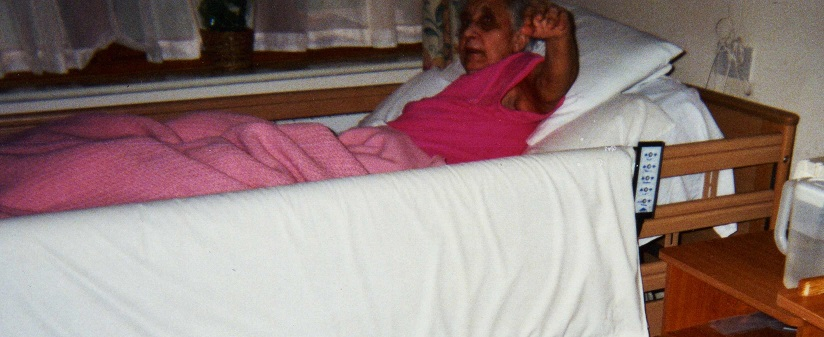
Maria, unable to speak, trying to call her daughter back.
메타데이터
- post_id
- ab1d7f7986a9
- slug
- maria-g-part-1-ab1d7f7986a9
- url
- https://medium.com/@cleowraybury/maria-g-part-1-ab1d7f7986a9
- canonical_url
- https://medium.com/@cleowraybury/maria-g-part-1-ab1d7f7986a9
- author_url
- https://medium.com/@cleowraybury
- status
- ok
- fetched_at
- 2026-06-13 16:00:06