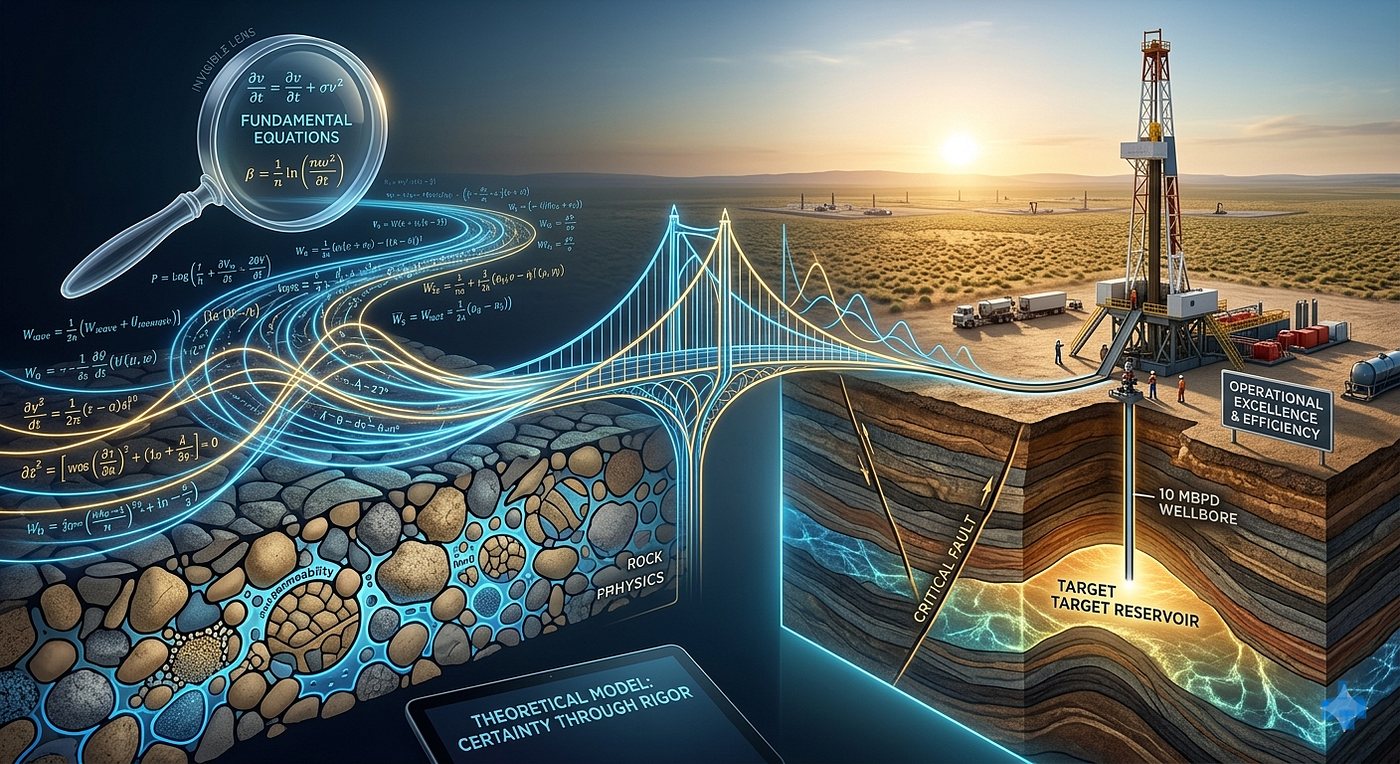
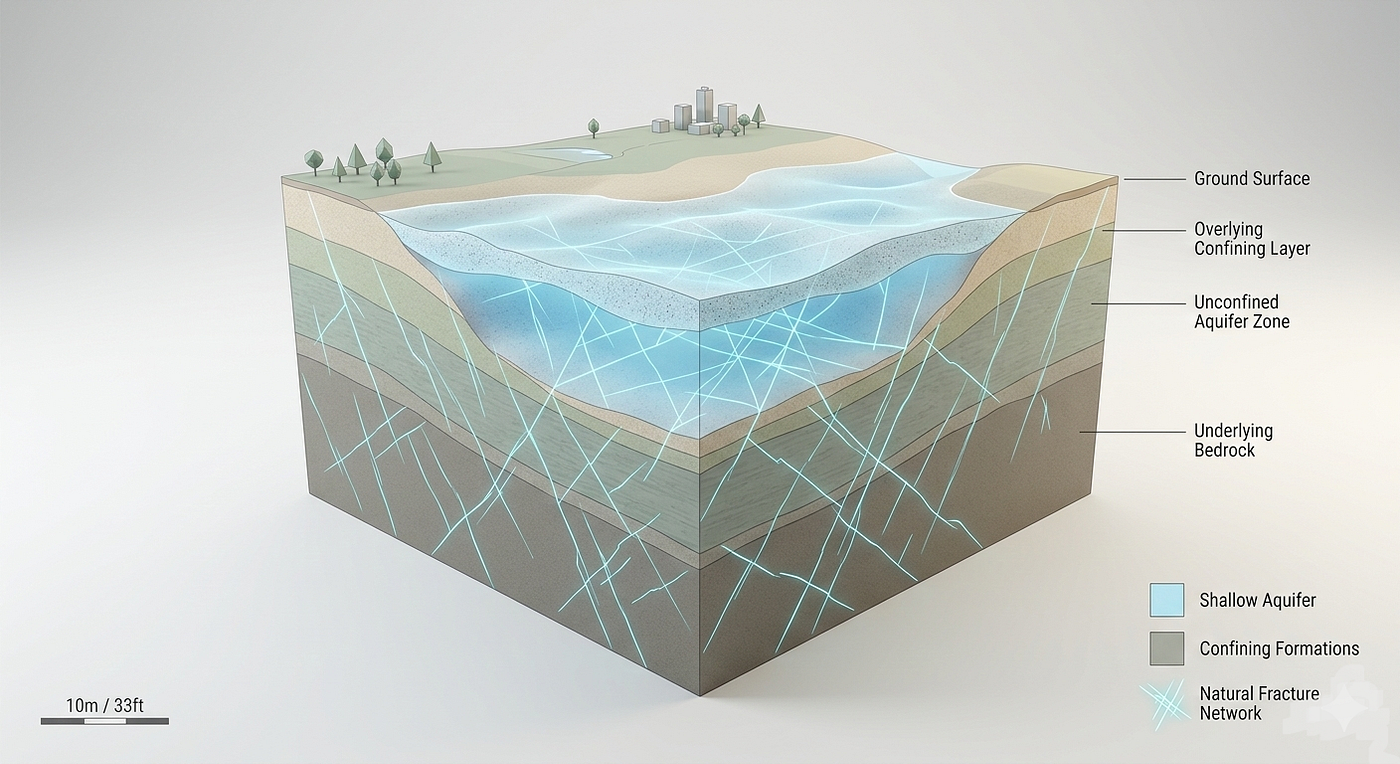
The Hidden Foundation of Energy Security: Why Subsurface Insight Still Shapes America’s Future
Energy conversations in the United States often center on technology, policy, and market trends. But beneath all of that — literally — lies…
The Hidden Foundation of Energy Security: Why Subsurface Insight Still Shapes America’s Future
Energy conversations in the United States often center on technology, policy, and market trends. But beneath all of that — literally — lies a quieter reality: the subsurface still determines the success, safety, and resilience of the nation’s energy system.
It’s easy to talk about electrification, renewables, or new storage technologies. It’s harder to discuss the geological structures, fracture networks, and uncertainties that determine whether those projects actually work. Yet every pipeline, geothermal well, CO₂ injection site, and mature field depends on our understanding of the rocks beneath.
And the truth is simple: energy security begins underground, long before it becomes infrastructure.
A System Facing New Pressures
The U.S. energy system is being stretched in ways we haven’t seen before. Aging infrastructure, extreme weather, and shifting global dynamics are forcing the country to rethink how it manages risk.
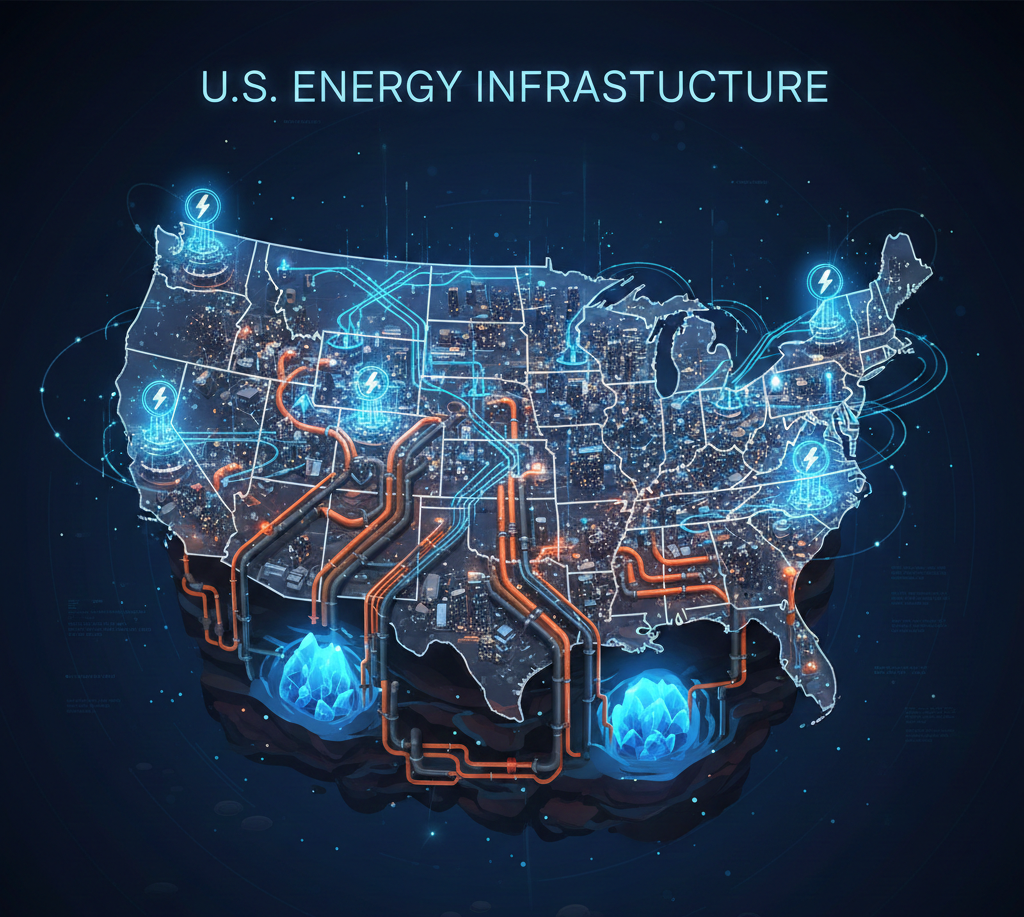
U.S. energy infrastructure overview, illustrating the interconnected network of pipelines, storage systems, and power grids that depend on subsurface stability and informed geological decision‑making.
But risk doesn’t start at the surface. It starts in the subsurface.
Whether it’s a drilling hazard, a fault that compromises storage integrity, or a fracture network that changes fluid flow, the geological environment sets the boundaries of what is possible — and what is safe.
This is why applied geoscience remains essential, even as the energy landscape evolves.
The Subsurface as a Strategic Asset
Tools such as curvature analysis, discontinuity mapping, and frequency‑based imaging are often treated as technical details. In reality, they are decision‑making tools that help operators avoid costly mistakes and improve long‑term reliability.
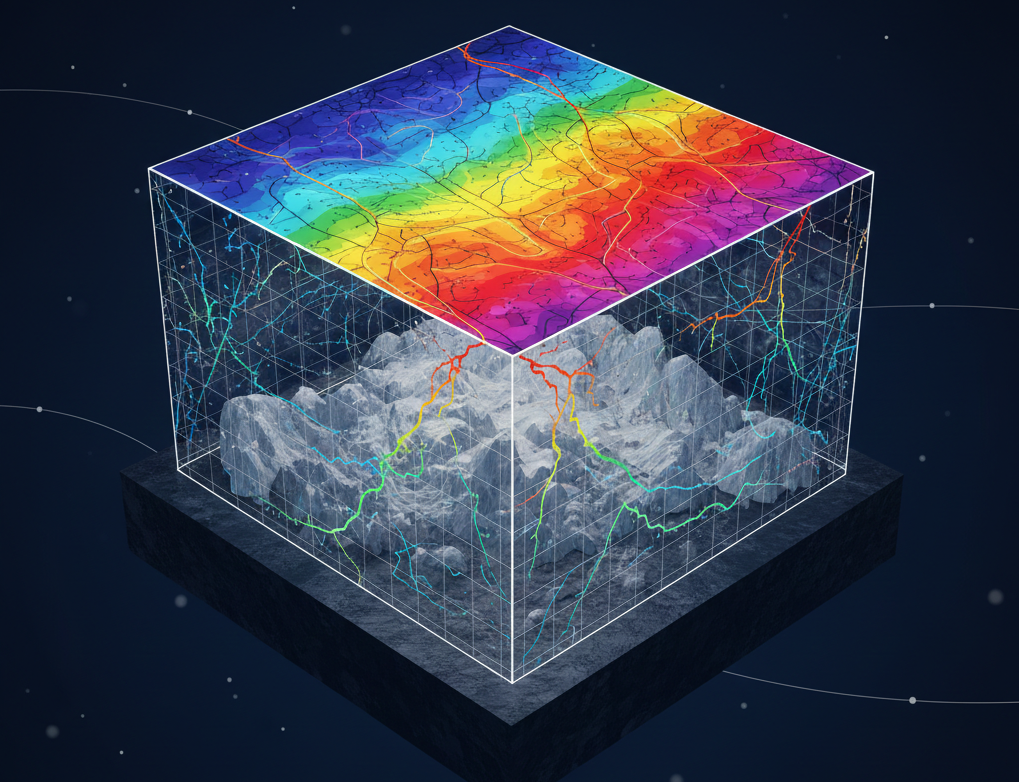
Conceptual 3D model illustrating subsurface complexity, highlighting the structural features and geological variability that influence risk assessment and operational decision‑making.
They answer questions that matter at a national scale:
- Where are the structural weaknesses that could compromise a project?
- How do fractures influence injection or production behavior?
- What zones pose operational risk?
- How can we design wells or storage strategies that are safer and more efficient?
These are not academic questions. They are the foundation of energy security.
Technology Helps, but Interpretation Leads
The industry is embracing automation and AI at an unprecedented pace. These tools are powerful, but they also create a new challenge: outputs without context.
A map generated in seconds is still only as reliable as the person interpreting it.

Conceptual illustration showing the integration of human expertise and AI‑driven tools, emphasizing how explainable AI supports more reliable and informed decision‑making in subsurface analysis.
Geology is not a pattern‑matching exercise. It requires judgment, experience, and the ability to integrate multiple disciplines. Automated tools can accelerate workflows, but they cannot replace the human ability to understand why something looks the way it does — or what it means for operations.
In a world that moves fast, interpretation is what keeps decisions grounded.
Why This Matters for the United States
As the U.S. expands geothermal projects, evaluates hydrogen storage, scales up carbon capture, and revitalizes mature fields, the need for subsurface clarity becomes even more urgent.
Every one of these initiatives depends on:
- understanding fault behavior,
- predicting fracture connectivity,
- assessing seal integrity,
- and reducing uncertainty before operations begin.
The more ambitious the energy transition becomes, the more essential it is to understand the geological realities that support it.
A Reflection: The Future Still Depends on What We Cannot See
Working in geoscience teaches you humility. No matter how advanced our tools become, the subsurface will always hold some degree of uncertainty. But it also teaches you something else: clarity is possible when we ask the right questions and interpret the right signals.
Energy security is not just about technology or policy. It is about understanding the foundations on which everything else is built.
And in that sense, the future of American energy will always depend on how well we understand the world beneath our feet.
— — — — — — — — — — — — — — — — — — — — — — — — — — — — — — — — — — — — —
If you are interested in the methodologies behind subsurface risk reduction—or if this perspective resonates with your experience in the energy sector—I welcome the opportunity to connect. Subsurface science is a collective effort, and the more we share insights, the stronger our energy future becomes.
You can explore more of my technical work and publications here:
Google Scholar: https://scholar.google.com/citationshl=en&user=2qHpt5sAAAAJ
메타데이터
- post_id
- ab317628a124
- slug
- the-hidden-foundation-of-energy-security-why-subsurface-insight-still-shapes-americas-future-ab317628a124
- url
- https://medium.com/@rlizcar/the-hidden-foundation-of-energy-security-why-subsurface-insight-still-shapes-americas-future-ab317628a124
- canonical_url
- https://medium.com/@rlizcar/the-hidden-foundation-of-energy-security-why-subsurface-insight-still-shapes-americas-future-ab317628a124
- author_url
- https://medium.com/@rlizcar
- status
- ok
- fetched_at
- 2026-06-15 20:49:13