Why Your Portfolio Is Actually a Map of Global Conflict
From the Strait of Hormuz to the Silicon Shield, here is how the world’s power struggles are dictating your financial future
Why Your Portfolio Is Actually a Map of Global Conflict
From the Strait of Hormuz to the Silicon Shield, here is how the world’s power struggles are dictating your financial future

Photo by Maxim Hopman on Unsplash
If you’re not a Medium member. ***Click here***!
Most investors believe they are buying into companies, balance sheets, and quarterly earnings. They spend hours poreing over price-to-earnings ratios and revenue growth, convinced that the stock market is a giant, rational calculator.
In reality, the stock market is a mood ring for the planet. It does not just track how many iPhones are sold or how much coffee Starbucks moves in a day.
Instead, it acts as a high-speed nervous system that reacts to every tremor in the global balance of power. If you want to know why your index fund suddenly dropped two percent on a Tuesday morning, the answer usually lies in a palace, a border fortification, or a narrow shipping lane 5000 miles away.
The Energy Tax Nobody Votes On
The most direct link between geopolitics and your wallet is the price of a barrel of oil. Energy is the literal fuel of global commerce. When tensions rise in the Middle East or Eastern Europe, the market does not just see a political disagreement. It sees a massive, unavoidable tax hike on every company in the world.
Think about it this way:
Almost every product you own was manufactured using electricity and delivered via a truck, ship, or plane. When a geopolitical flashpoint threatens a major oil producer, the cost of “everything” goes up instantly.
This eats into corporate profits, which causes stock prices to tumble. The market is not necessarily reacting to the violence itself; it is reacting to the fact that it just became more expensive for Amazon to deliver a package or for Delta to fly a route.
The Silicon Shield and the Fragility of Tech
We often talk about “the cloud” as if it were a mystical, untouchable realm. In truth, the modern stock market is built on a very physical, very vulnerable foundation of sand and glass.
Take Taiwan, for instance.
A single company there, TSMC, produces the vast majority of the world’s most advanced semiconductors. These chips are the brains inside your phone, your car, and the AI servers driving the current tech boom.
Geopolitically, this is known as the Silicon Shield. If a conflict were to erupt in the Taiwan Strait, the global supply of chips would evaporate overnight. In that scenario, even the most successful tech giants would see their production lines freeze.
This is why a single diplomatic speech in Asia can send the Nasdaq into a tailspin. The market is pricing in the risk that our digital world could lose its physical engine.
The Search for the Panic Room
When the world gets scary, money gets quiet.
There is a specific psychological phenomenon in the markets called the flight to quality. When a revolution happens or a treaty is torn up, investors do not look for the next hot startup. They look for a bunker.
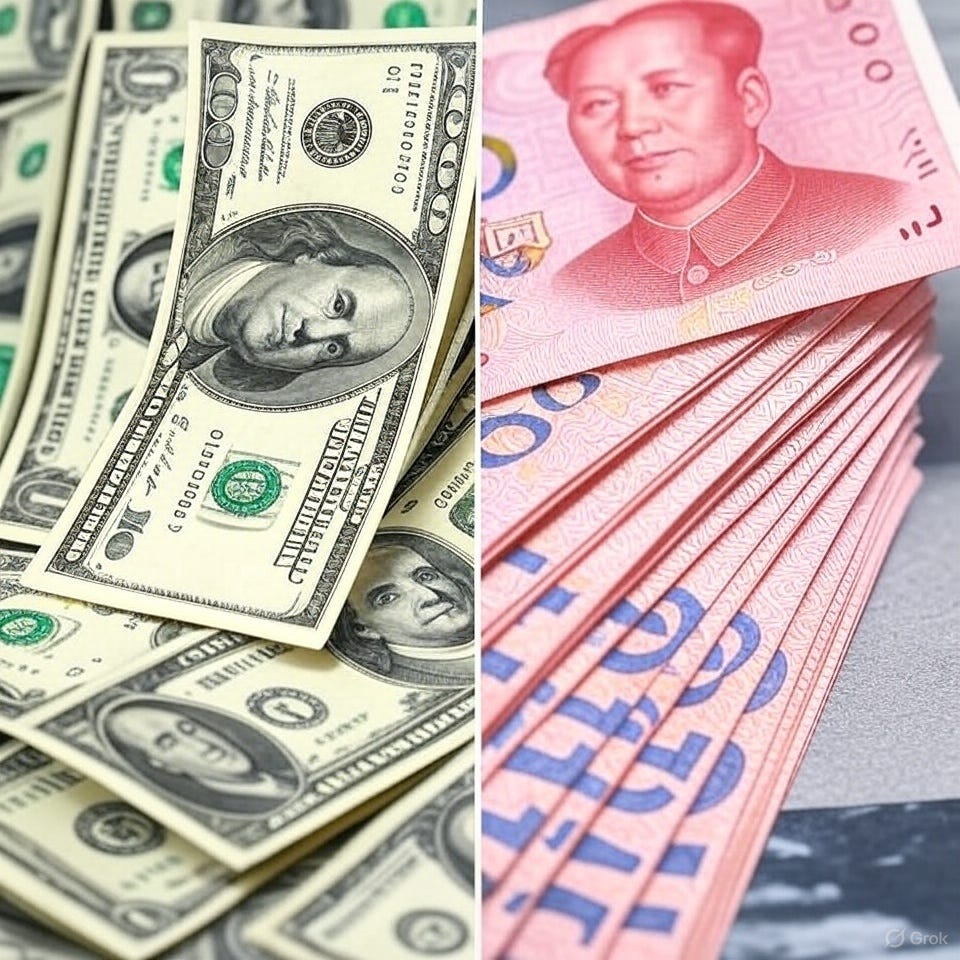
This bunker is usually the U.S. Dollar or gold. During geopolitical shocks, the dollar tends to strengthen because it is backed by the world’s largest military and a stable legal system. However, this creates a strange paradox for stock investors.
A very strong dollar actually makes it harder for American companies like Microsoft or Coca-Cola to sell products abroad. It makes their goods more expensive for foreign buyers and reduces the value of the money they earn overseas. Paradoxically, global instability can hurt American stocks simply by making the American currency too successful.
The Merchants of Defense
Not everyone loses when the global map gets redrawn. There is a cynical but factual side to the market where certain sectors thrive on friction. Aerospace and defense stocks often act as a hedge against global chaos. When nations feel insecure, they buy fighter jets, missile defense systems, and cybersecurity software.
Investors often watch these stocks as a leading indicator of how serious a conflict might become. If defense contractors are hitting all-time highs while the rest of the market is sliding, it tells you that the “smart money” expects the tension to last for years rather than weeks. It is a grim reality of the financial world: peace is good for consumer spending, but uncertainty is a catalyst for the military-industrial complex.
Climbing the Wall of Worry
If geopolitics is so dangerous, why does the stock market eventually go up?
There is an old saying on Wall Street that the market likes to climb a wall of worry. Historically, the initial shock of a geopolitical event, whether it is a war, a coup, or a trade embargo, causes a sharp, sudden dip.
This is the uncertainty phase, where nobody knows the rules of the new world. But once the dust settles and the new reality is understood, corporations do what they do best: they adapt. They find new suppliers, they move their factories, and they adjust their prices.
The stock market is a reflection of human resilience and the relentless pursuit of profit. While a border dispute might change the map, it rarely stops the world from spinning.
The most successful investors are not those who ignore geopolitics, but those who understand that while politics is about power, the market is about the long-term reality of survival. They stay hooked into the news, but they keep their eyes on the horizon.
메타데이터
- post_id
- ab596c40d77e
- slug
- why-your-portfolio-is-actually-a-map-of-global-conflict-ab596c40d77e
- url
- https://medium.com/the-geopolitical-economist/why-your-portfolio-is-actually-a-map-of-global-conflict-ab596c40d77e
- canonical_url
- https://medium.com/the-geopolitical-economist/why-your-portfolio-is-actually-a-map-of-global-conflict-ab596c40d77e
- author_url
- https://medium.com/@nouraellm
- status
- ok
- fetched_at
- 2026-08-21 19:41:05