Corporate Security Can’t Detect What They Can’t See: The Pico W Underground
Why a six-dollar microcontroller is quietly becoming one of the most interesting pieces of hardware in modern security research.
Corporate Security Can’t Detect What They Can’t See: The Pico W Underground
Why a six-dollar microcontroller is quietly becoming one of the most interesting pieces of hardware in modern security research.
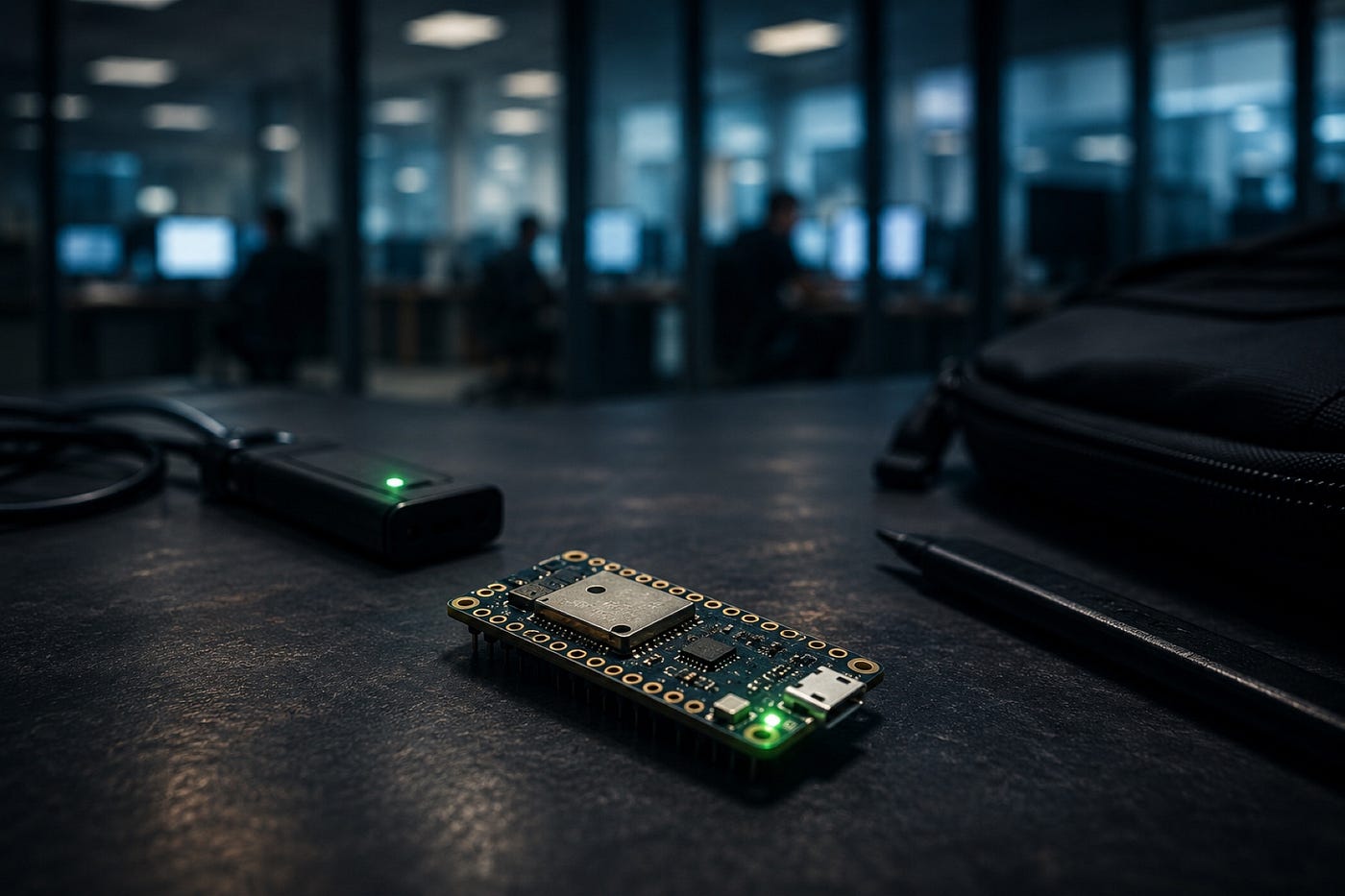
A few years ago, if you wanted to carry meaningful computing power into the field, your options were fairly obvious. You carried a laptop. Maybe a ruggedized tablet. Maybe a backpack filled with specialized equipment if your work involved radio analysis or hardware research. The tools looked like tools. They occupied space. People noticed them.
Walk through a modern office today and that assumption begins to fall apart.
Technology has become so deeply embedded into everyday environments that most people have stopped paying attention to it. Beneath conference room tables sit tangled nests of HDMI adapters and power bricks. Printers have become small ecosystems of cables and accessory devices. Smart televisions hang on walls beside wireless presentation systems. Charging stations appear in lobbies, break rooms, waiting areas, and employee workspaces.
The average employee spends eight hours a day surrounded by electronics they couldn’t identify if asked.
That reality creates an unusual situation for defenders.
Corporate security programs have become incredibly good at monitoring known assets. They can tell you which laptops are overdue for patches, which users logged in from unusual locations, and which servers are communicating with suspicious infrastructure. Entire industries have emerged around collecting telemetry from managed devices and turning it into dashboards, alerts, and risk scores.
But every visibility platform shares the same fundamental limitation.
It can only monitor things it knows exist.
That blind spot has become increasingly important as cheap embedded hardware continues to improve. Few devices illustrate this better than the Raspberry Pi Pico W.
The Device That Doesn’t Look Like a Security Tool
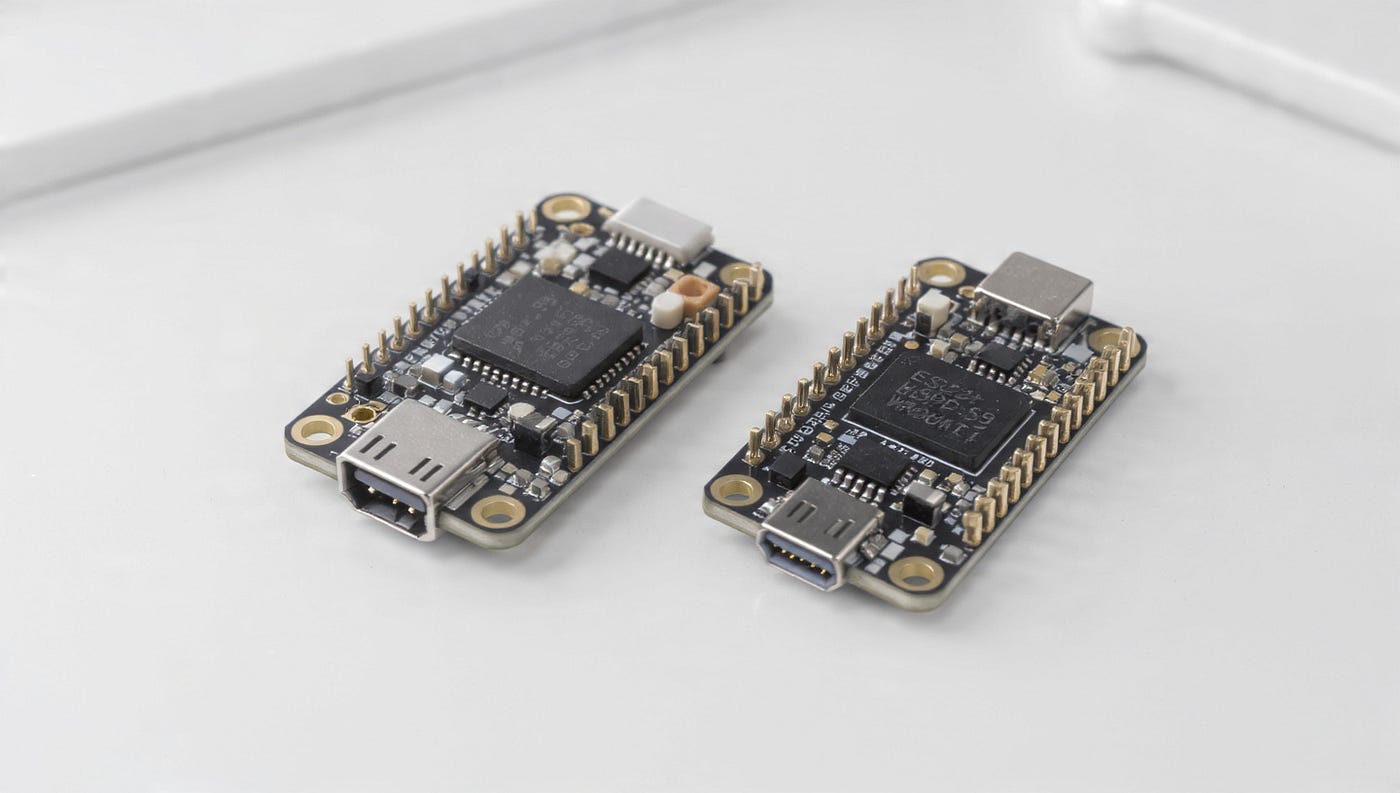
The Pico W is almost comically unremarkable.
It lacks the aggressive branding often associated with penetration testing hardware. It doesn’t resemble a corporate laptop. It doesn’t look like expensive networking equipment. Most people who encounter one assume it’s part of a hobby electronics project or an educational kit.
In many ways, that’s exactly what it is.
The board was designed to be accessible. Students use it. Makers use it. Engineers use it. Hobbyists use it. Entire communities have grown around finding creative applications for these tiny microcontrollers because they’re affordable, flexible, and surprisingly capable for their size.
What makes the Pico W interesting from a security perspective is not some mythical hidden capability. It isn’t secretly a supercomputer. It doesn’t magically bypass security controls.
Its value comes from something far more mundane.
People overlook it.
Security discussions often focus on technical sophistication, yet a significant amount of real-world security revolves around human attention. People notice things that fit their expectations. They filter out things that appear ordinary. After enough exposure, entire categories of objects become part of the background scenery.
The Pico W benefits enormously from this phenomenon.
Placed next to a collection of USB chargers, development boards, and miscellaneous electronics, it rarely attracts the kind of scrutiny that a laptop or networking appliance would receive. It occupies an unusual category where it is both capable and visually uninteresting.
That combination turns out to be surprisingly powerful.
Modern Security Is Built Around Assumptions
Spend enough time around enterprise security environments and you’ll start noticing something strange.
Many security programs are not actually designed around discovering unknown devices. They’re designed around managing known ones.
Asset inventories track enrolled systems. Endpoint protection platforms monitor approved computers. Mobile device management solutions focus on registered phones and tablets. Security operations centers investigate events generated by infrastructure that already exists within their monitoring ecosystem.
This approach makes sense. Organizations need structure. They need inventories. They need predictable systems that can be measured and secured.
The problem emerges when visibility begins to be mistaken for completeness.
An organization may have exceptional awareness of every managed laptop while simultaneously possessing very little awareness of everything outside that inventory. The larger the organization becomes, the easier it is for these blind spots to develop.
Large companies often occupy multiple buildings across multiple locations. Contractors come and go. Temporary workspaces appear. Conference rooms get upgraded. New equipment arrives. Old equipment never gets removed from inventory. Small technology decisions accumulate over years until the physical environment becomes far more complicated than any diagram suggests.
The result is a landscape filled with assumptions.
And assumptions have always been fertile ground for security research.
The Economics of Tiny Hardware
One reason the Pico W has gained so much attention among hardware enthusiasts is simple economics.
A decade or two ago, experimenting with embedded systems often required meaningful investment. Hardware projects could become expensive quickly, especially if mistakes were involved. Researchers had to think carefully before deploying equipment into environments where it might be damaged, lost, or discarded.
Today the economics are radically different.
When a microcontroller costs less than a fast-food meal, experimentation becomes easier. People become more willing to build strange prototypes. Researchers can test ideas that would have felt wasteful years ago. Hobbyists can purchase multiple boards and dedicate each one to a different project.
This shift has produced a kind of creative explosion.
Entire communities now exist around pocket-sized devices. Some focus on automation. Others focus on environmental monitoring. Others explore wireless research, embedded development, hardware design, and defensive security applications.
The common thread is accessibility.
Cheap hardware lowers the barrier to curiosity.
Once curiosity enters the equation, innovation tends to follow.
The Rise of Disposable Infrastructure
One of the more interesting trends in modern security culture is the emergence of disposable infrastructure.
Historically, infrastructure implied permanence. Servers stayed online for years. Hardware deployments were planned carefully. Systems accumulated importance over time.
The modern landscape increasingly rewards flexibility instead.
Cloud resources can be created and destroyed in minutes. Virtual machines appear and disappear constantly. Containers exist for hours rather than months. Temporary infrastructure has become normal.
The same mindset is beginning to influence hardware.
When devices are inexpensive enough, people stop treating them as precious objects. They become tools. Components. Building blocks.
Researchers can dedicate a device to a specific purpose, gather information, collect observations, and then move on to something else entirely. The hardware becomes part of a workflow rather than a long-term investment.
That shift in thinking has quietly transformed how many people approach experimentation.
The Pico W happens to fit perfectly into that model.
Why Physical Security Still Matters
Cybersecurity discussions often gravitate toward remote attacks because remote attacks are easier to scale and easier to discuss online. They create dramatic headlines and compelling stories.
Yet physical environments continue to matter.
Every network exists somewhere.
Every organization occupies physical space.
Every employee moves through real buildings filled with real equipment.
Walk through enough offices and you’ll notice how heavily security conversations emphasize digital controls while treating the physical environment as a separate problem. In practice, the two are deeply connected.
Access badges, visitor policies, equipment inventories, building layouts, conference rooms, storage closets, and maintenance procedures all influence the security posture of an organization. The strongest technical controls in the world cannot fully compensate for a poor understanding of the environment they are protecting.
This is one reason embedded hardware remains relevant.
Not because it is inherently dangerous.
Because it forces defenders to think beyond dashboards.
The Future of Pocket-Sized Security Research
The broader trend extends far beyond the Pico W itself.
Hardware continues to become smaller, cheaper, and more capable. Wireless technologies continue to evolve. Battery technology improves. Embedded development becomes more accessible every year.
As these trends converge, we should expect portable research platforms to become increasingly common.
Students will build them.
Hobbyists will build them.
Researchers will build them.
Security professionals will build them.
Some projects will be practical. Some will be strange. Some will be brilliant. Many will fail spectacularly.
That experimentation is healthy.
Security has always advanced because curious people explored the edges of what existing assumptions allowed.
The Pico W is simply one more reminder that the future of computing isn’t always hiding inside massive data centers or expensive enterprise platforms. Sometimes it’s sitting quietly on a desk, small enough to disappear beneath a charging cable, waiting for someone curious enough to wonder what else it might be capable of.
Further Reading
If this article sparked your interest in pocket-sized hardware, wireless research, and portable security tooling, I’ve put together two resources that go much deeper into the practical side of these platforms.
PICOPWN: 50 Raspberry Pi Pico W Projects for Pocket-Sized Penetration Testing
A collection of Pico W projects focused on wireless research, automation, embedded tooling, and portable security experimentation.
POCKET RECON: 75 ESP32 Projects for Wireless Research and Portable Hacking
A larger field guide exploring ESP32-based projects for reconnaissance, wireless experimentation, portable development, and hardware research.
The future of security research is getting smaller. The assumptions surrounding it are not.
메타데이터
- post_id
- ab6f267f2b85
- slug
- corporate-security-cant-detect-what-they-can-t-see-the-pico-w-underground-ab6f267f2b85
- url
- https://medium.com/@neonmaxima/corporate-security-cant-detect-what-they-can-t-see-the-pico-w-underground-ab6f267f2b85
- canonical_url
- https://medium.com/@neonmaxima/corporate-security-cant-detect-what-they-can-t-see-the-pico-w-underground-ab6f267f2b85
- author_url
- https://medium.com/@neonmaxima
- status
- ok
- fetched_at
- 2026-06-17 08:20:12