No-Snooze Discipline: The Morning Reset That Transforms Your Day
I used to hit snooze five times every morning before dragging myself out of bed, convinced that those extra ten-minute naps would “help.”…
No-Snooze Discipline: The Morning Reset That Transforms Your Day
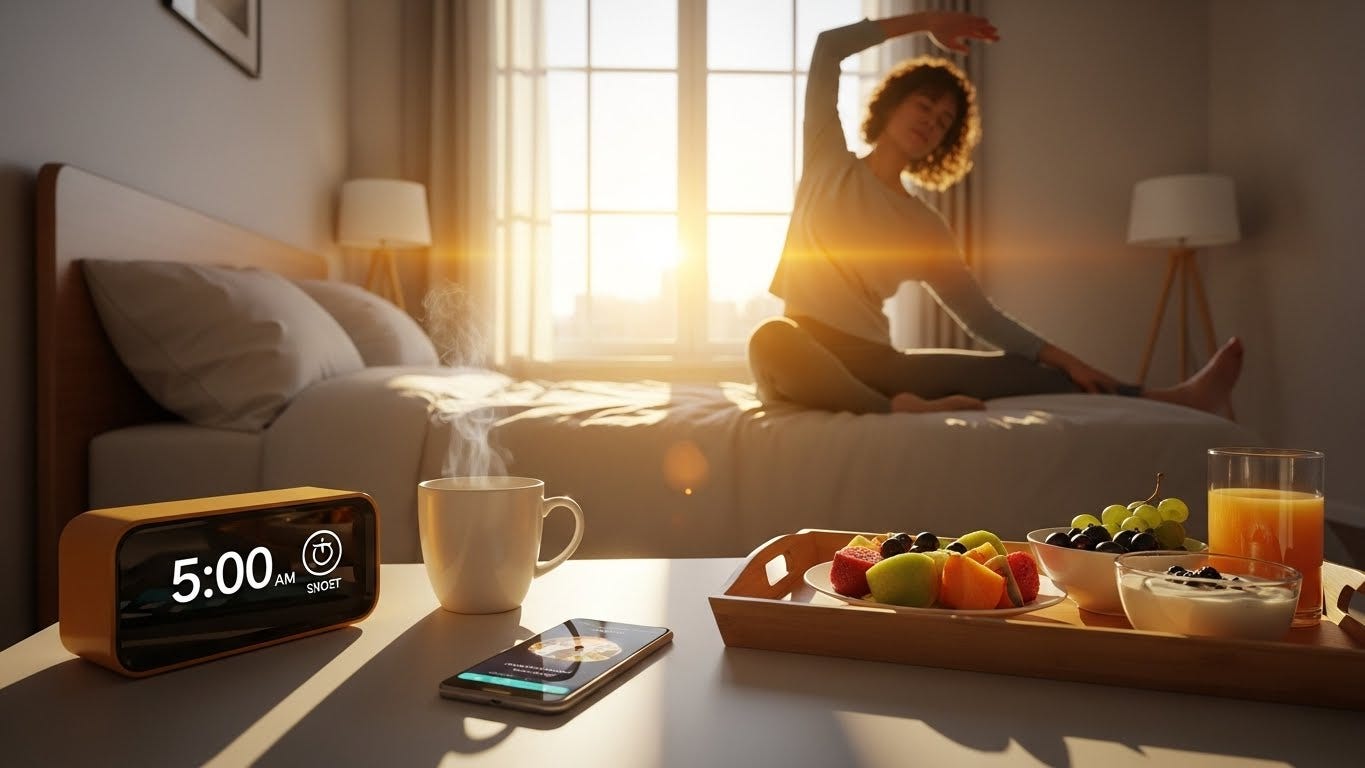
I used to hit snooze five times every morning before dragging myself out of bed, convinced that those extra ten-minute naps would “help.” Instead, they left me groggy, rushed, and irritable before my day even began. Sound familiar?
It turns out, this morning mini-cliffhanger — the snooze button — is sabotaging more than just your punctuality. The science of routine reveals that how you start your day shapes your energy, mood, and productivity for hours afterward.
If you’ve struggled to wake up without snooze, stuck in a fog of morning chaos, or simply want to optimize your mornings for better mental clarity and focus, this article is for you.
Here’s what you’ll learn:
-
How routine science explains the power of disciplined, no-snooze wakeups
-
Practical, beginner-friendly steps to create habit routines that stick
-
The secret to optimal routines that align with your body’s natural rhythms
-
Real-world tweaks for entrepreneurs, parents, night owls, and shift workers
-
How to build a power routine that fuels your day from the moment you open your eyes
Why No-Snooze Discipline Is Your Morning Gamechanger
The snooze button feels like a gift — a mini-relief from morning hard truths. But when you hit snooze repeatedly, your brain starts multiple sleep cycles it can’t finish, leaving you in a state called sleep inertia. That groggy, disoriented fog? It’s your brain’s way of telling you that you disrupted its natural rhythm.
Science-backed routine research shows that waking up and sticking to a consistent morning pattern wires your brain for energy and focus. This is where the magic of daily routines comes to play.
The goal: Wake once, fully, and take control from that very moment.
Wake Without Snooze: The Natural Alarm for Your Day
What it is
Waking without snooze means resisting the urge to delay starting your day.
Why it works
Your circadian rhythm — a natural internal clock — prefers consistency. It releases hormones like cortisol to wake you up fully at the right time. Snoozing confuses this process, leaving you sluggish.
How to do it
-
Place your alarm clock across the room so you must physically get up
-
Use a sunrise alarm clock that mimics natural light
-
Commit to one “wake time” and keep it consistent, even weekends
Real-life example
I switched to a sunrise alarm clock when working from home during the pandemic. Instead of a jarring sound, gentle light woke me up gradually, no snoozes needed. It felt like my body was naturally ready to start.
Variations for lifestyles
-
Entrepreneurs: Use a light alarm to ease into high-focus morning work
-
Parents: Sync wake time with kids’ schedules for smoother mornings
-
Night owls: Gradually move wake time 15 minutes earlier each week
Gratitude Journaling Mornings: Fuel Your Mind with Positivity
What it is
Spend 5 minutes each morning jotting down what you’re thankful for.
Why it works
Gratitude journaling triggers your brain’s reward centers, reducing stress hormones and boosting dopamine, which sets a positive tone.
How to do it
-
Keep a journal by your bed
-
Write 3 things you’re grateful for the moment you wake
-
Make it specific — “I’m grateful for the warm coffee aroma” works better than “I’m grateful for my life”
Example
After years of snooze battles, I started gratitude journaling. Shifting my mindset from groggy to grateful helped me break the cycle of morning dread.
Lifestyle tweaks
-
Busy parents: Do it during childcare downtime or with your kids to model gratitude
-
Entrepreneurs: Use a gratitude app if journaling isn’t your style
Protein Breakfast Routine: Fuel Your Energy Engine
What it is
Start your day with a high-protein breakfast.
Why it works
Protein stabilizes blood sugar, sustains satiety, and supports brain function by providing essential amino acids.
How to do it
-
Include eggs, Greek yogurt, nuts, or protein smoothies
-
Prep breakfast the night before to save time
-
Avoid sugary cereals and pastries that cause energy crashes
Example
A friend who struggled with mid-morning slumps switched to a hard-boiled egg and fruit every day. Her energy and concentration improved noticeably.
Adjustments
-
Busy entrepreneurs: Quick protein bars or smoothies
-
Parents: Incorporate family-friendly protein snacks like peanut butter toast
Circadian Rhythm Mornings: Align with Your Body’s Clock
What it is
Respect your body’s natural circadian rhythm to optimize wakefulness and rest.
Why it works
Exposure to natural light in the morning signals your brain to stop melatonin production (the sleep hormone) and boost alertness hormones.
How to do it
-
Get outside for 10–15 minutes within the first hour of waking
-
Use light therapy lamps in darker months or night shifts
-
Dim lights in the evening to prepare for restful sleep
Personal note
During winter, I use a 10-minute light therapy session alongside my morning walk, which helps counteract the seasonal blues and keeps my sleep routine steady.
Lifestyle tips
-
Night owls: Use light exposure strategically to shift your rhythm gradually
-
Shift workers: Apply light-blocking glasses after work to mimic night
Common Mistakes & Fixes When Building No-Snooze Discipline
- Relying on Willpower Alone
Cause of failure: Willpower fades quickly
Fix: Use environmental changes like alarm placement and light exposure
- Trying to Change Too Much at Once
Cause of failure: Overwhelmed and inconsistent
Fix: Start with one habit like wake without snooze before layering others
- Ignoring Sleep Quality
Cause of failure: Waking up tired despite no snooze
Fix: Prioritize sleep hygiene — no screens 30 min before bed, cool room
- Checking Phone First Thing
Cause of failure: Screens hijack mental energy and delay wakefulness
Fix: Avoid phone for first 30 minutes (science backs this up!)
- Giving Up Too Early
Cause of failure: Routine science shows habit forming takes ~66 days
Fix: Commit to a 10-week minimum trial, track progress
Actionable Summary: Do This Tomorrow Morning
-
Place your alarm clock across the room
-
Wake once — no snooze, no exceptions
-
Write down 3 things you’re grateful for
-
Eat a protein-rich breakfast (prep it tonight!)
-
Spend 10 minutes outside or by a bright window
-
Avoid your phone for 30 minutes after waking
-
Reflect on your progress without judgment
Discipline doesn’t mean hardship — it means reclaiming your mornings with intentional, science-backed routines that power your day. What’s one no-snooze habit you’ll try first tomorrow morning? Share your plans or challenges — I’d love to hear how you reset your morning game.
For more on personalized routines and habit science, follow me for upcoming tips on creating your own morning “power routine” that fits your unique lifestyle.
Wake up once. Feel alive once. Set your day on fire.
메타데이터
- post_id
- ab7ac00c8e8e
- slug
- no-snooze-discipline-the-morning-reset-that-transforms-your-day-ab7ac00c8e8e
- url
- https://medium.com/@bloomkin/no-snooze-discipline-the-morning-reset-that-transforms-your-day-ab7ac00c8e8e
- canonical_url
- https://medium.com/@bloomkin/no-snooze-discipline-the-morning-reset-that-transforms-your-day-ab7ac00c8e8e
- author_url
- https://medium.com/@bloomkin
- status
- ok
- fetched_at
- 2026-07-14 17:06:34