AI Is Coming For Us…
Moving technological discourse beyond science fiction
AI Is Coming For Us…
Moving technological discourse beyond science fiction
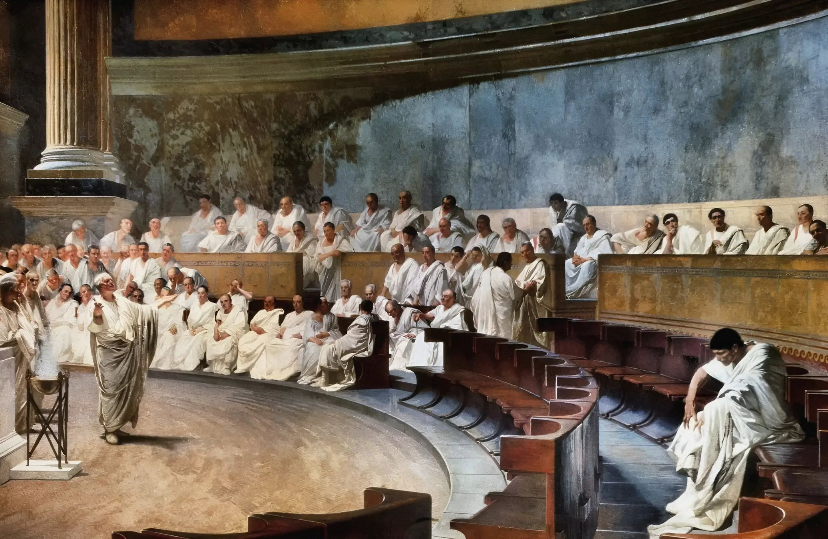
Photo by Huma Kabakci on Unsplash
“The machines rose from the ashes of the nuclear fire. Their war to exterminate mankind had raged for decades, but the final battle would not be fought in the future. It would be fought here, in our present. Tonight…” (Terminator, 1985)
I like movies. The kind of movies I like the most are science fiction stories. In such stories, like in many stories about love, the main question is “what if?”
It is a philosophical and existential question by nature. This is why science fiction works so well on us. With its “what if,” it not only shows a possible future, but also a possible life for us.
With the huge development and implementation that AI systems have had over the past few years, the “what if” has started to be the most common question that comes out of people's mouths when it comes to AI.
What if AI were to come for my job? What if AI could genuinely love me? What if a big AI mind were to come to rule us…or even worse, to kill us all?
Many people fear that AI could kill us all. However, it does not mean that they consider this to be very likely, just that it is thinkable. And yet, there remains the “what if?”
“What if” is a powerful narrative
When in the movie Terminator an evil AI, called Skynet, sends a robot into its past to kill in our present Sarah Connor, the mother of the one who led the resistance against machines, the spectator is confronted with many “what if?”
People today, whether they like SF stories or not, are very familiar with such “what if?” narratives framed to seem plausible. We have been raised with them. They are part of our representations. They are part of our reality.
Yet there is an important distinction between what is plausible, what might be following resemblances and expectations, and what is real. Science fiction stories are made so the line seems mostly invisible, leading us to wonder and to feel during their narratives.
I do love science fiction for sure. Nevertheless, what indicates the word “fiction” in “science-fiction” is that it is not real. It is, at best, a “plausible” story, and in other cases a fantasy. (I do like fantasy as well. I am an open-minded guy!)
The problem begins when imagination forgets it is imagination. A story is useful when it opens possibilities. It becomes dangerous when it pretends to close reality around a single future. At that moment, the “what if?” stops being a playground and starts becoming a cage. A very cinematic cage, sure, but a cage nonetheless.
Then, is AI coming for us?
This is a big question with a lot of preconditions (a lot of “if”). The short answer is, at least for today, no. We will figure it out tomorrow; we will be there, proving that it did not come to kill us all. (Yes, I know, that is not an argument; well, to be fair, science fiction neither!)
Nobody really knows what will happen in the future. That is one of the good reasons to justify AI guardrails. I vote for it. What I do not vote for is the current AI narrative: the shift from the “what if” (plausible story) to the “if” (hypothesis), and finally to the “it is coming.”
This is where philosophy can be useful, not as a boring professor interrupting the movie, but as the friend who asks, “Wait, what are we assuming here?” Before fearing the monster, we should first ask who named it a monster, who benefits from that name, and what other names were available but somehow did not get the trailer.
Many AI stakeholders today use this narrative to sell their AI tools, to promote their research, and to have some responsibility in AI safety programs. You will even find people online who use this fear to sell you subscriptions or training packages. The message is clear: you should adapt. You should be prepared. Is it worth it?
I do not know, but you will for sure live an easier life reading some deconstructions of such narratives. (Self-promotion is an art!)
And this is a wider issue
The thing is, such narratives are not new. When they appear in movies. They are fun, and they even allow us to share our impressions about Arnold Schwarzenegger’s acting with friends.
However, when they are used to sell products, people, or political programs, it is more problematic. The sentences “they come for us,” “they come for our jobs,” and so on are classics of conservative parties, and even when they are used by people who are not conservative, they use the same trigger: fear.
We all have fear. Fear toward the future. Fear for our loved ones or for us. Fear of the unknown, including death. We are all, at some point, fearful living beings. People know that. When they use such discourses, be they journalists, researchers, or politicians, they do one very simple thing: politics. They try to influence people's decision-making. To comply with their best interests, not yours.
Fear is not stupid. It is often a very intelligent alarm system. The issue is that alarms are not political programs, scientific arguments, or life plans. If we let fear think for us, it will always choose the nearest exit, even when the nearest exit is actually not the best one.
Conclusion
Then, somebody is really coming for you. It is not AI systems, which are not conscious and purposeful independently of their users. Some people made of flesh and blood are coming for your money, your support, or just to be part of your community. They come out of interest, which AI lacks.
And yet, we should be prepared, collectively, for what AI might occur or contribute to provoking, and we have to do so for our children and ourselves. Without fear, which is a bad counselor; just with a fair assessment of the danger and opportunity that AI might represent, with a fair understanding of its limitations, and of how we could put more guardrails in place.
But we should have in mind one little thing. In many cases, the danger is not the technology itself, but its users: people, nations, companies, and more fundamentally, people's greed and (yes, again) fears.
So maybe the real question is not whether AI is coming for us, but whether we are still able to think clearly about ourselves. About our judgment. About our politics. About the very boring, but very necessary, work of deciding collectively what we want technology to do, and what we refuse to let it do.
Because if there is a monster in this story, it is probably not hidden inside the machine. It is hidden in our old habits: greed, fear, domination, laziness, and this very human desire to give responsibility to something else and then act surprised when it does not give it back.
AI will not save us. AI will not doom us. At least, not by itself. It will mostly amplify what we already are. That is the bad news, but it is also good news.
So yes, let’s keep the guardrails. Let’s keep the debates. Let’s keep asking annoying philosophical questions. And then, let’s keep watching science fiction on Friday night. Not because it tells us the future, but because it reminds us that the future is still a story we are writing.
Hopefully, with fewer killer robots and better collective awareness.
메타데이터
- post_id
- ab84da30d178
- slug
- ai-is-coming-for-us-ab84da30d178
- url
- https://medium.com/philosophytoday/ai-is-coming-for-us-ab84da30d178
- canonical_url
- https://medium.com/philosophytoday/ai-is-coming-for-us-ab84da30d178
- author_url
- https://medium.com/@RomaricJannel
- status
- ok
- fetched_at
- 2026-07-16 06:05:14