Cinema Paradiso — From the Chickpea Jar
‘From the Chickpea Jar’ is a series I’m excited to take on. It’ll discuss films I deem perfect, or those I have such an emotional…
Cinema Paradiso — From the Chickpea Jar
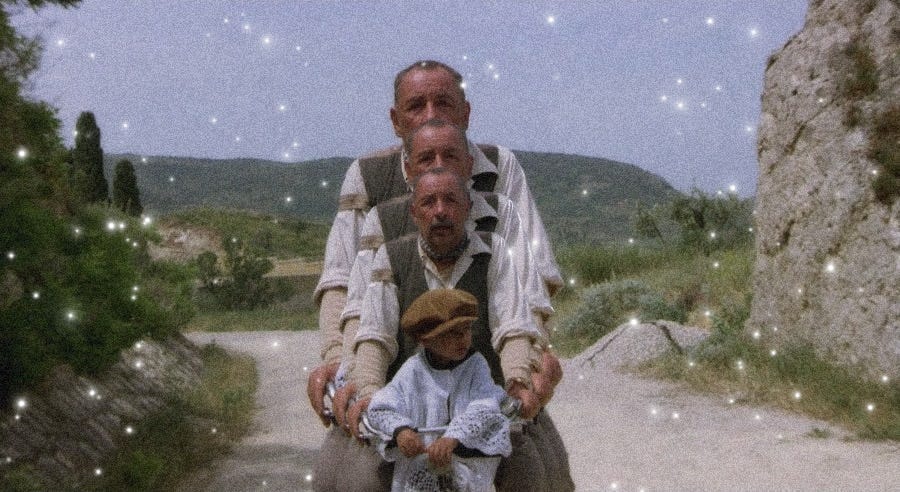
‘From the Chickpea Jar’ is a series I’m excited to take on. It’ll discuss films I deem perfect, or those I have such an emotional attachment to that I would struggle to view through a critical lens. This time I’ll be diving into Cinema Paradiso. Spoilers follow…
This modern retelling of Homer’s Odyssey focuses less on Ulysses’ “war” than the original text. Salvatore, played by three different actors, is our protagonist, whose struggles circulate an abusive domestic life, unappreciated ambitions, and feelings of isolation. Salvatore’s “war” is omnipresent. Despite spending time in the army as a young adult, this literal war is used merely to highlight his growing distance with his family and hometown in Sicily.
Fair warning — the film is not without its melodrama and clichés. There are a handful of montage scenes that can seem heavy-handed; and there’s a scene in an exam hall where Salvatore and his best friend / cinema projectionist mentor Alfredo (Philippe Noiret) have a full-length, nearly uninterrupted conversation. Some dialogue and performances can also seem vapid. But the relationship between Salvatore and Alfredo is so indulgent and wholesome, I forgive its occasional predictability.

A lot of my favourite scenes in Cinema Paradiso are in and around the cinema — Cinema Paradiso. The local priest was owner of Cinema Paradiso, and its name is most likely founded in theology. Our introduction to Paradiso depicts the priest ringing a bell at every scene in a film reel that he would like Alfredo to censor. As the film develops, the colours Paradiso fills the town with emerge. Set towards the end of World War II, in Fascist Italy, Paradiso becomes a place for a much needed escape. In these hours of ignorance, the town could briefly let go of the horrors of the war, and their grudges against authority figures like the priest — although the censorship can make him difficult to forget.
Cinema Paradiso gained acclaim after winning the Grand Jury Prize at Cannes and Best Foreign Language Film at the Oscars in 1989. Before this, it was released twice in cinemas, unsuccessfully so. In recent years we’ve seen it celebrated with references in The Simpsons; a 25th anniversary re-release in cinemas and Blu-ray release with the director’s cut; and releases on streaming services like MUBI. I feel, beyond this universal theme of escapism, and despite its sporadic displays on banality, what still keeps Cinema Paradiso on people’s lips is its understanding of the people the system fails.

In all its artistry, cinema isn’t merely a place for distraction, void-filling escapism nor pornography. Cinema, like most art, has the potential to educate and be a means of active protest. Salvatore’s mother has maintained the hope, among the family, that her husband will return from war. It is through a recent war documentary that young Salvatore uncovers the possibility that his father may have passed. In a later scene, a large group of townsfolk are gathered outside Paradiso because they can’t afford to watch the screening. Alfredo takes initiative to reflect the film through mirrors and project it simultaneously in Paradiso and in the square. This outdoor screening is noticed, and the local priest’s attempt to charge the townsfolk in the square half price fails.
Of course, these experiences surrounding a cinema can seem few and far between. But the continuous conflict with the priest makes me feel director Giuseppe Tornatore was asking us to view cinema as a new religion. Less with implications of oppression and control, but a focus on a potential communion. Despite the simplicity of the narrative — whereby Alfredo and Salva’s friendship is rooted in a love for cinema and his need for a father figure — Cinema Paradiso’s commentary is subtly present. After Paradiso burns to be rebuilt by a wealthy town citizen, its essence is worn down while the building stands entirely refurbished.

Impermanence is a key theme across the film. Fire is a recurring motif of physical destruction, while the figures of authority — the priest, new cinema owner, and teachers — function as recurring motifs of personal and spiritual destruction. Alfredo loses his sight in a fire, inhibiting from working the only job he knew how to do. The impurity the authority figures hold grates at Salvatore’s spirit. And although he takes Alfredo’s place, Alfredo is persistent this post is stunting Salvatore’s potential. He believes its only a matter of time until he rids himself of his attachments to Sicily and starts anew.
This lost and wasted potential is another core theme of Cinema Paradiso, playing into the idea of the system failing these characters. Alfredo, Salvatore, the townsfolk and Salvatore’s family are all failed by the Fascist Italy. Alfredo is still sitting school exams, working as a projectionist out of what is seemingly love, but arguably obligation and necessity; his paternal instincts override Salvatore’s conformism; the townsfolk depending on Paradiso for a sense of community and escape; and Salvatore’s family being left in the dark regarding his father’s return. All examples of lost vitality, whereby these characters are adapting to the absence of light rather than questioning why its been stripped of them.
Giuseppe Tornatore’s Cinema Paradiso is one of my favourite examples of accessible excellence. It can be watched and understood as a simplistic reimagining of Homer’s Odyssey, while subtly charged with poignant political commentary. There are multiple narrative textures to the script, and the fruitful score aids Tornatore’s vision. Although the director’s cut adds potency to stories carried through Salvatore’s older age and his younger romance, the general release still translates the palpability of Cinema Paradiso and is definitely worth your time and attention. And among all its fatality, Cinema Paradiso still entertains, excites and encourages.
메타데이터
- post_id
- abbbf2ded4b6
- slug
- cinema-paradiso-from-the-chickpea-jar-abbbf2ded4b6
- url
- https://medium.com/@chickpeafilms/cinema-paradiso-from-the-chickpea-jar-abbbf2ded4b6
- canonical_url
- https://medium.com/@chickpeafilms/cinema-paradiso-from-the-chickpea-jar-abbbf2ded4b6
- author_url
- https://medium.com/@chickpeafilms
- status
- ok
- fetched_at
- 2026-08-23 17:39:40