Scrum vs Kanban: Which One Should You Choose?
Helps readers compare and decide based on their team’s needs.
Scrum vs Kanban Methodology
Scrum vs Kanban: Which One Should You Choose?
Helps readers compare and decide based on their team’s needs.
Scrum and Kanban are two of the most popular frameworks used in project management.
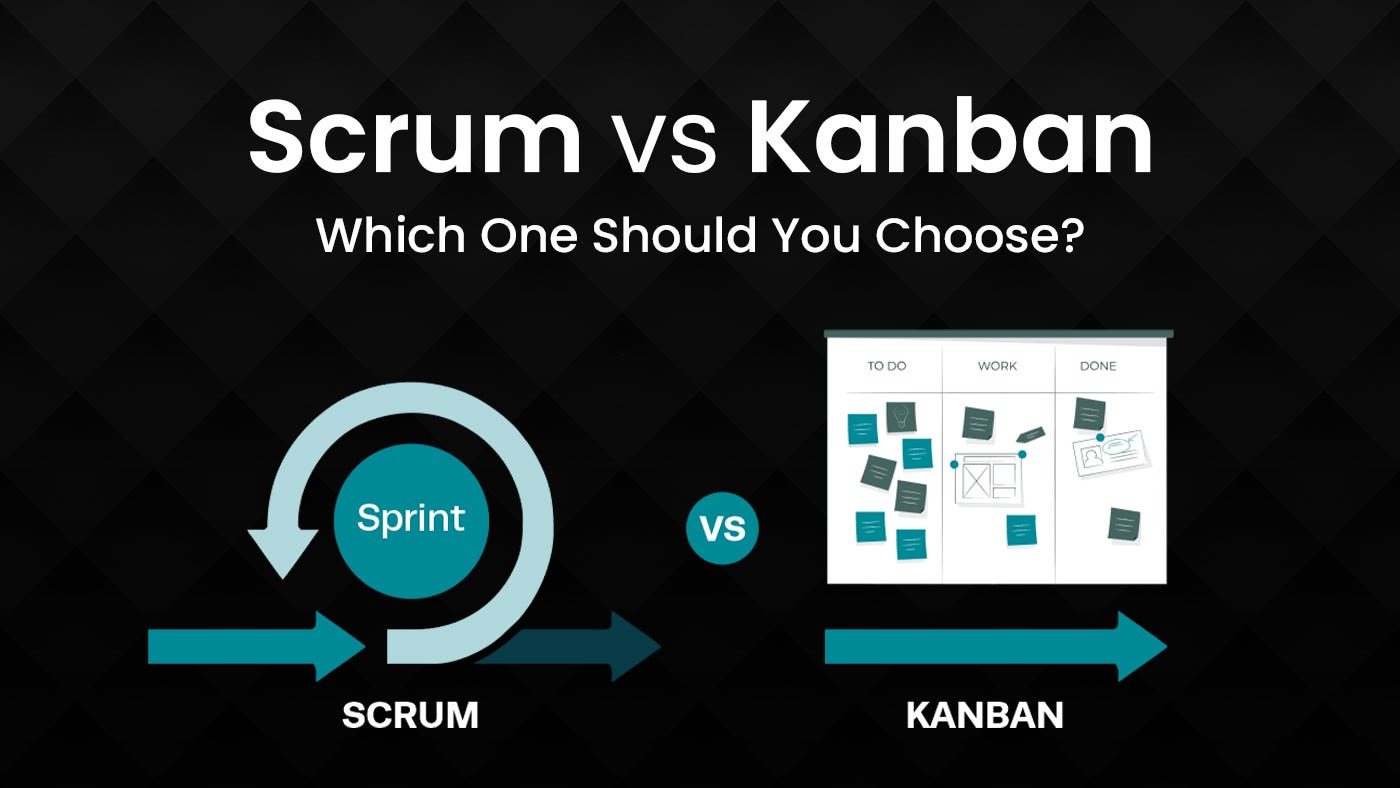
A comparison of Scrum and Kanban for better workflow management.
If you’re new to Agile, you might be wondering: Scrum vs Kanban — which one should you choose? I have worked with both and learned that each has its own benefits and challenges.
Let me break it down for you in the simplest way possible.
Table of Contents
- What is Scrum?
- What is Kanban?
- Scrum vs Kanban: Key Differences
- When Should You Use Scrum?
- When Should You Use Kanban?
- Scrum vs Kanban: Which One is Right for You?
- FAQs
What is Scrum?
Scrum is an Agile framework that helps teams work efficiently by organizing tasks into sprints. A sprint is a short, time-boxed period (usually 2–4 weeks) during which a team works on specific goals.
Key Features of Scrum:
- Sprints: Fixed-length iterations to complete a set of tasks.
- Roles: Scrum Master, Product Owner, and Development Team.
- Meetings: Daily Stand-ups, Sprint Planning, Sprint Review, and Retrospective.
- Backlog: A prioritized list of tasks to be completed in upcoming sprints.
Example of Scrum in Action
Imagine you are building a website. Your team decides to complete the homepage, login page, and user dashboard in a two-week sprint. You hold daily stand-up meetings to check progress and adjust the plan if needed. At the end of the sprint, you review the work and prepare for the next sprint.
What is Kanban?
Kanban is a visual workflow management system that helps teams track progress using boards, columns, and cards. Unlike Scrum, it does not have fixed sprints but focuses on continuous improvement.
Key Features of Kanban:
- Kanban Board: A visual tool with columns (To Do, In Progress, Done).
- Work in Progress (WIP) Limits: Restricts the number of tasks in progress at one time.
- Continuous Flow: No fixed iterations; work moves as soon as capacity is available.
Example of Kanban in Action
Let’s say you run an online store. You use a Kanban board with columns like “New Orders,” “Processing,” and “Shipped.” As orders come in, you move them across the board based on their status, ensuring a smooth workflow without delays.
Scrum vs Kanban: Key Differences

A comparison of Scrum and Kanban for better workflow management.
When Should You Use Scrum?
Scrum is best when:
- You have a structured team that can commit to sprints.
- Your project has well-defined requirements.
- You need regular feedback and improvements.
- You want to track progress through sprints and meetings.
When Should You Use Kanban?
Kanban is best when:
- Your work involves ongoing tasks without fixed deadlines.
- You need flexibility in handling priorities.
- Your team prefers minimal meetings and direct task management.
- You want to improve workflow efficiency over time.
Scrum vs Kanban: Which One is Right for You?
If you like structured workflows, clear deadlines, and regular check-ins, Scrum is a great choice. If you prefer flexibility, continuous delivery, and less rigid planning, Kanban might be better.
Personally, I have used both depending on the project type. For large software projects, Scrum works well. For customer support and marketing tasks, Kanban is more effective.
FAQs
1. Can Scrum and Kanban be used together?
Yes! Some teams use ScrumBan, a mix of both frameworks, to get the benefits of Scrum’s structure and Kanban’s flexibility.
2. Which is better for small teams?
Kanban is usually better for small teams since it does not require as many roles and meetings as Scrum.
3. Is Scrum harder to learn than Kanban?
Scrum has more rules and roles, so it takes longer to learn. Kanban is simpler and easier to start with.
4. Which one is better for software development?
Both work well! Scrum is great for planned features, while Kanban is better for bug fixes and continuous updates.
5. Does Kanban have daily stand-up meetings like Scrum?
No, Kanban does not require daily stand-ups, but teams can have meetings if needed.
메타데이터
- post_id
- abd43dc2d836
- slug
- scrum-vs-kanban-which-one-should-you-choose-abd43dc2d836
- url
- https://medium.com/@trushitkasodiya/scrum-vs-kanban-which-one-should-you-choose-abd43dc2d836
- canonical_url
- https://medium.com/@trushitkasodiya/scrum-vs-kanban-which-one-should-you-choose-abd43dc2d836
- author_url
- https://medium.com/@trushitkasodiya
- status
- ok
- fetched_at
- 2026-07-28 17:48:18